Top

Hong Kong licensing success sees SEBA Bank expand APAC crypto presence

Web3 & Enterprise·November 09, 2023, 1:01 AM

Switzerland-based SEBA Bank AG has taken a significant step in its global expansion strategy by securing a license from Hong Kong’s Securities and Futures Commission (SFC) to manage traditional securities and digital assets through its subsidiary, SEBA Hong Kong.
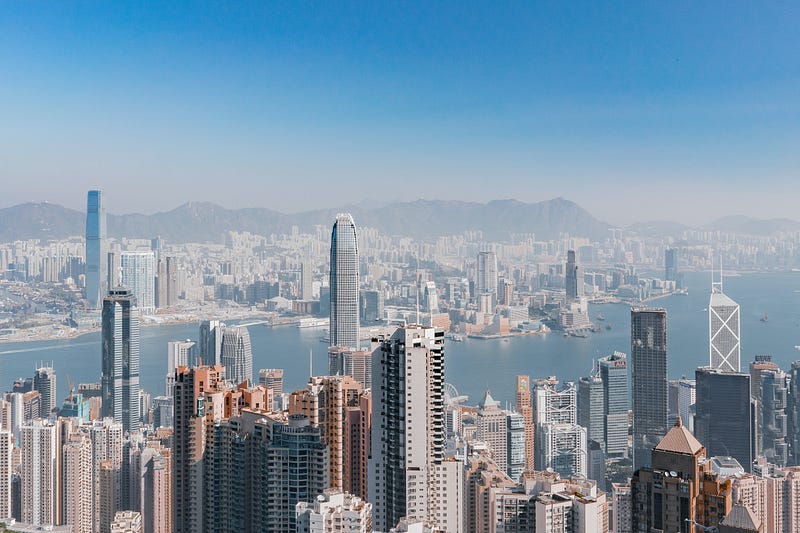
Photo by Ruslan Bardash on Unsplash


First move into APAC for crypto business

SEBA Hong Kong published a statement on Wednesday to announce the milestone. It marks the crypto-centric bank’s maiden entry into the Asia-Pacific (APAC) region and expands its footprint across three regulated hubs, including Switzerland and Abu Dhabi.

The acquisition of the digital asset license from the SFC provides SEBA Bank with the ability to offer regulated services pertaining to digital assets, encompassing both virtual assets and securities. The move is seen as a reflection of SEBA’s confidence in the long-established capital markets and strong appetite for investment and trading in Hong Kong.

SEBA Hong Kong’s CEO, Amy Yu, expressed her enthusiasm, stating:

“We are tremendously excited by Hong Kong’s deep-rooted capital markets and appetite for investment and trading; to have secured this license from the SFC provides enormous potential for our business, owing to the well-established and defined regulatory framework that is present here.”


Opening up OTC derivatives possibilities

The license grants SEBA Bank the authority to engage in a wide range of regulated activities related to traditional securities and digital assets within Hong Kong. This includes dealing with and distributing all types of securities, including virtual asset-related products like over-the-counter (OTC) derivatives.

What is likely to give SEBA Bank’s licensed services the upper hand is their accessibility to a diverse clientele, including institutional investors, corporate treasuries, funds, family offices and high-net-worth individuals. The aim is to cater to a broad spectrum of clients seeking exposure to the digital asset landscape, from sophisticated institutional investors to individuals with substantial assets.

This milestone comes after SEBA’s previous in-principle approval (AIP) for virtual asset trading services, granted in August. The full approval allows SEBA Bank to significantly broaden its product and service offerings in Hong Kong, contributing to the wider adoption of cryptocurrencies and digital assets in the region.

Franz Bergmueller, Chief Executive Officer of SEBA Bank, highlighted the significance of this regulatory achievement, not only for the bank but for Hong Kong’s position as a global financial services hub. He stated:

“This regulatory clarity not only benefits our business but also supplements Hong Kong’s status as a global financial services hub. The region’s robust legal system provides a solid foundation to conduct crypto-related services, and we look forward to beginning that from today.”

The regulatory breakthrough achieved by SEBA Bank in Hong Kong aligns with the broader trend of evolving and expanding regulations in the digital asset space within the region. Hong Kong has been progressively adapting its regulatory landscape to accommodate the growth of digital assets.

SEBA Bank’s move also echoes the welcoming environment for crypto firms in Hong Kong. As Standard Chartered-backed Zodia Custody recently announced plans to launch its services in the city, it underscores Hong Kong’s emergence as a prominent player in the APAC region. SEBA's presence in Hong Kong not only strengthens the region’s stature as a global financial services hub but is also suggestive of its interest in fostering the growth of the digital asset industry within the Chinese autonomous territory.


More to Read
View All
Policy & Regulation·

May 03, 2023

VCs Say US Crypto Crackdown Opportunity for Asia

VCs Say US Crypto Crackdown Opportunity for AsiaA couple of Hong Kong-based venture capitalists told Bloomberg TV in an interview that aired on Tuesday that the current crypto crackdown in the United States is a boon for Asia and particularly for Hong Kong in establishing itself as a global crypto hub.© Pexels/lalesh aldarwishMartin Baumann, Managing Partner and Co-Founder of CMCC Global, one of Asia’s first VC funds focused purely on blockchain and crypto, said that “Hong Kong has always been a financial capital of Asia and we believe in this location.”Golden opportunityWhile the fund has a global mandate, it believes that investor focus is shifting away from North America towards Asia. Baumann’s colleague, CMCC Global Managing Partner and Co-Founder Charlie Morris said that “the US has been quite negative from the regulatory perspective and it really seems to us that the US is shooting itself in the foot with a machine gun.”Morris elaborated, stating that the US crypto crackdown is handing a golden opportunity to other world regions to lead on blockchain and crypto. Baumann chimed in to clarify that one third of all blockchain equity deals are currently being done in Asia. He maintains that most of the investment community in the West doesn’t appreciate the extent to which capital is being committed into the space by Asian entities.Morris expanded further: “We see places like Hong Kong having a real opportunity at this point in time to bring those firms and entrepreneurs to the city.”Launching $100M blockchain fundAgainst that backdrop CMCC Global is launching a $100 million fund, where funding will be allocated to blockchain projects. Specifically the duo are targeting crypto and blockchain firms at Series A and Series B funding stages. Baumann believes that in tandem with the fact that there’s a lot of innovation emerging in Asia, “there’s plenty of capital sitting on the sidelines waiting for the right entry valuations to pull the trigger.”While Baumann and Morris are majority stakeholders in CMCC Global, the Winklevoss twins (Cameron and Tyler Winklevoss) also have an equity stake in the business. Founders of the Gemini crypto exchange platform, they are investors alongside Hong Kong based Richard Li, who has a net worth estimated to be in the region of $4.6 billion.VC investment into crypto slowed down considerably since the onset of the most recent crypto winter. However, that activity has still been ongoing, something that is entirely different to the 2018 bear market when investment came to a complete standstill. In April, CMCC partnered with Switzerland-based Syz Group with the objective of establishing a funding vehicle with a minimum $50 million fund earmarked for crypto-centric hedge fund investment.Meanwhile, in speculating on the prospects of bitcoin, the CMCC duo expressed the view that double digit gains are well within reach. Morris envisages a Bitcoin unit price of $40,000 in 2023. From a long term perspective the CMCC co-founder suggested that “I can easily see us breaking all time highs and easily breaking $100,000 for bitcoin.”

news
Web3 & Enterprise·

Aug 02, 2023

Binance Set For Japanese Market Re-Entry With 34 Token Listings

Binance Set For Japanese Market Re-Entry With 34 Token ListingsBinance, the world’s largest cryptocurrency exchange, is gearing up to re-enter the Japanese market with a bang on August 14. According to a report published by local crypto media outlet Coinpost, Binance Japan is set to immediately list an impressive 34 tokens.The move will put Binance ahead of its domestic rivals, as the offering will be the most extensive in terms of the selection of tokens made available to Japanese customers.Photo by David Edelstein on UnsplashBNB token offeringIn addition to that, Binance intends to make its native token, BNB, available in Japan for the first time. Exchange tokens have proven to be controversial in recent times. In November 2022, FTX’s reliance on their native token FTT caused a run on the exchange which Binance started once it started to sell off the token. Similar concerns have been expressed ever since about a similar reliance within Binance relative to its BNB token.The expansion into Japan will likely prove a tonic for Binance, given the difficulties it has experienced in other markets recently. Regulatory pushback has forced Binance out of markets such as Germany, Belgium, the Netherlands, and Cyprus over the course of the past three months.The company has been actively working to comply with Japan’s regulatory environment. In a Twitter video posted in July, Changpeng Zhao (CZ), Binance’s Founder and CEO, expressed his excitement about re-entering the Japanese market. He praised Japan’s clear and progressive approach to crypto regulations, citing the well-established framework that dates back to 2017, as well as recent developments, including the opening up of crypto listing frameworks and the passing of stablecoin regulations in June.Roadmap to market re-entryBinance’s journey back into Japan started in November 2022 when it acquired 100% ownership of Sakura Exchange BitCoin (SEBC). The acquisition paved the way for Binance to be regulated by the Japan Financial Services Agency (JFSA). As part of this move, SEBC underwent a name change, rebranding itself as Binance Japan Inc. The company then announced in May its plans to re-enter the Japanese market.The re-entry comes after the JFSA had previously issued warnings in 2021 against Binance for operating in the country without proper registration. Now, with the acquisition of SEBC and its regulatory compliance, Binance has gained a foothold in the Japanese market once again.Binance Japan aims to provide a comprehensive suite of services to its Japanese customers. New users can access spot trading, Earn products, and the NFT marketplace, while existing customers can migrate to the local subsidiary starting August 14. The token offerings include a diverse range of assets, and the addition of BNB presents exciting opportunities for traders and investors in Japan.Rival exchanges such as Coinbase and Kraken have decided to halt their operations in the country as they struggled to adjust to Japanese market conditions. The move by Binance to re-enter Japan’s market will be closely watched to see if it can succeed where others have failed.

news
Web3 & Enterprise·

Nov 07, 2025

Hana Financial Group bets on stablecoins and AI as crypto adoption surges in South Korea

Hana Financial Group, one of South Korea’s largest financial institutions, plans to establish a new task force focused on digital assets, according to a report by News1. The move comes as the cryptocurrency market continues to expand and institutional adoption grows worldwide.Photo by POURIA 🦋 on UnsplashGroupwide crypto task forceThe company intends to use the task force to develop a coordinated response system linking its banking, card, and securities subsidiaries. It also plans to introduce crypto-related products, services, and infrastructure in line with forthcoming legislation on digital assets. As its first initiative, the task force will focus on stablecoin-related projects, including issuance and reserve management. Another key objective is to build a merchant network that enables customers to make payments using stablecoins. Beyond its crypto initiatives, Hana Financial Group also aims to expand the use of artificial intelligence (AI) to advance its digital finance capabilities. Ongoing AI research at the Hana Institute of Technology will serve as the foundation for integrating AI across the group’s subsidiaries, with a particular focus on enhancing sales divisions. Commenting on the initiative, Chairman Ham Young-joo said the group will strengthen its capabilities in both crypto and AI, underlining the transformative potential of digital assets in capital markets and payment networks. Paycoin expands retail acceptanceThe rising adoption of cryptocurrencies in South Korea is reflected in Paycoin’s (PCI) recent expansion into the convenience store chain Emart24. Operated by Danal Fintech, the blockchain affiliate of Danal, Paycoin now allows customers to make purchases with its PCI tokens at Emart24 locations, according to a report by Etoday. With 7-Eleven scheduled to start accepting PCI later this month, the digital asset will soon be usable across all four major convenience store chains in the country, joining CU and GS25, which already support it. Building on this momentum, Paycoin aims to expand its utility across a wider range of sectors, including restaurants, sports facilities, shopping malls, and accommodations. The platform has already established a presence at well-known eateries such as Domino’s and Pizza Hut, as well as at Dal.Komm, Danal’s coffee chain. Market manipulation probesHowever, the growing acceptance of digital assets has also brought side effects—specifically, a rise in crypto-related crimes. Amid stricter oversight, South Korea’s Financial Supervisory Service (FSS) has voted to refer alleged cryptocurrency market manipulators to law enforcement. The decision concerns two separate cases, Edaily reported. In the first case, a suspect is accused of generating illicit profits by artificially inflating the price of a particular cryptocurrency. The individual reportedly accumulated tokens worth billions of Korean won before placing a series of sell orders at higher prices. Using an application programming interface (API), the suspect repeatedly executed these orders, prompting ordinary investors to buy in and drive prices even higher—ultimately securing profits for the manipulator. The second case involves multiple individuals accused of employing similar methods across various tokens. They allegedly used APIs to automate trades, creating false impressions of high trading volumes and inflated prices to reap unlawful gains. These developments offer a broader view of how South Korea’s nascent digital asset industry is taking shape. The growing presence of cryptocurrencies in everyday life reflects Seoul’s push to align with the global trend of embracing crypto as both a new payment method and an emerging asset class. While crime prevention and investor protection remain key concerns, forthcoming legislation is expected to give regulators clearer guidelines. Ranked 15th worldwide in crypto adoption in this year’s Chainalysis study, South Korea continues to stand out as a market that merits close attention from investors and industry observers alike. 

news
Loading
