Top

Singapore Looks to Prohibit Crypto Lending and Staking

Policy & Regulation·July 04, 2023, 12:30 AM

In a move to bolster investor protection and maintain financial stability, the Monetary Authority of Singapore (MAS) is introducing new guidelines for cryptocurrency platforms operating in the country.

Details of the measures were published by MAS on Monday. According to its statement, the measures “will mitigate the risk of loss or misuse of customers’ assets, and facilitate the recovery of customers’ assets in the event of a DPT [Digital Payment Token] service provider’s insolvency.”

The proposed guidelines outline several key measures. One such measure is the daily reconciliation of customer assets, which will help prevent discrepancies and safeguard against potential losses.
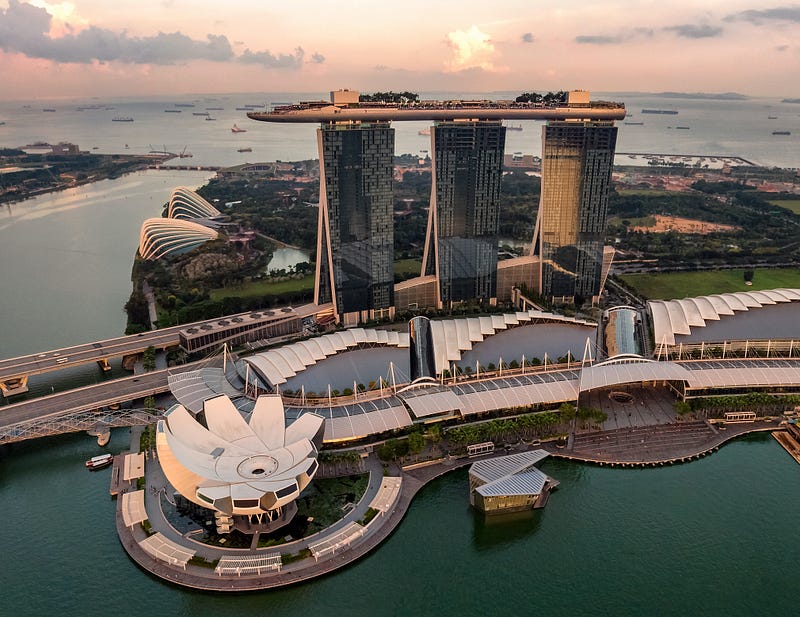
Photo by Hu Chen on Unsplash


Holding assets in trust

Additionally, the custody function, responsible for holding and safeguarding client assets, will be operationally separated from other business divisions to minimize the risk of mismanagement or unauthorized use. By the end of this year, it’s understood that crypto platforms will be required to store client assets in trust accounts, ensuring enhanced security and accountability.


Disclosures

Furthermore, licensed cryptocurrency service providers will be mandated to provide explicit disclosures to customers, clearly outlining the risks associated with holding and trading digital payment tokens (DPTs). Recognizing the speculative nature of digital token trading, the MAS acknowledges that regulations alone cannot fully protect consumers from potential losses.

To further protect retail investors, the MAS intends to prohibit cryptocurrency service providers from facilitating lending or staking activities. Lending and staking, where digital tokens are loaned or pledged to earn profits, are considered unsuitable for the general public due to their complex and high-risk nature.

These measures come as part of Singapore’s efforts to strengthen its regulatory environment for digital assets. The consultation process began last year, following the collapse of FTX, a cryptocurrency exchange.

Singaporeans suffered disproportionately with the collapse of FTX as previously, MAS had banned global crypto exchange Binance from operating within the city-state. That led to Singapore having more FTX customers than many other world regions. To compound matters, state-owned global investment firm Temasek, was an investor in the fraudulent crypto exchange.

MAS had called for feedback and proposals, with a focus on enhancing investor safeguards and promoting responsible trading practices. While the regulations aim to provide a safer environment for investors, the MAS also emphasizes the importance of individuals exercising caution when engaging in digital token trading.


Contrasting approaches

While Singapore is taking steps to tighten regulations, other cities like Hong Kong are adopting a more inclusive approach to the crypto industry. Hong Kong Legislative Council member Johnny Ng has voiced support for the local crypto business and has encouraged prominent exchanges like Coinbase to establish operations in the territory, aiming to foster greater engagement and growth within the sector.

As the crypto industry continues to evolve, regulatory frameworks play a crucial role in ensuring investor protection and maintaining market integrity. Singapore’s proactive approach to strengthening its regulatory environment reflects its commitment to striking a balance between fostering innovation and safeguarding the interests of investors.


More to Read
View All
Web3 & Enterprise·

Jun 30, 2023

Hang Seng Ponders Crypto Product Offering

Hang Seng Ponders Crypto Product OfferingHang Seng Investment Management Co., the largest exchange-traded fund (ETF) manager in Hong Kong, is considering entering the decentralized ecosystem.According to a report in local news media in Hong Kong on Wednesday, Li Peishan, the firm’s Director and Executive President, stated that Hang Seng is paying close attention to the development of digital assets. She clarified that the company is examining the possibility of including digital assets within its existing investment product offering.Photo by Jonathan Borba on UnsplashCrypto ETF expansionThis news comes shortly after HSBC, one of the largest banks in Hong Kong, introduced Bitcoin (BTC) and Ethereum (ETH) ETFs to its customers, becoming the first bank in the region to do so. This development has opened up possibilities for greater cryptocurrency adoption in the area.While most people in the space recognize that the authorities in the US have gone too far in their clampdown on the digital assets space, it’s interesting to note that recent weeks have seen a plethora of established TradFi players filing Bitcoin spot ETF applications. That list includes the world’s largest asset manager, BlackRock, multinational financial services firm Fidelity Investments, WisdomTree, VanEck, and others.Assessing potentialPeishan stated that while the company does not have a specific plan to develop a crypto ETF, Hang Seng is actively assessing the potential of incorporating digital assets into their existing investment products. She highlighted the remarkable growth in the average daily asset management scale, which has surged by 80% since December and has surpassed HK$12 billion.On June 24, Leung Fung Yee, the CEO of the Securities and Futures Commission of Hong Kong (SFC), emphasized the importance of crypto service providers embracing the next generation of the web and finance. He expressed Hong Kong’s ambition to establish itself as the central hub for crypto companies, fostering innovation within the region.Responding to Yee’s statement, the Hong Kong Virtual Assets Consortium (HKVAC) announced the inclusion of XRP, SHIB, and ADA in its newly developed HKVAC index. The creation of the HKVAC index aims to assist investors in analyzing the potential of cryptocurrencies and gaining insights into their prospects.The digital assets landscape in Hong Kong is evolving rapidly, driven by increasing interest in the asset class and the recognition of their transformative potential. Hang Seng Investment Management’s exploration of the decentralized ecosystem signifies the growing demand for exposure to cryptocurrencies among traditional financial institutions.TradFi IntegrationThe introduction of Bitcoin and Ethereum ETFs by HSBC represents a significant milestone in the adoption of cryptocurrencies within the traditional banking sector. This recent indicator from Hang Seng suggests that we are likely to see more developments unfold within the ETF space in Hong Kong in the not-too-distant future where digital assets are concerned. That view is further endorsed by the findings of a recent report produced by the Hong Kong Stock Exchange, pointing to the yet-to-be-realized potential of crypto ETFs.As the industry continues to mature, the integration of digital assets into traditional investment products is likely to become increasingly common, leading to a more diversified and inclusive financial ecosystem.

news
Policy & Regulation·

Oct 21, 2025

Binance-Gopax deal under scrutiny as Korean lawmakers press for investor protection

During a National Policy Committee audit, South Korean lawmakers pressed financial regulators on their oversight of the domestic crypto market, focusing on Binance’s acquisition of local exchange Gopax, risks from order-book sharing with foreign platforms, and weaknesses in anti–money laundering (AML) controls.Photo by Kanchanara on UnsplashQuestions over Gopax compensationAccording to Kuki News, Democratic Party lawmaker Min Byeong-dug has urged regulators to reach out to Binance for details on its plan to compensate Gopax creditors following its acquisition of the local exchange. One of the nation’s five fiat-to-crypto exchanges, Gopax suspended withdrawals from its GoFi service, a yield-bearing product, in November 2022 after the collapse of the Bahamas-based FTX crypto exchange and the bankruptcy of Genesis, a U.S.-based crypto financial services firm. Citing investor losses estimated at 10 billion to 50 billion won (about $7 million–$35 million), Min said Binance had agreed to cover the shortfall as part of its cashless acquisition of Gopax, but full repayment to Korean users remains unresolved. He noted that the deal had faced delays due to concerns raised by the Financial Services Commission’s (FSC) Financial Intelligence Unit (FIU) over Binance’s eligibility as a major shareholder, and urged the FSC and FIU to ensure a clear and timely resolution for affected investors. Concerns over order-book sharingPeople Power Party (PPP) lawmaker Lee Heon-seung raised additional concerns about order-book sharing tied to the Binance–Gopax deal, warning it could create regulatory blind spots. According to Dailian, he asked the FIU about risks such as possible gaps in AML oversight at foreign exchanges and the potential exposure of Korean user data. FIU head Park Gwang said inadequate AML systems at overseas platforms can hinder fund tracing. He noted that separate approval is required before a domestic exchange can share its order book with a foreign platform, adding that no such request was under discussion. Park said the FIU would closely examine the matter and ensure protection of personal data. Lee also questioned how effectively regulators can supervise the crypto market given its scale, pointing to the Bithumb exchange as an example, where he had raised similar concerns about order-book sharing. Bithumb serves about 3.8 million users and records roughly 605 trillion won (approximately $426 billion) in annual trading volume. He said order-book sharing with major global exchanges such as Binance could complicate AML compliance, data protection, and regulatory oversight, and called for stronger enforcement. In response, Park said that the agency would ensure proper supervision to address these risks. Allegations of AML loopholes and illicit useAnother PPP lawmaker, Kim Jae-sub, flagged a potential AML loophole involving Binance, saying the exchange had allegedly been used by Cambodia’s Prince Group, which is linked to fraudulent schemes to conceal illicit funds. Last week, the U.S. Department of Justice filed a civil forfeiture complaint to seize roughly 127,271 Bitcoin linked to Prince Group’s operations, marking the largest seizure in its history. Kim also cited past allegations connecting Binance to illicit transactions involving Hamas and North Korea, and said the exchange’s founder faces related charges. He urged the FSC to conduct a thorough examination to determine the extent of any involvement if the claims prove accurate. As the parliamentary audit continues, lawmakers from both parties are pressing regulators to clarify standards, tighten oversight, and prioritize investor protection while maintaining fair and predictable rules for market participants. 

news
Policy & Regulation·

Dec 27, 2024

Proposed stablecoin legislation advances to Hong Kong’s Legislative Council

Legislation geared towards regulating stablecoins has reached the Legislative Council stage in the Chinese autonomous territory of Hong Kong.  The bill, which extends to a 285 page document, has been formulated following “extensive consultations” with industry stakeholders, according to Eddie Yue, CEO of the Hong Kong Monetary Authority (HKMA).  This latest development moves the Chinese autonomous territory one step closer to having a comprehensive regulatory framework in place for stablecoins. The bill’s arrival at the Legislative Council follows its publication on Dec. 6 in Hong Kong’s Gazette. Subsequently, on Dec. 18, it made its preliminary entry at the Legislative Council by way of a first reading. The legislation will deem a digital asset a stablecoin if it is operated on a distributed ledger, is expressed as a unit of account and maintains an equivalent value relative to another asset that it references. Digital assets issued by governments or central banks will be excluded from that stablecoin definition.Photo by Laurentiu Morariu on UnsplashThree readings requiredBefore the bill can be enacted into law, it is required to go through a series of three readings. Allied to that process is a requirement for a series of debates, with the bill coming under the scrutiny of lawmakers. Depending upon the issues raised, this process may also require the introduction of amendments to the proposed legislation. If passed following the third reading, it will then be forwarded to the autonomous territory’s chief executive, John Lee Ka-chiu, to be signed into law. Once signed into law, stablecoin issuers in Hong Kong will then be required to obtain a license from the city's central bank, HKMA. That licensing process would implicate the HKMA scrutinizing the applicant with an emphasis on the evaluation of the issuer, its resources, the use of reserve assets and the means through which the stablecoin’s value will be rendered stable. Stablecoin optimismThis latest milestone has provoked a cause for optimism among some commentators. Sean Lee, co-founder of Hong Kong-based Web3 firm IDA, told the South China Morning Post (SCMP) that “the applications of stablecoin will be numerous.” Lee outlined that stablecoins can be used for payments, settlements, payrolls and financing, while adding that “new products will spring up, and transactions will be faster, instant, 24/7 – and at a lower cost.” Dominic Maffei, Standard Chartered’s head of digital asset and fintech for Hong Kong, is similarly encouraged. Maffei stated: “As of today, we think that stablecoins are the best available tool for connecting traditional finance and Web3 markets and have proven use cases and business models to support that belief.” Once enacted, the bill is likely to have a significant impact on the stablecoin market in Hong Kong. In Europe, the application of the Markets in Crypto Assets (MiCA) regulation is having such an impact. It has led to a growth in Euro-denominated stablecoin trading while leading U.S. dollar stablecoin Tether (USDT) is being delisted by many platforms due to its non-compliance with these regulations.

news
Loading