Top

Indonesia Embraces XRP, ADA as Tradable Crypto Assets

Policy & Regulation·June 19, 2023, 11:44 PM

In a significant move towards cryptocurrency acceptance, the Indonesian government has taken a momentous step by including a range of digital assets, including XRP and ADA, in a recently published regulatory document.
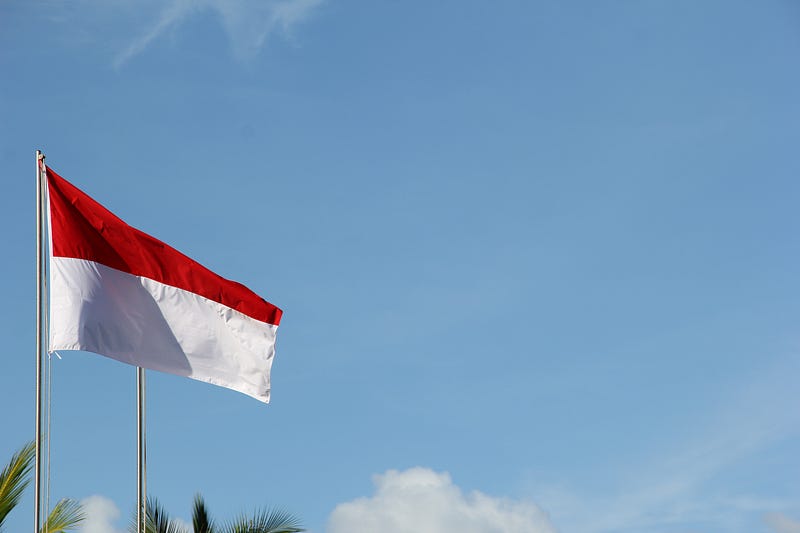
Photo by Nick Agus Arya on Unsplash


501 digital assets

The document, published earlier this month, comprises an extensive list of 501 cryptocurrencies that are eligible for trading within the country. Unsurprisingly, BTC and ETH feature on the list. Other notable cryptocurrencies that have been listed include SOL, LTC, DOT, SAND, and UNI. This development is seen as a positive stride towards wider crypto adoption and holds the potential for broader use of all of these assets. In the case of XRP, it provides it with greater potential to become a viable means of payment within the region in the future, even though current regulation within Indonesia prohibits payments for goods and services in anything other than the rupiah.


Defining tradable assets

The regulatory document, officially titled “Supervisory Body Regulation Commodity Futures Trading Number 4 of 2023,” signifies an amendment to the Trade Controlling Agency Regulations Commodity Futures Number 11 of 2022. Its main objective is to identify the assets that can be traded in the physical market of crypto assets within Indonesia.

Colin Wu, a prominent Chinese reporter, shared this significant development on Twitter, sparking interest and discussions within the crypto community. The news has been met with a mix of optimism and caution from Indonesian individuals. One Indonesian YouTuber expressed enthusiasm for the country’s XRP-friendly stance and voiced hope for XRP to eventually attain legal tender status. However, others, like Twitter user Pondok Indah, urged the government to focus on regulatory oversight and taxation rather than direct involvement in the crypto business.

This development takes place in the broader context of Indonesia’s evolving crypto landscape. According to a 2022 research report titled “The 2022 Global Crypto Adoption Index: Emerging Markets Lead in Grassroots Adoption ‘’ by Chainalysis, Indonesia ranked at the top among the 20 countries analyzed in terms of peer-to-peer (P2P) exchange trade volume. The country has demonstrated its active participation in the crypto market, with Indodax, the largest Indonesian exchange, adding support for FLOKI, an up-and-coming cryptocurrency, back in April.

That said, as we’ve seen in many other jurisdictions, the development of regulation and policy relative to digital assets has not been without its hiccups. Last month, the governor of Bali warned the foreign tourists that flock to the Indonesian island that there would be consequences for those that flouted Indonesian law and used crypto as a form of payment for goods and services.

Indonesia’s recognition of the potential benefits of digital assets demonstrates a path forward for other nations to follow. Providing regulatory clarity with regard to digital assets bolsters investor confidence but also opens doors for innovation and financial inclusion. In taking this approach, the Southeast Asian country is setting the stage through which digital assets can contribute to economic growth and technological advancement.
More to Read
View All
Policy & Regulation·

Jun 16, 2023

SEC Opposes Motion to Dismiss Terraform Labs Lawsuit

SEC Opposes Motion to Dismiss Terraform Labs LawsuitLawyers representing the United States Securities and Exchange Commission (SEC) have responded to a motion to dismiss the lawsuit filed by Dentons, the lawyers representing Singapore-based Terraform Labs and its Founder Do Kwon.Photo by Miguel Á. Padriñán on PexelsCourt filingAccording to its arguments, set out in a court filing lodged to the District Court of the Southern District of New York on Thursday, the SEC’s counsel claims that the additional documents provided by Dentons lack sufficient grounds for dismissing the case.It claims that the internal SEC emails presented by Dentons are irrelevant to the current lawsuit. The SEC asserts that the parameters of an “investment contract” are clearly defined by the Howey test and argue that TerraUSD ($UST) should be classified as a security.The reliance by US regulators on the Howey test, a legal test case that implicated citrus grove contracts that date back to 1946, has proven to be controversial. Naturally, there could have been no consideration of the digital innovation that digital assets present today almost eighty years ago. Notwithstanding that, the SEC maintains that the principle factors of what constitutes an investment contract are covered by the case regardless.During the court hearing held on June 15, Dentons submitted supplementary documents to strengthen their motion to dismiss the lawsuit. The primary focus of the hearing was to determine whether the digital assets developed by Terraform Labs should be categorized as securities based on the criteria of an “investment contract.”Dentons maintains that the algorithmic stablecoin, $UST, should not be considered a security and emphasizes its practical purpose rather than its classification as an investment contract. To support their motion, Dentons included additional documents such as the US House Financial Services Committee hearing on digital asset regulation and stablecoin issuance, the SEC’s request for a restraining order against Binance.US, and the Hinman emails from the SEC vs. Ripple lawsuit.Judge to decideThe defense lawyers highlighted what they perceive as a “regulatory gap” in classifying crypto assets as securities, particularly as the US Congress engages in discussions about regulatory frameworks for digital assets and stablecoin issuance. Furthermore, they argued that the SEC is exceeding the scope of securities laws and relying on internal emails related to “investment contracts” to determine the security status.A decision on the motion to dismiss will be arrived at by July 14. Judge Jed Rakoff, who is presiding over the case, will be responsible for that, once he’s weighed up the merits of the arguments presented by both parties.It is noteworthy that Dentons has previously represented Kwon in challenging the US SEC’s subpoena during the investigation of the Mirror Protocol in 2021, as well as in a class-action lawsuit in the Singapore High Court in 2022. The law firm also provides representation to Terraform Labs in other legal matters.In a separate development, the Basic Court in Podgorica, Montenegro, has granted bail for Kwon and former Terra Chief Technology Officer Han Chang-joon. However, Kwon has recently been taken into custody for extradition in Montenegro while the court deliberates on South Korea’s extradition request for the Terra founder.As the legal proceedings continue, the outcome of the motion to dismiss will have significant implications for the ongoing dispute between Terraform Labs, Do Kwon, and the SEC.

news
Web3 & Enterprise·

May 15, 2024

Deutsche Bank joins Singapore's asset tokenization initiative

German multinational investment bank Deutsche Bank, is collaborating with Singapore's central bank on asset tokenization.  Project GuardianThe company announced on May 14 via a press release that it has joined the Monetary Authority of Singapore’s (MAS) Project Guardian. Project Guardian is an international collaboration between a number of market regulators, led by MAS. Other participants in the initiative include the UK’s Financial Conduct Authority (FCA), Japan’s Financial Services Agency (FSA) and Switzerland’s Financial Market Supervisory Authority (FINMA). The project focuses on asset tokenization relative to wholesale funding markets and decentralized finance (DeFi) applications.Photo by Mariia Shalabaieva on UnsplashThe bank outlined how it intends to participate as part of the collaboration, stating: “As part of the asset and wealth management workstream, the bank will test an open architecture and interoperable blockchain platform to service tokenized and digital funds. It will then propose protocol standards and identify best practice to contribute to industry progress.” The bank’s participation in the project will be headed up by its Asia Pacific (APAC) head of securities and technology, Boon-Hiong Chan. Anand Rengarajan, Head of Securities Services for Asia Pacific and the Middle East, commented on the development, stating:“Contributing to Project Guardian will bolster our efforts to help shape the new frontier of asset servicing, and strongly position us to contribute to industry progress, and not only anticipate our clients’ needs but exceed their expectations.”  Memento Blockchain partnershipDeutsche Bank outlined that it intends to work closely with Memento Blockchain on the project. In fact, it has an existing ongoing collaboration in place with Memento, the developer of a decentralized asset management platform. Memento has developed multi asset swap products and it is currently working towards the development of a zero knowledge layer-2 solution. The duo have worked together over the course of the past two years. A proof-of-concept known as Project DAMA (Digital Assets Management Access) emerged from that partnership. That body of work will be extended into DAMA 2.  Memento Blockchain is the software developer behind the Domani Protocol. It stated on X that more technical details relative to the collaboration will be released in the coming weeks. It added that the collaboration will also involve Interop Labs, the developer of the Axelar Network, the programmable Web3 interoperability platform.  Earlier this year, the Axelar Foundation established a partnership with payment technology firm Ripple Labs with a view towards tokenizing real world assets (RWAs) on top of the XRP Ledger, enabled via Axelar. Axelar co-founder and Interop Labs CEO Sergey Gorbunov told Cointelegraph that “it’s now clear that secure blockchain interoperability is required to unlock the trillion-dollar potential in asset tokenization.” Gorbunov added that “Deutsche Bank and Project Guardian are leading innovation toward establishing the open systems that will enable this technology.” He highlighted the relevance of the Axelar Network in that endeavor, suggesting that “Axelar is critical infrastructure for institutional adoption."

news
Web3 & Enterprise·

Nov 07, 2025

Hana Financial Group bets on stablecoins and AI as crypto adoption surges in South Korea

Hana Financial Group, one of South Korea’s largest financial institutions, plans to establish a new task force focused on digital assets, according to a report by News1. The move comes as the cryptocurrency market continues to expand and institutional adoption grows worldwide.Photo by POURIA 🦋 on UnsplashGroupwide crypto task forceThe company intends to use the task force to develop a coordinated response system linking its banking, card, and securities subsidiaries. It also plans to introduce crypto-related products, services, and infrastructure in line with forthcoming legislation on digital assets. As its first initiative, the task force will focus on stablecoin-related projects, including issuance and reserve management. Another key objective is to build a merchant network that enables customers to make payments using stablecoins. Beyond its crypto initiatives, Hana Financial Group also aims to expand the use of artificial intelligence (AI) to advance its digital finance capabilities. Ongoing AI research at the Hana Institute of Technology will serve as the foundation for integrating AI across the group’s subsidiaries, with a particular focus on enhancing sales divisions. Commenting on the initiative, Chairman Ham Young-joo said the group will strengthen its capabilities in both crypto and AI, underlining the transformative potential of digital assets in capital markets and payment networks. Paycoin expands retail acceptanceThe rising adoption of cryptocurrencies in South Korea is reflected in Paycoin’s (PCI) recent expansion into the convenience store chain Emart24. Operated by Danal Fintech, the blockchain affiliate of Danal, Paycoin now allows customers to make purchases with its PCI tokens at Emart24 locations, according to a report by Etoday. With 7-Eleven scheduled to start accepting PCI later this month, the digital asset will soon be usable across all four major convenience store chains in the country, joining CU and GS25, which already support it. Building on this momentum, Paycoin aims to expand its utility across a wider range of sectors, including restaurants, sports facilities, shopping malls, and accommodations. The platform has already established a presence at well-known eateries such as Domino’s and Pizza Hut, as well as at Dal.Komm, Danal’s coffee chain. Market manipulation probesHowever, the growing acceptance of digital assets has also brought side effects—specifically, a rise in crypto-related crimes. Amid stricter oversight, South Korea’s Financial Supervisory Service (FSS) has voted to refer alleged cryptocurrency market manipulators to law enforcement. The decision concerns two separate cases, Edaily reported. In the first case, a suspect is accused of generating illicit profits by artificially inflating the price of a particular cryptocurrency. The individual reportedly accumulated tokens worth billions of Korean won before placing a series of sell orders at higher prices. Using an application programming interface (API), the suspect repeatedly executed these orders, prompting ordinary investors to buy in and drive prices even higher—ultimately securing profits for the manipulator. The second case involves multiple individuals accused of employing similar methods across various tokens. They allegedly used APIs to automate trades, creating false impressions of high trading volumes and inflated prices to reap unlawful gains. These developments offer a broader view of how South Korea’s nascent digital asset industry is taking shape. The growing presence of cryptocurrencies in everyday life reflects Seoul’s push to align with the global trend of embracing crypto as both a new payment method and an emerging asset class. While crime prevention and investor protection remain key concerns, forthcoming legislation is expected to give regulators clearer guidelines. Ranked 15th worldwide in crypto adoption in this year’s Chainalysis study, South Korea continues to stand out as a market that merits close attention from investors and industry observers alike. 

news
Loading