Top

Coinbase Effects International Expansion By Extending Singapore Offering

Web3 & Enterprise·May 18, 2023, 11:59 PM

In further proof of Coinbase’s recently-adopted strategy of focusing on global expansion, the company has just extended the range of its product offering to Singaporean customers.
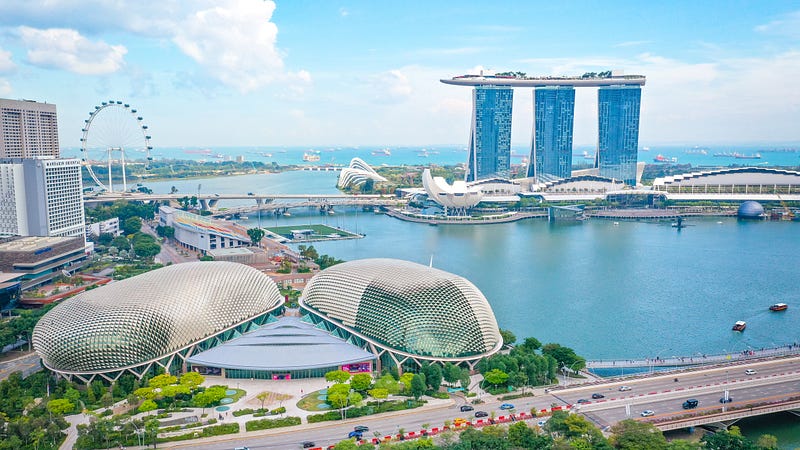
Photo by Meriç Dağlı on Unsplash


No Fees on USDC

The move was announced by way of a blog post published to the company’s website on Tuesday. The expansion entails the introduction of fee-less purchases of the USDC stablecoin for users who buy it with the Singaporean dollar (SGD). Furthermore, it is enabling Singaporean customers to earn rewards on the USDC that they hold on the platform. USDC trading pairs are being added that will allow users to trade USDC directly with over two hundred digital assets.


Taking staking overseas

Additionally, Coinbase Global is rolling out staking to the Singaporean market. Users will be empowered with the ability to stake the following digital assets: ETH, SOL, ADA, ATOM, and XTZ.

It’s interesting that Coinbase feels enabled in rolling out a digital asset staking service in this overseas market. In March of this year, the company received a Wells Notice — a formal notice informing the recipient that there are firm plans to bring enforcement actions against it — from the Securities and Exchange Commission (SEC) in the United States. The notice was sent in relation to digital assets covered under Coinbase’s staking product offering, Coinbase Earn.

In highlighting the issue, the company bemoaned the fact that the SEC had gone down the route of issuing a Wells Notice without it expressing a single specific concern about any specific digital asset offered by the platform in advance of taking the action.


Global strategy

Coinbase Founder and CEO Brian Armstrong has been outspoken in criticizing the regulatory approach to crypto in the United States. He expressed that at the time of having received the Wells Notice earlier this year, and again last week, when he and key Coinbase executives visited Abu Dhabi and Dubai in the United Arab Emirates.

On the day of SEC Chair Gary Gensler’s appearance before the House Financial Services Committee on Capitol Hill in Washington, D.C. a few weeks ago, Armstrong signaled that unless there was a more accommodating regulatory approach taken to crypto in the US, Coinbase would increasingly be looking to expand operations overseas.

A short time later, it emerged that the company had obtained a license to trade in Bermuda. At last week’s Dubai Fintech Summit, Armstrong applauded the regulatory approach taken by the UAE and indicated that the company is interested in opening a base in Abu Dhabi.


Positive survey results

Against this background, it’s not surprising to hear that Coinbase has expanded its service offering in Singapore, another aspiring global hub for crypto business. As part of reviewing and updating its business offering in the city state, Coinbase carried out a survey of prospective customers in Singapore. It found that 25% of Singaporeans consider crypto as the future of finance, on a par with findings in the US, and higher than the 17% reported in the UK.

Among its other findings, security concerns and price volatility of digital assets are still a barrier to entry for many. Of those who are already crypto-native, they tend to trade higher trade amounts, and with greater frequency, if from higher income backgrounds.


More to Read
View All
Web3 & Enterprise·

Nov 03, 2023

SK Securities introduces fractional investment service with three partners

SK Securities introduces fractional investment service with three partnersSK Securities, a major South Korean securities firm, announced on Friday (local time) that it has launched a service aimed at enabling fractional investments.Photo by Mathieu Stern on UnsplashReal estate, artworks and luxury goodsThis service involves three fractional investment companies: real estate platform Funble, online art auction house Seoul Auction Blue and luxury goods platform Treasurer.This offering represents the first phase of the fractional investment alliance, delivering a wide array of investment insights from these platforms. Funble presents details on housing subscriptions, special housing supplies and key real estate market indicators. Seoul Auction Blue provides analyses of the art market along with information on individual artworks. Additionally, Treasurer offers insights into an assortment of luxury collectibles, including fine wines. Customers of SK Securities can easily access this service through the company’s mobile trading system called Frequency 3.0.Second phase in H1 2024As part of the second phase, SK Securities is developing an API-integrated system designed to link with assets on these fractional investment platforms. This system is slated for launch in the first half of the upcoming year.An SK Securities spokesperson explained that the firm has rolled out this novel service to guide its clients through the emerging arena of fractional investments, while also enriching their investment options. Beginning with this offering, SK Securities aims to broaden its collaborative efforts with fractional investment entities. Furthermore, the firm is committed to advancing the security token ecosystem, which will involve channeling investments into blockchain startups and participating in security token consortiums.On a related note, SK Securities inked a memorandum of understanding (MOU) with Woori Bank and Samsung Securities in September, targeting the development of business models for security tokens within the bounds of regulatory compliance.

news
Policy & Regulation·

Apr 20, 2023

Do Kwon Loses Fight to Conceal Singapore Records

Do Kwon Loses Fight to Conceal Singapore RecordsDo Kwon, the founder of Terraform Labs has failed in his attempt to deny the United States’ Securities and Exchange Commission (SEC) from accessing company records in Singapore.©Pexels/George BeckerIn February, the SEC filed a complaint against Terraform Labs and its founder in a US court. The move followed an investigation that the agency had carried out into the collapse of a number of digital assets established by the company. The lawsuit claims that both the company and Do Kwon had engaged in fraud, together with the sale of unregistered securities to US citizens.Jurisdictional challengeLawyers for Do Kwon had claimed that in trying to access documents related to the Singapore-domiciled company, the SEC was acting far beyond its jurisdiction. According to court filings, his defense team argued that Do Kwon is a Singapore resident while Terraform Labs is a Singapore-based company that operates on a global basis and not specifically in the United States.The filing pointed to the fact that the Terraform Labs CEO had “limited contact with the US.” “Most of the company’s business is essentially global, and it’s not specifically aimed at the United States,” it stated.His lawyers had filed a request for the SEC to withdraw its documentation request. In a recent hearing, US District Judge Jed Rokoff turned down Terraform’s request. The documents are understood to be held by the Monetary Authority of Singapore (MAS) although the specific nature of the documentation sought remains unclear.The SEC claims that in founding the Terra US dollar stablecoin (TUSD) and associated cryptocurrency LUNA, Terraform Labs and Do Kwon were responsible for wiping out more than $40 billion dollars in value following their collapse. The Luna Foundation Guard (LFG), which was established to provide funds to keep the TUSD stablecoin at a $1 value, is another entity that the SEC intends to access documents from with the court’s permission. Singaporean police had stated last month that they had launched an investigation into the collapse of the TUSD stablecoin.Meanwhile, both the South Korean and US authorities are seeking the extradition of Do Kwon to face related charges. He was arrested last month in the southeastern European country of Montenegro where he was charged with having used forged documentation to enter the country. Although he had denied it on social media, in effect Do Kwon had been on the run from the reach of South Korean authorities over the course of a number of months, spending a portion of that time in Montenegro.Asset huntAn investigation by authorities in South Korea in recent weeks revealed that they were unable to find any assets held in the country owned by the Terraform Labs founder. The trail in chasing down any such assets has led to the United States. It is understood that Do Kwon bought real estate in the United States under his mother’s name. This is a common tactic for those who attempt to evade future confiscation of assets.Earlier this week, South Korean prosecutors confirmed that they are investigating a transfer of funds by Do Kwon to a leading law firm based in Seoul.

news
Web3 & Enterprise·

Dec 12, 2023

SBI and Saudi Aramco to explore digital asset business partnerships

SBI and Saudi Aramco to explore digital asset business partnershipsJapanese financial services conglomerate SBI and Saudi Arabia’s state-controlled energy giant Saudi Aramco have jointly announced their exploration of potential collaboration in the realms of digital assets and semiconductors.Photo by Chris Liverani on UnsplashDigital asset portfolio co-investingThe partnership, which was publicly disclosed last week, aims to delve into co-investing in each other’s digital asset portfolios. Such an arrangement will leverage SBI’s substantial holdings and the formidable position of Aramco as the world’s second-largest company by revenue, boasting a staggering $604 billion figure. The partnership will mark a strategic alliance that goes beyond geographical boundaries, underscoring the global impact of digital asset investments.The collaboration between SBI and Aramco extends beyond mere investment, with SBI actively seeking to identify Japanese digital asset startups keen on expanding their operations into Saudi Arabia. The joint effort aims to provide comprehensive support to these startups, facilitating their integration into the Saudi market and contributing to the growth of the digital economy.SBI Middle EastIn addition to this venture, SBI is set to establish “SBI Middle East” in Riyadh, serving as a central hub for its operations in the Middle East. This move aligns with SBI’s recent announcement of a $100 million joint fund with Standard Chartered, based in Dubai, solidifying its commitment to fostering financial partnerships in the region.When contemplating cryptocurrency activities in the Middle East, Saudi Arabia might not be the first destination that comes to mind, given Turkey’s significant crypto adoption rate and the UAE’s well-established crypto regulatory authorities, such as Dubai’s VARA and Abu Dhabi’s ADGM.However, Chainalysis data reveals that Saudi crypto activity is steadily gaining ground, experiencing the most significant year-on-year growth (12%) to June 2023. Additionally, the country’s Vision 2030 initiative involves efforts to diversify its economy. With that, blockchain and Web3 are being embraced.TokenizationWhile lacking a formal crypto regulatory regime, recent reports suggest that Saudi regulators are warming up to the idea, indicating a shift in approach. A recent collaboration has emerged between the central banks of Saudi Arabia and Hong Kong which will explore tokenization and payments infrastructure.It is noteworthy that both SBI and Aramco explicitly referred to “digital assets” in their collaboration, avoiding the mention of cryptocurrencies. This emphasis raises the possibility that the focus might extend to tokenization, an area where SBI has a robust presence, notably through the establishment of the Osaka Digital Exchange (ODX), set to commence trading tokenized securities later this month.As part of its digital asset investments, Saudi Aramco has previously engaged in blockchain initiatives, including investments in VAKT, a post-trade solution for the oil sector. Additionally last year Aramco invested in blockchain startup Data Gumbo, which utilizes blockchain in order to bring about operational efficiencies. The collaboration extends to the approval of electronic bill of lading (eBL) providers like TradeGo.In February, Aramco signed an agreement with droppGroup to build out a range of Web3 technologies. Furthermore, Aramco’s investments in companies like Red Date Technologies and IR4LAB underscore its interest in developing blockchain-based services, including document and supply chain solutions.

news
Loading