Top

China to Pay State Employees in Digital Yuan

Policy & Regulation·April 25, 2023, 2:42 AM

China is making its biggest push yet to facilitate greater use of its central bank digital currency (CBDC), the digital yuan (e-CNY).
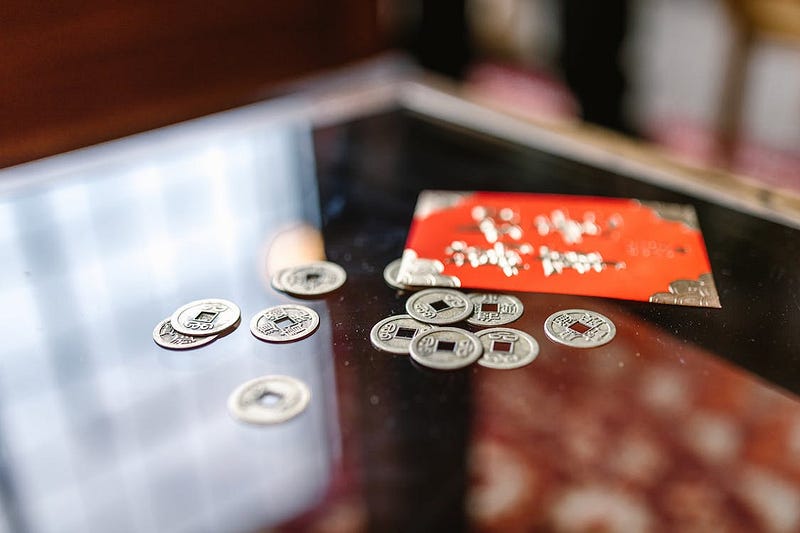
Chinese red envelope with coins
©Pexels/RODNAE Productions

The eastern city of Changshu is gearing up to commence paying state employees in the city in e-CNY. According to an announcement made by the city’s finance bureau on Sunday, the civil servants will start to receive e-CNY as payment in May. The measure will also impact journalists working for state media, medical staff, technicians and schoolteachers.


Advancing a cashless society

Through a proliferation in the use of digital money such as that offered via WeChat Pay and AliPay, China is already well on its way towards being a cashless society. However, this latest move with the e-CNY is another major step in that direction.

In a separate announcement on Sunday, the administrators of the city of Xuzhou, which like Changshu is also located within Jiangsu province, said that Xuzhou is in the process of publishing a pilot scheme which will set out a means for promoting China’s e-CNY digital currency. Meanwhile another Jiangsu province city, Suzhou, was one of the first locations in China to run a digital yuan pilot scheme in April 2020.

Previously local government authorities in cities like Shenzhen and Beijing have experimented with using the currency, offering free digital yuan to citizens to spend, in an effort to popularize the digital currency.

Changshu had already been using the currency for the best part of a year to make overtime payments to 4,900 state enterprise employees. Additionally, the city administrators had introduced it to pay subsidies, including payments to tech companies, payments related to housing and transport for local government workers. While there’s every likelihood that this latest measure could be applied on a province-wide basis, there has as yet been no direct confirmation of such an eventuality.


Privacy concerns

The Chinese government maintains that further introduction of the e-CNY will lead to an improvement for citizens in terms of privacy. Beijing maintains that the large tech platforms like WeChat Pay and AliPay will have no access to the transaction data of individuals and companies. However, that data will find itself directly in the hands of the Chinese government. Given the totalitarian nature of governance in China, it’s hard to imagine how that could be a positive outcome for Chinese society.


International currency

Originally known as DCEP, work on the digital currency began in China in 2014. The Chinese are among a growing list of countries that are understood to be unhappy with the need to use US dollars for international trade given that the dollar is the global reserve currency.

That discontent has grown further as a direct response to greater use of sanctions by the United States, and particularly the seizure of Russian sovereign funds held in dollars. Furthermore, the weaponization of the SWIFT payments system exemplified through the exclusion of countries like Russia and Iran is also believed to have been a catalyst for greater development of the e-CNY.

More to Read
View All
Web3 & Enterprise·

Jan 23, 2024

NEOPIN to launch bridge platform for Finschia, Ethereum and Klaytn networks

Centralized decentralized finance (CeDeFi) protocol NEOPIN is gearing up to launch NEOPIN Bridge, a platform designed to bridge the Finschia network with Ethereum Virtual Machine-based (EVM) networks like Ethereum and Klaytn. According to an official announcement via Medium on Tuesday (KST), the service will be launched by the end of February.Photo by Shubham's Web3 on UnsplashLinking ecosystemsEver since its establishment of an official partnership with the Finschia Foundation last month, NEOPIN has been developing Finschia’s first EVM-compatible bridge. The project is intended to facilitate the process of exchanging cryptocurrencies for users on the Finschia, Ethereum and Klaytn networks. This will enhance the development and liquidity of the Finschia and Klaytn ecosystems through the integration of Ethereum-based stablecoins.  Currently, NEOPIN’s DeFi protocols are accessible only through the NEOPIN Wallet. But with NEOPIN Bridge, user accessibility and convenience will be enhanced through provided support for various wallets like MetaMask, Kaikas, DOSI Vault and more. New services will also be implemented, including token swaps for users to transfer the converted Finschia tokens (FNSA) through the bridge. NEOPIN is the only DeFi protocol that simultaneously supports both the Finschia and Klaytn mainnets, who recently announced a joint proposal for the Dragon DeFi Initiative – a project to build a DeFi ecosystem active on both the Finschia and Klaytn mainnets. NEOPIN’s strengthsWith a record of zero incidents including stake slashing since 2018, along with a 99.99999% block generation rate, the protocol touts a clean track record in node validation across multiple blockchains, emphasizing its dedication to trust and stability. “NEOPIN is recognized for its robust security and reliability, serving as a role model for the Abu Dhabi DeFi regulatory framework. The launch of our self-developed NEOPIN Bridge is a significant stride towards encouraging the growth of the Finschia and Klaytn ecosystems,” said Ethan Kim, CEO of NEOPIN.

news
Web3 & Enterprise·

Dec 18, 2023

NEOPIN and Finschia Foundation to jointly launch Finschia’s first decentralized exchange

NEOPIN and Finschia Foundation to jointly launch Finschia’s first decentralized exchangeCentralized decentralized finance (CeDeFi) protocol NEOPIN and blockchain developer Finschia Foundation have teamed up to launch Finschia Network Swap (FNSwap) — the first automated market maker (AMM) decentralized exchange on Finschia’s public blockchain — in the first quarter of next year, according to an announcement on Finschia’s official website last Friday (KST).Photo by Chris Liverani on UnsplashRevolutionizing DeFiNEOPIN has taken over the development of FNSwap, which will employ a pricing algorithm as an AMM decentralized exchange to set the prices of assets, thus increasing liquidity in liquidity pools. The platform will support crypto deposits, including those made in FNSA and NPT — Finschia and NEOPIN’s respective governance tokens — along with other stablecoins. The list of supported cryptocurrencies will be expanded later on as the mainnet grows, Finschia said.“As Finschia’s first decentralized exchange, Finschia Network Swap is expected to make it more convenient for many users to use crypto services,” said Kim Yong-gi, CEO of NEOPIN. “We plan to actively expand the number of cryptocurrencies supported on the platform in line with the expansion of the Finschia ecosystem.”Ecosystem expansionFNSwap will also be centered around its community of users, providing lucrative DeFi products and incentives like token swapping, staking and rewards, thus establishing a secure and convenient blockchain ecosystem.The two firms committed to exploring other endeavors as well, such as discovering promising Web3 projects through events like hackathons; facilitating interaction between their respective partner firms; and conducting joint promotional campaigns to expand the Finschia ecosystem.“We are pleased to work with NEOPIN to launch the first decentralized exchange of the Finschia ecosystem,” said Ko Young-soo, Chairman of the Finschia Foundation. “We will consistently provide the technical support that NEOPIN needs to successfully launch the Finschia Network Swap.”

news
Web3 & Enterprise·

Sep 07, 2023

Mirae Asset Securities Expands Security Token Group with Media Collaborators

Mirae Asset Securities Expands Security Token Group with Media CollaboratorsSouth Korean securities firm Mirae Asset Securities announced yesterday the expansion of its security token working group. This development includes the addition of two new media-related companies to the group: Studio Genius, a content production house, and Solaire Partners, a venture capital firm with a specific focus on the media industry. Mirae has chosen to collaborate with these companies to jointly develop security token products centered around Korean films and TV series.Photo by Timothy Ries on UnsplashSynergy between Korean content and financeThe Korean securities company claims that since the Financial Services Commission unveiled regulatory guidelines for security tokens in February, it increased focus on exploring the synergy between Korean content and finance. In support of this, data from the Korea Creative Content Agency indicates that as of 2022, the Korean content market stands as the world’s seventh-largest, experiencing an average annual growth rate of 11%.Studio Genius, established by Yang Woo-suk, the director behind the box office success “The Attorney,” is currently in the process of producing a TV series with a global audience in mind.Meanwhile, Solaire Partners was a key investor in the critically acclaimed movie “Parasite.” This investment company, founded in 2017, is led by Choi Pyung-ho, a seasoned expert in content production. Prior to founding Solaire Partners, Choi held the position at CJ Entertainment (now CJ ENM) as head of its film business.Fractional investment and blockchain techOther participants who are newly joining the group include Treasurer, a luxury goods fractional investment platform, as well as Coinplug and Zkrypto, both technology companies. In collaboration with Treasurer, Mirae intends to discuss the valuation and commercialization of luxury goods, which hold substantial investment potential. Subsequently, they plan to explore various avenues for integrating security tokens into their business strategies.Coinplug is the first company in Korea to commercialize blockchain-based certificates for the financial sector. Positioned as a Web3 technology company, Coinplug boasts a diverse portfolio of blockchain technologies, including decentralized identity (DID), mainnets, wallets, decentralized applications (dApps), and non-fungible tokens (NFTs).Zkrypto stands as a prominent leader in South Korea within the realm of zero-knowledge (ZK) proof technology. This distinction is underscored by its product, which received an innovation award at CES in Las Vegas earlier this year. Mirae holds the belief that ZK-proof technology will play a pivotal role in facilitating enhanced privacy protection and accelerated transaction speeds for security tokens.Another collaborative endeavorIn addition to the aforementioned working group, Mirae is running the Next Finance Initiative, a consortium with the primary goal of broadening the security token ecosystem. Partners in this consortium are the two notable entities: SK Telecom and Hana Financial Group. Mirae will strive to further grow and enhance the reach of this consortium.

news
Loading