Top

Report: Can Bitcoin Replace Gold As a Safe Asset?

Markets·April 24, 2023, 9:07 AM

In light of the substantial increase in Bitcoin (BTC) prices this year, a report from KB Financial Group in South Korea examined the potential for BTC to replace gold as a safe asset.
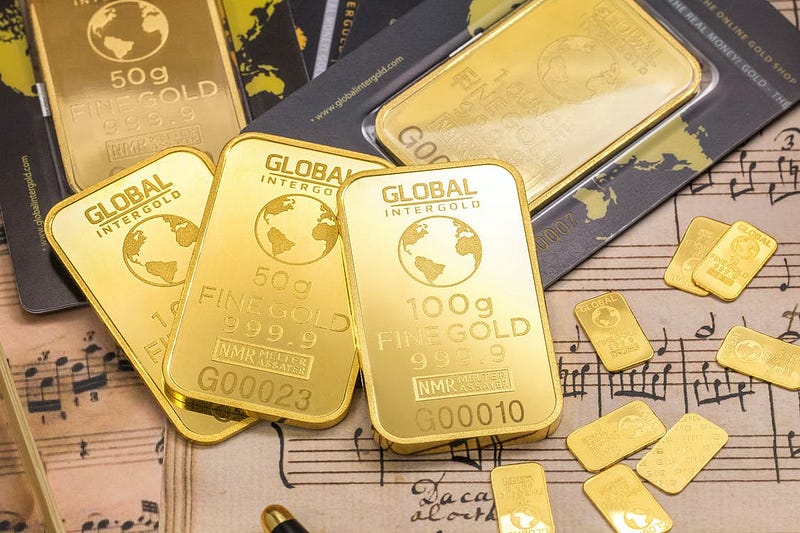
gold slots
©Pexels/Michael Steinberg

The study delves into the factors behind the recent BTC price surge and emphasizes the need for caution when considering BTC as an alternative to traditional safe assets.


3 drivers behind BTC surge

From January 1 to March 31 this year, BTC experienced an impressive return of 71%. This surge can be attributed to three main factors: an anticipated increase in liquidity due to market expectations of unchanged or falling interest rates; central banks supplying liquidity to mitigate risks in the traditional banking system; and concerns over the potential delisting of cryptocurrencies should the US court’s decision on the Ripple-SEC case classify XRP, Ripple’s native token, as securities, prompting investors to shift their focus to BTC.

The report suggests that the current BTC boom is more likely a result of short-term arbitrages and social conformity, given the greater information asymmetry in the crypto market, which lacks the disclosure system present in traditional stock markets.


Persisting risk factors

Last month, blockchain tracker Whale Alert spotted a transfer of 11,125 BTC from an anonymous address to Binance. The primary reason for moving assets from a private address to an exchange address is to sell them, indicating that investors should keep a watchful eye on Bitcoin trading volumes, particularly for any signs of large sell-offs.

Data from the crypto data analysis platform Glassnode revealed that the percentage of the BTC supply that was active over a year ago reached an all-time high of 68% in late March. Historically, such an increase has been associated with falling BTC prices.

This year, the BTC supply is set to grow due to the US government’s liquidation of seized BTC. As detailed in a March 31 Cointelegraph article, the US government seized 51,352 BTC in a case related to Ross Ulbricht, the creator of the online black market Silk Road. The government has already sold 9,861 BTC, with the remaining amount expected to be liquidated in four additional portions throughout the year.

Binance, the world’s largest crypto exchange by trading volume, has been struggling to find banks in the US to store client funds after crypto-friendly banks Silvergate and Signature closed their doors.


Need for caution

Although various media sources often portray BTC as a safe asset, the report advises caution in accepting these claims. Although some liken BTC to “digital gold,” the two assets share little in common beyond their finite and scarce nature. In fact, gold and BTC diverge significantly in terms of social consensus, intrinsic value, price volatility, and investor protection.

Gold serves as a highly liquid asset with applications in both jewelry and industrial goods, in addition to its role as an investment vehicle. In contrast, BTC’s intrinsic value is still debatable. The price volatility of BTC is also a concern, as evidenced by its 71% spike in the first quarter of 2023, compared to gold’s modest 8% increase. Additionally, gold investment products are regulated by law, whereas BTC is not. The report thus recommends treating BTC as a high-risk product and incorporating it into a diverse investment portfolio.

It is worth noting that since the outbreak of the COVID-19 pandemic, the crypto market has demonstrated a stronger correlation with the global stock market in response to negative signals. This trend can be partially attributed to the growing presence of institutional investors in the crypto market, who often sell risky assets first to secure liquidity in the face of unexpected shocks.


More to Read
View All
Policy & Regulation·

Oct 24, 2023

Singapore High Court Embraces NFTs for Financial Investigations

Singapore High Court Embraces NFTs for Financial InvestigationsA recent decision by the Singapore High Court has seen it embrace non-fungible tokens (NFTs) in financial investigations. Financial investigation firm Intelligent Sanctuary, also known as iSanctuary, has been granted permission to attach NFTs containing legal documents to cold wallets linked to a hacking incident.This innovative approach, similar to the one used in Italy and the United States to deliver court summonses recently, signals a new departure in the application of NFT technology in the legal and financial world.Photo by Choong Deng Xiang on UnsplashMoving towards tokenized legal ordersLondon-based iSanctuary set out details of the court decision in a blog post published to its website recently. A pivotal moment in this scenario was the court’s issuance of a global freezing order encapsulated within soulbound NFTs, securely linked to the specified wallets. Soulbound NFTs are special types of NFTs which are tied to a user’s account. They cannot be transferred or traded.Although these NFTs do not halt transactions, they serve as powerful deterrents, notifying counterparties and exchanges about the wallets’ dubious past involvement in a hacking event.Monitoring fund movementsFurthermore, iSanctuary has unveiled an ingenious strategy to actively monitor funds leaving these wallets through the NFTs. This innovative method ensures a permanent and unbreakable connection between the NFTs and the wallets.iSanctuary recounted on its website that it was employed by a businessperson who had lost $3 million in crypto assets and was able to track the stolen funds successfully. Their method, which combines both on-chain and off-chain evidence, was presented by an iSanctuary senior investigator to the Singapore High Court. This led to the issuance of a worldwide injunction.iSanctuary’s financial and crypto investigators identified a series of cold wallets holding the proceeds of the crime, and the court approved their use of NFTs for service delivery.Mintable collaborationiSanctuary accredited Singaporean NFT marketplace Mintable as the creator of the NFTs. As reported by local news media outlet The Straits Times last week, this case revolved around a stolen private key and the alleged involvement of Singapore-based crypto exchanges in laundering the stolen assets. The fraudsters, purportedly from Singapore, are alleged to have orchestrated this saga that spans countries from Singapore to Spain, Ireland, Britain, and other European territories.Taking to X (formerly Twitter) to comment on the saga, Mintable founder Zach Burks stated:”Happy to help clean up the crypto space and move the NFT ecosystem into a realm of utility and away from the speculation of jpegs!”In a subsequent post, Burks highlighted further NFT-related innovation when pointing to a central bank digital currency (CBDC) pilot program led by Mastercard that implicated the use of NFTs to stamp out fraud. Mintable supported that particular use of the technology within that project.iSanctuary’s founder, Jonathan Benton, emphasized the impact of the recent initiative, calling it a “game changer.” The approach enables swift action, allowing for the identification of illicit asset holders and expediting the issuance of civil or criminal orders, even red flags, within hours if necessary. It also demonstrates that NFTs can be put to good use, above and beyond speculative trading.

news
Policy & Regulation·

Apr 01, 2025

Japan to implement crypto insider trading restrictions

According to a report published on March 31 by Nikkei, a Tokyo-based financial news outlet, the Japanese authorities are gearing up to categorize digital assets as financial products, while in the process broadening the scope of insider trading restrictions. While the publication didn’t cite a particular source, it reported that the Japanese Financial Services Agency (FSA) is expected to file a draft amendment related to the existing Financial Instruments and Exchange Act in 2026.Photo by M.S. Meeuwesen on UnsplashFrom payment to investment productCurrently, Japan’s Payment Services Act categorizes crypto assets as a means of settlement. That categorization looks at these assets from the perspective of a payment tool rather than considering them as investment products. The move is understood to be part of a broader effort to copper-fasten crypto sector oversight. Earlier this month, the Japanese cabinet approved a proposal that seeks to amend the Payment Services Act.  At the time, it had been suggested that the amendment would look to exclude crypto assets from being classified as securities, while also bringing about a reduction in the capital gains tax rate as it is applied to digital assets. It’s likely that crypto assets will find themselves in a distinct category, apart from securities like stocks and bonds. Crypto adoptionActivity related to crypto assets has been growing in Japan. 7.34 million active accounts were found to be responsible for crypto transactions in Japan in January. That amounts to a tripling in such crypto transaction activity over the course of five years. Japan enjoyed greater adoption at a very early stage in the global development of crypto. However, following the Mt. Gox crypto exchange collapse in 2014, which at the time accounted for the loss of 7% of Bitcoin’s supply, regulators responded by clamping down on the sector.  That situation led to greater investor protection for Japanese investors but it presented as a difficulty for Japan-based exchanges to compete globally with other exchange businesses overseas. A conservative stance taken by the FSA has also held back crypto exchange-traded fund (ETF) approval and adoption. Bitcoin ETFs were approved in the United States over a year ago. Earlier this month, Astar Network founder Sota Watanabe outlined that the current ruling party in Japan plans to remove crypto assets from a securities classification, alongside other changes which could potentially lead to the approval of crypto ETFs. The Liberal Democratic Party has also put forward crypto tax reforms that, if implemented, would see a 20% tax rate brought into effect where capital gains on digital assets are concerned.The finer detail with regard to the nature of insider trading restrictions as they will be applied to crypto assets has yet to be revealed. Nikkei speculated that such restrictions would likely be similar to those applied to conventional financial products. Last week, the Asia Web3 Alliance Japan, a crypto advocacy group, put forward a proposal to the U.S. Securities and Exchange Commission (SEC) that, if implemented, would see collaboration between the U.S. regulator and Japan’s FSA, its central bank and the Ministry of Economy, Trade and Industry. The objective of the proposal is to bring about cross-border regulatory clarity related to the further development of the Web3 ecosystem in both Japan and the U.S.

news
Policy & Regulation·

Jun 29, 2023

Incheon Empowers Korean Blockchain Startups with Binance and Undefined Labs as Accelerator…

Incheon Empowers Korean Blockchain Startups with Binance and Undefined Labs as Accelerator OperatorsIncheon Technopark (ITP), a public organization dedicated to promoting startup growth in Incheon, South Korea, has revealed the selection of two accelerator program operators to support ten blockchain ventures. This joint effort between ITP and Incheon Metropolitan City aims to nurture blockchain startups and establish Incheon as a thriving blockchain hub.Photo by Shubham Dhage on UnsplashTwo operatorsA consortium consisting of Web3 gaming studio Ret Games, on-chain risk rating solution developer Undefined Labs, and global cryptocurrency exchange Binance will join forces as a single operator. Venture capital firm Nanuhm Angels will participate as the other operator. Each blockchain venture enrolled in the accelerator program will receive support worth 20 million KRW ($15,000) from one of the two accelerators. The application window will run from June 28 to July 21.Support contentUndefined Labs will provide comprehensive insights into the blockchain industry, covering technology, market trends, and use cases. Binance will offer consultations on business modeling and marketing strategies. Ret Games will share its expertise in developing blockchain services. Meanwhile, Nanuhm Angels will enable participants to test their business models by granting them access to Rotonda’s launchpad. Rotonda is a subsidiary of the Korean crypto exchange Bithumb and operates the Web3 Burrito Wallet.In a recent tweet, Jo Dong-hyeon, the founder of Undefined Labs, expressed his enthusiasm for assisting other companies in entering the blockchain industry.

news
Loading