Top

Korea’s FSS Seeks to Protect Investors from Crypto Exploit Losses

Policy & Regulation·April 21, 2023, 5:38 AM

Lee Bokhyun, Governor of the Korean Financial Supervisory Service, said the agency will seek to protect investors from losses resulting from cryptocurrency exchange exploits, according to Korean newspaper Donga Ilbo.
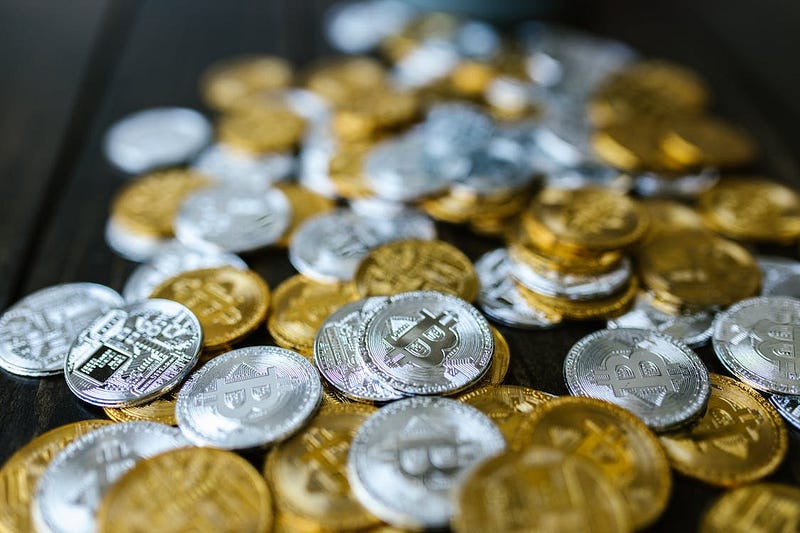
crypto coins
©Pexels/RODNAE Productions


Efforts to enact legislation

While delivering a congratulatory speech at a forum co-hosted by Donga Ilbo and its subsidiary broadcasting company Channel A on Wednesday, Lee underlined that the agency will be committed to enacting legislation that obligates crypto exchanges to be held accountable for customer asset losses caused by hacks.

He explained that amidst a continued crypto winter triggered by multiple failures, such as the collapse of the stablecoin Terra last year, cases of security vulnerabilities are subsequently occurring.


Cold wallet requirements

In response to this situation, financial authorities and the National Assembly are collaborating on legislation that would require crypto exchanges to store a portion of their custody assets in cold wallets, which are disconnected from the Internet, or face liability for damages resulting from hacks.

A February report from blockchain data platform Chainalysis showed that losses to crypto hacks last year amounted to $3.8 billion. Earlier this month, Korean crypto exchange GDAC suffered an exploit of 20 billion KRW (~$15 million).

Lee said the agency will work with the financial industry to bolster the fraud detection system and build an immediate response system that prevents uncanny transactions when abnormalities are detected. These efforts are to curb the rise in financial crimes, which followed the growing popularity of remote banking services.


Experts’ inputs

At the event held to discuss the protection of consumer information in the digital age, senior researcher Kim Gap-rae at Korea Capital Market Institute said that a law should be introduced to penalize unfair practices, such as market manipulation and use of undisclosed information, in the virtual asset market.

Lee Joo-hwan, head of the information security management division at Hana Bank, suggested the approach used in the US, which is recovering ill-gotten gains from financial crimes to compensate victims.

Kang Byung-hoon, a professor who teaches cyber security at KAIST, anticipated that the financial industry would accelerate the adoption of confidential computing, a highly secure system, to which even administrators have limited access.

More to Read
View All
Web3 & Enterprise·

Nov 23, 2023

Shinhan Card to launch NFT-based art-tech service next year

Shinhan Card to launch NFT-based art-tech service next yearSouth Korean credit card company Shinhan Card is set to launch its art-tech service dubbed “Prestige Collection” next year, according to Park Young-woong of the Digital R&D team during his presentation at the seventh annual Shinhan Future’s Lab Demo Day event held in Seoul on Wednesday.Photo by Yi Liu on UnsplashDigitizing investments in artArt-tech — a portmanteau of art and money management technology — refers to an investment method that involves purchasing or owning artworks as assets and earning profits from their sales.“We are planning to launch our art-tech service next year, which will include exhibition recommendations, NFT ticketing and NFT art warranties to work in tandem with Shinhan Card’s payment services,” Park said. He also mentioned that it is currently undergoing legal evaluations.Making event access more efficientThe inception of this upcoming release started in September, when Shinhan carried out a collaborative proof of concept (PoC) mechanism with two member startups from the ninth installment of its Future’s Lab startup acceleration program, Art Map and SnapTag.Art Map is an art curation service put together by a team of database experts, software developers, artists, curators and designers that gathers metadata based on users’ preferences to recommend exhibitions and other art-related events for them to enjoy. On the other hand, SnapTag offers a variety of services based on its patented invisible watermark technology dubbed LAB Code. LAB Code is able to create an encrypted code by subtly converting image pixels of items like product packages, photos and illustrations and applying those files to printing or production processes without damaging or changing the original image.Last month, Art Map and SnapTag used their respective technologies to work with Shinhan Card to issue and verify blockchain-based NFT tickets for the Sneakers Unboxed special exhibition held at the Sejong Museum of Art. Shinhan was responsible for minting NFTs as tickets for exhibitions promoted on Art Map’s platform, which could be issued and stored on the My NFT section on Shinhan’s mobile app ShinhanpLay. Visitors would then be able to use SnapTag’s digital check-in service Keefo to enter the exhibition.This NFT ticketing system was proven to be a time-efficient and secure alternative to traditional ticketing procedures, which come with several inconveniences like long wait lines, delayed entry, illegal ticket resells and monopolization of customer data by major ticketing conglomerates. This is especially true for music performances by famous artists, where competition during ticket sales can become intense.“Our NFT ticketing service will evolve into an art-tech management service that focuses on art,” Park explained. “Prestige Collection will leverage Art Map’s art concierge platform, SnapTag’s LAB Code technology and Shinhan Card’s My NFT service.”

news
Markets·

Mar 13, 2024

Korean banks see over $1.5B outflow in funds to crypto market

Recently, the top five Korean banks have seen a significant outflow of funds in their demand deposits – worth about KRW 2 trillion ($1.52 billion) – to crypto markets as local investors are rushing to withdraw their money from banks to invest in the crypto and stock markets. The recent surge of Bitcoin to KRW 100 million prompted the funds’ outflow, local media Etoday reported. This is a substantial turn from just a week ago, when these banks saw a KRW 23.5 trillion increase in their demand deposits just in a month.  The previous rise in demand deposits at banks, however, was also driven by local investors who used these accounts as a “station” to temporarily store their money for future crypto investments. These accounts are highly liquid, since users can deposit or withdraw funds at any time without incurring penalties from banks.Photo by Emile-Victor Portenart on UnsplashBank deposits flowing into crypto Data from the five banks –  KB Kookmin Bank, Shinhan Bank, Hana Bank, Woori Bank and NH Nonghyup Bank – show that their combined demand deposits totaled KRW 612.4 trillion on Friday, down KRW 2.2 trillion from late last month.  The crypto investing trend has prompted investors to withdraw their funds not only from demand deposit accounts, but also from fixed deposit and installment savings accounts. During the same period, the five banks’ fixed deposits saw a KRW 5.1 trillion decline from KRW 886.2 trillion to KRW 881 trillion, with installment savings decreasing by KRW 2.5 trillion, from KRW 33.2 trillion to KRW 30.6 trillion.  In particular, NH Nonghyup Bank, which offers real-name accounts to the crypto exchange Bithumb, has witnessed a decline of over KRW 2 trillion in its demand deposits over the past week. Shinhan Bank also reported an increase in dealing with more crypto assets.  Bullish crypto and stock market With Bitcoin prices hitting a new high, the U.K. bank Standard Chartered forecasts that Bitcoin could eventually reach $200,000 by 2025. The excitement around crypto has boosted the amount of cryptocurrencies traded against the Korean won across the top five crypto exchanges in Korea, reaching KRW 78 trillion.  Korean stock markets are also signaling a bullish sentiment, with the amount of investor deposits exceeding KRW 53 trillion this month. Investor deposits refer to customer deposits at securities companies saved for investment purposes or those left unclaimed after selling stocks.  Declining interest rates Meanwhile, local savings products with over 4% interest rates are no longer to be seen. According to the Korea Federation of Banks, a one-year savings product with the highest interest rate among the top five local banks offers an annual rate of 3.55%.  Online-only banks, which typically offer relatively higher rates than other traditional banks, are rapidly lowering rates on their saving products. The highest annual rate for Kakao Bank’s fixed deposits products stands at 3.5%, down by 0.1 to 0.2 percentage points depending on their maturity.  Kbank has also decreased rates for fixed deposits by 0.05 percentage points, lowering the rate for its flagship fixed deposits product from 3.7% to 3.65%. 

news
Web3 & Enterprise·

May 23, 2023

Cake DeFi Co-Founder Launches Ordzaar Ordinals Marketplace

Cake DeFi Co-Founder Launches Ordzaar Ordinals MarketplaceU-Zyn Chua, Singaporean Co-Founder and CTO of Singapore-based Cake DeFi, has launched Ordzaar, a Bitcoin Ordinals marketplace.In a social media post on Friday, the marketplace described itself as “a decentralized & trustless marketplace for #Bitcoin Ordinals, bridging the gap between trustlessness and true decentralization.” The Ordinals protocol has been enabled due to the SegWit and Taproot upgrades to the bitcoin protocol. It’s a system for numbering satoshis, the smallest denomination of the Bitcoin cryptocurrency. The protocol assigns each satoshi with a serial number, using that number to track them across transactions.By taking this approach, each individual satoshi becomes unique, allowing additional data to be attached to them in a process called inscription. The project has hit the ground running, with its website online and a step by step guide released, instructing new users in how to buy and sell Ordinals on the marketplace.Releasing a press release to publicize the launch, the project pointed out that “the lack of a fully decentralized Ordinals marketplace [poses] a major challenge”, given a backdrop in which Bitcoin Ordinal inscriptions have surged in popularity over the course of recent weeks. Elaborating on that point, the team stated: “There is a growing need for a reliable and secure platform that allows buyers and sellers to transact in a decentralized manner, giving them complete control over their assets, this is where Ordzaar comes in.”Asia Ordinals marketplace firstOrdzaar represents the first ever Bitcoin Ordinals marketplace based within the Asian region. Alongside U-Zyn Chua, the team behind the project implicates three other seasoned crypto-natives with a wealth of experience in crypto, bitcoin, and blockchain. Cake DeFi colleague Naqib Noor assumes the role of Co-Founder and Development Lead. As well as being Co-Founder, Chua is the project’s Lead Researcher.In an effort to showcase the brand new marketplace, the Ordzaar team sponsored and participated in the Bitcoin Ordinals 2023 conference in Miami late last week, with Chua appearing as a speaker at the event. The Co-Founder told Blockhead that:“Ordinals have proven that Bitcoin is more than just a peer-to-peer payment system and has demonstrated a new, high-value use case for the longest-running cryptocurrency. As the industry continues to build and innovate, Ordinals have the potential to unlock even more value on the Bitcoin blockchain, and will lift the entire crypto ecosystem as a whole.”NFTs took on a life all of their own with a market surge, tripling in value to $250 million in 2020. While that largely Ethereum-based market has cooled somewhat since then, it nonetheless continues to broaden and establish itself. Chua believes that Bitcoin-centric Ordinals can take a large slice of that development. “Along with the explosive adoption seen in the traditional ETH NFT market, we expect to see a similar trajectory in the Ordinals space,” he explained.In a tweet published on Saturday, Crypto journalist and investment team member at Seoul-based crypto venture capital firm #Hashed, Joseph Young, referred to changing dynamics within the NFT space, with relative newcomers Blur and Tensor taking on OpenSea and Magic Eden. Not short on confidence, the Ordinals team responded, stating: “And Ordzaar will be dominating decentralized Ordinals and BRC20 trading.” The overarching crypto space continues its progression at pace, and it will be intriguing to see how Ordinals, together with new marketplaces like Ordzaar, perform as the industry trundles forward.Photo by Dmitry Demidko on Unsplash

news
Loading