Top

3AC liquidators estimate 46% recovery while BVI court freezes $1B

Policy & Regulation·December 23, 2023, 12:08 AM

The joint liquidators of the now-defunct Singaporean crypto hedge fund Three Arrows Capital (3AC) have provided creditors with an estimated 45.74% recovery rate for their claims in the bankrupt estate. Meanwhile, in parallel proceedings in the British Virgin Islands (BVI), a court has frozen $1 billion of founders’ assets.

According to The Block, the details were disclosed in a December report to creditors by joint liquidators Russell Crumpler and Christopher Farmer of Teneo, the firm appointed to oversee the liquidation of the failed business.


$1.16B in assets

As of Dec. 18, the estimated value of 3AC’s assets was reported to be $1.16 billion, while claims totaling $2.7 billion are expected to be recognized for distribution. The liquidators highlighted that settlements in litigation against various parties, including DCG, Genesis and BlockFi, increased reported assets by an estimated $292 million. It’s important to note that the BlockFi settlement is still pending approval.

A total of 154 claims, valued at $3.4 billion, were filed against the 3AC estate. The report indicates that $200 million of claims were not admitted for distribution, and $322 million in claims have either been rejected or are expected to be rejected. Additionally, $76 million in claims are currently under dispute. The report reveals that initial distributions to creditors are being planned for the first quarter of the upcoming year.


Illiquid tokens

The breakdown of assets reveals that a large majority are illiquid tokens, subject to vesting periods, comprising 82% of the total. Only 6% of the portfolio is liquid, while equity and investments account for 6.9% and 4.8% is in cash. These illiquid tokens, totaling $563 million at current prices, consist of 13 different tokens with vesting schedules unlocking assets over the next three years, reaching $200 million by the end of 2024.

To date, the liquidators have staked some of these tokens, resulting in $5.4 million in staking rewards. Liquidation efforts, including the sale of $34.5 million worth of liquid tokens and $15 million in NFTs, along with other asset sales, have generated a total of $66 million.

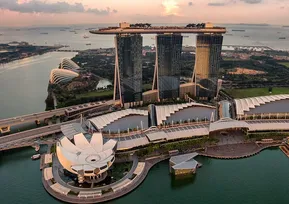
Photo by Kemp Fuller on Unsplash


Frozen assets

In a related development, Bloomberg reported on Thursday that a British Virgin Islands court has frozen assets totaling $1.1 billion belonging to 3AC co-founders Su Zhu and Kyle Davies, along with Davies’ wife Kelly Chen. The liquidators filed a claim for insolvent trading against the founders for $1.078 billion, with additional claims against Davies for $66 million and Chen for $4.6 million.

Teneo outlined the rationale behind the move in the following statement it made to Decrypt:

“The worldwide freezing order has been sought in connection with claims that are being pursued by the liquidators that allege, amongst other things, that the Founders should be held responsible for causing 3AC’s position to deteriorate by an amount that is equivalent to the value of the freezing orders sought.”

Su Zhu, who was under house arrest for the last few weeks, became free on Dec. 20. Zhu had been arrested in Singapore on Sept. 29 and sentenced to four months imprisonment, serving two-thirds of his sentence under house arrest.

Throughout the bankruptcy proceedings, legal fees have accumulated to $49.7 million while the report suggests ongoing efforts to maximize creditor recovery.

More to Read
View All
Web3 & Enterprise·

Jul 31, 2023

Strategic Shift Sees Wintermute Expand Singapore Base

Strategic Shift Sees Wintermute Expand Singapore BaseCrypto market maker Wintermute is making a strategic shift towards Asia, specifically in Singapore, following the digital asset industry’s growing interest in the region’s growth opportunities.Photo by Hu Chen on Unsplash4% of staff moving to SingaporeIn an interview with Bloomberg last week, Wintermute Co-Founder Yoann Turpin said he will move from London, where the company is currently headquartered, to Singapore in the coming months. Additionally, approximately 4% of the company’s workforce, which currently comprises around 85 staff members, will also relocate to the city-state, where Wintermute conducts its derivatives business.At the time of publication, the company was also actively recruiting for an open position in the city-state. In further publicizing Wintermute’s developing presence in Singapore, Turpin took to social media recently to invite people to meet Wintermute’s Singapore-based team in September at Token 2049 Singapore. Evgeny Gaevoy, Wintermute Co-Founder and CEO, is scheduled to appear as a speaker at the event.Turpin emphasized the company’s focus on Asia and highlighted the significance of having a co-founder based in the region to drive the business forward. The move comes as the crypto industry faces the aftermath of a crackdown in the United States, triggered by bankruptcies at platforms like FTX and Celsius Network.Exploring global opportunitiesIn response, crypto businesses are exploring opportunities in Asian markets, with countries like Singapore, Hong Kong, Japan, and the United Arab Emirates vying to attract companies while ensuring robust regulatory frameworks in the wake of the market turbulence in 2022.Although tokens like Bitcoin and Ether have partially recovered from the crash experienced last year, spot digital-asset trading volumes and volatility have remained low, indicating reduced investor engagement. That said, demand for crypto futures and options has proven to be more resilient.Possible Dubai expansionWintermute established an office in Singapore in 2021, adding to its existing base in London. Turpin also confirmed to Bloomberg that the company is weighing up the possibility of establishing a third office in Dubai as part of its expansion plans. Dubai, like Singapore and Hong Kong, has been actively trying to attract crypto businesses over the course of the past twelve months.During the 2021 crypto bull market, the company reported trading volume worth $1.5 trillion and generated $1.05 billion in revenue. However, the market maker also faced challenges during the market turmoil, including exposure to around $55 million of assets on FTX. Moreover, in September of the same year, Wintermute experienced a hack that resulted in a loss of about $160 million from its decentralized finance operations.Despite the hurdles faced in 2022, Turpin expressed confidence in the company’s resilience and stated that they do not have immediate plans to raise funds. The company just celebrated six years in business, and has executed 8.4 million OTC trades over the course of the past twelve months.By relocating key personnel and expanding its presence in Singapore and possibly Dubai, the company aims to strengthen its foothold in the Asian market and navigate the challenges and opportunities that lie ahead.

news
Policy & Regulation·

Oct 11, 2024

Dubai regulator takes action against unlicensed crypto firms

The Virtual Assets Regulatory Authority (VARA), the regulatory body which oversees the digital assets market within the emirate of Dubai in the United Arab Emirates (UAE), has taken corrective action against seven unlicensed crypto entities. Fines issuedAccording to an enforcement notice, published to the VARA website on October 8, the agency issued fines relative to a number of firms that it found were engaging in unlicensed virtual asset-related trading activity. The fines ranged from between 50,000 to 100,000 UAE dirhams (AED), equivalent to between $13,600 and $27,200 in U.S. dollars. The agency outlined that it was taking this corrective action in order to continue its enforcement efforts so as to safeguard Dubai’s virtual asset ecosystem. In its enforcement notice, the regulator did not disclose the names of the entities that have been sanctioned. The agency said that its investigations are ongoing, in partnership with local law enforcement.  A statement from the Regulatory Affairs and Enforcement division within VARA was provided, stating: “VARA will not tolerate any attempts to operate without appropriate licenses, nor will we allow unauthorized marketing of virtual asset activities. Our marketing regulations further emphasize Dubai’s commitment to ensuring transparency and always protecting stakeholder interests.”Photo by Alex Block on UnsplashCease and desist ordersIn addition to fines, VARA also issued the seven firms with cease and desist orders for breaching marketing regulations. Marketing by crypto firms is an area the regulator has been focusing on recently. Last month, VARA published a press release, outlining that it had updated its crypto regulations to specifically deal with marketing-related matters. Alongside that update, it issued a guidance document, clarifying the responsibilities of virtual asset service providers (VASPs) relative to marketing practices. A schedule of fines was provided in the case of a breach of the regulations, while the update set out a need for a mandatory disclaimer on marketing material to indicate that virtual assets are volatile and may lose their value, fully or partially. The Dubai regulator is not the first to home in on the marketing activities of crypto businesses. In the UK, the Financial Conduct Authority (FCA) enforced additional rules related to crypto marketing in late 2023. Some crypto businesses found the requirements too arduous and left the UK market as a direct consequence. Public warningIn its enforcement notice, the Dubai regulator also had a message for the trading and investing public, stating: “This public warning is VARA’s market notice to all to avoid engaging with any unlicensed firms.” The regulator added that interacting with unlicensed entities exposes both individual investors and institutions to both financial and reputational risk.  Furthermore, it warned of “potential legal consequences” for regulatory violations. “Only firms licensed by VARA are authorised to provide virtual asset services in/from Dubai, and the Authority remains steadfast in its commitment to protect consumers and investors, and to preserve market integrity,” the regulator further asserted. 

news
Policy & Regulation·

Jun 27, 2023

South Korea Launches Blockchain Project to Streamline Public Services

South Korea Launches Blockchain Project to Streamline Public ServicesThe South Korean Ministry of Science and ICT and the Korea Internet and Security Agency (KISA) have launched the 2023 blockchain application project to bolster the domestic industry and adapt to the rapidly evolving global blockchain landscape.Photo by Ping Onganankun on Unsplash$1.6 million projectAs part of the Korean government’s broader strategy to promote the blockchain industry, the project has received a budget of approximately 20.7 billion KRW ($1.6 million). The project participants are focused on exploring blockchain-based services that offer convenience to the public and have the potential to penetrate the global market. The digitization of drivers’ licenses is such a service that has been developed and has simplified the lives of Korean citizens.The project encompasses both the public and private sectors, each undertaking six programs. The public sector programs aim to explore blockchain-based services that the government can provide, while the private sector programs are dedicated to supporting the commercialization of business prototypes developed by companies.Public sector programsThe six public sector programs are the implementation of digital badges for national licenses, the development of an online voting system for residents, the establishment of a remote pension eligibility check system, the enhancement of the electronic authentication system, the streamlining of drone operation applications, and the creation of a performance tracking platform for athletes.For instance, the implementation of digital badges for national licenses will greatly streamline the process for individuals who need to present their licenses to relevant organizations as a means of verifying their credentials. Presently, license holders are required to physically visit issuers or navigate their websites to gather the necessary documentation. However, the introduction of this new technology eliminates the need for this cumbersome process.Private sector programsMeanwhile, the private sector programs focus on developing the following six platforms: the battery life authentication system for electric vehicles (EVs), the oil waste trading platform, the non-fungible token (NFT) issuer for digital identity authentication, the NFT concert ticket system, the fractional investment platform for power plants, and the corporate management planner for environmental, social, and governance (ESG) initiatives.For example, the introduction of a blockchain-based certificate system to assess the remaining life of EV batteries holds significant implications for both car insurance and the trading of used cars. Currently, the lack of comprehensive data to evaluate the exact value of EV batteries poses challenges to the efficient trade of both used cars and batteries. Establishing this certificate platform will not only promote battery recycling but also positively impact the industry as a whole.

news
Loading