Top

Buysell Standards and AGST collaborate to expand security token projects in Southeast Asia

Web3 & Enterprise·December 22, 2023, 4:02 AM

Buysell Standards, a South Korean company operating fractional investment platform Piece, is accelerating its expansion into the Southeast Asian market through a recent business collaboration.

A report from Korean news outlet Financial News indicates that the company has signed a memorandum of understanding (MOU) with AGST, a subsidiary of blockchain-focused investor Fundiant Holdings. This collaboration aims to launch security token projects within the Association of Southeast Asian Nations (ASEAN) region.
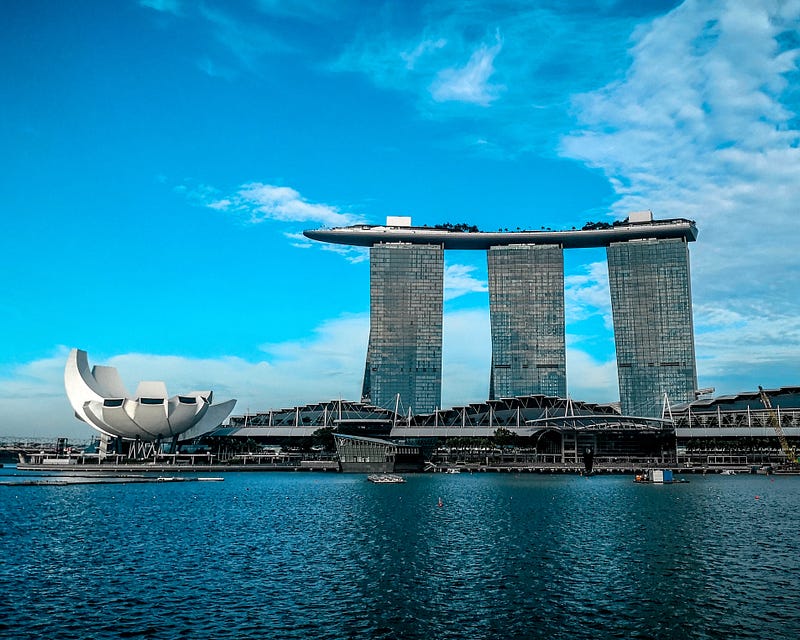
Photo by Kelvin Zyteng on Unsplash


Singapore in Q1 2024

As an asset manager in Singapore and Japan, AGST is set to play a pivotal role in the issuance and distribution of security tokens in these markets. Their strategy includes launching security token products in Singapore in the first quarter of next year. These products will be backed by assets from Buysell Standards.

The partnership between Buysell Standards and AGST is set to be multifaceted, encompassing several key areas of collaboration. Together, they will focus on developing new investment products and building the necessary infrastructure to support them. They will also focus on marketing and promotional efforts in the ASEAN region.


Anticipating regulatory exemption

Buysell Standards is among the seven companies that received approval from the South Korean Financial Services Commission to issue security tokens. The company is anticipating a regulatory exemption from the government, which would allow them to introduce fractional investment products linked to ship finance.

Buysell Standards expects that its partnership with AGST will facilitate quicker access to funding from international sources for high-quality investment products in South Korea. Meanwhile, AGST seeks to introduce a range of Korean assets to the global security token market.

Emphasizing the quick adoption of fintech by ASEAN investors and their fondness for South Korea, Shin Beom-jun, CEO of Buysell Standard, stated that the company is committed to actively promoting Korean security token products on the global investment stage.

Kim Chang-soo, Chairman of Fundiant Holdings, expressed his ambition to strengthen the Korean security token market. He observed that the market is currently in an early stage of development, leading to the undervaluation of underlying assets. He believes that introducing Korean security tokens to international markets will reciprocally aid in the expansion and maturation of the domestic market.

More to Read
View All
Policy & Regulation·

May 23, 2025

Pakistan establishes authority to regulate crypto

Pakistan’s Ministry of Finance has signed off on the establishment of the Pakistan Digital Assets Authority (PDAA), a body which will be responsible for the implementation of regulations governing blockchain and the digital assets sector. In a report published by Pakistani English-language newspaper Dawn, the media outlet outlined that the Ministry of Finance has taken this step in an effort to embrace future innovation in the finance sector.  The new agency will be responsible for monitoring the operations of digital wallet service providers, stablecoin issuers, the development firms behind decentralized finance (DeFi) protocols, crypto custodians and crypto exchange platforms. Photo by Hamid Roshaan on UnsplashFrom crypto ban to crypto regulationIn October 2022, Pakistan was removed by the Financial Action Task Force (FATF), a global money laundering and terrorist financing watchdog, from its grey list. The following year, Pakistan’s Minister of State for Finance and Revenue, Aisha Ghaus Pasha outlined that banning cryptocurrency was a condition of the country’s removal from the FATF grey list. Accordingly, the South Asian country proceeded to ban digital assets, with Ghaus Pasha declaring that crypto would “never be legalized in Pakistan.”Despite the adverse position taken previously by the authorities in Pakistan where digital assets were concerned, in 2024 a survey carried out by Chainalysis revealed that Pakistan featured strongly in terms of retail-level crypto adoption. With this latest development, Pakistan is moving forward progressively with digital assets, albeit that it is doing so while being cognizant of the current requirements demanded by FATF related to crypto. The newly-formed PDAA will act to ensure FATF-compliant innovation, while striving for economic inclusion and the adoption of digital assets in a responsible manner. Regulating to lead crypto innovation rather than catching upPakistan’s current Minister for Finance and Revenue, Muhammad Aurangzeb, said that “Pakistan must regulate not just to catch up — but to lead.” He added that through the establishment of the PDAA, a digital assets regulatory framework that protects consumers will be created. Furthermore, he claimed that such an approach would attract global investment, putting Pakistan “at the forefront of financial innovation.”Another area of focus for the PDAA will be the facilitation of the tokenization of government debt and national assets. Pakistan runs an annual average electricity surplus of 4,000 megawatts. In 2024, total electricity generation was recorded at 92,091 GWh while demand weighed in at 68,559 GWh. With that, the Pakistani authorities want the PDAA to create the correct conditions that will lead to regulated Bitcoin mining operators utilizing this energy resource. Other objectives which have been set out for the new agency include encouraging the growth of startups aimed at building blockchain-based solutions at scale, the regulation of what is estimated to be a $25 billion informal crypto market and the provision of legal clarity within the crypto sector in Pakistan for both local and international investors. This latest positive development follows the formation of the Pakistan Crypto Council (PCC) back in February. That event signaled a policy shift in Pakistan with regard to digital assets. In March PCC CEO Bilal bin Saqib said that Pakistan was done sitting on the sidelines and that the authorities now want to see Pakistan develop as a “leader in blockchain-powered finance.”

news
Web3 & Enterprise·

Oct 07, 2024

Zetrix launches product to simplify KYC for Chinese nationals

Zetrix, a layer-1 blockchain project for real-world applications, has launched an electronic Know Your Customer (KYC) verification product for Chinese nationals. The Malaysian enterprise, which is a subsidiary of digital services company My E.G. Services Berhad (MYEG), has launched ZCert. The offering is available to Chinese nationals who opt to have their digital identities published to the Xinghuo BF network, a Chinese national blockchain infrastructure network developed under the guidance of China’s Ministry of Industry and Information Technology and managed by the China Academy of Information and Communications Technology.Photo by Diego Jimenez on UnsplashFirst-of-its-kind applicationZetrix acts as an international super-node relative to the Xinghuo blockchain. In a press release published by PR Newswire on Oct. 3, the company outlined that ZCert had been launched as a first-of-its-kind application, enabling Chinese nationals “to be authenticated and verified digitally overseas, paving the way for a seamless, efficient, and secure verification process for verifiers and identity holders. ” The service simplifies the issue of identity verification for verifiers located outside of China, as a consequence of Zetrix’s integration with the Xinghuo BIF network.  Connecting to ‘China Web3’Xinghuo signed a memorandum of understanding (MoU) with Zetrix’s parent company, MYEG, to establish the international super-node back in November 2022. The tie-up was seen as an opportunity to provide access to Chinese government agencies and businesses internationally.  At the time, MYEG Managing Director and Zetrix Co-Founder Wong Thean Soon said that “with the commencement of the Xinghuo International Supernode, the rest of the world can connect and be part of the China Web 3 evolution that will promote the establishment of international communities and facilitate global trade and finance.”  On this occasion, Wong said that the new product “enables a new wave of services powered by smart contracts.” He added that KYC processes can be simplified and automated, while “user data is retained by users at all times and only critical information is shared in an encrypted manner." The company has already digitized Chinese driving licenses for the purpose of overseas verification. Furthermore, it has plans to expand its offering beyond ID verification soon. In April of this year, Zetrix and MYEG signed an MOU with MaiCapital, a Hong Kong-based virtual assets manager, with a view towards collaborating on the launch of a digital asset fund or digital asset-based exchange-traded fund (ETF). Last year Zetrix engaged in a pilot project with the Bank of China with the aim of offering supply chain financing products. On a similar theme, its parent company entered into a partnership with the Philippines Bureau of Customs (BOC) and Cargo Data Exchange Center Inc. (CDEC), also in 2023. The collaboration involved the use of Zetrix’s ZTrade product, a Web3 platform that enables digitized trade document verification. Zetrix launched its ZETRIX token in October 2023 through an initial exchange offering (IEO) facilitated by the Coinstore exchange.

news
Web3 & Enterprise·

Sep 29, 2023

Nomura Subsidiary Achieves In-Principle Approval in Abu Dhabi

Nomura Subsidiary Achieves In-Principle Approval in Abu DhabiThe digital assets subsidiary of Japanese financial services conglomerate Nomura has been granted in-principle approval by the Abu Dhabi Global Market (ADGM) to offer broker-dealer and asset/fund management services for both digital and traditional assets.Photo by Belinda Fewings on UnsplashPreliminary license to tradeThe development is a shot in the arm for Laser Digital Asset Management while serving to highlight Abu Dhabi’s growing prominence as a global center for digital assets, attracting prominent players such as Binance and Kraken.Led by CEO Jez Mohideen, Laser Digital is now on the path toward securing full financial services authorization in Abu Dhabi, subject to meeting undisclosed conditions specified in the approval. The company is enthusiastic about the ADGM’s transparent and comprehensive regulatory framework.Speaking to that, Mohideen stated: “We are thrilled to be part of their comprehensive and clear regulatory framework, which is creating a global hub for digital assets.”International free zoneThe ADGM, an international financial free zone situated in Abu Dhabi, covers nearly 15 square kilometers across two islands. It hosts a registration authority, regulatory authority, and a court system functioning under common law principles. This favorable regulatory ecosystem has been instrumental in attracting digital asset firms to establish a presence in the UAE’s capital.Laser Digital’s approval follows a series of recent cryptocurrency-related approvals in Abu Dhabi. Zodia Markets, backed by UK bank Standard Chartered, was recently granted permission to operate as a crypto broker, adding to the growing list of companies making strides in the region.Binance, one of the world’s largest cryptocurrency exchanges, received in-principle approval from the ADGM in April 2022 and subsequently obtained full financial services permission in November of the same year. Kraken, along with firms like UAE-based M2 and Bahrain-based Rain, have also received permissions to operate within the ADGM in recent years.Building on Dubai achievementLaser Digital’s approval in Abu Dhabi comes on the heels of its earlier achievement of obtaining an operating license from Dubai’s Virtual Asset Regulatory Authority (VARA). Alongside these regulatory milestones, Laser Digital introduced an institutional Bitcoin Adoption Fund in August. Despite its relatively short existence since its establishment in September 2022, the firm has made significant strides.Nomura’s engagement extends beyond Laser Digital, as it is also part of the Komainu joint venture alongside cryptocurrency firms CoinShares and Ledger. Komainu secured its operating license from Dubai’s VARA in August, contributing to the expanding community of crypto-focused businesses in the region.It is worth noting the UAE’s diversified approach to cryptocurrency regulation, offering five distinct regulatory regimes for cryptocurrencies, including the ADGM and VARA. Legal experts from White & Case have recently assessed these regulatory frameworks, highlighting the UAE’s commitment to fostering a progressive and well-regulated environment for digital assets.Nomura’s Laser Digital is well-positioned to play a pivotal role in the digital asset sector in Abu Dhabi, given that it’s leveraging the favorable regulatory environment of the ADGM and the UAE’s dedication to becoming a global digital asset hub.

news
Loading
