Top

Cronos Labs launches zkEVM chain testnet

Web3 & Enterprise·December 15, 2023, 2:04 AM

Cronos Labs, the developer behind the Cronos blockchain ecosystem, is charting a new path in the blockchain space by launching a zkEVM chain.


From Cosmos to Ethereum

The Cronos zkEVM chain is being launched in the first instance as a test network. The layer-2 blockchain will rely upon ZK Stack, the software kit developed by Matter Labs. In this way, the project will be extending its scaling roadmap from Cosmos to Ethereum. As Matter Lab’s SVP of Business and Operations, Marco Cora put it:

“When we introduced the ZK Stack, we opened up the door for anyone wanting to build on top of Ethereum to do so by deploying hyperchains. Whether you’re building a specialized Rollup or a general purpose one, hyperchains allow you to tap into Ethereum’s extensive userbase base and liquidity while preserving its robust security and decentralization.”

The journey began with the creation of the first chain in the Cronos ecosystem — a Cosmos appchain developed in collaboration with Singapore-headquartered crypto platform Crypto.com and launched in 2021. Subsequently, Cronos introduced an EVM-compatible chain in 2022, built using the Cosmos SDK. Notably, these new endeavors complement, rather than replace, the earlier established chains.
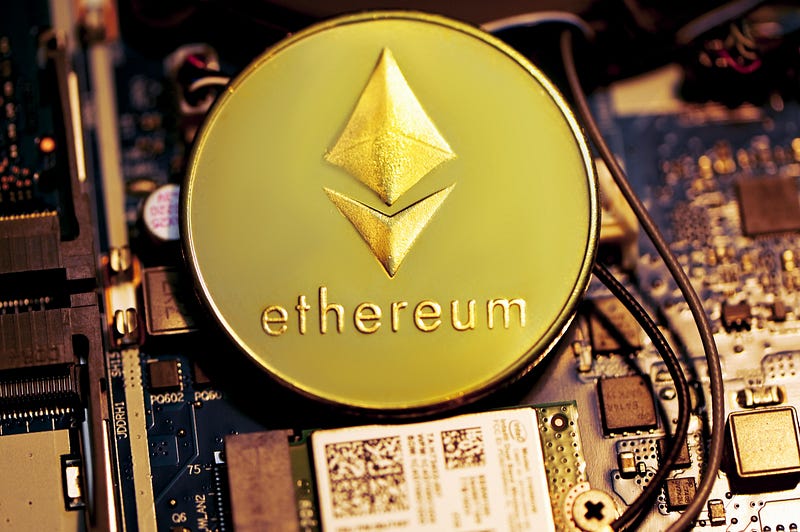
Photo by Kanchanara on Unsplash


The product of collaborative efforts

A significant development in Cronos’ evolution is the introduction of zkEVM, a result of collaborative efforts involving Cronos Labs, Matter Labs and engineering teams from stakeholders Crypto.com and existing dApp developers. The zkEVM testnet is a breakthrough, utilizing Ethereum’s Sepolia testnet and incorporating zkSync’s open-source prover, Boojum — a STARK-based zero-knowledge proof system known for its efficiency in the layer-2 rollup space, with low hardware requirements and fees.

The decision to launch a native Ethereum chain stemmed from challenges in bridging EVM chains and bridging between Cosmos and Ethereum, according to Ken Timsit, Managing Director at Cronos. Timsit emphasized the richness and robustness of the Ethereum developer ecosystem for building DeFi and NFT applications.


Native account abstraction

Hyperchains within the ZK Stack share components, including a native bridge to the Ethereum mainnet and zkSync’s trustless bridging mechanism, ensuring assets remain secured by Ethereum. The implementation of zkSync’s native account abstraction allows transaction fee payments in various cryptocurrencies, including Cronos’ native token (CRO).

Cronos’ zkEVM is anticipated to progress to the mainnet in the second quarter of 2024, marking a pivotal moment in the evolution of hyperchains.

The landscape of hyperchains is expanding, with projects like GRVT and Tradable utilizing the ZK Stack. GRVT, a derivatives exchange, and Tradable, a tech firm focused on bringing private credit on-chain, exemplify the diversity and specialization within this emerging sector. Tradable aims to establish an institutional-focused hyperchain, potentially forming a decentralized chain alongside other institutional partners.

Matter Labs views the zkSync hyperchain as a superior option compared to app-specific chains in Cosmos, emphasizing the scalability and security benefits. Hyperchains, a potential alternative to private blockchain frameworks like Hyperledger or Corda, offer technical scalability with the benefits of Ethereum. However, practical scalability remains a challenge due to cost considerations and the social coordination problem.

More to Read
View All
Web3 & Enterprise·

Jan 11, 2024

AsiaPay and BLOX explore crypto payments within Malaysian market

BLOX, the Malaysian Web3 firm, has forged a strategic partnership with AsiaPay, a payment processor and gateway solution provider in Asia, focused on crypto payments. Memorandum of understanding (MOU)According to a recently published press release, the collaboration has been formalized through a memorandum of understanding (MOU) and aims to collectively explore and develop cryptocurrency digital payment solutions tailored for the Malaysian market. As global consumers increasingly gravitate towards the most frictionless payment methods, cryptocurrencies are gaining significant traction. However, the seamless integration of cryptocurrencies into day-to-day transactions requires the support of adept payment service providers.Photo by Esmonde Yong on UnsplashStablecoin potentialDespite the burgeoning popularity of cryptocurrencies, the inherent volatility in their prices poses a considerable challenge. To address this challenge, stablecoins have emerged as a viable solution. The adoption of stablecoins has gained momentum, particularly in the business-to-business (B2B) segment, where the efficiency of blockchain-based payments and instant settlement can be harnessed without being hampered by the uncertainties of price fluctuations. It is within the area of stablecoins that BLOX can lend support, given that the entity is responsible for the first Malaysian ringgit-denominated stablecoin (MYRC). Ethan Chung, CEO and Co-Founder of BLOX, expressed enthusiasm about the partnership, stating:“I’m excited to announce our partnership with AsiaPay, enabling Malaysian merchants to effortlessly accept crypto payments without the need for technical expertise. Empowering businesses, simplifying transactions.” Regulatory sandboxThe crypto payment exploration, which will be undertaken by the two companies, is being enabled under the auspices of a regulatory sandbox environment provided by Malaysian central bank Bank Negara Malaysia. Loo Tak Kheong, Country Head and Director at AsiaPay Malaysia, emphasized the added value this collaboration brings to their payment solutions. He said:“At AsiaPay, we provide payment acceptance solutions with multi-currency, multi-lingual, multi-card, and multi-channeled payment capabilities, which we believe by adding an additional payment method via crypto, will further enhance the value-add service to our Merchants and Partners in the payments ecosystem.” AsiaPay operates throughout the Asian region, headquartered in Hong Kong but with a local corporate entity also established to serve the Malaysian market. Malaysia has shown interest in harnessing blockchain for the purposes of international trade and payments. Last year the Southeast Asian country’s Prime Minister had expressed interest in decreasing its dependency on use of the U.S. dollar. Under the guidance of the country’s central bank, Malaysian banks have explored the use of blockchain for the purpose of trade finance. The country had expressed interest in a central bank digital currency (CBDC) in a financial sector blueprint it had previously published, mapping a way forward from 2022 to 2026. The same document deems decentralized cryptocurrencies like bitcoin to be “non-backed digital assets.” Previously the country’s deputy finance minister had said, “cryptocurrencies like Bitcoin are not suitable for use as a payment instrument due to various limitations.” This strategic alliance between BLOX and AsiaPay reflects the ongoing evolution of payment systems, positioning both companies at the forefront of the exploration of crypto-as-a-payment means in Malaysia.

news
Policy & Regulation·

Sep 21, 2023

Overseas Crypto Holdings Declared to Korean Tax Agency Amount to $98B

Overseas Crypto Holdings Declared to Korean Tax Agency Amount to $98BIn a recent press release from the South Korean National Tax Service (NTS), it was revealed that this year, a record 5,419 Koreans declared overseas financial assets amounting to KRW 186.4 trillion. This is a notable jump from the previous year, marking a 38.1% rise in the number of declarants and an impressive 191.3% increase in the declared amount.Photo by Traxer on UnsplashRecord-breaking declarationsThese are the most significant figures reported since the 2011 inception of the overseas financial account reporting system, which requires Korean individuals and entities to disclose their foreign financial holdings, like savings, stocks, collective investment schemes, and derivatives, if their balance exceeds KRW 500 million.The NTS attributed the record-breaking figures to foreign crypto accounts, a new addition to this year’s overseas account declaration.Crypto’s dominanceVirtual assets comprised a staggering 70.2% of the total declared amount, overshadowing all other assets. 1,432 individuals and corporate entities reported crypto holdings amounting to KRW 130.8 trillion (approximately $98 billion).Decline in non-virtual assetsFor non-virtual asset accounts, including deposits, savings, and stocks, the reported figure stood at KRW 55.6 trillion, marking a year-on-year drop of KRW 8.4 trillion, or a 13.1% decline.Call for complianceIn the future, the NTS plans to leverage data shared between countries to rigorously check for potential non-compliance in reporting overseas financial accounts. Those suspected of omissions can expect strict actions, including fines, criminal charges, public name disclosure, and the collection of related taxes.After the reporting deadline, filers may be eligible for a penalty reduction of up to 90%. Importantly, tax agencies worldwide, including the NTS, are gearing up to share information like cryptocurrency transaction details under the Crypto Asset Reporting Framework. In light of this, the NTS strongly encourages those who haven’t yet reported but are obligated to to promptly declare their overseas virtual asset accounts.

news
Policy & Regulation·

Dec 01, 2023

KCC sets guidelines for user protection on metaverse platforms

KCC sets guidelines for user protection on metaverse platformsThe Korea Communications Commission (KCC) has established its latest guidelines for ensuring the protection and safety of users of metaverse platforms, dubbed the “Basic Principles for the Protection of Metaverse Users”.Photo by GuerrillaBuzz on UnsplashNavigating the metaverse landscapeAlthough metaverse platforms can create new economic and business opportunities by linking reality with the virtual realm and providing users with a realistic and immersive experience, the agency argued that various problems may arise due to the use of anonymous profiles or avatars.In response, the KCC assembled six voluntary principles for metaverse service providers to apply to their operations through discussions with a policy advisory group for metaverse ecosystem user protection. The group is composed of 29 members, including academics, legal experts and domestic and overseas companies. It has been active since last year.Fostering ethical metaverse environmentsThe principles cover topics like ensuring free yet respectful communication between users; granting users a platform for voicing their opinions on issues related to their rights and interests; and ensuring that transactions involving digital products and services are conducted on proper terms. They also urge companies to give users the right to use and manage their own data along with that of the metaverse.On a less technical level, the last principle mentions that companies should make efforts to study the long-term impact of the metaverse on users’ physical and mental health, and on society, culture, environment and economy.The agency has also proposed to draft a code of practice outlining more specific measures to protect users, such as prohibiting sexual harassment and stalking, reporting and punishing cyberbullying and transferring the right to purchase NFTs.Responsible governanceMajor metaverse platform operators like Naver, SKT and Meta, who are members of the agency, agreed to apply the guidelines and include them in their relevant terms and conditions documents and service operation regulations. The KCC stated that it plans to monitor whether or not these commitments are met.Although not mandatory, the guidelines are recommended as measures to resolve user inconvenience, enhance service reliability and provide standards for user protection. User protection includes that of children, adolescents and personal privacy.

news
Loading