Top

IEEE to deploy skill certificates on blockchain for Indian members

Web3 & Enterprise·December 07, 2023, 1:44 AM

The Institute of Electrical and Electronics Engineers (IEEE), a professional association boasting a membership of over 75,000 in India, has chosen the Avalanche blockchain as the primary settlement layer for issuing tamper-evident certificates.

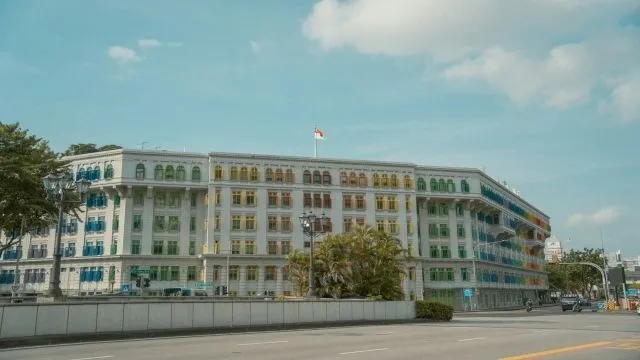
Photo by Vishnu Mohanan on Unsplash


Integrating Avalanche blockchain

India holds the second-largest IEEE membership base globally outside the United States, making this move a significant development in secure credentialing.

According to a report by Cointelegraph on Wednesday, Avalanche’s C-Chain will serve as the key settlement layer for IEEE’s certificate issuance due to its compatibility with the Ethereum Virtual Machine (EVM). The decision aims to provide an ecosystem that meets the requirements for tamper-proof, instant and secure verification processes for all trainees and users receiving IEEE credentials.


Zupple Labs collaboration

The blockchain certificates will be issued through LegitDoc, a blockchain-based credential lifecycle management system developed by Zupple Labs. Neil Martis, Co-Founder of Zupple, noted that the Indian public sector has shown increased willingness to implement full-fledged blockchain projects over the past 12 months, moving beyond pilot initiatives.

This is the latest project in recent weeks that has seen Zupple Labs play a key role in enabling the real-world use of blockchain. Through a collaboration with the Indian Web3 startup in October, the Hindustan Petroleum Corporation (HPCL) streamlined its purchase order process, issuing tamper-proof digital purchase orders via LegitDoc.


Avalanche expands into India

Devika Mittal, Head of Avalanche’s India arm, emphasized the significance of Avalanche’s EVM compatibility in simplifying the deployment of widely used applications, including credential registries and identity management. She pointed out that reputable institutions like SK Planet and JP Morgan Onyx prefer Avalanche as their go-to blockchain.

Mittal has been a key hire for Avalanche blockchain developer Ava Labs recently as part of its efforts to target significant expansion within India. Earlier this year, the company collaborated with China’s Alibaba Cloud, the cloud computing subsidiary of e-commerce behemoth Alibaba Group, assisting with the building of a launchpad that will enable the deployment of metaverses.

The partnership between IEEE and Zupple Labs is poised to bring about the issuance of numerous tamper-proof engineering credentials in India. This collaboration underscores the growing acceptance of blockchain in education credentialing, setting a powerful precedent for broader participation in the Web3 landscape.

In an interview, Martis expressed the flexibility of their approach, stating:

“We would be experimenting with new platforms as additional parallel settlement layers as suitable new tech emerges.”

This reflects an openness to exploring evolving blockchain technologies while maintaining a commitment to ensuring the immutability, longevity and security of the solutions.

The IEEE-Zupple Labs collaboration aligns with the trend of blockchain integration in educational and professional spheres, offering a glimpse into the future of secure and efficient credentialing systems. As the second-largest membership base outside the United States, India plays a pivotal role in shaping the trajectory of blockchain adoption within professional associations like IEEE.


More to Read
View All
Policy & Regulation·

Sep 18, 2023

Korbit Report: SEC Commissioner Shares Insights on Crypto Regulation

Korbit Report: SEC Commissioner Shares Insights on Crypto RegulationKorbit Research Center, a division of South Korea’s cryptocurrency exchange Korbit, on Monday, released a report that provides a comprehensive summary of its interview with Hester M. Peirce, a Republican Commissioner at the US Securities and Exchange Commission (SEC), which took place on August 18. The interview was conducted by Peter Chung, the head of research at Korbit Research Center.Photo by Joshua Hoehne on UnsplashKorbit’s meeting with US crypto expertsIn August, Chung made a trip to the United States, where he met with prominent figures and companies within the cryptocurrency industry to gain a deeper understanding of the ongoing institutionalization of cryptocurrencies in the United States. Through this opportunity, Korbit intends to release a series of reports that will encapsulate the valuable insights garnered during these interactions in the US.His first interviewee of the series was Commissioner Peirce, who serves as one of the five commissioners at the SEC. These commissioners are appointed by the President of the United States with the confirmation of the US Senate. To maintain political balance and impartiality, it is mandated that no more than three commissioners belong to the same political party.Peirce assumed her role as a Commissioner at the US Securities and Exchange Commission (SEC) in January 2018, following her appointment by President Trump. Before her tenure at the SEC, she held the position of Senior Counsel on the United States Senate Committee on Banking, Housing, and Urban Affairs. She is known as an advocate for technological innovation.Token safe harbor proposalPeirce earned the nickname “Crypto Mom” due to her advocacy for encouraging innovation within the cryptocurrency industry through the implementation of reasonable regulations. One notable initiative that exemplifies her perspective is the token safe harbor proposal. This proposal suggests giving blockchain network developers a three-year grace period during which they can work on building a decentralized network while being exempted from complying with the registration rules of federal securities laws, as long as certain conditions are met.During the interview, Peirce expressed concerns about recent actions taken by the SEC, which have added to the uncertainty surrounding cryptocurrency regulations. She also emphasized the need for swift legislative action to establish a framework for cryptocurrency regulation. Peirce noted that there appears to be a tendency to prioritize the classification of virtual assets over investor protection.Suggestions for KoreaAlthough Peirce hasn’t engaged in any direct interactions with Korean regulators, she suggested the Korean government optimize regulations for its own cryptocurrency industry. Her suggestion was to minimize unnecessary intervention and instead foster an environment where the sector can naturally evolve in accordance with the principles of a free-market economy.Furthermore, Peirce delved into detailed discussions on three pivotal topics: the classification of virtual assets as securities, the need for disclosure requirements, and the significance of assessing the extent of decentralization within a network.Classification of cryptocurrenciesThe Commissioner said that it is inappropriate for the SEC to contend that most cryptocurrency projects should fall under its regulatory purview. The SEC’s argument is based on the assertion that cryptocurrencies may constitute securities because they function as a medium of value exchange in fundraising activities, much like investment contracts in traditional financial markets. Despite this, she expressed optimism regarding the recent US court’s ruling on the Ripple vs. SEC case, which she believes may help rectify misconceptions surrounding the classification of investment contracts.Balancing investor protection and investor choiceMeanwhile, she expressed her viewpoint that regulations aimed at protecting investors should stay true to the disclosure principles introduced back in 1934 when the SEC was first established. However, she also argued that the SEC should avoid imposing arbitrary restrictions on investors’ choices. During the initial phases of a cryptocurrency project, there tends to be an inherent information asymmetry between crypto project leaders and individual investors. To ensure a fair investment environment, she advocated for legal mandates for disclosure. Notably, both her token safe harbor proposal and the Responsible Financial Innovation Act proposed by US Senators Kirsten Gillibrand and Cynthia Lummis incorporate such disclosure requirements.Decentralization assessmentCommissioner Peirce also approached the assessment of decentralization with a thoughtful perspective. Her Token Safe Harbor Proposal 2.0 states that after the three-year grace period, “token transactions may not constitute securities transactions if the network has matured to a functioning or decentralized network.” However, she admitted to grappling with the challenge of precisely defining what constitutes sufficient decentralization. During the conversation, she sought Mr. Chung’s perspective on this matter. In response, Mr. Chung shared that the Korbit Research Center regularly conducts measurements and assessments of the degree of decentralization for major blockchain networks every six months.Regarding the interview, Peter Chung expressed his admiration for the high-ranking official’s openness to innovation and strong communication skills. He also voiced his hope for more open discussions in Korea that could promote sustainable growth of the country’s crypto industry.

news
Policy & Regulation·

Dec 08, 2023

Korea invites distinguished financial officials to discuss digital money

Korea invites distinguished financial officials to discuss digital moneyThe Bank of Korea (BOK), South Korea’s central bank, announced on Friday (local time) its participation in an international conference focused on the economic impact and future prospects of digital currencies. This event, co-hosted by the BOK, the Ministry of Economy and Finance (MOEF), the Financial Services Commission (FSC), and the International Monetary Fund (IMF), is scheduled to take place in Seoul on Dec. 14 and 15.The conference, titled “Digital Money: Navigating a Changing Financial Landscape,” is set to welcome high-ranking officials such as Kristalina Georgieva, the Managing Director of the IMF; Choo Kyung-ho, the Minister of the Ministry of Economy and Finance (MOEF); Rhee Chang-yong, the Governor of the Bank of Korea (BOK); and Kim So-young, the Vice Chairman of the Financial Services Commission (FSC). This event is particularly significant as it marks the first visit of IMF head Kristalina Georgieva to South Korea.Photo by pan zhen on UnsplashCrypto, stablecoins, CBDCsDuring the conference, MOEF Minister Choo and FSC Vice Chairman Kim will kick off the event with welcome remarks, followed by a keynote speech from IMF’s Managing Director, Kristalina Georgieva. Spanning over two days, the conference will include seven sessions, covering a diverse range of topics. These sessions will delve into various aspects of digital money, such as practical use cases of digital currencies, regulatory approaches to cryptocurrencies, and discussions on stablecoins and central bank digital currencies (CBDCs).The conference will feature prominent financial officials in both its opening and closing sessions. On the first day, Thursday, a distinguished panel, including IMF Chief Georgieva; Stefan Ingves, the former Governor of Sveriges Riksbank; FSC Vice Chairman Kim; David E. Rutter, the Founder of R3; and Shin Hyun-song, the Economic Adviser at the Bank of International Settlements (BIS), will discuss the opportunities and challenges facing digital money.The final session on Friday will see another group of high-level financial authorities sharing their expertise and insights. This session will include BOK Governor Rhee; Eddie Yue, the Chief Executive of the Hong Kong Monetary Authority; Serey Chea, the Governor of the National Bank of Cambodia; and Veerathai Santiprabhob, the former Governor of the Bank of Thailand. Their discussion will focus on regulatory policies surrounding digital currencies.Live-streaming scheduledThe two sessions of this conference will be accessible to a global audience as they will be live-streamed on the BOK’s official YouTube channel. This provides an opportunity for interested individuals from around the world to tune in and gain insights into the evolving landscape of digital money and its regulatory environment.

news
Web3 & Enterprise·

Jun 23, 2023

Japan’s Biggest Bank Explores Global Stablecoin Issuance

Japan’s Biggest Bank Explores Global Stablecoin IssuanceMitsubishi UFJ Financial Group Inc. (MUFG), the largest bank in Japan, is currently engaged in discussions with companies involved in popular global stablecoins, as well as other firms, to explore the possibility of issuing these tokens using MUFG’s blockchain platform.That’s according to a report published by Bloomberg on Thursday. The stablecoin law in Japan, which recently went into effect on June 1, has established that only licensed banks, registered money transfer agents, and trust companies within the country are authorized to issue stablecoins.Photo by CoinWire Japan on UnsplashProgmat platformMUFG is actively in talks with various parties regarding the utilization of its blockchain platform, Progmat, to mint stablecoins linked to foreign currencies, including the US dollar, with the intention of facilitating their global use.Tatsuya Saito, the Vice President of Product at MUFG, emphasized that the implementation of the legislation provides issuers and users with a sense of security when it comes to engaging with stablecoins. However, he refrained from disclosing the specific stablecoin parties that MUFG is currently in discussions with.Stablecoins play a pivotal role within the cryptocurrency sector, serving as a reliable asset for investors to hold between trades involving more volatile tokens. These tokens are designed to maintain a consistent value, often pegged to $1, and are typically backed by reserves such as cash and bonds. CoinGecko data indicates that approximately $130 billion worth of stablecoins are presently in circulation.Stablecoin stabilityNevertheless, stablecoins have faced challenges in the past when it comes to maintaining their pegs, resulting in disruptions within crypto markets. Notably, TerraUSD, a token reliant on algorithms and trader incentives, experienced a significant crash in May 2022, leading to losses of at least $40 billion. In response to such incidents, regulators have intensified their scrutiny of stablecoins. The stablecoin law in Japan encourages the issuance of stablecoins that are fully backed by fiat cash in a corresponding currency.MUFG envisions leveraging its Progmat blockchain platform to issue security tokens on behalf of third parties, with no immediate plans to develop its own stablecoin, according to Saito. He further revealed that the bank is actively exploring stablecoin projects with entertainment firms, non-financial businesses, and a consortium of Japanese financial institutions. Furthermore, overseas financial groups have shown keen interest, and Saito believes that Japan has the potential to become a global hub for stablecoin issuance.Tether dominanceTether ($USDT) holds the position of the top global stablecoin, accounting for more than 60% of the sector’s market value, while Circle Internet Financial Ltd.’s USD Coin ($USDC) occupies the second spot. Any party intending to produce stablecoins within Japan would need to comply with the country’s legislation.Saito highlighted that the regulation’s provision allowing stablecoins to be denominated in various currencies, including the US dollar, opens up opportunities for the issuance of tokens intended for global use. He expressed his belief that this presents a significant opportunity for Japan.Prime Minister Fumio Kishida’s economic agenda, known as “New Capitalism,” includes a focus on supporting the growth of Web3 firms. While Japan has taken steps to relax certain cryptocurrency regulations, such as those pertaining to token listing and taxation, it continues to be perceived as a country with relatively strict regulations.

news
Loading