Top

RBI Governor: No place for ‘crypto mania’ in India despite U.S. ETF approval

Policy & Regulation·January 13, 2024, 10:54 AM

At the 16th Mint Annual BFSI Summit and Awards in Mumbai, Reserve Bank of India (RBI) governor Shaktikanta Das reiterated the central bank's cautious stance on cryptocurrencies, regardless of recent global developments.


During the event, which was held on Thursday, Das took to the stage. He was asked if the approval of spot bitcoin exchange-traded funds (ETFs) in the United States gives legitimacy to cryptocurrency.
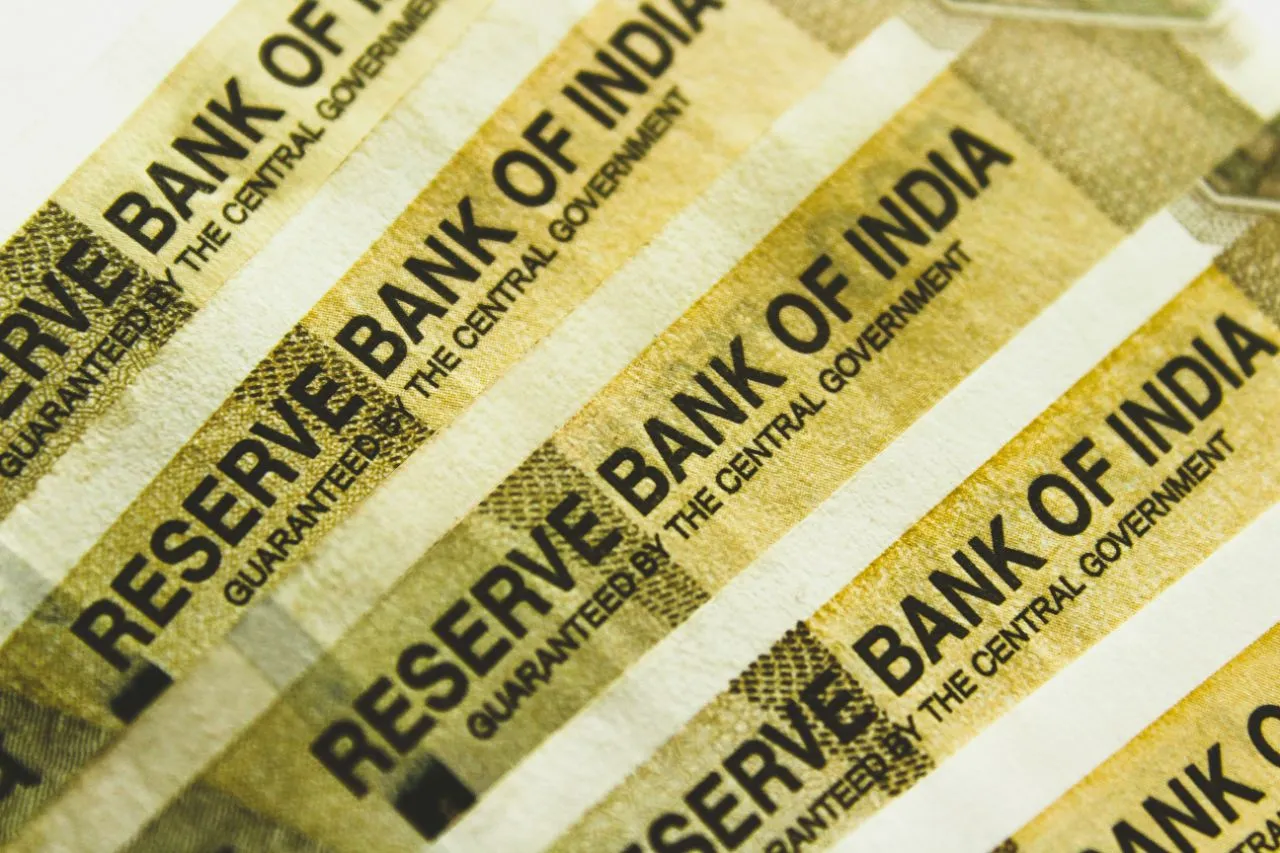
https://asset.coinness.com/en/news/8f406444c88214126a5f00df6058da92.webp
Photo by rupixen.com on Unsplash

Unwavering response

Das was unwavering in his response, maintaining that the RBI remains steadfast in its approach and opposition to cryptocurrencies. He stated:


"The way we look at crypto remains unchanged, irrespective of who does what." 


He emphasized that the RBI does not intend to emulate regulatory decisions made by other countries. Despite this global development, Das maintained the RBI's reservations, expressing concerns about the potential risks associated with venturing further into the cryptocurrency space.


Favoring a crypto ban

Last month, officials from the Indian central bank told the Hindustan Times that the RBI believes that the Indian government should impose an outright ban on cryptocurrencies in India. One unnamed official stated:

"The government cannot sidestep the RBI’s concerns while deciding on cryptocurrencies, as it is responsible for monetary stability in India and maintains price stability."


Das acknowledged the potential of blockchain technology, the foundation of cryptocurrencies, highlighting its versatility for various applications. Both the central bank and the Indian government have encouraged the development of blockchain rather than crypto. Last year, an RBI-led initiative, the National Payments Corporation of India (NPCI), recruited blockchain expertise to further develop that project.


However, he made it clear that the RBI's focus remains on strengthening governance and assurance in regulated entities, with an emphasis on early identification, close monitoring and effective management of risks.


Citing ‘Tulipmania’

Das cautioned against a “crypto mania,” drawing parallels to the historical tulipmania of the 17th century. He underscored the RBI's position that embracing cryptocurrencies could pose significant risks, echoing his previous warnings about the macroeconomic and financial stability risks associated with these digital assets.


The governor emphasized the importance of instilling an appropriate risk culture within organizations, with active involvement from the board and senior management. Das stated that the RBI expects top officials and board members to play a more proactive role in risk management.


India’s crypto community responded critically to the RBI governor’s comments. Ajeet Khurana, a Web3 growth investor, responded on social media, stating:

”Dear RBI governor, I respect you a lot, and I don’t mind that you don’t like Crypto. Diverse points of view are healthy. Yet, using words like 'tulip mania' only gives the impression that you are out of touch with what is happening in Web3. My request, Sir, is that you update yourself.”


Vivek Sen, the founder of Bitgrow Lab, wrote:

”Dear RBI, First, don't club Bitcoin with ‘Crypto’. Secondly, Tulips did not experience an 80% drop on four occasions, and they recovered each time.”

Despite opposition to cryptocurrencies in official circles in India, a report last year produced by Chainalysis found that India is leading the way in Asia in terms of grassroots adoption of cryptocurrencies.

 

More to Read
View All
Web3 & Enterprise·

Nov 17, 2023

Coinbit suspends operations, marking second crypto exchange shutdown this month

Coinbit suspends operations, marking second crypto exchange shutdown this monthCoinbit, a South Korean cryptocurrency exchange operated by blockchain service provider AXIASOFT, has suspended its services according to an official announcement on its website posted on Thursday (local time). This development comes just over a year after it became a virtual asset service provider (VASP) on Sept. 1 last year. It is also the second crypto exchange in the country that has ended its operations after Cashierest on Nov. 6, indicating that troubled predictions previously projected by industry sources are becoming a reality.Photo by Andrew Winkler on UnsplashBusiness transitionCoinbit explained that, despite its efforts to create an environment optimized for transparent crypto transactions, it was pushed by ongoing changes in regulatory policies to make changes to its business. It intends to shift its focus to establishing a securitized transaction system.Membership registration and deposits will no longer be allowed starting at 5 p.m. next Friday. Transactions and withdrawal services will be suspended from 1 p.m. on Dec. 29. The exchange advised its users to withdraw their virtual assets accordingly.Earlier, it was reported that Coinbit was facing difficulties maintaining smooth operations due to its exceedingly low trading volume. Industry sources believe that the realization of the previously speculated closure of coin market exchanges.More shutdowns to come?“Much of the workforce at crypto exchanges have been taking hits, leading to challenging business conditions,” stated an unnamed industry expert, proposing conjecture that more announcements of service suspensions may be imminent. According to a survey conducted earlier this year by the Financial Intelligence Unit (FIU), 10 out of 21 crypto exchanges reported zero revenue from transaction fees, and 18 were in a state of complete capital impairment.

news
Policy & Regulation·

Apr 28, 2023

Hong Kong to Issue Digital Asset Licensing Guidelines in May

Hong Kong to Issue Digital Asset Licensing Guidelines in MayAccording to Hong Kong’s Securities and Futures Commission (SFC), the Commission will issue new guidelines for virtual asset exchanges within the Chinese autonomous special administrative region (SAR).© Pexels/Jimmy ChanSFC CEO Julia Leung made that announcement while speaking at an event in the city on Thursday, indicating that the guidelines are due to be released next month. Additionally the autonomous region intends to introduce a new licensing system from June 1 onwards, enabling the retail investors among Hong Kong’s populace to trade leading cryptocurrencies like Bitcoin and Ethereum.Hong Kong authorities had provided an insight into this approach back in February, when plans to provide retail access to digital assets were first set out. At the time, they outlined the need for retail customers to pass a knowledge test relative to digital assets or otherwise only being allowed to trade such assets once the customer had completed a certain level of training relative to digital assets, provided by a regulated crypto service provider.This latest announcement has arrived amid a backdrop of a series of recent indications that signify the intent of authorities in Hong Kong to make the autonomous region a major financial hub centered around digital assets.Leung articulated that the further development of this digital assets framework follows a consultation process that attracted more than 150 responses. Although virtual asset service providers (VASPs) will need to await the complete rollout of the licensing system, a handful of crypto businesses such as OSL and Hashkey, under the supervision of the Hong Kong regulator, have already started to offer their services.Crypto as propertyA Hong Kong court recently recognized cryptocurrency as property. The ruling emerged in a bankruptcy hearing pertaining to failed cryptocurrency exchange Gatecoin. In presiding over the case, Justice Linda Chan outlined that the autonomous region takes a broad view of what constitutes property. In finding crypto to meet the definition of property, she went on to clarify that it therefore has the capability of being held in trust.The finding has particular relevance in the crypto world right now given the consequences of an “in trust” custodianship of customer’s digital assets relative to numerous ongoing bankruptcy processes involving failed crypto businesses, and the pecking order of creditors in those instances, in their efforts to recover their digital assets.Positive approachWhile mainland China remains an adverse territory relative to digital assets, Hong Kong has taken to welcoming the sector and with that, enticing crypto firms to relocate to the autonomous region from the mainland. Leadership in the city has been making all the right soundings to demonstrate that it is actively trying to nurture the nascent sector.While recent months have seen the Biden administration in the United States attempt to close off banking from the crypto sector, in contrast, Hong Kong’s largest virtual bank, ZA Bank, was recently given permission to act as a settlement bank for regulated Web3 businesses located within Hong Kong.

news
Policy & Regulation·

Sep 26, 2023

Japan’s Cryptoasset Group Proposes Self-Regulatory Reforms for IEO System

Japan’s Cryptoasset Group Proposes Self-Regulatory Reforms for IEO SystemThe Japan Cryptoasset Business Association (JCBA) has revealed a preliminary draft advocating for reforms in self-regulation to bolster the soundness of the initial exchange offering (IEO) system. This draft has been submitted to the Japan Virtual and Crypto Assets Exchange Association (JVCEA).IEOs serve as a mechanism enabling various enterprises to accrue funds and broaden their user base by orchestrating token sales on cryptocurrency exchanges for Web3 projects. This fundraising method holds the potential to enhance trust as crypto exchanges, supervised by the Japanese Financial Services Agency, undertake evaluations of project feasibility and maintain ongoing oversight.Photo by Takashi Miyazaki on UnsplashPositive regulatory developmentsThe ameliorating regulatory landscape is also a positive development, highlighted by this year’s tax law amendment, which grants exemptions to enterprises’ self-issued tokens from year-end corporate taxation. In Japan, four IEOs have been conducted so far, with the inaugural IEO amassing over 900 million yen (approximately $6 million). The cumulative amount from the four IEOs has surpassed 4.4 billion yen. However, given that the IEO is a relatively nascent fundraising method, improvements in token price stability and operational modalities are required to ensure that businesses and users can engage with it confidently.Enhanced user protectionAgainst this backdrop, JCBA, an organization comprised of various enterprises involving virtual assets and Web3, has been discussing the direction of the IEO system from a corporate viewpoint since May of this year. Establishing price stabilization measures and selling restrictions within the Japanese IEO system will contribute to user protection by allowing investors to manage their assets under domestic regulations. JCBA stated that users will find domestic exchanges more secure in comparison to foreign ones.As this proposal represents an initial draft, deliberated and formulated only within the JCBA, the group intends to consult and assess the feasibility of the self-regulatory rules with each pertinent organization as necessary.Four key pointsThe document submitted by JCBA to JVCEA presented four key points concerning the IEO. Pertaining to pricing, it suggested the diversification of calculation methods customized to each project and the specification of price-related disclaimers. On liquidity, it posited that liquidity objectives should be established at the time of listing, and an environment conducive to securing liquidity should be developed. JCBA also pointed out the necessity of establishing rules for price stabilization measures at the time of listing. Finally, regarding selling restrictions, it was noted that both token issuers and exchanges should adhere to a minimum three-month lock-up period for tokens.

news
Loading