Top

Bakkt targets business expansion in Asia

Web3 & Enterprise·January 26, 2024, 3:58 AM

Bakkt Holdings, a software as a service (SaaS) and API platform for owning and trading cryptocurrency, has unveiled its plans for an extensive expansion into Asia and other crypto-friendly international jurisdictions.


Focus on Hong Kong and Singapore

According to a recent press release, Bakkt has broadened its footprint into two additional Asian markets, namely Hong Kong and Singapore. This strategic expansion aligns with the company's key objectives for 2024.


Data from South Korean Web3 advisory and research firm Tiger Research suggests that Asia is poised to become the epicenter of the global crypto landscape within the next five years.


In particular, Singapore and Hong Kong have emerged as dominant forces in the Asian crypto landscape. Their well-defined regulations, favorable tax structures and status as international financial hubs have attracted major players in the crypto industry.


The announcement emphasizes Bakkt's commitment to making cryptocurrencies more accessible globally. The company envisions that crypto has the potential to enhance financial inclusivity and connect communities within the global economy. CEO Gavin Michael expressed excitement about the opportunities these regions present, highlighting the company's dedication to reaching millions of people through its crypto services.

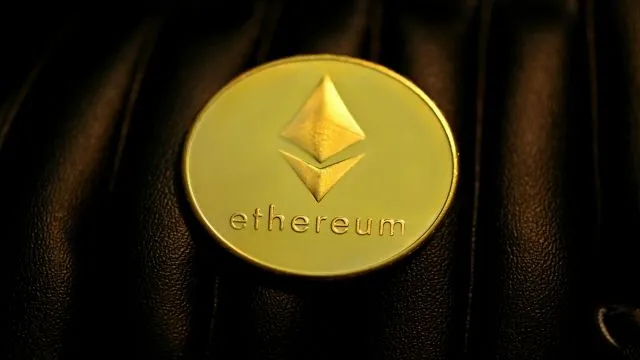
https://asset.coinness.com/en/news/15e896fb87408d2bccf679ad54cbef89.webp
Photo by Jigar Panchal on Unsplash

Broader global expansion

Bakkt's international expansion is not limited to Asia. Additionally, the company is targeting Latin America. Brazil, Argentina and Mexico lead the way in the adoption of crypto assets in Latin America.


The digital assets solutions firm has successfully established crypto trading and on-ramp capabilities in Brazil and Guatemala, adding to its existing operations in Argentina and Mexico.


Furthermore, Bakkt has plans to establish a presence in the United Kingdom and Australia in the coming months.  


The decision to expand into these specific jurisdictions is influenced by the rapid growth of the crypto economy and the regulatory clarity observed in these regions. Despite global market fluctuations and recoveries, certain countries continue to welcome crypto-related businesses with robust regulatory frameworks.


In collaboration with Bakkt Holdings, Hapi and SogoTrade have launched new crypto trading capabilities, expanding their offerings across Asia, Europe, North America and South America. Hapi, a stock trading platform, has extended its crypto trading services to Brazil, Guatemala and Spain, deepening its relationship with Bakkt. On the other hand, SogoTrade, a digital brokerage, has initiated crypto trading in Hong Kong and Singapore, marking the beginning of its foray into Asian markets.


Bakkt, established in 2018, is focused on providing institutional-grade custody, trading and on-ramp capabilities. The company positions itself as a partner for sustainable, long-term crypto involvement. The firm was established with Intercontinental Exchange (ICE), the owners of the New York Stock Exchange, having a 66.7% controlling interest in the company. 


Bakkt's strategic expansion into diverse international jurisdictions, including the Asian region, underscores its intention to enable global platform accessibility, together with its belief in the transformative power of cryptocurrencies within the financial landscape.


 

More to Read
View All
Markets·

May 02, 2024

Lackluster debut for crypto ETFs in Hong Kong

Hong Kong's debut of Bitcoin and Ether exchange-traded funds (ETFs) faced a tough start on their first day of trading, with volumes falling far below the record-breaking figures seen in the United States earlier in January 2024. Tough act to followThe launch of six spot Bitcoin and Ether ETFs, managed by prominent firms including China Asset Management, Harvest Global, Bosera and HashKey, marked a significant milestone for Hong Kong's cryptocurrency market. However, initial trading volumes indicated a notable contrast with the groundbreaking volumes witnessed during the debut of spot Bitcoin ETFs in the United States. On their inaugural day, the total trading volume of the six new crypto ETFs in Hong Kong amounted to 87.58 million Hong Kong dollars ($12 million). This figure, while significant, paled in comparison to the $4.6 billion trading volume recorded for U.S. spot Bitcoin ETFs on their first day, making the U.S. investment funds a tough act to follow. Despite the disparity, industry experts like Justin d'Anethan, head of APAC business development at crypto market maker Keyrock, viewed the Hong Kong ETFs' performance positively within the local market context.Photo by Simon Zhu on UnsplashAbsence of stakingD'Anethan told The Block that while the trading volume in Hong Kong didn't match the U.S. debut, it reflected a noteworthy level of investor interest, particularly considering the market dynamics in Hong Kong, which lacks access to mainland China investors. Bloomberg ETF Analyst Eric Balchunas suggested on X that people expected too much and that in reality, it was a good first day’s trading. In an interview with Bloomberg, China Asset Management CEO Yimei Li stated that the products open the door “for a lot of RMB holders.” They didn’t show up on day one as d’Anethan pointed out, and he further noted that the absence of staking rewards for Hong Kong's spot Ether ETFs was a notable factor affecting investor decisions. Data from the Hong Kong Stock Exchange (HKEX) cited by Cointelegraph illustrated the relatively subdued performance of the newly launched ETFs. Among them, the Bosera HashKey Bitcoin ETF and Ether ETF recorded modest trading volumes, while the China Asset Management (CAM) Bitcoin ETF demonstrated stronger traction, attracting significant trading volume by the closing bell. Prior to trading, CAM's subscription size for its spot Bitcoin and Ether ETFs drew substantial interest, totaling $140 million during the initial offering period. This heightened anticipation was further fueled by the success of HKEX's cryptocurrency futures ETFs, which garnered $529 million in net inflows in the first quarter of 2024. Fee exemptionsIn an effort to stimulate investor participation, local fund managers and brokerages in Hong Kong offered fee exemptions for the new crypto ETFs. Harvest waived its management fee for six months, while Bosera extended a fee waiver period of four months. Despite the optimism surrounding the launch, potential access to the ETFs by mainland Chinese investors remains uncertain, subject to Know Your Customer (KYC) policies. Meanwhile, the Securities and Exchange Commission's (SEC) stance on Ether ETFs in the U.S. complicates the prospects of listing such products in the near future. While Hong Kong's debut of Bitcoin and Ether ETFs faced challenges in matching the fervor witnessed in the U.S., it nevertheless represents a significant step forward for the region's cryptocurrency market, signaling growing interest and participation in digital asset investments.

news
Web3 & Enterprise·

Jun 20, 2023

Japanese Exchanges Canvas Regulator to Permit 10x Leverage

Japanese Exchanges Canvas Regulator to Permit 10x LeverageJapan’s cryptocurrency exchanges are advocating for looser regulations on margin trading, despite the global digital asset market crash experienced last year.According to a report published by Bloomberg on Monday, The Japan Virtual & Crypto Assets Exchange Association has revealed that many industry insiders are seeking leverage limits of four to 10 times for retail investors.Currently, customers are limited to doubling their exposure through borrowing. Genki Oda, the Vice Chairman of the association, believes that relaxing the leverage rule could enhance Japan’s appeal to crypto and blockchain companies, thereby stimulating increased trading activity.Photo by Su San Lee on UnsplashOngoing discussionJapanese digital asset exchanges are currently engaged in discussions to establish a consensus on the recommended leverage limit. They are planning to present their proposal to the Financial Services Agency (FSA) as early as next month.While Japan has made some efforts to ease certain cryptocurrency regulations, such as token listing and taxation, the overall regulatory environment is considered strict. The FSA expects crypto firms to provide solid justifications for loosening margin trading caps, demonstrating how it would contribute to the government’s objective of expanding blockchain-based industries. However, the agency remains open to discussions with digital asset businesses on the matter.Plummeting trade volumesPreviously, Japanese crypto platforms offered leverage up to 25 times, resulting in annual margin trading volumes of approximately $500 billion in 2020 and 2021. However, after the FSA imposed a limit of two times to curb excessive speculation and protect investors from amplified losses, trading volumes plummeted by 75% in 2022.In other parts of the world, digital asset exchanges typically offer spot margin trading with leverage ranging from five to 10 times the initial deposit, depending on local regulations. Some platforms even offer more aggressive lending options, often associated with speculative behavior that can generate waves of greed and fear within the crypto market.Oda argues that digital asset volatility has decreased since 2020 and asserts that Japanese exchanges are well-prepared to assist investors in managing the risks associated with margin trading positions. However, any relaxation of leverage rules is not expected to occur before 2024.Leverage dangersLast year’s global cryptocurrency downturn exposed risky practices and resulted in numerous bankruptcies. Regulators worldwide have responded by implementing new rules and regulations that address the lessons learned. While leverage might be in the interests of the exchange operators, many industry commentators have warned that leverage brings about market weakness.Caitlin Long, Founder and CEO of Custodia Bank, has been one such commentator, warning that massive leverage “built an industry of insolvent intermediaries” on a “foundation of sand”. It’s commonly believed that leverage leads to unsustainable market bubbles rather than iterative organic market growth.In 2022, an index tracking the top 100 cryptocurrencies partially recovered, showing a 33% increase since the beginning of this year. However, the market still faces challenges, as institutional and individual investors have exited, leading to reduced liquidity and lower expectations for price volatility in Bitcoin and other cryptocurrencies.

news
Web3 & Enterprise·

Jan 25, 2024

ClayStack expands into Ethereum restaking ahead of token launch

ClayStack, the crypto liquid staking platform, has made a strategic move into the Ethereum restaking arena through EigenLayer, providing users with reward points in anticipation of its upcoming token launch.Photo by Kanchanara on Unsplash‘Redefining the staking landscape’The Singaporean platform describes its mission as redefining “the staking landscape by helping users unlock the underlying value of their crypto assets, and we are doing this by building a decentralized cross-chain liquid staking protocol.” In its efforts to deliver on that mission, it appears that the crypto startup is set to convert its Ethereum liquid staking token, csETH, into a liquid restaking token, leveraging the Ethereum restaking protocol offered by EigenLayer. Eigenlayer enables restaked sidechains, through which ETH restakers can participate in Ethereum-centric consensus protocols. Reward pointsIn an announcement on Tuesday, ClayStack revealed its plan to offer reward points to users participating in Ethereum restaking, with a 1:1 ratio for redemption when the platform's token is launched. Each clay point earned will be redeemable for one clay token during the token launch. Notably, the platform distinguishes itself by offering a 1:1 redemption system, setting it apart from other points programs. Founder and CEO Mohak Agarwal explained how the project is adopting EigenLayer's protocol for this new service. Agarwal had teased that the project had something new to offer in the pipeline when taking to social media last week, writing:”We are entering into a new era where staking will become more dynamic, accessible, and rewarding for the entire DeFi community.” Currently, ClayStack accepts native ETH for direct restaking on EigenLayer. Agarwal confirmed to The Block that other liquid staking tokens, such as Lido staked ether (stETH) and Rocket Pool ether (rETH), will be integrated into the platform in the coming days. He emphasized that these tokens will be directly deposited on EigenLayer, streamlining the restaking process. Growing interest in restakingEthereum restaking has gained significant traction since EigenLayer's launch in June of the previous year, with a total value locked (TVL) in smart contracts reaching approximately $1.7 billion. Renzo Protocol recently entered the Ethereum restaking space via EigenLayer, securing a $3.2 million seed funding round. Despite being in beta, Renzo has already achieved a TVL exceeding $116 million. ClayStack's TVL currently stands at around $2.25 million, having initially launched liquid staking for Polygon's MATIC token in 2022. Following that, the platform introduced Ethereum liquid staking in September. However, the latest move marks a shift in focus towards Ethereum restaking due to challenges faced on the Polygon network. Agarwal outlined the reward structure, stating that 20 clay points will be allocated per ETH per week, with rates subject to change every Monday but generally remaining constant throughout the week. There are no minimum or maximum points for individual users, although there is a weekly total cap for all users combined, which refreshes at the beginning of each week.

news
Loading