Top

Japanese Exchanges Canvas Regulator to Permit 10x Leverage

Web3 & Enterprise·June 20, 2023, 11:47 PM

Japan’s cryptocurrency exchanges are advocating for looser regulations on margin trading, despite the global digital asset market crash experienced last year.

According to a report published by Bloomberg on Monday, The Japan Virtual & Crypto Assets Exchange Association has revealed that many industry insiders are seeking leverage limits of four to 10 times for retail investors.

Currently, customers are limited to doubling their exposure through borrowing. Genki Oda, the Vice Chairman of the association, believes that relaxing the leverage rule could enhance Japan’s appeal to crypto and blockchain companies, thereby stimulating increased trading activity.

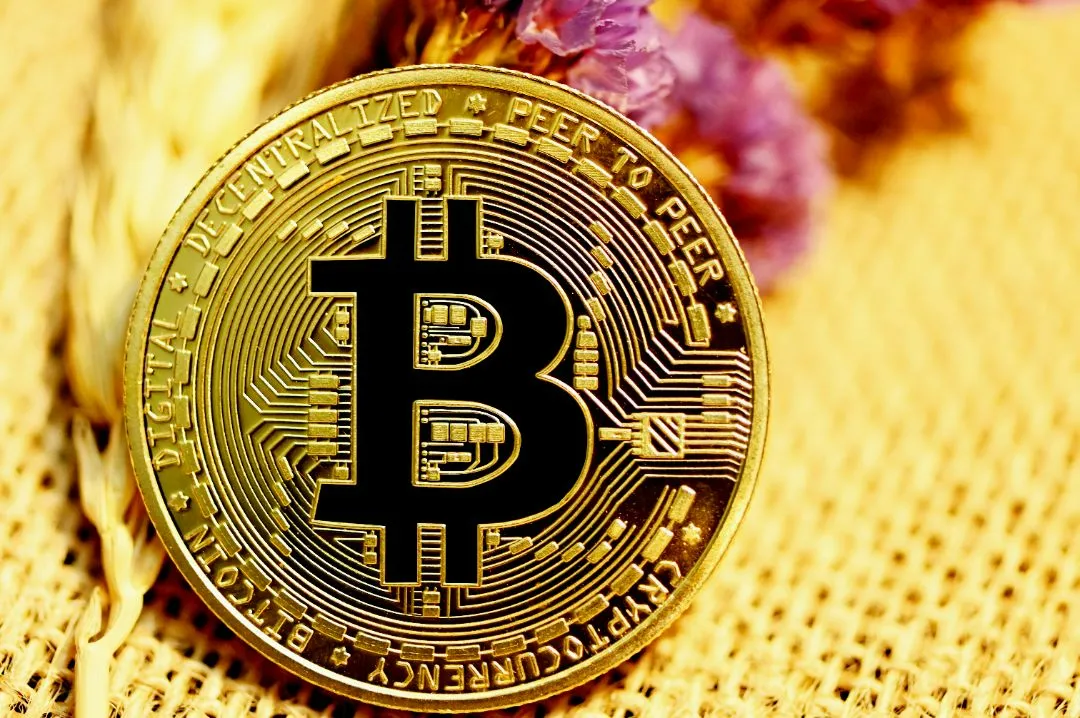
Photo by Su San Lee on Unsplash


Ongoing discussion

Japanese digital asset exchanges are currently engaged in discussions to establish a consensus on the recommended leverage limit. They are planning to present their proposal to the Financial Services Agency (FSA) as early as next month.

While Japan has made some efforts to ease certain cryptocurrency regulations, such as token listing and taxation, the overall regulatory environment is considered strict. The FSA expects crypto firms to provide solid justifications for loosening margin trading caps, demonstrating how it would contribute to the government’s objective of expanding blockchain-based industries. However, the agency remains open to discussions with digital asset businesses on the matter.


Plummeting trade volumes

Previously, Japanese crypto platforms offered leverage up to 25 times, resulting in annual margin trading volumes of approximately $500 billion in 2020 and 2021. However, after the FSA imposed a limit of two times to curb excessive speculation and protect investors from amplified losses, trading volumes plummeted by 75% in 2022.

In other parts of the world, digital asset exchanges typically offer spot margin trading with leverage ranging from five to 10 times the initial deposit, depending on local regulations. Some platforms even offer more aggressive lending options, often associated with speculative behavior that can generate waves of greed and fear within the crypto market.

Oda argues that digital asset volatility has decreased since 2020 and asserts that Japanese exchanges are well-prepared to assist investors in managing the risks associated with margin trading positions. However, any relaxation of leverage rules is not expected to occur before 2024.


Leverage dangers

Last year’s global cryptocurrency downturn exposed risky practices and resulted in numerous bankruptcies. Regulators worldwide have responded by implementing new rules and regulations that address the lessons learned. While leverage might be in the interests of the exchange operators, many industry commentators have warned that leverage brings about market weakness.

Caitlin Long, Founder and CEO of Custodia Bank, has been one such commentator, warning that massive leverage “built an industry of insolvent intermediaries” on a “foundation of sand”. It’s commonly believed that leverage leads to unsustainable market bubbles rather than iterative organic market growth.

In 2022, an index tracking the top 100 cryptocurrencies partially recovered, showing a 33% increase since the beginning of this year. However, the market still faces challenges, as institutional and individual investors have exited, leading to reduced liquidity and lower expectations for price volatility in Bitcoin and other cryptocurrencies.


More to Read
View All
Policy & Regulation·

Feb 05, 2024

Korean banks to bolster AML measures for cryptocurrency exchanges

South Korean banks will soon have to be prepared with adequate anti-money laundering (AML) measures when issuing real-name bank accounts to cryptocurrency exchanges, according to a report by local media outlet News1. This requirement is part of the proposed amendment to the enforcement decree of the Financial Transaction Reports Act, with the Korean Financial Services Commission (FSC) issuing a legislative notice about it today. The FSC will be gathering feedback until March 4, prior to the implementation.Photo by Tuan P. on UnsplashAdequate staff and physical facilitiesThe new amendment requires banks supporting virtual asset service providers (VASPs) to employ adequate staff and establish and uphold physical infrastructure to combat money laundering and terrorist financing. Through this revised legislation, the FSC aims for banks to be equipped with the necessary resources to manage risks linked to the provision of real-name bank accounts to VASPs. With the issuance of real-name bank accounts, banks will face ongoing cautionary duties. The FSC plans to offer clearer guidelines to help banks decide whether to continue providing such accounts to VASPs. In its 2024 agenda, the FSC stated its plans to evaluate VASPs' readiness for their responsibilities ahead of the Virtual Asset User Protection Act, set to be implemented in July. Additionally, the regulatory body will develop infrastructure to improve its monitoring of the cryptocurrency market.Intelligence platform focused on financial securityMoreover, the FSC plans to create a specialized intelligence platform focused on financial security. This platform is aimed at enabling proactive responses to cyberattacks and supporting financial institutions in the agile management of risks associated with emerging technologies.

news
Markets·

Oct 31, 2024

HKEX to launch digital asset index with real-time pricing within Asian time zone

Hong Kong Exchanges and Clearing Limited (HKEX), the operator of the Hong Kong stock exchange, has announced plans to launch a digital asset price index. The index which the company is marketing as the HKEX Virtual Asset Index Series, will aim to provide for the developing asset class, while complimenting Hong Kong’s overarching efforts to transform itself into a regional digital assets hub. The company announced details of the new product offering in a press release published to its website on Oct. 28. HKEX indicated that the product will go live on Nov. 15, outlining that the product “provides investors with transparent and reliable benchmarks for Bitcoin and Ether pricing in the Asian time zone.”Photo by Kanchanara on UnsplashReference index for Bitcoin (BTC) and Ether (ETH)The firm claims that the Index Series will include a Reference Index for Bitcoin (BTC) and Ether (ETH) while providing a Reference Rate for the two leading digital assets. The Reference Index will be formulated using a 24-hour volume-weighted reference spot price, with that pricing coming from leading virtual asset exchanges. The Reference Rate has been devised with the settlement of financial products in mind. As a result, it will be calculated on a daily basis at 16:00 Hong Kong time. From a compliance perspective, the product complies with the European Union’s (EU) Benchmark Regulation (BMR), being the first such product to be developed in Hong Kong. Additionally, the Index Series will be administered by CCData, a UK-headquartered data and index solutions firm formerly known as CryptoCompare.  Taking to the X social media platform, CCData outlined that the product is underpinned by its data selection process, leveraging its “Exchange Benchmark methodology to provide highly robust real-time and EOD  [end-of-day] reference rates.” The firm added that the offering will introduce “essential benchmarks for the Asian market,” while enhancing transparency and reliability within the digital assets sector, broadening opportunities for market participants across the region. Enabling informed investment decisionsHKEX CEO Bonnie Chan said that the company was pleased to introduce the HKEX Virtual Asset Index Series to meet the region's growing demand for this fast-emerging asset class. “By offering transparent and reliable real-time benchmarks, we seek to enable investors to make informed investment decisions,” she added.Like many other financial services firms in TradFi, HKEX has been getting itself acquainted with the blockchain and digital assets sector. In October of last year, the firm launched a blockchain-based settlement platform called Synapse. The platform relies upon DAML-based smart contracts. Earlier this year, a number of asset management firms launched spot Bitcoin and Ethereum exchange-traded funds (ETFs) on the exchange. In April, a report published by HKEX suggested that the true potential of crypto ETFs had yet to be fully realized, pointing out that a number of regulatory tweaks would be necessary to better support digital asset-based products. HKEX itself could have a greater role to play in the expansion of the digital assets sector in Hong Kong. Last month Hong Kong Legislative Council member Lee Wai-hung called on the platform to expand its range of derivatives, including crypto derivatives.

news
Web3 & Enterprise·

May 24, 2023

Wemade Signs MOU with Hub71 to Expand WEMIX Ecosystem in the UAE

Wemade Signs MOU with Hub71 to Expand WEMIX Ecosystem in the UAEWemade, a leading blockchain gaming company based in South Korea, has recently entered into a memorandum of understanding (MOU) with Hub71, a global tech hub situated in the United Arab Emirates (UAE).Photo by Mohamad on PexelsGlobal tech hubHub71, established in 2017, serves as a global tech hub that brings together startups, corporates, and investors in the Abu Dhabi Global Market (ADGM), which is also home to Wemade’s branch in the Middle East and North Africa (MENA) region called WEMIX MENA.Hub71 benefits from the support of several influential partners, including Mubadala, the Abu Dhabi Investment Office (ADIO), and ADGM. Mubadala, a sovereign investor, manages a diverse portfolio of assets in the UAE and overseas. ADIO acts as the pivotal government hub promoting investment in Abu Dhabi. Meanwhile, ADGM functions as an international financial center with a regulatory framework based on UK common law.Web3 initiativeIn February, Hub71 launched a dedicated initiative called Hub71+ Digital Assets, aimed at fostering Web3 startups and blockchain technologies in the UAE. The initiative has attracted over $2 billion in capital commitments. Notable partners include Binance, Algorand, Polygon, Mastercard, and Amazon Web Services.As part of this collaborative endeavor, Wemade will participate as a partner by leveraging its native WEMIX token. While WEMIX and startups within its ecosystem will have expedited access to Hub71’s programs, GameFi and DeFi companies in Hub71 will have the opportunity to join the WEMIX ecosystem.Korea and UAE’s investment cooperationEarlier this year, the UAE and South Korea signed an MOU, outlining a $30 billion investment plan in the East Asian nation. This agreement has facilitated the entry of Korean firms into the UAE while also attracting investment opportunities.Wemade aims to expand its WEMIX ecosystem by establishing partnerships with various blockchain projects, both domestically and internationally. The company views the MOU with Hub71 as a significant stepping stone for its expansion in the MENA region.

news
Loading