Top

ClayStack expands into Ethereum restaking ahead of token launch

Web3 & Enterprise·January 25, 2024, 7:35 AM

ClayStack, the crypto liquid staking platform, has made a strategic move into the Ethereum restaking arena through EigenLayer, providing users with reward points in anticipation of its upcoming token launch.
https://asset.coinness.com/en/news/339af2bbef0b5d7051cc6407458b2a5f.webp
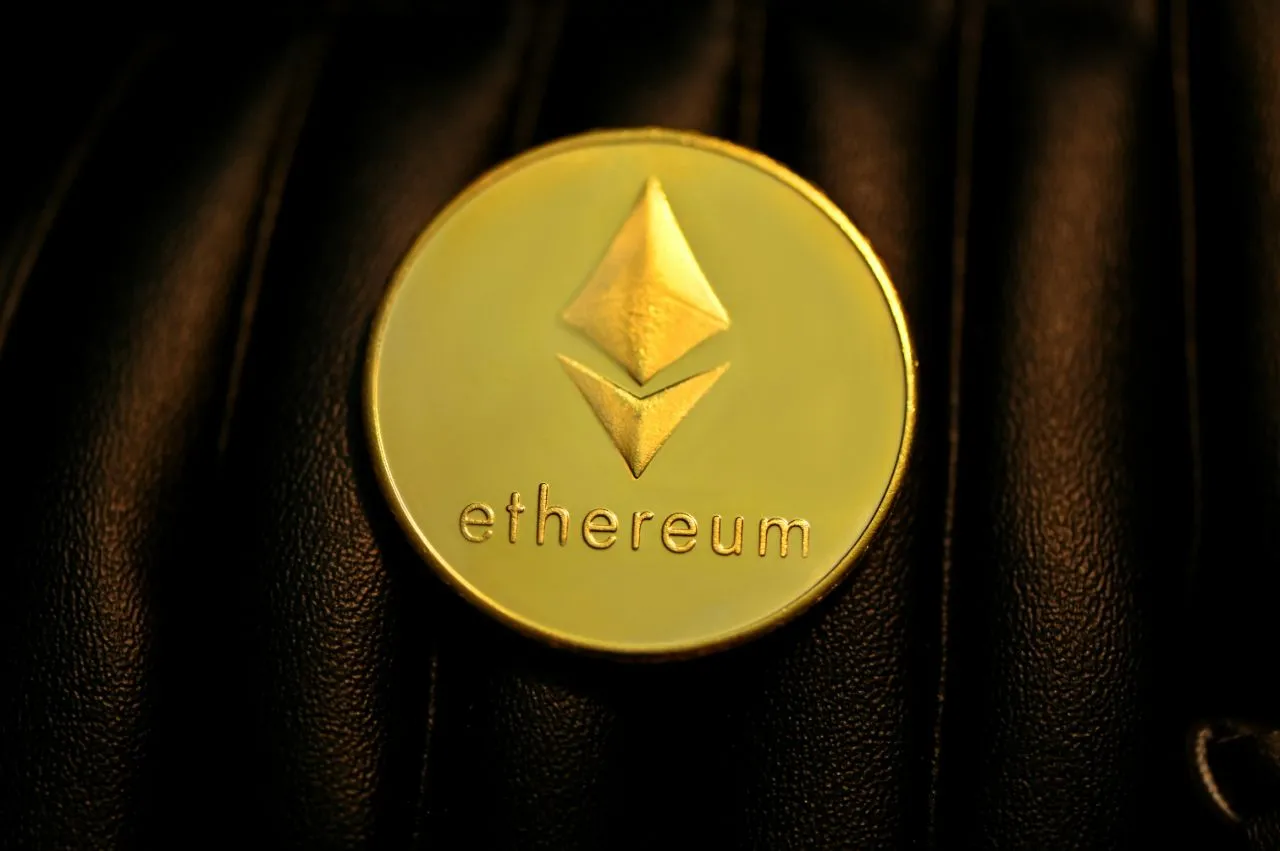
Photo by Kanchanara on Unsplash

‘Redefining the staking landscape’

The Singaporean platform describes its mission as redefining “the staking landscape by helping users unlock the underlying value of their crypto assets, and we are doing this by building a decentralized cross-chain liquid staking protocol.”


In its efforts to deliver on that mission, it appears that the crypto startup is set to convert its Ethereum liquid staking token, csETH, into a liquid restaking token, leveraging the Ethereum restaking protocol offered by EigenLayer. Eigenlayer enables restaked sidechains, through which ETH restakers can participate in Ethereum-centric consensus protocols.


Reward points

In an announcement on Tuesday, ClayStack revealed its plan to offer reward points to users participating in Ethereum restaking, with a 1:1 ratio for redemption when the platform's token is launched. Each clay point earned will be redeemable for one clay token during the token launch. Notably, the platform distinguishes itself by offering a 1:1 redemption system, setting it apart from other points programs.


Founder and CEO Mohak Agarwal explained how the project is adopting EigenLayer's protocol for this new service. Agarwal had teased that the project had something new to offer in the pipeline when taking to social media last week, writing:

”We are entering into a new era where staking will become more dynamic, accessible, and rewarding for the entire DeFi community.”


Currently, ClayStack accepts native ETH for direct restaking on EigenLayer. Agarwal confirmed to The Block that other liquid staking tokens, such as Lido staked ether (stETH) and Rocket Pool ether (rETH), will be integrated into the platform in the coming days. He emphasized that these tokens will be directly deposited on EigenLayer, streamlining the restaking process.


Growing interest in restaking

Ethereum restaking has gained significant traction since EigenLayer's launch in June of the previous year, with a total value locked (TVL) in smart contracts reaching approximately $1.7 billion. Renzo Protocol recently entered the Ethereum restaking space via EigenLayer, securing a $3.2 million seed funding round. Despite being in beta, Renzo has already achieved a TVL exceeding $116 million.


ClayStack's TVL currently stands at around $2.25 million, having initially launched liquid staking for Polygon's MATIC token in 2022. Following that, the platform introduced Ethereum liquid staking in September. However, the latest move marks a shift in focus towards Ethereum restaking due to challenges faced on the Polygon network.


Agarwal outlined the reward structure, stating that 20 clay points will be allocated per ETH per week, with rates subject to change every Monday but generally remaining constant throughout the week. There are no minimum or maximum points for individual users, although there is a weekly total cap for all users combined, which refreshes at the beginning of each week.


More to Read
View All
Policy & Regulation·

Jun 01, 2023

Hong Kong and the UAE Collaborate on Crypto Regulation

Hong Kong and the UAE Collaborate on Crypto RegulationHong Kong and the United Arab Emirates’ (UAE) central banks have announced a collaboration to work on cryptocurrency regulations and financial technology development. The move is significant insofar as both territories have been making headway in developing global crypto hubs over the course of the past six months.Photo by Nick Fewings on UnsplashStrengthening cooperationFollowing a meeting on Monday, the Hong Kong Monetary Authority (HKMA) and the Central Bank of the UAE published a statement on Tuesday, in which they set out the areas of cooperation between them. They agreed to strengthen cooperation on “virtual asset regulations and developments.”The central banks also expressed their commitment to facilitating discussions on joint fintech development initiatives and the sharing of knowledge through their respective innovation hubs.Financial infrastructureDuring the meeting, the officials highlighted the importance of financial infrastructure and financial market connectivity between the two jurisdictions. The Governor of the Central Bank of the UAE, H.E. Khaled Mohamed Balama, expressed his anticipation for an ongoing and long-term relationship with the HKMA.HKMA’s Chief Executive Eddie Yue echoed this sentiment, emphasizing that both regions share many complementary strengths and mutual interests, which will contribute to the economic benefits of the collaboration.In addition to the meeting, a seminar was organized for senior executives from banks in Hong Kong and the UAE. The seminar covered various topics, including improving cross-border trade settlement and exploring how UAE corporations can leverage Hong Kong’s financial infrastructure platforms to gain access to Asian markets.This collaboration comes at a time when the Securities and Futures Commission (SFC) in Hong Kong is allowing virtual asset service providers (VASPs) to cater to retail investors starting from June 1. Christopher Hui, the Treasury Chief of Hong Kong, emphasized that virtual assets are here to stay and acknowledged the fundamental value they bring. Hui also stressed the importance of regulation to harness the positive elements of cryptocurrencies while mitigating potential risks.Since the announcement of the application process by the SFC, several cryptocurrency exchanges, including CoinEx, Huobi, BitMEX, and OKX, have filed applications to provide dedicated crypto trading services in Hong Kong.FAFT travel ruleThe collaboration between the central banks of Hong Kong and the UAE marks a significant step in the global development of cryptocurrency regulations and fintech innovation. The move is demonstrative of ever improving levels of international cooperation on digital assets worldwide.Both jurisdictions are moving forward with the implementation of the Financial Action Task Force’s (FATF) travel rule. The UAE issued new guidelines in that respect on Tuesday. Hong Kong has gotten a head start in this respect, with the implementation of the travel rule through the introduction of the Anti-Money Laundering and Counter-Terrorist Financing (Amendment) Bill in December 2022.By leveraging their respective strengths and knowledge-sharing efforts, these regions aim to foster a conducive environment for the growth and adoption of digital assets. With increased financial infrastructure connectivity and joint initiatives, both jurisdictions are poised to benefit economically from this collaboration in the long run.

news
Web3 & Enterprise·

Sep 18, 2023

SK C&C Issues Voluntary Carbon Offsets on Blockchain-Based Credit Platform

SK C&C Issues Voluntary Carbon Offsets on Blockchain-Based Credit PlatformSK C&C, the information communications technology arm of South Korean conglomerate SK Group, said last Thursday that it has issued a total of 186,595 carbon offset credits through 19 projects on the blockchain-based carbon reduction certification and credit trading platform Centero.Amidst the ever-growing challenge of climate change, industries and companies around the world are attempting to reduce their carbon output and reach net zero emissions through involvement in carbon finance — specifically, carbon credit markets.Photo by Jas Min on UnsplashUnderstanding carbon marketsThere are two types of carbon markets — the compliance market, which uses a cap-and-trade system, consists of governments and companies that are legally mandated to offset their carbon emissions. On the other hand, the voluntary carbon market (VCM) operates outside of mandatory frameworks and uses a project-based system to allow companies, organizations, and individuals to trade carbon offset credits voluntarily. Each of these carbon offset credits represents the reduction of one metric tonne of carbon dioxide or greenhouse gas (GHG) emissions. Participants in the voluntary market are mainly driven by their corporate social responsibilities, shareholder pressure, or PR motives.Revolutionizing voluntary carbon reductionCentero — short for Center of Net Zero — provides a one-stop registry service that enables monitoring, reporting, and verification of greenhouse gas reduction projects in the VCM, and issues certified carbon reduction credits to support credit transactions with companies that are pursuing net zero goals. It was developed by SK C&C and is currently operated by the KCCI Center for Carbon Reduction Certification according to the KCCI Carbon Standard, which evaluates and certifies carbon reduction efforts.Centero takes care of the entire process of voluntary carbon reduction projects, from preparation to registration and execution, credit certification, and credit distribution. Its advantage also lies in its transparent management of carbon reduction projects and resources that reflect global regulations and standards, from organizing project information to keeping records of carbon reduction credits. Companies can also buy and sell credits on Centero’s intermediary carbon credit marketplace.Voluntary carbon reduction projects span a vast range of industries, from manufacturing and chemicals to information technology (IT) and construction. Current ongoing projects include carbon capture and waste management initiatives.Notably, Centero manages all credit information and transactions using blockchain technology. It makes all relevant information accessible to companies — including information about certifiers, verification, and quantity of issued credits — thereby increasing security and transparency in transactions. Credit-related events, such as the transfer of ownership, are also managed through blockchain processes.Through its most recent achievement, Centero has demonstrated a total carbon reduction effect of 186,595 tonnes.“The mandatory market has limited corporate participation, resulting in insufficient trading volume and difficulties in handling the demand for carbon emission rights due to the strengthening of global GHG emission regulations. Through Centero, we will encourage participation from local companies and organizations in voluntary carbon reduction projects and help accelerate a privately-led voluntary carbon market,” said Bang Soo-in, Head of SK C&C’s Digital ESG Group.

news
Web3 & Enterprise·

Jun 09, 2023

Parachain Fork Sees Transition to Enjin Blockchain

Parachain Fork Sees Transition to Enjin BlockchainEnjin, a Singapore-headquartered non-fungible token (NFT) platform, has announced its transition to a new mainnet named Enjin Blockchain, with the goal of further advancing Web3 adoption. As part of this transition, Enjin has forked its Polkadot parachain, Efinity, to the new blockchain.The project made the announcement via a blog post published to its website on Thursday.Photo by Shubham Dhage on UnsplashIntegrated functionalityAccording to the team at Enjin, the Enjin Blockchain distinguishes itself from other blockchain solutions by integrating functions such as NFT creation and transfer directly into the foundational code of the blockchain, eliminating the reliance on smart contracts. This integration aims to streamline and simplify the process of creating and transferring NFTs.In addition to this fundamental change, the Enjin Blockchain introduces several new features. One notable feature is “Fuel Tanks,” which enables developers to subsidize user transaction fees, making it more cost-effective for users to interact with the blockchain. Another feature is “Discrete Accounts,” which allows users to engage with blockchain-based projects without the need to download specific wallet software.Fork to Efinity MatrixchainAlongside the transition to the Enjin Blockchain, the team has also forked Efinity, the Polkadot parachain, to the new mainnet. This rebranded version will be known as the Efinity Matrixchain and will facilitate a smooth transition for existing users.Witek Radomski, the Co-Founder and Chief Technology Officer of Enjin, emphasized that the launch of the Enjin Blockchain aims to support creativity by making the creation and distribution of NFTs more accessible and affordable. Radomski stated: “Enjin Blockchain makes the creation and mass distribution of NFTs affordable and accessible to everyone. Our aim is nothing short of revolutionizing gaming, ownership, and online identity.”Enjin’s chief financial officer, Oscar Franklin Tan, expressed his belief that NFTs and digital ownership will be pivotal in the future of gaming, particularly with advancements in artificial intelligence, augmented reality, and virtual reality. Tan emphasized Enjin’s commitment to supporting this next wave of gaming and the resulting “explosion of content.”Enjin believes that it sets itself apart from the competition due to the fact that it’s built on top of the open-source Substrate framework, a mechanism that facilitates the development of customized blockchains that may be run on an entirely autonomous basis.Using this unique approach, Enjin Blockchain doesn’t depend upon the use of smart contracts. Instead, critical functions such as creating, using, and transferring NFTs are integrated directly into the core, foundational blockchain code.NFT lending stabilityIn related news, the stability of NFT lending has been aided by the use of blue-chip collateral. Paraspace, an NFT protocol, recently reported that despite facilitating NFT loans totaling over $280 million, it experienced no bad debt and only 16 NFT liquidations. This success can be attributed to the protocol’s requirement that only blue-chip NFTs can be used as collateral, ensuring the value and stability of the assets involved.As Enjin embraces its new mainnet and the Efinity Matrixchain, the platform positions itself as a key player in the evolving NFT and blockchain landscape. With a focus on accessibility, affordability, and the support of creative endeavors, Enjin aims to drive innovation in gaming, ownership, and online identity.

news
Loading