Top

3AC-founded OPNX Exchange announces closure

Web3 & Enterprise·February 03, 2024, 3:13 AM

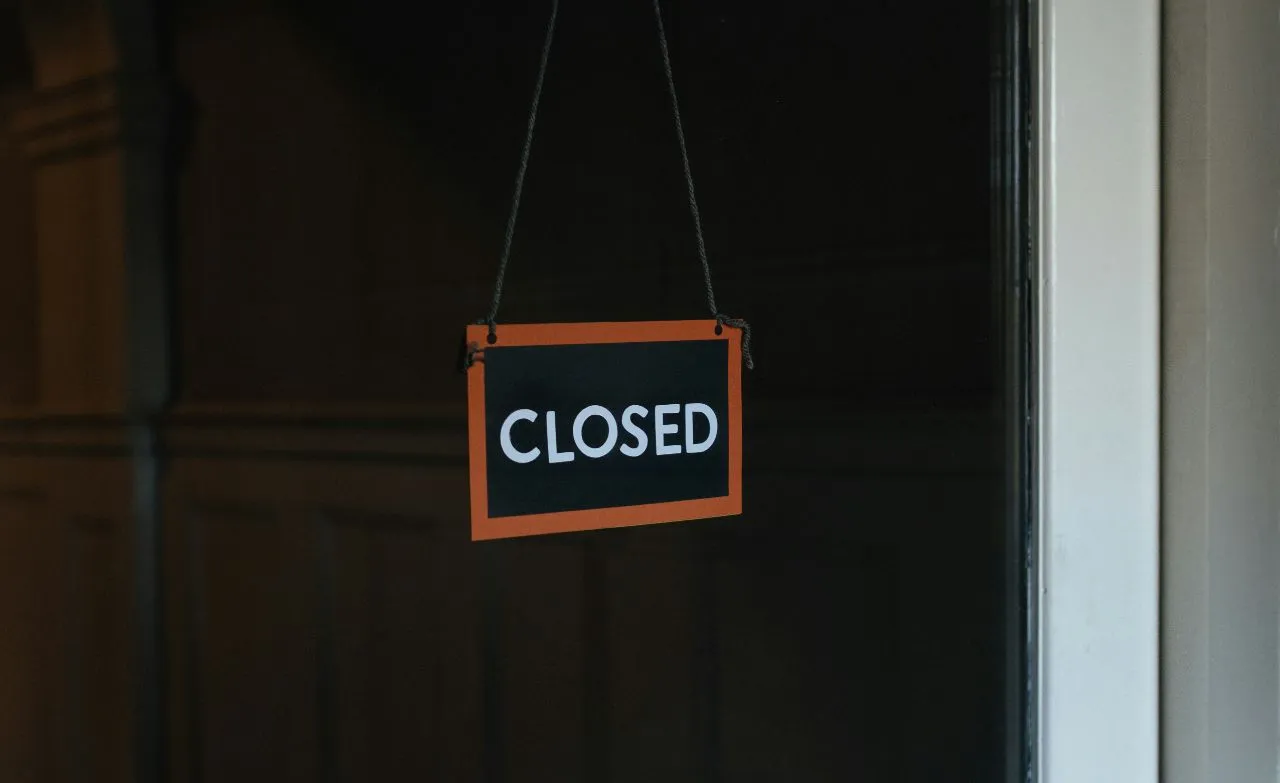
In a recent announcement OPNX, the Seychelles-incorporated cryptocurrency bankruptcy claims platform co-founded by the creators of the now-defunct hedge fund Three Arrows Capital (3AC), has revealed its decision to cease all operations.
https://asset.coinness.com/en/news/d10901ef092836a0c880a0a7968763cf.webp
Photo by Kelly Sikkema on Unsplash

February 14 shutdown

In a message to its users, subsequently shared on social media on Thursday, the OPNX team expressed its commitment to ensuring an orderly closure, urging users to settle all positions by Feb. 7 and withdraw their funds from the platform before Feb. 14, as all withdrawal functionality will be disabled thereafter. The team expressed gratitude to the OPNX community, acknowledging their dedication and trust throughout the platform's existence.


Short for "Open Exchange," OPNX served as both a hybrid bankruptcy claims platform and a crypto exchange, enabling users to trade creditor claims of bankrupt crypto companies.


The origin of OPNX can be linked to two defunct crypto entities — Coinflex and 3AC. Seychelles-based Coinflex was a crypto yield platform that was forced to suspend withdrawals in June 2022. It subsequently entered into a bankruptcy process. Coinflex co-founder Mark Lamb joined forces with 3AC’s Kyle Davies and Su Zhu to found OPNX. In October, Coinflex creditors sued Lamb, alleging that he had appropriated Coinflex's intellectual property, customer base, employees and technology to establish OPNX.


Mired in problems

Within its short existence, OPNX has been mired in problems. From the very outset, there was little goodwill for the new venture, given that many crypto sector participants took a dim view of Zhu and Davies due to the turmoil the collapse of 3AC caused within the industry.


In April of last year, OPNX claimed to have significant venture capital backing, only for many of the VC entities mentioned to quickly deny such claims subsequently. The following month, the local regulator in Dubai, the Virtual Assets Regulatory Authority, formally reprimanded the OPNX founders for promoting an unregulated business within the Emirate of Dubai. In August, it emerged that VARA had hit OPNX and its founders with a hefty fine.


Following the closure announcement, the native OX token of OPNX experienced a significant price decline. Over the course of the past 24 hours, the token unit price has fallen 13.6% to $0.007981.


The failure of 3AC led to Teneo, the firm responsible for liquidating 3AC's assets, subpoenaing Zhu and Davies for concealing details of their physical whereabouts through messages on social media platform X.


The closure of OPNX adds to the challenges faced by Zhu and Davies, as Teneo is actively seeking to recover $1.3 billion directly from the co-founders. The claim asserts that Zhu and Davies engaged in substantial leverage with investor funds after the insolvency of their hedge fund.


In September 2023, Singapore's central bank issued nine-year prohibition orders against Davies and Zhu, citing alleged violations of the country's securities laws at Three Arrows Capital.


All the while, crypto community sentiment remains negative where OPNX and its founders are concerned. Taking to social media, Ikigai Asset Management’s Travis Kling didn’t mince his words, stating:

”I mean it from the bottom of my heart when I say **** these criminals.”


As OPNX concludes its operations, the unfolding events surrounding its co-founders and their association with the failed hedge fund continue to draw attention to the need for the industry to raise its standards.




More to Read
View All
Web3 & Enterprise·

Jul 19, 2023

Upbit Operator Dunamu Assists Indebted Youths in Rebuilding Credit Scores

Upbit Operator Dunamu Assists Indebted Youths in Rebuilding Credit ScoresDunamu, the operator of South Korean cryptocurrency exchange Upbit, has announced an initiative aimed at helping indebted youths rebuild their credit scores. The company will accept applications from July 19 through August 20. Eligible individuals must be residents of Seoul, Gyeonggi-do, or Incheon, aged between 19 and 39, and have successfully completed debt workout arrangements.Photo by Towfiqu barbhuiya on UnsplashGiving backThe project, called Dunamu Next Dream, is part of the company’s efforts to give back to the community by using revenue generated from Luna Classic (LUNC) transaction fees. In September of last year, Dunamu committed to allocating the LUNC transaction fee profits of 239.13025970 BTC to investor protection. After consulting with an external advisory committee, the exchange operator decided to donate around 3 billion KRW ($2.3 million) to public organizations and utilize the remaining funds to provide financial and credit support.To implement the Dunamu Next Dream project, Dunamu entered into a memorandum of understanding (MOU) with the Credit Counseling and Recovery Service (CCRS) and the Social Solidarity Bank (SSB) in April.Two componentsThe project consists of two main components: financial consulting and emergency loans. The initial focus will be on financial consulting, which includes support for living expenses. The aim is to assist indebted youths in developing healthier financial habits. Financial experts will provide six sessions of financial consulting, addressing their recurring indebtedness and fostering financial independence. Additionally, each individual will be granted a living expense of 1.2 million KRW ($950) to ensure they can meet timely interest payments.Dunamu will collaborate with the CCRS and the SSB to conduct a comprehensive review of applicants and select 150 deserving beneficiaries. The selection process will involve thorough evaluation through paper screening and interviews, allowing applicants to demonstrate their dedication and financial responsibility.The second component of the project, emergency lending, will launch in September. It aims to provide interest-free loans of up to 2.5 million KRW to individuals facing immediate needs, such as medical fees.Dunamu CEO Lee Sirgoo highlighted the importance of this project, emphasizing the challenges faced by young people who are the future leaders of society. The economic struggles they encounter can have significant repercussions for society as a whole. Accumulating debts has made it difficult for young individuals to achieve financial stability and advance their careers. Lee stressed the need for public awareness regarding this issue, as it is crucial for young people to establish themselves promptly within society.

news
Markets·

Apr 26, 2024

Turkey leads in stablecoin purchases relative to GDP

According to a recent report from blockchain intelligence firm Chainalysis, stablecoin purchases in Turkey amount to 4.3% of the country's GDP, surpassing all other global economies. The report, titled "The 2024 Crypto Spring Report" highlights Turkey's significant share of stablecoin transactions relative to its economic output.Photo by Michael Jerrard on UnsplashStablecoin activity in TurkeyBetween April 2023 and March 2024, stablecoin purchases in Turkey totaled $38 billion, representing 4.3% of the country's GDP, which was $907 billion as of 2022. This data encompasses transfers between the Turkish lira and stablecoins in either direction, emphasizing the scale of stablecoin activity within the Turkish economy. Chainalysis director of research Kim Grauer explained that stablecoin activity does not directly impact GDP but is expressed as a percentage to provide context for readers. Grauer clarified that the reported figure includes transfers of Turkish lira to stablecoins and vice versa. Turkey's prominence in stablecoin purchases stands out compared to other economies analyzed by Chainalysis. In Thailand and Georgia, stablecoin purchases accounted for 1.3% and 0.7% of GDP, respectively, over the same period. Global trends in stablecoin usageWhile the United States leads in stablecoin transaction volumes, with fiat purchases surpassing $20 billion in March 2024, Turkey's share of stablecoin purchases relative to GDP is notably higher. The use of stablecoins, including Tether (USDT) and USD Coin (USDC), has outpaced other cryptocurrencies like Bitcoin and Ether, representing over 50% of all transaction volume in recent months. Rapid growth in stablecoin transactionsChainalysis analysts attribute the rapid growth of stablecoin transactions to their utility in everyday transactions beyond trading. Major jurisdictions, including the European Union, the United Kingdom, Brazil and Thailand, have witnessed significant increases in fiat purchases of stablecoins over the past year. Nations experiencing currency volatility and devaluation, such as Turkey, have increasingly turned to stablecoins like USDT to safeguard their savings. Turkey's inflation rate surged to as high as 67% in March, prompting residents to seek alternative stores of value. The findings from Chainalysis underscore the growing prominence of stablecoins in global economic activity, particularly in nations grappling with currency instability. Turkey's significant share of stablecoin purchases relative to GDP reflects a broader trend of increasing adoption of stablecoins for everyday transactions and wealth preservation. 

news
Web3 & Enterprise·

May 06, 2024

Animoca Brands partners with Saakuru Labs to bolster Web3 gaming

Metaverse gaming company Animoca Brands has recently announced a strategic partnership with Saakuru Labs, aiming to drive the adoption and integration of blockchain technology within Saakuru Labs' ecosystem. The collaboration is expected to bolster the expansion of the Web3 gaming industry, particularly in Southeast Asia, where the partnership officially kicks off. The initiative involves the incorporation of Web3 games developed with the Saakuru Protocol into the Animoca Brands ecosystem. Gasless transactionsAnimoca Brands will play a crucial role by providing gaming titles to its partners, while Saakuru Labs will facilitate Animoca Brands' expansion efforts in Southeast Asia. Developers stand to benefit from access to accelerated development processes and gasless transactions. Gasless transactions are particularly significant in regions like Southeast Asia, known for lower-income demographics. The market has shown a keen interest in blockchain technology and Web3 games, indicating promising growth potential. With gasless transactions, developers can seamlessly integrate critical functionalities into their gaming titles, including infrastructure components.Photo by Bastian Riccardi on UnsplashTransition to Web3 gamingThe Saakuru Protocol, known for its consumer-centric L2 infrastructure, enables major integrations of Web3 components into traditional gaming segments. This ensures a smooth transition from traditional gaming to Web3 gaming, enhancing the overall gaming experience. Yat Siu, Executive Chairman of Animoca Brands, emphasized the pivotal role of gaming in the evolution of the Internet and open metaverse, highlighting Southeast Asia's potential to lead in Web3 technology adoption. Jack Vinijtrongjit, CEO of Saakuru Labs, underscored the platform's capability to offer seamless engagement with multiplayer gaming titles without latency or transaction fees. The partnership between Saakuru Labs and Animoca Brands aligns with Saakuru Labs' recent collaboration with cloud computing infrastructure platform Aethir, aimed at enhancing blockchain gaming through GPU infrastructure. Notable partners of Animoca Brands, including GameGPT, W3GG and GameFi.org, have already expressed their commitment to adopting the gasless protocol. Experts believe that gaming presents an ideal avenue to accelerate blockchain technology adoption and advance Web3 gaming principles. With gaming becoming a mainstream form of entertainment, seamless integration of technology is crucial for user acceptance. The outcome of the Animoca Brands and Saakuru Labs partnership is anticipated to manifest results in the coming quarter or by the end of the year. 

news
Loading