Top

Bitpowr looks to Asia for further growth following $200M milestone

Web3 & Enterprise·February 06, 2024, 2:55 AM

Bitpowr, a digital asset custody and blockchain wallet provider that concentrates on the African market, is looking to expand in Asia having achieved a recent crypto transaction milestone.


$200 million in total transactions

The company has exceeded $200 million in total transactions processed since its launch in January 2022. The milestone demonstrates the firm’s efforts in furthering its mission to democratize finance with accessibility for all through crypto.


The achievement was outlined recently in a report by TechCabal, a pan-African publication that covers innovation and tech developments across Africa. Bitpowr provides a modular ecosystem of Web3 and blockchain infrastructure to aid enterprises in building out blockchain-powered solutions.

https://asset.coinness.com/en/news/d16839eb6173f217f634db36ab98ca50.webp
Photo by Kyle Glenn on Unsplash

Asian clientele on the ascendancy

In a recent interview, Toby Oyetoke, the co-founder of Bitpowr, disclosed a noteworthy shift in customer demographics, with Asian clientele now surpassing their African counterparts in contributing to the company's $200 million transaction milestone. The Bitpowr co-founder believes that this signals a growing demand in the Asian market for accessible blockchain tools and infrastructure which are necessary for financial institutions seeking to launch and scale their products and services, relative to Web3.


Oyetoke shared insights into Bitpowr's financial performance, stating:

“Currently, we do up to $20 million per month in terms of traction volume processed, and that is from April 2022 till now. We now generate more revenue than we spend. We are cash flow positive.”


There have been signs that inter-regional trade between the African and Asian regions is growing where crypto-related payment gateways and solutions are concerned. At the end of last month, Klasha, an Africa-based cross-border payments company, partnered with Singapore-headquartered digital payments firm FOMO Pay with a view towards better enabling Asian merchants to trade with African businesses over crypto-enabled payment rails.


A recent Chainalysis report revealed Asia as the largest cryptocurrency market globally. Its crypto adoption index prominently featured Asian nations such as India, Thailand and Vietnam among the top grouping of nations where adoption of the digital asset innovation is concerned.


Bitpowr co-founder Amarachi Amaechi is equally enthused about Asian market growth opportunities. She stated:


“There is a good demand from Asia right now. We are seeing increasing representation in transaction volume which also translates to an increase in revenue for us.”  


Amaechi outlined that the firm intends to hire people from Asian countries in order to market the company’s service offering in those markets.


Focus on Southeast Asia

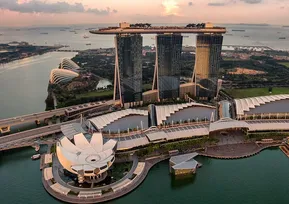
Looking ahead, Bitpowr is setting its sights on expanding further into the Asian market, particularly in Southeast Asia, while maintaining its operations in Africa. The company aims to establish its ledger and wallet infrastructure during this strategic expansion.


Bitpowr has also announced that it has achieved SOC 2 compliance, meaning that it follows strict information security policies and procedures. It has also initiated the implementation of the ISO 27001 audit process through its partnership with New York-headquartered compliance specialist Thoropass.


The company's expansion into the Asian market is anticipated to not only accelerate its own growth but also offer customers in the region access to innovative digital asset solutions, supporting them in achieving their financial goals.


More to Read
View All
Web3 & Enterprise·

Jul 31, 2023

Strategic Shift Sees Wintermute Expand Singapore Base

Strategic Shift Sees Wintermute Expand Singapore BaseCrypto market maker Wintermute is making a strategic shift towards Asia, specifically in Singapore, following the digital asset industry’s growing interest in the region’s growth opportunities.Photo by Hu Chen on Unsplash4% of staff moving to SingaporeIn an interview with Bloomberg last week, Wintermute Co-Founder Yoann Turpin said he will move from London, where the company is currently headquartered, to Singapore in the coming months. Additionally, approximately 4% of the company’s workforce, which currently comprises around 85 staff members, will also relocate to the city-state, where Wintermute conducts its derivatives business.At the time of publication, the company was also actively recruiting for an open position in the city-state. In further publicizing Wintermute’s developing presence in Singapore, Turpin took to social media recently to invite people to meet Wintermute’s Singapore-based team in September at Token 2049 Singapore. Evgeny Gaevoy, Wintermute Co-Founder and CEO, is scheduled to appear as a speaker at the event.Turpin emphasized the company’s focus on Asia and highlighted the significance of having a co-founder based in the region to drive the business forward. The move comes as the crypto industry faces the aftermath of a crackdown in the United States, triggered by bankruptcies at platforms like FTX and Celsius Network.Exploring global opportunitiesIn response, crypto businesses are exploring opportunities in Asian markets, with countries like Singapore, Hong Kong, Japan, and the United Arab Emirates vying to attract companies while ensuring robust regulatory frameworks in the wake of the market turbulence in 2022.Although tokens like Bitcoin and Ether have partially recovered from the crash experienced last year, spot digital-asset trading volumes and volatility have remained low, indicating reduced investor engagement. That said, demand for crypto futures and options has proven to be more resilient.Possible Dubai expansionWintermute established an office in Singapore in 2021, adding to its existing base in London. Turpin also confirmed to Bloomberg that the company is weighing up the possibility of establishing a third office in Dubai as part of its expansion plans. Dubai, like Singapore and Hong Kong, has been actively trying to attract crypto businesses over the course of the past twelve months.During the 2021 crypto bull market, the company reported trading volume worth $1.5 trillion and generated $1.05 billion in revenue. However, the market maker also faced challenges during the market turmoil, including exposure to around $55 million of assets on FTX. Moreover, in September of the same year, Wintermute experienced a hack that resulted in a loss of about $160 million from its decentralized finance operations.Despite the hurdles faced in 2022, Turpin expressed confidence in the company’s resilience and stated that they do not have immediate plans to raise funds. The company just celebrated six years in business, and has executed 8.4 million OTC trades over the course of the past twelve months.By relocating key personnel and expanding its presence in Singapore and possibly Dubai, the company aims to strengthen its foothold in the Asian market and navigate the challenges and opportunities that lie ahead.

news
Web3 & Enterprise·

Oct 28, 2024

Binance Thailand CEO identifies Thai market shift from retail to institutions

The focus of Thailand’s crypto market is moving towards institutional business rather than retail. That’s the view of Nirun Fuwattananukul, CEO of Binance Thailand. Changing regulatory landscapeFuwattananukul laid out his thoughts on the matter in an opinion piece published by the Bangkok Post on Oct. 25. The Binance executive believes that the regulatory conditions are changing in the country such that institutional involvement in digital assets will become more likely. Fuwattananukul pointed to a proposal that was put forward by the Thai Securities and Exchange Commission (SEC) earlier this month. The proposal, published on Oct. 9, seeks to permit mutual and private equity funds in Thailand to invest in various crypto products, including the spot Bitcoin exchange-traded funds (ETFs) that were launched in the United States earlier this year. Back in June, the Thai SEC green-lighted the launch of homegrown spot Bitcoin ETFs. In August, the regulator launched the Digital Asset Regulatory Sandbox, inviting interested parties to test crypto-related services within a controlled environment. Fuwattananukul described the SEC’s new rules opening institutional access to digital asset products as a “vital step in the maturation of Thailand’s cryptocurrency landscape.” The Binance Thailand CEO added that “by allowing more institutional funds to participate, the SEC is enabling a diverse range of investment strategies and helping digital assets gain broader acceptance in the mainstream.”Photo by Vadim Artyukhin on UnsplashPotential regional crypto hubIt’s based on this rationale that the Binance executive perceives a shift in focus within the crypto market in Thailand, with the likelihood of more money flowing into the space from institutional sources than from retail.  The entry of institutional money could lead to a “more mature ecosystem,” while further legitimizing Bitcoin and the crypto space more broadly. Extending that line of thought, Fuwattananukul suggests that this change of focus to institutional involvement could lead to positioning Thailand as a regional digital asset hub.RWA tokenizationThe Binance Thailand executive also identified the tokenization of real-world assets (RWAs) as an area that’s trending right now. He cites it as an example of the convergence of TradFi and digital assets markets. Fuwattananukul stated: “Tokenisation brings 24/7 trading, increased liquidity, and cross-border accessibility, which could reshape traditional financial markets and make investment opportunities more inclusive.” Back in January, Thailand’s SEC introduced new rules that lifted restrictions on retail investors accessing two classes of tokenized RWAs. The change affected real estate-backed tokens or tokens linked to real estate revenues. Prior to the rule change, retail investors couldn’t invest more than $8,415 in such tokenized assets. In collaboration with Gulf Innova, a subsidiary of Gulf Energy Development, Binance launched Binance Thailand as a joint venture in January. The SEC had awarded the business a trading license in 2023.

news
Web3 & Enterprise·

Jan 05, 2026

South Korean card issuers line up stablecoin plans as regulation nears

South Korean credit card companies are preparing to develop a stablecoin-powered payment system, Yonhap Infomax reported. The Credit Finance Association (CREFIA)—a nonprofit comprising credit card firms, leasing companies, and venture capitalists—plans to launch a second task force this month. The group aims to prepare for the anticipated regulatory framework governing stablecoins.Photo by rupixen on UnsplashStablecoin cards, settlement under reviewThe task force will discuss building a comprehensive system covering the entire transaction process, from stablecoin-based card payments to merchant settlements. The agenda also includes testing stablecoin-powered debit cards, which would allow users to pay at standard card terminals just as they would with traditional cards. This second task force will include nine credit card companies—including Samsung Card, Shinhan Card, and KB Kookmin Card—that participated in the initial task force formed last July. At that time, CREFIA and the participating firms held weekly meetings on regulatory and technological issues while gathering input from external advisors. Through that process, the group examined whether credit card companies could legally engage in stablecoin businesses under the current Specialized Credit Finance Business Act. They also jointly filed 30 stablecoin-related trademark applications and reportedly sought consultations with financial authorities on securing payment and settlement accounts for stablecoin transactions. This push into the sector comes despite lingering uncertainty regarding the government’s phase-2 virtual asset legislation. Progress on the draft has been delayed due to disagreements between financial and monetary authorities. The Bank of Korea favors a model where only consortia with majority bank ownership can issue stablecoins. By contrast, the Financial Services Commission opposes setting a specific bank-ownership threshold in law to allow participation by non-bank firms. The forthcoming legislation is expected to comprehensively regulate stablecoins, including their issuance, distribution, and custody, leaving companies to await clearer guidance. Despite the legislative delays, the credit card companies are positioning themselves to move quickly once the rules are finalized. Investor sentiment shifts to U.S. equitiesWhile traditional financial firms explore digital assets to expand their business, South Korean investors are prioritizing U.S. equities over cryptocurrencies for this year. According to a weekly survey of 2,000 respondents conducted by CoinNess and Cratos, 30.8% said they plan to focus on U.S. stocks. Cryptocurrencies ranked second at 25.5%, followed by gold and silver (18.3%), Korean stocks (12.8%), and cash (12.7%). Market sentiment toward Bitcoin also appears cautious. 22.7% of respondents said they expect Bitcoin to rise or surge this week, down from 28.9% the previous week. Meanwhile, 38.3% predicted the price would move sideways, while 39% expected a fall or plunge. Asked about the broader crypto market, 50.8% of respondents said fear or extreme fear was prevailing. 

news
Loading