Top

Bitcoin rally significantly benefits online-only Kbank in Korea

Markets·March 04, 2024, 7:11 AM

Following the recent bitcoin boom, transactions in cryptocurrencies among Korean investors have surged, significantly benefiting local banks that have made contracts with Korean crypto exchanges to offer real-name accounts for crypto investors. As the price of bitcoin soared to as high as KRW 90 million ($67.6 million) in Korea on Thursday, online-only bank Kbank saw an uptick in trading fee revenue, according to local media outlet The Seoul Economic Daily. Kbank is a partner with crypto exchange Upbit, which accounts for 70% of the Korean crypto market. 


Under the current law, Korean crypto exchanges offering trading against Korean won must secure real-name accounts from a bank. These banks typically earn fees of KRW 300 to KRW 1,000 per transaction. Currently, other than Kbank, NongHyup Bank offers real-name accounts to Bithumb, Kakaobank to Coinone, Shinhan Bank to Korbit and Jeonbuk Bank to Gopax.

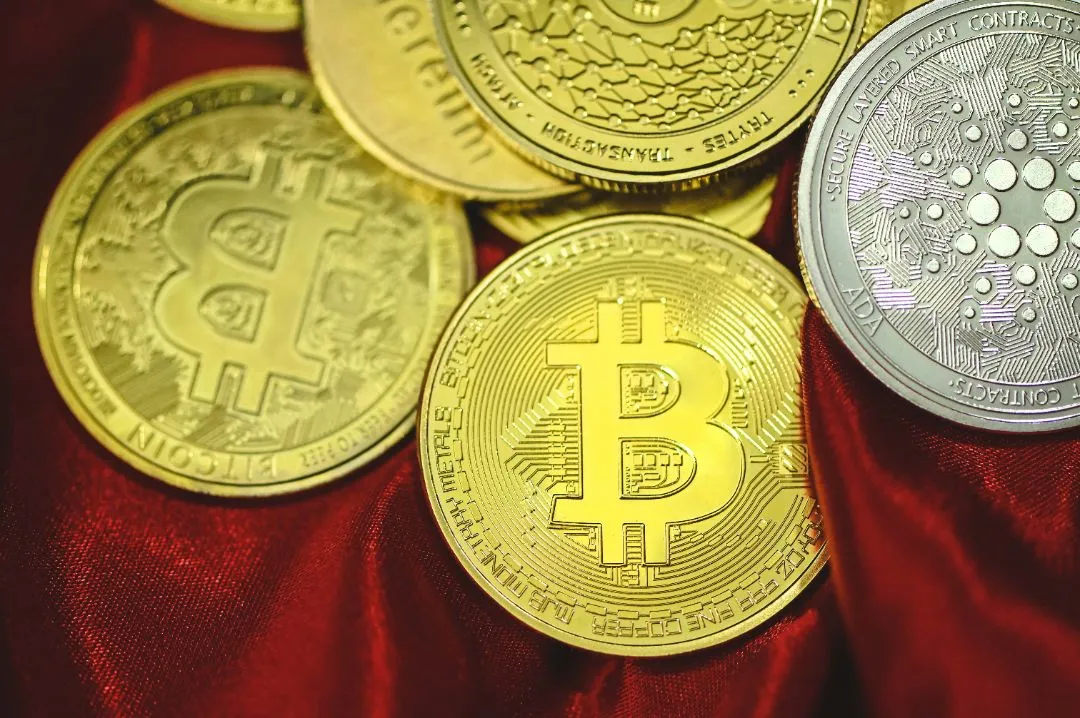
https://asset.coinness.com/en/news/7315c44d342b0a44a3f5b5528d734719.webp
Photo by Kanchanara on Unsplash

Crypto trading volume up 68.2% in a month

According to Xangle, a crypto data intelligence platform, the total crypto trading volume in Korea rose by 68.2% between the last week of January and the last week of February, rising from KRW 2.39 trillion to KRW 40.2 trillion. During the same period, the daily average trading volume also grew from around KRW 4 trillion to KRW 5.7 trillion.  


In particular, the bitcoin trading volume on Upbit surged to 19,254 BTC on Feb. 28, reaching the second-highest level since Nov. 10, 2022, when the asset’s trading volume stood at 20,710 BTC. After signing the real-name account contract with Upbit in 2020, Kbank raked in KRW 29.2 billion in fees during the last bull market of 2021, which was equivalent to 14% of its annual interest income of KRW 198 billion and exceeded its net income for the year, which stood at KRW 22.5 billion.


Increased bank deposits from exchange users

Kbank also saw a substantial rise in its balance sheet, with Upbit users depositing around KRW 2.94 trillion into their real-name accounts. The sum is six times greater than the deposits made into NongHyup Bank by Bithumb users, which stood at KRW 547.1 billion. 


Experts see that the surge in Kbank’s user base, which recently surpassed 10 million users, is largely attributed to growing excitement surrounding bitcoin. One crypto insider said that crypto trading fees, which have been on the decline for the past 2 years, could take a turn this year, signaling further gains for the affiliated banks. 

 

More to Read
View All
Web3 & Enterprise·

Sep 25, 2023

Korea Investment and Securities Completes the Construction of Security Token Infrastructure

Korea Investment and Securities Completes the Construction of Security Token InfrastructureKorea Investment and Securities (KIS) recently announced that it has become the first securities firm in South Korea to successfully establish an infrastructure for security token offerings.Photo by Joshua Sortino on UnsplashReal-world assetsSecurity tokens are a new class of securities that are based on distributed ledger technology, allowing individuals to invest in real-world assets (RWAs) that can be tokenized. Such assets include real estate, ships, airplanes, and artworks.In March, KIS initiated a security token consortium named “Korea Investment ST Friends,” collaborating with Internet-only banks KakaoBank and Toss Bank, AI company Kakao Enterprise, and blockchain developer Open Asset. Since May, the consortium has been diligently working with the principal objective of constructing an infrastructure leveraging distributed ledgers. Consequently, the group has finalized the development and testing of a system that manages the entire trajectory of security token projects, from issuance to liquidation.Cloud systemSpecifically, KIS has built its infrastructure on a cloud network, bearing in mind that the regulatory framework for security tokens is still in development. This cloud system is capable of adapting to regulatory modifications and implementing improvement updates. Moreover, it utilizes an agile development approach to encourage rapid decision-making and productive collaborations, enhancing time efficiency.Compatibility with the traditional systemThe newly established security token infrastructure is also compatible with the traditional security trading system. Achieving this compatibility posed numerous technical challenges as the new system operates on distributed ledgers, whereas the existing one relies on centralized servers.KIS is preparing to file patents for some of the technologies incorporated into the new system. These technologies encompass the payment of dividends through smart contracts, assurance of immediate settlements using deposits on distributed ledgers, and the management and safeguarding of personal information. By demonstrating the infrastructure’s capability and stability, the securities firm aims to gain a technological edge.Choi Seo-ryong, the head of the platform division at KIS, expects the new infrastructure to mark a significant milestone as distributed ledger technology merges with traditional finance. He further mentioned that the securities company will discover blue-chip assets meeting investor needs while committing to the stable establishment of the regulatory framework and the protection of investors.Moving forward, ST Friends will continue to enhance the stability and functionalities of the infrastructure through a series of field tests related to the entire process of security token products. Aiming to construct a security token ecosystem, the group will also concentrate on developing products by collaborating with various firms, including Korean content investment platform Funderful and real estate trading platform Valuemap.

news
Policy & Regulation·

Nov 10, 2023

Suspects emerge in Taiwan in ongoing JPEX scandal fallout

Suspects emerge in Taiwan in ongoing JPEX scandal falloutIn the ongoing saga surrounding the collapse of Dubai-headquartered cryptocurrency exchange JPEX, Taiwanese prosecutors have identified new suspects, marking a significant development in the case.The Taipei District Prosecutors Office (TDPO) has requested the custody of Chang Tung-ying, chief partner at JPEX’s Taiwan office, over allegations of fraud. That’s according to a report by local TV channel TVBS News on Thursday.Photo by Ricky Zeng on UnsplashMoney laundering and Banking Act violationsThis latest development brings a new twist to the scandal, which has largely been playing out in the Chinese territory of Hong Kong. The TDPO reportedly conducted searches at nine locations linked to the JPEX investigation. Chang, along with three other individuals, including JPEX lecturer Shih Yu-sheng (also known as Shi Yu), was summoned by the authorities. Chang and Shih are being investigated for violations of the Banking Act and the Money Laundering Control Act.During the investigation, JPEX salespersons Liu Chien-fu and Niu Keng-sheng were released, with Liu being granted bail of 50,000 New Taiwan dollars ($1,550). Niu, the registered person in charge of JPEX Taiwan, was released after questioning.Celebrity promoter focusThe report also revealed that Nine Chen, a Taiwanese celebrity and singer who previously served as a brand ambassador for JPEX, was summoned by prosecutors. He has cooperated with law enforcement in the role of a witness to the alleged fraud who has testified to illicit activity carried out by the platform. However, it is now understood that recent events have developed such that Chen is now being treated as a defendant.This action resonates with actions taken by the authorities in Hong Kong some weeks ago in the earlier stages of investigation into this affair. In September, one of the first actions taken by Hong Kong law enforcement was the arrest and detention of social media influencer and former lawyer Joseph Lam, known to followers as “Jolamchok” on the Instagram platform.Alleged liquidity crisisJPEX, once a successful crypto exchange, abruptly halted some services in mid-September, citing a liquidity crisis triggered by alleged “unfair treatment” from institutions in Hong Kong. The sudden implosion led to accusations of misleading investors regarding the application for a crypto trading license and other issues.The scandal surrounding JPEX has escalated into a major industry concern, prompting investigations by Hong Kong authorities. Over 2,000 complaints from JPEX users, reporting losses of nearly $180 million, have triggered significant regulatory attention.As investigations progressed in Hong Kong, the authorities took the decision to block access to the platform, with the platform responding by advising customers to circumvent this restriction through the use of a virtual private network (VPN).As of September 25, law enforcement has arrested at least 11 alleged suspects in the JPEX case, while the alleged masterminds remain at large. At that time, Hong Kong’s Securities and Futures Commission (SFC) pledged to renew its efforts to combat unregulated crypto platforms in Hong Kong.A survey conducted by the Hong Kong University of Science and Technology (HKUST) business school has indicated that the affair has had a negative impact on public sentiment towards crypto more recently.

news
Policy & Regulation·

Feb 29, 2024

Korea’s ruling party retracts its pledges to approve spot bitcoin ETFs

With the general election just over a month away, South Korea’s ruling People Power Party (PPP) has retracted its campaign pledges to allow trading of spot bitcoin ETFs, local media outlet Chosun Biz reported. The PPP has previously drawn substantial attention from the crypto industry, as the party showed its intention to ease a range of crypto regulations in hopes of gaining more votes in the general election.  A political insider familiar with the issue said yesterday that the PPP has recently removed crypto-related agendas from its priority list. The crypto pledges, initially planned to be announced last week, have been permanently suspended, the person said. “The leaders of the PPP are currently focusing on nomination for local constituencies and its satellite People’s Future Party, rather than coming up with additional crypto agendas. As the PPP appears to be embarking on the election campaign starting in March, the likelihood of the ruling party releasing crypto pledges is very slim,” another political circle insider mentioned.Photo by Traxer on UnsplashTalks between PPP and FSC go in vainThe PPP’s decision to retract crypto-related pledges comes after its attempt to approve the introduction and trading of spot bitcoin ETFs met with opposition from the Financial Services Commission (FSC).  Unlike the PPP or its opposition Democratic Party of Korea (DPK) that scrambled to ease crypto regulations ahead of the general election, the FSC’s stance on viewing crypto assets as risky hasn’t changed much. Despite last month’s approval of spot bitcoin ETFs by the U.S. Securities and Exchange Commission (SEC), the FSC continues to ban the issuance of crypto-based financial products or investments in them, stating that crypto assets are not defined as underlying assets under the current Capital Markets Act. This has gotten in the way of the PPP’s plan to delay taxation on crypto gains for as long as two years and allow institutional investments in virtual assets.  The PPP also had to verify all the party members to see if any of them had a record of wrongdoings related to crypto transactions, which further delayed the pledges. This shows politicians’ heightened awareness of crypto-related issues. Last year, the DPK lawmaker Kim Nam-guk made headlines for a scandal, as he was accused of failing to report a considerable amount of crypto assets transactions to the financial authority. PPP lags a step behind its opposition DPKThe DPK has also strived to come up with crypto pledges alongside the PPP. The crypto-related pledges released by the DPK so far largely overlap with those of the PPP, meaning there’s no particular merit to the PPP’s campaign vows leading up to the general election. Many see this as another reason for the PPP’s decision to withdraw crypto pledges. The DPK unveiled its plan on Feb. 21 to legalize spot bitcoin ETFs, and pledged to deduct taxes on crypto gains worth less than KRW 50 million ($37,400). Under the current law, only crypto gains that are worth less than KRW 2.5 million qualify for the tax deduction. Most of these pledges largely align with those of the PPP.  With the PPP’s withdrawal of its plan to ease crypto regulations, the excitement among crypto industry insiders for the upcoming general election appears to have subsided. “Despite the DPK’s promise to allow spot bitcoin ETFs, it is unlikely that we’ll see crypto assets being incorporated into the conventional financial system without the ruling party’s approval, let alone fostering the blockchain industry,” said one crypto insider. 

news
Loading