Top

The Seoul AI Innovation Tour 2024 comes to an end, sharing insights on digital finance

Web3 & Enterprise·March 08, 2024, 5:55 AM

The Seoul AI Innovation Tour 2024 – scheduled from March 5 to 7 – came to an end yesterday, Korean media outlet ETNews reported. Under the theme of “Navigating the Future: Unveiling Seoul’s Prowess in AI Innovation,” the event highlighted Seoul’s potential as an AI technology hub and facilitated discussions on global cooperation to foster the Asian fintech and digital asset industry. 


The event was jointly hosted by the Korea Fintech Industry Association (KFIA) and The Asian Banker, a Singapore-based consultancy in finance and banking services. Several major Asian banks and fintech industry insiders attended the event, including officials from Permata Bank in Malaysia and Bank SinoPac in Taiwan. 

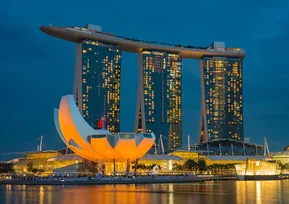
https://asset.coinness.com/en/news/4df5449e1821d4fe84292b337cdea4c9.webp
Photo by Headway on Unsplash

Lee Keun-ju, President of the KFIA, stated in his opening speech that cutting-edge technologies such as AI will further accelerate innovation in financial services. He also emphasized how the Korean financial and fintech industry developed at a breakneck speed over the past decade, introducing the landscape of the Korean fintech industry to bank officials. 


Sharing insights on fintech and digital asset industry


In the initial session, KFIA officials delivered speeches on the current financial environment of Korea and the association’s contributions to the local fintech industry. The following discussions revolved around development strategies for the fintech industry and collaborative efforts between the association and government institutions.


In the later part of the event, leading local fintech insiders discussed the outlook of the security token offering (STO) and digital asset industry, sharing strategies to broaden their businesses to overseas markets. 

More to Read
View All
Web3 & Enterprise·

Nov 07, 2023

NEOPIN wallet users gain access to Pala’s NFT marketplace

NEOPIN wallet users gain access to Pala’s NFT marketplaceNEOPIN, a centralized decentralized finance (CeDeFi) platform, has entered into a strategic partnership with South Korean NFT marketplace Pala. This collaboration aims to connect the NEOPIN wallet to Pala’s NFT trading platform, thereby facilitating a more interconnected blockchain ecosystem on a global scale.Photo by Pete Linforth on PixabayNEOPIN wallet integrated into PalaThis partnership paves the way for enhanced user experience, as NEOPIN wallet holders will have the added convenience of trading non-fungible tokens (NFTs) directly on Pala using the virtual assets in their NEOPIN wallets. Furthermore, these wallets will also serve as a repository for purchased NFTs.Additionally, Pala stands to benefit from access to NEOPIN’s international users who have gone through the Know Your Customer (KYC) and anti-money laundering (AML) checks, broadening its market reach.Growing network connectionsNEOPIN is set to aid Pala in establishing connections with NEOPIN’s network of NFT partners. Conversely, Pala will assist NEOPIN with introductions to Pala’s blockchain partners. This collaborative approach leverages their respective strengths, setting the stage for a synergistic relationship.Additionally, the collaboration will involve concerted efforts from both parties to enhance their services and broaden their customer reach. Part of this initiative includes aiding Web2 companies and projects in their Web3 endeavors, as well as rolling out products that are underpinned by real-world assets (RWAs) or offer practical real-life benefits.NEOPIN CEO Kim Yong-ki expressed enthusiasm about the partnership, noting that it is poised to be mutually advantageous, particularly since trust and convenience are core values shared by both companies. Kim further emphasized their commitment to achieving success on an international level, not only through service cooperation but also by utilizing their respective ecosystems.Jason Pyo, CEO of Pala, echoed a similar sentiment, stating that the partnership is set to propel service enhancement, foster the growth of blockchain businesses and contribute to the expansion of the Web3 ecosystem.It’s noteworthy that Pala is a joint venture established by Snow, the mobile video messaging app subsidiary of internet giant Naver, and artificial intelligence (AI) company Alchera. This joint enterprise has claimed a leading position in the Korean NFT trading arena, having exceeded an accumulated trading volume of KRW 30 billion ($23 million) as of April last year.The Pala platform serves as a one-stop shop for NFT services, including NFT minting, secondary market sales and launchpads. It accommodates a range of blockchains like Klaytn, Ethereum and Polygon.NEOPIN has been expanding its offerings to improve user experience, introducing services beyond its DeFi suite. This includes their NFT wallet capabilities. Following its announcement last year to intensify focus on NFT initiatives, NEOPIN has updated its wallets to support multiple NFT standards, such as KIP-17, ERC-721 and EIP-5192.

news
Policy & Regulation·

Jul 28, 2023

Hong Kong and Saudi Arabia Collaborate on Tokenization and Payments

Hong Kong and Saudi Arabia Collaborate on Tokenization and PaymentsIn an effort to enhance financial collaboration, Hong Kong and the Kingdom of Saudi Arabia are expanding their ties and focusing on agreements related to tokenization and payments infrastructure.Photo by Ketut Subiyanto on PexelsBilateral meetingOn Wednesday, the Saudi Central Bank (SAMA) and the Hong Kong Monetary Authority (HKMA) held a bilateral meeting to discuss various initiatives aimed at integrating financial services between the two nations. During the meeting, the central banks explored areas such as financial infrastructure development, open market operations, market connectivity, and sustainable development. Additionally, they signed a memorandum of understanding (MoU) to facilitate joint discussions on financial innovation.HKMA chief executive Eddie Yue emphasized the potential for cooperation in fields like economy, trade, sustainable development, finance, and fintech between the two nations. He expressed optimism about the continued development of the relationship and the prospects it holds for the future.SAMA governor Ayman Al-Sayari echoed this sentiment, acknowledging the significance of the MoU in fostering stronger ties and assisting them in the future. “HKMA is an important partner for the Saudi Central Bank. Today’s MoU will support our relationship and contribute to the consolidation of efforts in developing the Fintech industry,” he stated.Tokenization and payment infrastructureNotably, the authorities of Hong Kong and Saudi Arabia also used the opportunity to exchange expertise in tokenization, payment infrastructure, and supervision technologies. This collaboration opens up possibilities for both countries to leverage each other’s strengths in these areas.Hong Kong has been actively participating in various inter-jurisdictional tokenization initiatives. In June, the Bank of China’s investment bank subsidiary, BOCI, issued a $28 million tokenized security in Hong Kong using the Ethereum blockchain. The project utilized Goldman Sachs’ tokenization protocol GS DAP and featured cash tokens representing claims on the Hong Kong dollar.Digital assets firm Ripple Labs has also participated in a HKMA pilot program that implicates real estate tokenization.No crypto discussionHowever, the joint announcement did not explicitly mention any joint efforts related to cryptocurrencies like Bitcoin. It is worth noting that Hong Kong recently allowed retail investors to trade crypto, but Saudi Arabia has not shown any specific plans to promote cryptocurrencies in recent years. In 2019, the Saudi Central Bank issued a warning that Bitcoin is not recognized by legal entities within the country.International collaborationRecent months have seen ever greater collaboration between international central banks and regulators relative to digital assets. Last month Japan’s Financial Services Authority (FSA) joined forces with the Monetary Authority of Singapore (MAS) on its Project Guardian initiative to further explore the potential of digital assets.In May, the central banks of Hong Kong and the United Arab Emirates announced a collaboration to work on cryptocurrency regulations and financial technology development. In the same month, MAS partnered with New York’s Federal Reserve Bank on an initiative that examined the use of central bank digital currency (CBDC) for wholesale cross-border payments.As the financial collaboration between Hong Kong and Saudi Arabia strengthens and other such international partnerships continue to unfold, the focus on tokenization and payment infrastructure and digital assets more broadly signifies a step forward in embracing these innovative financial technologies.

news
Web3 & Enterprise·

Jan 25, 2024

ClayStack expands into Ethereum restaking ahead of token launch

ClayStack, the crypto liquid staking platform, has made a strategic move into the Ethereum restaking arena through EigenLayer, providing users with reward points in anticipation of its upcoming token launch.Photo by Kanchanara on Unsplash‘Redefining the staking landscape’The Singaporean platform describes its mission as redefining “the staking landscape by helping users unlock the underlying value of their crypto assets, and we are doing this by building a decentralized cross-chain liquid staking protocol.” In its efforts to deliver on that mission, it appears that the crypto startup is set to convert its Ethereum liquid staking token, csETH, into a liquid restaking token, leveraging the Ethereum restaking protocol offered by EigenLayer. Eigenlayer enables restaked sidechains, through which ETH restakers can participate in Ethereum-centric consensus protocols. Reward pointsIn an announcement on Tuesday, ClayStack revealed its plan to offer reward points to users participating in Ethereum restaking, with a 1:1 ratio for redemption when the platform's token is launched. Each clay point earned will be redeemable for one clay token during the token launch. Notably, the platform distinguishes itself by offering a 1:1 redemption system, setting it apart from other points programs. Founder and CEO Mohak Agarwal explained how the project is adopting EigenLayer's protocol for this new service. Agarwal had teased that the project had something new to offer in the pipeline when taking to social media last week, writing:”We are entering into a new era where staking will become more dynamic, accessible, and rewarding for the entire DeFi community.” Currently, ClayStack accepts native ETH for direct restaking on EigenLayer. Agarwal confirmed to The Block that other liquid staking tokens, such as Lido staked ether (stETH) and Rocket Pool ether (rETH), will be integrated into the platform in the coming days. He emphasized that these tokens will be directly deposited on EigenLayer, streamlining the restaking process. Growing interest in restakingEthereum restaking has gained significant traction since EigenLayer's launch in June of the previous year, with a total value locked (TVL) in smart contracts reaching approximately $1.7 billion. Renzo Protocol recently entered the Ethereum restaking space via EigenLayer, securing a $3.2 million seed funding round. Despite being in beta, Renzo has already achieved a TVL exceeding $116 million. ClayStack's TVL currently stands at around $2.25 million, having initially launched liquid staking for Polygon's MATIC token in 2022. Following that, the platform introduced Ethereum liquid staking in September. However, the latest move marks a shift in focus towards Ethereum restaking due to challenges faced on the Polygon network. Agarwal outlined the reward structure, stating that 20 clay points will be allocated per ETH per week, with rates subject to change every Monday but generally remaining constant throughout the week. There are no minimum or maximum points for individual users, although there is a weekly total cap for all users combined, which refreshes at the beginning of each week.

news
Loading