Top

Thailand greenlights U.S. spot Bitcoin ETF access

Policy & Regulation·March 13, 2024, 8:35 AM

The decision by U.S. regulators to approve spot Bitcoin exchange-traded funds (ETFs) in January appears to be having some knock-on effects, with the latest such response seeing the Thai authorities enable access to such products for institutional investors and ultra-high-net-worth individuals within Thailand.

https://asset.coinness.com/en/news/82fef656e7d5a9134b98a041ff4b2a5e.webp
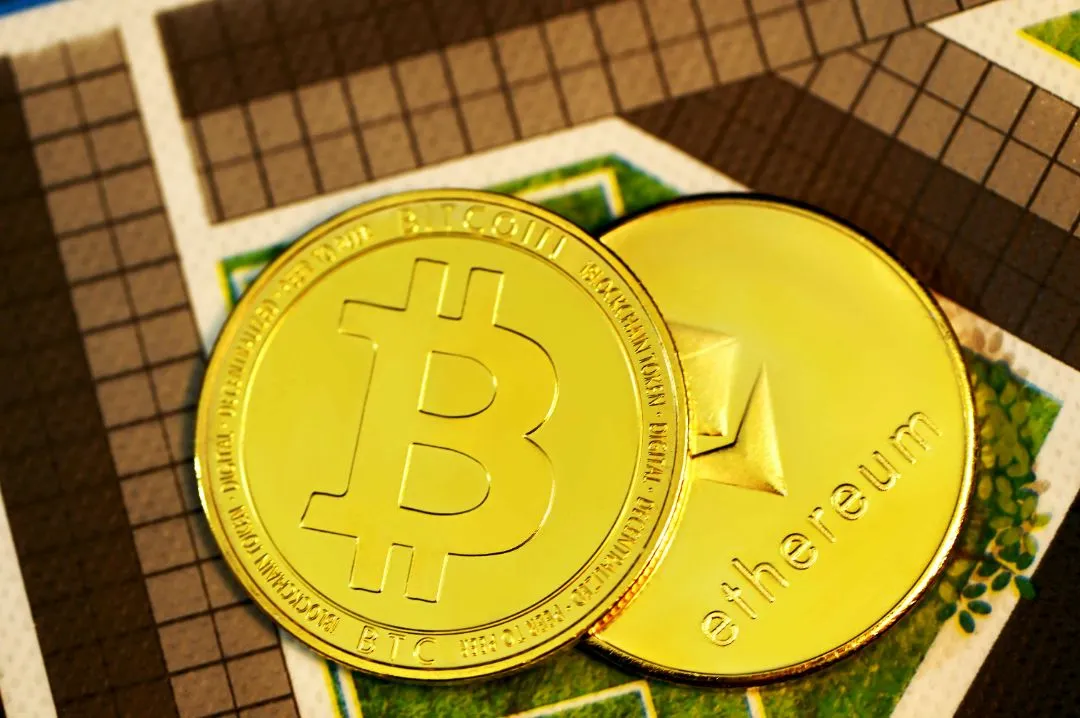
Photo by Karolina Grabowska on Pexels

Meeting a growing demand

According to a report in the Bangkok Post on March 12, Thailand’s Securities and Exchange Commission (SEC) has agreed that Thai asset management firms may manage and offer funds that incorporate investment in U.S. spot Bitcoin ETF products. The decision was arrived at following a recent SEC board meeting.


The SEC's decision reflects a strategic response to the growing demand for digital asset exposure among institutional investors. It would appear that spot Bitcoin ETF approval in the United States has bolstered investor confidence in this investment instrument on an international basis.


Urging caution

Despite the opportunities this presents for institutional investors, the SEC has emphasized caution, citing the high-risk nature of digital asset investments. SEC Secretary-General Pornanong Budsaratragoon verbalized that need for caution, stating:


"Asset management firms asked the SEC for them to have exposure in digital assets, especially Bitcoin and spot Bitcoin ETFs, but we need to consider carefully whether to allow asset management firms to invest in digital assets directly due to the high risk.”

It’s interesting to note that in an immediate response to the approval of these products in the United States in January, Thailand’s SEC clarified that it had no plans to allow asset management firms to launch similar products within Thailand. For the moment at least, it seems that demand will be satisfied by accessing products that have gained exposure to U.S. spot Bitcoin ETFs instead.


Retail investors excluded

While this move expands the investment landscape for institutional players, retail investors in Thailand find themselves sidelined due to regulatory restrictions. The amended regulations primarily cater to accredited investors, leaving retail participation in spot Bitcoin ETFs out of reach.


This exclusion contrasts with the popularity of retail crypto trading in Thailand, albeit within regulated boundaries. Recent government regulations have both facilitated and restricted certain crypto activities.


Thailand's move aligns with broader trends in the cryptocurrency sector, with several countries, including South Korea and Hong Kong, exploring opportunities in the space. In Hong Kong, regulators are currently processing applications for Bitcoin ETFs, with several financial institutions expressing interest in introducing spot Bitcoin ETFs.


Just like the Thai authorities, the governor of the Royal Bank of India (RBI) had also responded in the aftermath of product approval in the U.S. stating that he didn’t favor the approval of such products in India. Despite that, news emerged on March 11 that Indian crypto investment platform Mudrex is planning to meet demand by providing clients with access to these U.S. products.


As institutional investors gear up to capitalize on this opportunity in Thailand, the regulatory framework surrounding digital assets will continue to shape market dynamics, both domestically and internationally.

More to Read
View All
Markets·

Nov 06, 2025

Crypto and Wall Street leaders set to meet at Abu Dhabi Finance Week next month

Emerging as one of the world’s major crypto hubs, the United Arab Emirates (UAE) is set to host Abu Dhabi Finance Week, described as the region’s largest financial and investment event, in the capital next month. Scheduled to take place from Dec. 8 to 11, the conference will feature leading figures from both traditional finance and the crypto industry. Notable speakers from traditional finance include Bridgewater founder Ray Dalio, Morgan Stanley International CEO Clare Woodman, and Franklin Templeton CEO Jennifer Johnson. Representing the crypto sector will be Binance CEO Richard Teng, Solana Labs CEO Anatoly Yakovenko, Circle CEO Jeremy Allaire, among others.Photo by Saj Shafique on UnsplashHashed, ADGM host Web3 policy talksAmong the partners for the four-day event is Seoul-based venture capital firm Hashed, which opened its Abu Dhabi office last year. The expansion followed its partnership with Hub71, the city’s global tech ecosystem, which aims to help more Korean startups expand into the Emirates. According to South Korean news outlet News1, Hashed, jointly with Abu Dhabi Global Market (ADGM) Emerging Tech, will host the Web3 Leaders Roundtable. The event will feature two sessions: one exploring next-generation digital infrastructure, where artificial intelligence and blockchain converge with the real economy, and another focusing on digital asset regulations, particularly how policies can be designed to balance innovation with oversight. Bybit courts UAE talentAbu Dhabi’s growing appeal as a hub for digital asset businesses is also underscored by crypto exchange Bybit’s recent participation in the annual NYU Abu Dhabi Career Fair. Concluding on Oct. 30, the event marked the trading platform’s first talent outreach initiative in the UAE. The participation comes after Bybit obtained a full virtual asset platform operator license from the Securities and Commodities Authority (SCA) last month. The occasion gave Bybit an opportunity to engage with students and recent graduates. The growing adoption of cryptocurrency in the country is reflected in Du’s launch of a crypto mining service aimed at individual users. As one of the UAE’s two major telecom operators, Du is leveraging its nationwide data centers to allow residents to rent the necessary computing power on a subscription basis to mine digital assets, according to a report by the Emirates-based newspaper The National. Du’s cloud platform powers user miningJasim Al Awadi, Du’s chief information and communications technology officer, said the new service is powered by Cloud Miner, a platform introduced last year under the company’s sub-brand Du Tech. He explained that as the service evolves, users will gain access to a calculator that estimates their potential monthly Bitcoin earnings. Du also intends to continue enhancing and expanding its mining-as-a-service offering. The launch coincides with a period of volatility in the crypto market. On Nov. 5, Bitcoin fell below the $100,000 mark for the first time since June 23, dropping to $99,992.01 against USDT on Binance before recovering to above $103,000. 

news
Web3 & Enterprise·

Jan 08, 2025

Metaplanet aims for 10K Bitcoin stockpile

Metaplanet, a Japanese Bitcoin treasury company listed on the Tokyo stock exchange, is targeting a holding of 10,000 BTC in 2025.2025 targetTaking to the X social media platform on Jan. 5, the company’s CEO, Simon Gerovich, set out a number of objectives which the company will strive to reach in 2025. Among them is the objective to expand the company’s Bitcoin holdings to 10,000 BTC. Gerovich said that the expansion of the firm’s Bitcoin holding would be achieved “by utilizing the most accretive capital market tools available to us.” He followed up on Jan. 6 with an announcement that Metaplanet has completed its 12th series stock acquisition rights. Gerovich claimed that the successful completion of the stock issuance marked “a milestone in Metaplanet’s financing and Bitcoin acquisition strategy.” The 12th series stock issuance was first announced back in November, with a six-month exercise period opening on Dec. 17. Additionally, the company issued 4.5 billion yen ($28,562,451) and 5 billion yen ($31,736,057) in ordinary bonds, with a maturity date of June 2025. Other objectives the company has set out for 2025 include enhancing transparency and shareholder engagement through new initiatives. Furthermore, Metaplanet intends to leverage its partnerships to advance Bitcoin adoption in Japan and further afield. Gerovich said that Metaplanet will explore innovative opportunities to grow the firm’s impact in Japan and within the Bitcoin ecosystem.Photo by Vasilis Chatzopoulos on Unsplash2024 ‘transformational’The Metaplanet CEO claimed that 2024 had been “transformational” for the company. He added: “We broke records, expanded our Bitcoin treasury, and reinforced our position as Asia’s leading Bitcoin Treasury Company.” Shifting its attention to 2025, the firm is focused on its efforts to drive greater value for shareholders. Metaplanet’s fortunes are now heavily dependent upon the performance of Bitcoin. In an interview at a New Year’s Eve party held in Miami by Microstrategy founder Michael Saylor, Gerovich commented on Bitcoin adoption, stating:"I’m slowly but surely seeing Bitcoin becoming a topic of discussion at the highest levels of government. Corporations around the world are beginning to adopt it as a Bitcoin standard." The Metaplanet CEO is optimistic that the U.S. will adopt a strategic Bitcoin reserve once the Trump administration commences. Should that happen, he believes that other countries will follow. He sees Japan as one of those countries where they do look to the U.S. as a guide on such matters. “So I think if President Trump does adopt it as a strategic reserve, then Japan and many countries in Asia will do the same,” he stated. Metaplanet is understood to be pursuing a business model very similar to the one pioneered by Microstrategy in the United States. The company increased the rate at which it acquired Bitcoin in H2 2024. Metaplanet made its first Bitcoin purchase in April 2024. At that time, its stock was trading at $1.90. Just as the Bitcoin unit price surged, so too did Metaplanet stock, closing the year at $22.05 per share.

news
Web3 & Enterprise·

Dec 28, 2023

Bithumb surpasses Upbit in 24h trading volume for first time in four years

The trading volume of South Korean cryptocurrency exchange Bithumb exceeded that of its competitor Upbit as of 10:30 a.m. UTC on Wednesday, as reported by the local news outlet Etnews, which cited data from CoinMarketCap. This shift occurred for the first time in four years. According to CoinMarketCap, as of the specified time, Bithumb's 24-hour trading volume reached KRW 4.93 trillion (approximately $3.8 billion), surpassing Upbit, which recorded a volume of KRW 4.37 trillion. Until 2019, Bithumb was the leading exchange in Korea. However, it ceded its top position to Upbit, which gained a competitive edge through its collaboration with the internet-only bank, Kbank.Photo by Pierre Borthiry - Peiobty on UnsplashZero trading fees and new crypto listingsEarlier in the year, Bithumb initiated a strategic plan with the objective of boosting its trading volume in order to increase its market share in the domestic market to 25%. To achieve this goal, the exchange implemented several key initiatives. One of the significant steps taken was the elimination of trading fees, aimed at attracting more users and increasing transaction volumes. Additionally, Bithumb broadened its cryptocurrency offerings by listing prominent cryptocurrencies such as Tether (USDT) and WEMIX.Questioned sustainability of strategiesIn anticipation of crypto winter giving way to crypto spring, trading platforms are gearing up for more intense competition to increase their market shares. However, there are concerns about the sustainability of strategies like implementing zero trading fees. Critics argue that such policies, while they may temporarily shift market shares, are unlikely to be successful in the long term. This skepticism is largely due to the fact that cryptocurrency exchanges heavily rely on trading fees as a primary source of revenue.  An industry expert has pointed out that unless the cryptocurrency exchanges currently lagging behind develop innovative, paradigm-shifting strategies capable of significantly impacting the market landscape, there's a high likelihood that the ranking order will revert to the previously established, entrenched market order.  In fact, at the time of this publication, Upbit upended Bithumb in 24-hour trading volume, recording KRW 4.4 trillion compared to Bithumb's KRW 3.2 trillion. This data underscores Upbit's strong position in the market, illustrating its continued dominance.

news
Loading