Top

Ripple scores DFSA license approval in Dubai

Web3 & Enterprise·October 02, 2024, 2:57 AM

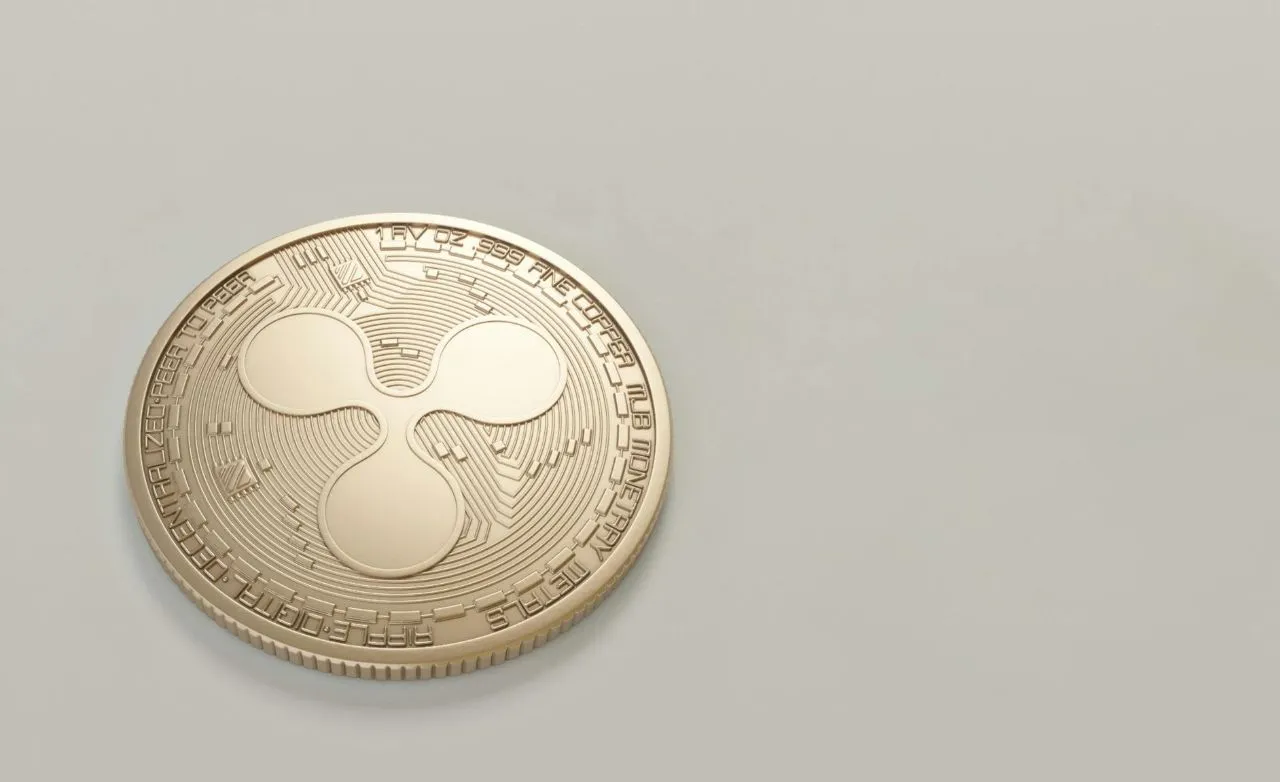
Blockchain-based digital payment network enterprise Ripple has announced that it has acquired in-principle approval of a financial services license from the Dubai Financial Services Authority (DFSA) in the United Arab Emirates (UAE).


In a press release published on the firm’s website on Oct. 1, Ripple claimed that the approval “unlocks Ripple’s end-to-end payment services in the UAE, boosting Middle East operations.”


The in-principle approval is a first step on the company’s path towards full approval. That eventuality will enable Ripple to offer cross-border payment services relative to fiat and digital assets, within the Dubai International Financial Center (DIFC) special economic zone.
https://asset.coinness.com/en/news/aaf40f7199830707381fe5e0e24ec556.webp
Photo by Moose Photos on Pexels

Expanding Middle Eastern presence

The company claims that pursuing the license is part of a broader strategy to expand its Middle Eastern presence. It follows on from the firm’s move in 2020 to establish its Middle Eastern headquarters in Dubai. Ripple claims that the licensing “significantly strengthens Ripple’s global footprint as a regulated entity and enables the introduction of seamless cross-border payment services, including Ripple Payments Direct (RPD), in the United Arab Emirates (UAE).”


In moving from in-principle approval to full approval, Ripple will have further obligations to accomplish, such as securing office space within the DIFC special economic zone. The company had previously indicated its intention of establishing an office within the DIFC. Back in August, it emerged that Ripple had partnered with the DIFC Innovation Hub with a view towards promoting blockchain and digital asset innovation within the UAE.


Regulatory clarity in the UAE

Ripple is striving to become the first blockchain-enabled payment services provider licensed by the DFSA. Once licensed, the company plans to roll out its enterprise-grade digital asset infrastructure.


Ripple’s XRP has been one of five digital assets approved by the DFSA such that investment funds are allowed to invest in it, although the regulator did indicate in June that it is moving towards expanding the list of recognized tokens.


Mired in legal difficulties with local regulator the Securities and Exchange Commission (SEC) in its home market of the United States in recent years, the company signaled a change of strategy in 2023, indicating its interest in focusing more on international expansion.


While speaking at an event in Dubai at the time, Ripple CEO Brad Garlinghouse said that Ripple was expanding in Dubai. Taking to X in relation to this latest milestone, Garlinghouse wrote that “regulatory clarity is what businesses want, and what consumers need,” adding that “the UAE understands that.”


In the company’s press release, Garlinghouse referred to the “forward-thinking regulatory approach” being pursued in the UAE, which he believes is positioning the country “as a global leader in this new era of financial technology.”


The UAE isn’t the only focus for the company’s international expansion. Ripple has established an office in Singapore which handles over 50% of the firm’s payment flows. On Oct. 1, U.S. investment bank Houlihan Lokey published a report in which it highlighted Ripple as an emerging competitor to the SWIFT cross-border payments system. 


Although the company has had some success in navigating its way through litigation with the SEC in the U.S., it’s thought that the dispute may be prolonged further as some commentators have suggested that the SEC plans to appeal a recent court decision.

 

More to Read
View All
Web3 & Enterprise·

Oct 24, 2023

Global Blockchain Incheon Conference to Promote Web3 Exchange and Advancement

Global Blockchain Incheon Conference to Promote Web3 Exchange and AdvancementThe city of Incheon is set to host the Global Blockchain Incheon Conference (GBIC 2023) this year from October 30 to 31 under the theme “The Age of Discovery: Voyage to the New World of Blockchain.” The conference aims to provide a space for the exchange of Web3 technologies that are becoming a part of daily life and facilitating communication between businesses, all in the pursuit of establishing Incheon as a global blockchain hub.Photo by Jiho Choi on UnsplashThe city intends to reveal its master plan to achieve this pursuit, consisting of five major strategy points: citizen participation, sustainable growth, advanced innovation, development of a business-friendly environment, and global technological leadership.Exploring the rich tapestry of GBIC 2023The event will include an opening ceremony, keynote speeches, seminars, and additional activities such as hackathon competitions, photo exhibitions of cutting-edge technologies, and interactive zones. Keynote speakers include Marouen Zelleg, Head of Business Development at Polygon Labs’ Asia-Pacific region; Patrick Yoon, General Manager Korea at Crypto.com; Shun Ishikawa, COO at Astar Foundation; and Christopher Lai, Director of the Hong Kong Trade Development Council’s Korea branch.There will be sessions centered around various themes such as stepping into the future of blockchain, improving safety for the citizens of Incheon, delivering tangible innovation, integrating blockchain into daily life, venturing beyond regulations into new possibilities, disseminating technology, and innovating industrial ecosystems.In particular, the conference will also hold a demo day, where companies can showcase demos for their products and services to attract potential investors.Diverse experiences for visitorsAttendees will have the unique opportunity to see how blockchain technology is integrated into daily life by receiving non-fungible tokens (NFTs) minted with Incheon’s mascots — Deungdaeri, Bumi, Kkomi, and Aini — and participating in blockchain-powered games. Other NFTs, such as those issued by Shinhan Bank with records of information like confirmation of entry and coupon usage, will also be available.GBIC is also holding other online and offline activities for visitors to participate in, such as quizzes, social media events, and souvenir distributions.“We will demonstrate how digital technology is integrated into daily life through blockchain in the Web3 era that we are living in,” said Son Hye-yeong, Head of the city’s Data Industry Division. “We encourage everyone’s interest and participation in the blockchain presentations and forums led by global leaders.”GBIC will take place at Songdo Convensia in Incheon, an international conference complex located in Songdo International Business District.

news
Policy & Regulation·

Nov 29, 2023

Korea’s financial regulator establishes dedicated units for crypto oversight

Korea’s financial regulator establishes dedicated units for crypto oversightThe Financial Supervisory Service (FSS) of South Korea revealed in a Wednesday (local time) press release that it is introducing new units specifically focused on virtual asset matters. This move is in anticipation of the upcoming implementation of the Virtual Asset User Protection Act scheduled for next July. The establishment of these dedicated organizations is a strategic step towards bolstering the integrity of the crypto market, with the goal of enhancing consumer protection.Photo by Ethan Brooke on UnsplashSupervision and investigation bureausThe newly established units will be known as the Virtual Asset Supervision Bureau and the Virtual Asset Investigation Bureau. These units are being created in response to the burgeoning crypto market.The Supervision Bureau will be responsible for extensive oversight of cryptocurrencies. Its roles will include supervising and inspecting virtual asset service providers (VASPs), monitoring market activities and enhancing policy and regulations in the sector. Additionally, the bureau is tasked with ensuring the effective implementation of these regulations and contributing to the promotion of market stability.The Investigation Bureau, the other key component of the new structure, will concentrate on identifying and addressing market abuse activities in the cryptocurrency sector, specifically targeting unfair trading practices.Until now, the Financial Intelligence Unit (FIU) of the Financial Services Commission (FSC) has played a leading role in overseeing the crypto sector, primarily due to its responsibility in evaluating applications from VASPs.FSS’s greater role in crypto oversightThe FSS, on the other hand, has maintained a digital asset research team, which has been responsible for supporting virtual asset legislation, along with conducting market analysis and monitoring. However, the latest move is set to the FSS’s role in regulation and oversight within the crypto market.The Supervision Bureau will be under the leadership of Lee Hyun-duk, who currently serves as Head of Financial Investment Examination Department 2. Meanwhile, Moon Jung-ho, the present leader of Audit Oversight Department 1, will take charge of the Inspection Bureau. The process of appointing team members to these bureaus is scheduled to take place in early January.

news
Policy & Regulation·

May 24, 2023

Hong Kong Moves to Enable Retail Crypto Trade

Hong Kong Moves to Enable Retail Crypto TradeHong Kong’s Securities and Futures Commission (SFC) has moved to enable retail participation in crypto trading within the Chinese autonomous territory.The SFC has arrived at that determination, according to a report it published on Tuesday. The report, titled “Consultation Conclusions on the Proposed Regulatory Requirements for Virtual Asset Trading Platform Operators Licensed by the SFC (Note 1),” provides an overview of the nature of feedback the Commission received as part of its consultation process relative to virtual asset trading.Photo by Ben Cheung on PexelsRetail investor protectionIn the press release which accompanied the report, the Commission outlined that “a significant majority of respondents agreed to our proposal to allow licensed trading platform operators to serve retail investors.” On that basis, the SFC is moving forward in enabling retail trading of crypto assets through licensed virtual asset trading platforms effective June 1, and it’s setting out to do so while implementing a number of measures to protect retail investors.That will include ensuring that operators provide an appropriate on-boarding process. In the case of crypto asset projects, the SFC is determined to see to it that good governance is implemented, alongside enhanced token due diligence, admission criteria, and disclosures.In the statement, the SFC’s CEO Julia Leung, said that “providing clear regulatory expectations is the key to fostering responsible development.” She added that “Hong Kong’s comprehensive virtual assets regulatory framework follows the principle of ‘same business, same risks, same rules’ and aims to provide robust investor protection and manage key risks. This will enable the industry to develop sustainably and support innovation.”Specific conditionsOne item that the SFC’s new rule-book on virtual asset trading for retail investors outlines is a ban on crypto “gifts.” Effectively any promotions or incentives that lead with free gifts, and this will likely include token airdrops, will be prohibited.In terms of capital liquidity, virtual asset exchanges will be required to maintain a minimum of 5,000,000 Hong Kong dollars ($638,000) at all times as a minimum paid-up share capital. A Platform Operator must at all times maintain liquid capital which is not less than its required liquid capital,” the document outlines.Token due diligenceThe SFC acknowledged that it can be difficult for virtual asset exchanges to carry out due diligence on new tokens. With that in mind, it has incorporated a requirement for any new token to have a twelve-month track record before it can be considered to be listed to provide an indication of such things as supply, demand, maturity, and liquidity. In that way, exchanges have some data to work with in carrying out token due diligence.Smart contracts have been a point of weakness in recent years, with considerable sums lost through hacks that have exploited smart contract code vulnerabilities. To that end, the SFC insists that as part of token due diligence, new assets will have to undergo smart contract audits performed by independent assessors.Given that the spate of recent crypto platform failures implicated loss of customer deposits, the rule-book considers the need for segregation of client funds. Exchanges will need to segregate funds and can either hold them separately from the assets of the exchange itself or have them held in escrow.

news
Loading
