Top

Vietnam sets out blockchain strategy with goal of regional leadership by 2030

Policy & Regulation·October 24, 2024, 7:29 AM

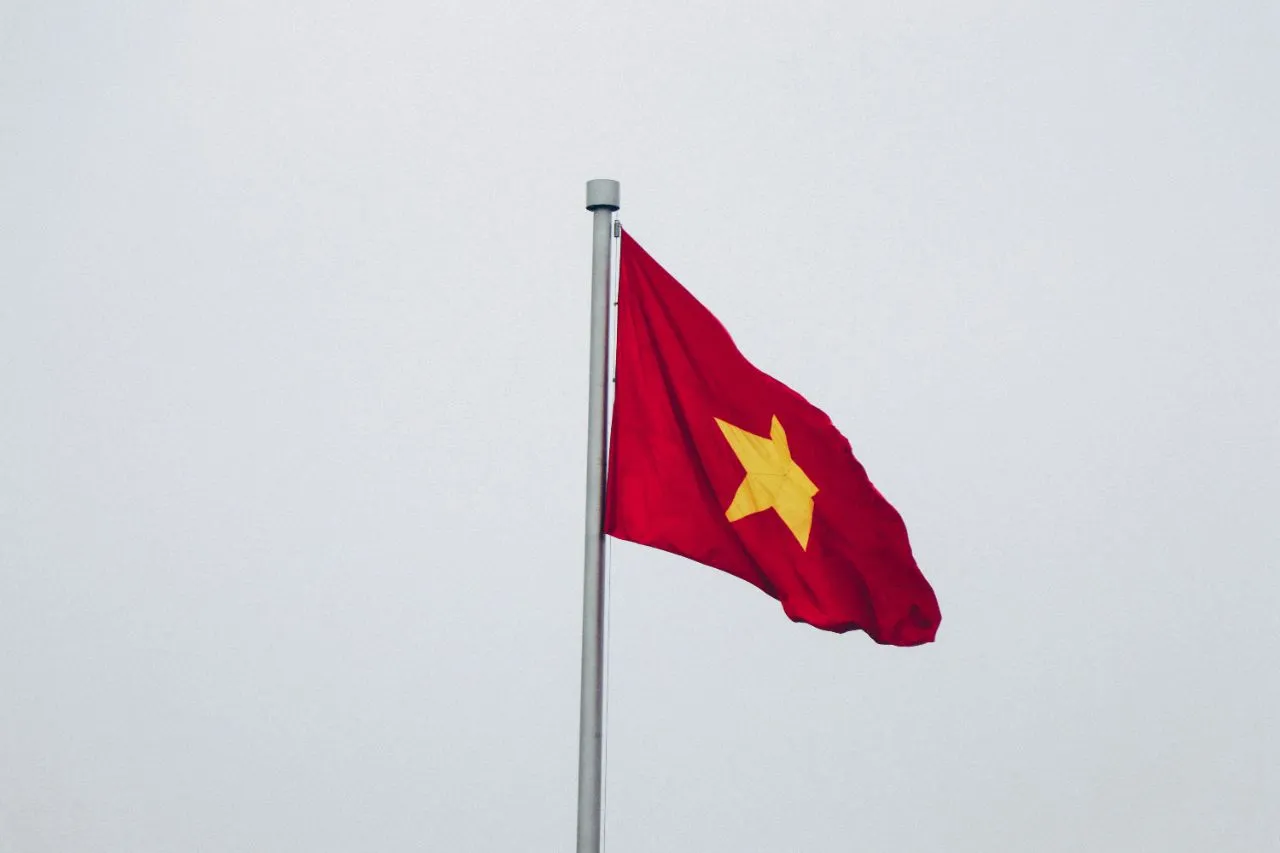
In a statement published to Vietnam.vn on Oct. 23, a website run by the Office of Foreign Information Service under Vietnam’s Ministry of Information and Communications, Vietnam revealed its official National Blockchain Strategy.


Key objectives 

In announcing its National Blockchain Strategy, the Vietnamese government articulated several key objectives that it feels will lead to Vietnam eventually taking a leadership role in blockchain development within the region. 


These key objectives include an emphasis on research relative to the further roll-out of blockchain innovation. The Vietnamese authorities intend to promote blockchain research, innovation and international cooperation. Another specific action area has been identified as perfecting the legal environment with respect to blockchain development. 


The development of infrastructure has been cited as a key objective, with the Ministry proposing that this should incorporate the formation of a blockchain industrial ecosystem. Additionally, the statement highlighted the need to focus on developing human resources in respect of blockchain, while also pointing to an overall need to promote blockchain development generally and the application of the technology.


A number of branches of the Vietnamese government have been tasked with achieving these key objectives, including the Government Cipher Committee, the Ministry of Education and Training, the Ministry of Science and Technology, as well as the Ministry of Information and Communications.
https://asset.coinness.com/en/news/009f7868295cb9812f96d4765680467e.webp
Photo by Hugo Heimendinger on Pexels

Positive reaction 

The plan has been broadly welcomed by Vietnam-based crypto stakeholders. Jenny Nguyen, Chief Operating Officer (COO) of Ho Chi Minh City-based crypto venture fund Kyros Ventures, suggested the development was bullish. She wrote:


“This is the most bullish policy on blockchain from the Vietnam Government in history, which not only acknowledges the importance of blockchain, but also defines clear expectations for the development of this technology sector in the years to come.“


Nguyen also pointed out that regulations on digital assets are currently being discussed within Vietnam’s National Assembly, with legislators working towards a 2025 completion date. On the basis of these two developments, she believes that “the future for blockchain and crypto in Vietnam is looking brighter and brighter day by day.”


KardiaChain, a hybrid blockchain infrastructure provider to governments in Vietnam and other Southeast Asian countries, outlined on social media that it had been a key contributor in shaping the strategy. The project believes that the strategy “will enable us as builders more opportunities to impact the country's blockchain development, and further accomplish our mission of mass adoption that we set out on day one.”


Laura Nguyen, head of Vietnam at Ava Labs, said that the strategy was forward-thinking and that consequently Vietnam is “primed to become a blockchain powerhouse, pushing the boundaries of technological innovation and fostering global collaboration.”


As part of the strategy, the Vietnamese government plans to bring about the development of 20 blockchain brands for platforms, products and services. Additionally, the strategy aims to put in place three testing centers located in major Vietnamese urban centers as part of an effort to create a national blockchain network.


 

More to Read
View All
Policy & Regulation·

Oct 10, 2023

Hacking Attempts on Upbit Reach 160,000 in First Half of the Year

Hacking Attempts on Upbit Reach 160,000 in First Half of the YearThere have been approximately 160,000 hacking attempts on Upbit, Korea’s largest cryptocurrency exchange, in the first half of this year alone, according to a report submitted by Upbit’s operator Dunamu to lawmaker Park Sung-joong of the National Assembly’s Science, ICT, Broadcasting, and Communications Committee.“Cryptocurrency hacking incidents are increasing both domestically and internationally, and hacking attacks on exchanges such as Upbit, which have daily trading volumes exceeding KRW 2 trillion, are a serious issue,” Park said.Photo by Clint Patterson on UnsplashAn uptick in hacking attemptsThe data revealed that the number of cyber breach attempts in the first half of the year totaled 159,061–2.17 times higher than the number of attempts in the first half of last year, which stood at 73,249.Hacking attempts on Upbit have been steadily increasing in recent years, from 8,356 in the second half of 2020 to 34,687 and 63,912 in the first and second half of 2021, respectively. In the first half of last year, there were 73,249, and 87,242 in the second half. Notably, the exchange suffered losses of approximately KRW 58 billion (approximately $43 million) from a hacking attack in 2019.Ramping up securitySubsequently, Dunamu has taken action to enhance security by managing over 70% of its assets in cold wallets and operating hot wallets in a distributed structure instead of a singular one. Hot wallets refer to online crypto wallets, whereas cold wallets are crypto wallets that are offline and disconnected from the internet. Hot wallets offer the advantage of direct deposits and withdrawals, but they have weaker security levels — most known exchange hacks have thus occurred through this medium. On the other hand, cold wallets store private keys on offline sources like external hard drives and portable storage devices, making real-time trading difficult but providing better security and stability.“We have taken various preventive measures since the hacking incident in 2019, such as operating hot wallets in a distributed manner. There have not been any successful cyber breaches to date,” Upbit said.Regarding the role of the Ministry of Science and ICT in managing and overseeing crypto hacking incidents, Park pointed out that this still remains ambiguous. “The Ministry should conduct large-scale white-hat hacking tests and security assessments for crypto exchanges that are frequently faced with hacking attempts, as well as for hospitals and subway systems that manage large amounts of personal information,” he said.

news
Web3 & Enterprise·

Nov 24, 2023

Wemade CEO to attend Abu Dhabi Finance Week and Fortune Global Forum next week

Wemade CEO to attend Abu Dhabi Finance Week and Fortune Global Forum next weekHenry Chang, CEO of South Korean blockchain gaming publisher Wemade, will be traveling to the United Arab Emirates to speak at the second annual Abu Dhabi Finance Week — one of the biggest financial and economic events in the Middle East and North Africa (MENA) region — scheduled for Nov. 27 to 30.Photo by Kevin JD on UnsplashExploring the future of financeTouting the theme “Investing in the Transition Era”, this year’s ADFW is organized by Sheikh Khalid Abu Dhabi, Crown Prince of Abu Dhabi and Head of the Abu Dhabi Executive Council. Several organizations such as the Abu Dhabi Global Market (ADGM) and the Abu Dhabi Department of Economic Development are also participating as official partners. More than 10,000 visitors from over 100 countries across the world are expected to attend.Chang will participate as a panelist on Nov. 29 in the “Convergence: Media, Culture and Fintech” panel at Fintech Abu Dhabi, the flagship event of ADFW. The panel will cover topics like the impact of blockchain and decentralized finance (DeFi) technologies on fintech — more specifically, digital payment trends and the future of digital assets and currencies.Wemade’s expansion in the UAEHe will also partake in the Fortune Global Forum 2023, a global conference for CEOs of major global conglomerates also set to be held in Abu Dhabi from Nov. 27 to 29. The forum has been hosted by American business magazine Fortune since 1995 as a platform for member companies of the Fortune Global 500 list to gather and share insights on global issues like innovation and stability and their impact on economic progress. They will also be joined by government officials from various sectors in the UAE, including artificial intelligence, cybersecurity, oil and gas, industrial automation, healthcare and telecommunications.Wemade has been making strides to expand WEMIX3.0, its borderless Web3 mega-ecosystem, in the MENA region. The company opened an office in Abu Dhabi earlier this year.

news
Web3 & Enterprise·

Dec 01, 2023

Late Korean artist Lee Jung-seob’s ‘Bull’ NFT on auction at OpenSea

Late Korean artist Lee Jung-seob’s ‘Bull’ NFT on auction at OpenSeaNFT marketplace OpenSea is hosting an ongoing auction for a digital representation of the painting “Bull” by the late Korean artist Lee Jung-seob, Yonhap News TV reported on Tuesday. Celebrated for his distinctive lines in his paintings, Lee passed away in 1956. This auction is set to conclude on Dec. 12, with the starting bid placed at 300 WETH (Wrapped Ethereum), which is approximately equivalent to $626,000.Photo by Hans Eiskonen on UnsplashWhite bull as NFTLee’s “Bull,” featured in the OpenSea auction, is distinguished by its depiction of a white bull set against a dark green background. This particular piece is one of Lee’s unpublished works and is currently being offered for sale by a private art collector. Regarding the authenticity of the painting, the description on the OpenSea page states, “This work received a handwritten evaluation from Professor Jung Jum-sik, a founding member of the Lee Jung-seob Art Award, on November 9, 2000.”The current owner of the original artwork has expressed their intention for auctioning it as a desire to share a valuable piece of art. The painting originally belonged to poet Ku Sang and has since changed hands multiple times, experiencing some damage along the way. While the copyright for an artist’s work typically remains with their inheritors for 70 years posthumously, in the case of Lee Jung-seob, this period has already lapsed.Authenticity and NFT investmentsMeanwhile, art appraisal experts are advising caution, emphasizing the need to first confirm the authenticity of the original painting. This caution stems from the fact that the painting has not undergone evaluation by an official appraisal organization.During his interview with Yonhap, Jung Jun-mo, CEO of Korea Art Authentication Appraisal Inc., offered a word of caution regarding investment in NFTs tied to artworks with questionable authenticity. He emphasized that NFTs representing works that lack genuine authentication also hold no value in terms of authenticity. Jung advised potential investors to thoroughly verify the legitimacy of such artworks before proceeding with any investment in their NFT representations.Last year, many paintings of modern Korean artists were converted into NFTs, but they sparked controversy over issues of authenticity. Experts in art investment have since been advising thorough research prior to making any investments in these digital assets. They warn that losses incurred from transactions involving these NFTs fall squarely on the investors.

news
Loading