Top

USDT stablecoin receives full regulatory approval in Abu Dhabi

Web3 & Enterprise·December 16, 2024, 11:47 PM

The Financial Services Regulatory Authority (FSRA), a regulatory body within the Abu Dhabi Global Market (ADGM) economic free zone and financial center in the United Arab Emirates (UAE), has fully approved USD₮, the world’s leading U.S. dollar stablecoin by market cap, as an accepted virtual asset (AVA).
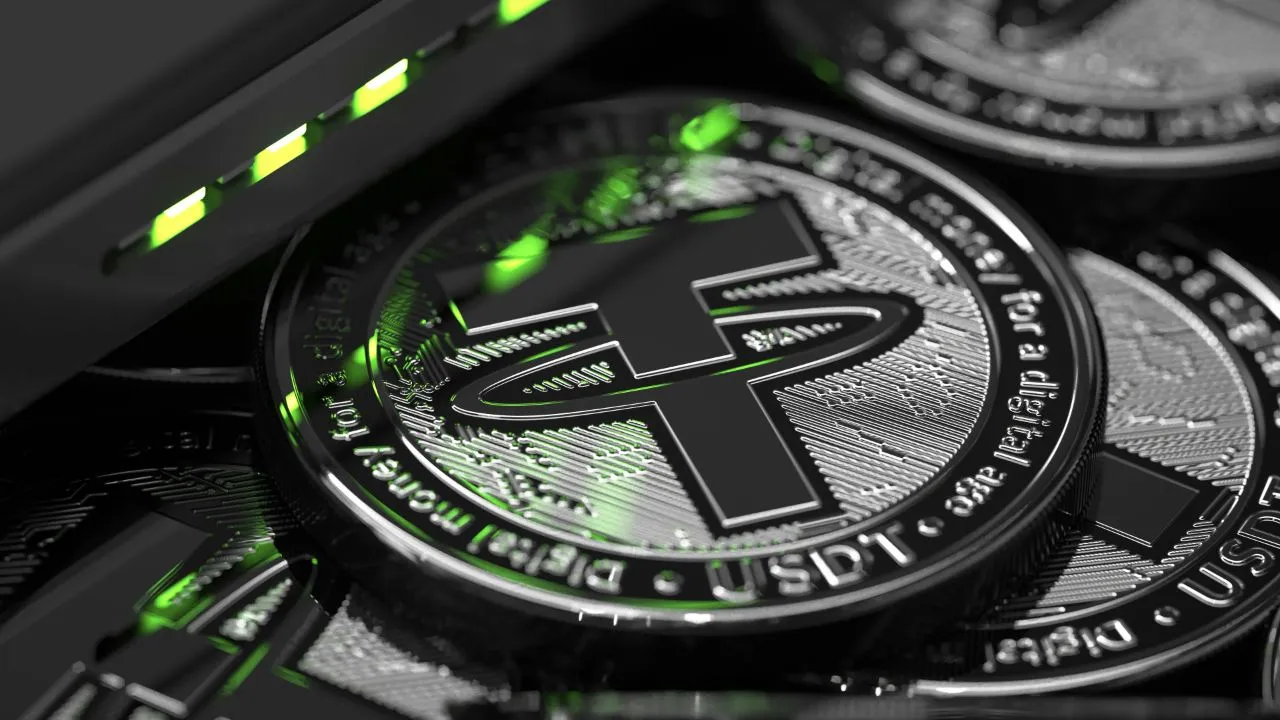
https://asset.coinness.com/en/news/eaf08a1ad4bdf292be57387fe07c3323.webp
Photo by DrawKit Illustrations on Unsplash

Pre-approved USDT services

USDT issuer Tether publicized details of the approval via a statement published to its website on Dec. 10. The company outlined that the approval means that “Authorised Persons” operating and licensed by the FSRA can offer pre-approved services related to USDT.


The company stated that the approval facilitates the integration of USDT into regulated financial ecosystems in Abu Dhabi while also claiming that the move helps to advance the region’s leadership relative to digital asset innovation.


The FSRA has acknowledged acceptance of the leading stablecoin with recognition of its issuance on various blockchains including Ethereum, Solana and Avalanche.


Validating the importance of stablecoins 

With the ADGM regulator now fully accepting and recognizing the stablecoin, Tether CEO Paolo Ardoino said that the move goes beyond just “validating the importance of stablecoins as critical tools for modern finance,” as he believes it opens the door for collaboration and growth across the Middle East.


Stablecoins are increasingly playing a significant role in bridging the gap between traditional finance (TradFi) and the Web3 sector. In October, crypto asset fund manager Bitwise identified a number of key insights that point to the ongoing development and use of stablecoins. 


It outlined that the top five stablecoin projects are currently holding more U.S. Treasury bonds than some G20 countries. Tether recorded profits last year that surpassed those of BlackRock, the world’s largest asset manager. Bitwise identified that leading payments firms like Visa are adopting stablecoins and incorporating them into their platforms for the purpose of effecting transactions.


A month prior to that, Wall Street investment bank Bernstein highlighted the fact that stablecoins are playing an increasingly important role relative to the global financial system as a whole. 


It’s thought that this latest development in Abu Dhabi may act as a further driver of USDT’s market cap. At the time of writing, the stablecoin asset had a market cap in excess of $140 billion. Its inclusion as an AVA reinforces the crypto asset’s position as the most used stablecoin within the industry.


AE Coin licensing 

In a further boost for further roll-out of stablecoins in the Middle East, the Central Bank of the UAE (CBUAE) awarded the final license to fully approve AE Coin, a UAE dirham-denominated stablecoin. Commenting on the development, AE Coin General Manager Ramez Rafeek said, "AE Coin harnesses the speed and efficiency of blockchain technology, offering instant, secure, and cost-effective transactions. It simplifies transfers, making them faster and more seamless."


In an effort to bring about greater adoption of the stablecoin, the AE Coin project intends to engage in partnerships with payment gateways, financial institutions and technology providers going forward. Tether also has plans to launch a dirham-backed stablecoin, having recently partnered with UAE-based entities to bring that about.



More to Read
View All
Web3 & Enterprise·

Dec 28, 2023

Mt.Gox creditors start to confirm receipt of first repayments

It's been nearly ten years since the infamous collapse of the Japanese bitcoin exchange Mt. Gox, with some creditors of the defunct business now claiming to have finally received their long-awaited repayments.Photo by Su San Lee on UnsplashSubreddit payment confirmationsTestimonies shared on the Mt.Gox creditor subreddit and a dedicated Telegram channel reveal that certain payments, in the form of Japanese yen, have been distributed to creditors who opted for PayPal as their preferred mode of receipt. Excitement marked the early stages of this repayment process. Users on Reddit joyfully shared their experiences, with one exclaiming:"I got money!! I just got my initial payment via Paypal!!"This development comes after Mt.Gox rehabilitation trustee, Nobuaki Kobayashi, had previously extended the repayment deadline from Oct. 31, 2023, to Oct. 31, 2024. However, last month, Kobayashi informed creditors that certain cash repayments would be initiated before the year's end. Despite efforts to expedite the process, the sheer volume of creditors and the complexities involved mean that repayments will continue into 2024. The collapse of Mt.Gox in early 2014 triggered global regulatory responses and initiated a nearly decade-long bankruptcy and corporate rehabilitation process. The exchange fell victim to a series of hacks between 2011 and 2014, leaving a lasting impact on the cryptocurrency landscape. The commencement of repayments has been hanging over the crypto market for many years, with many fearing that the process may have a dampening effect on the bitcoin unit price, given that funds are being distributed in Japanese yen and bitcoin. Earlier this year, the U.S. government indicted two Russian nationals for laundering funds stolen from Mt.Gox, shedding light on the enduring legal ramifications stemming from the exchange's demise. Double payment glitchHowever, it appears the process encountered some glitches, as other Reddit posts indicated that a few creditors received double payments via PayPal, adding a new layer of complexity to the already intricate Mt. Gox saga. Reddit users, such as u/rlycreativename, have shared emails they claim to have received from the Mt.Gox Rehabilitation Trustee. The emails acknowledge a system issue leading to inadvertent double transfers and legally obligate recipients to return the surplus amount. While some users have complied with the request and returned the duplicated funds, others have expressed hesitancy, citing the historical challenges creditors faced in obtaining their money. The situation has evoked discussions on Reddit, with users debating whether the Trust deserves a swift return, considering the prolonged struggle creditors endured to reclaim their funds. While it may be tempting for some creditors to hold on to the duplicate payment, such a decision may only serve to heap more misery on long-suffering Mt.Gox creditors. The recent case of Jatinder Singh and Thevamanogari Manivel would be very relevant for creditors to consider. Singh was a customer of well-known digital assets platform Crypto.com. In 2021 the firm inadvertently transferred $10 million to his account. Singh conspired with Manivel to withdraw and keep the funds. A community corrections order of 18 months has been imposed on Manivel in Australia while Singh will be sentenced in February.  

news
Web3 & Enterprise·

Oct 19, 2024

Singapore’s DBS introduces Token Services for institutions

Singapore’s largest bank in terms of assets under management (AUM), DBS Bank, has introduced “DBS Token Services,” an offering it describes as “a new suite of banking services that integrate tokenisation and smart contract-enabled capabilities with its award-winning banking services.” The bank announced details of the new service offering via a press release published on its behalf by PR Newswire on Oct. 18. The product caters towards the needs of DBS Bank’s institutional clients, with the objective of unlocking operational efficiencies and transaction banking capabilities.  The product suite includes DBS Treasury Tokens, conditional payments and programmable rewards, with the latter allowing institutions to program and manage the use of funds. The products run on the bank’s permissioned blockchain, while being Ethereum virtual machine (EVM) compatible.Photo by Shubham Dhage on UnsplashRunning on permissioned blockchainThe bank pointed out the implications of operating the service over a permissioned blockchain network, stating:”Using a permissioned blockchain provides DBS full control over these services, enabling the bank to harness the benefits of blockchain technology while adhering to compliance standards.” Permissioned networks utilize distributed ledger technology (DLT) but they don’t truly embrace decentralization. They’ve proven popular with traditional financial services companies who want to still maintain ultimate control over the network. Conditional paymentsThe bank’s new product suite integrates tokenization and smart contract capabilities with existing conventional services. Those smart contracting capabilities make programmability an accessible feature for institutions relative to fund governance.  With that, conditional payments are likely to lead to an improvement in payment workflows for institutions. The bank believes that this aspect of its latest offering builds upon a recent pilot project that DBS engaged in alongside Enterprise Singapore and the Singapore Fintech Association (SFA). That project involved the utilization of blockchain technology, and in particular smart contracting, for the purpose of distributing government grants. DBS Token Services has been integrated with the bank’s core payment engine and various other banking sector payment infrastructures. Treasury Tokens enable institutional clients to settle multi-currency intra-group transactions across multiple markets instantaneously, 24/7. Back in August DBS partnered with digital payments provider Ant International, an affiliate of Chinese conglomerate Alibaba Group, on a pilot project involving blockchain-based treasury and liquidity management using Treasury Tokens. DBS Bank’s Group Head of Global Transaction Services, Lim Soon Chong, claimed that "by leveraging tokenisation and smart contract capabilities, DBS Token Services enables companies and public sector entities to optimise liquidity management, streamline operational workflows, strengthen business resilience, and unlock new opportunities for end-customer or end-user engagement.” Chong added that the new service is a leap forward in transaction banking, demonstrating “how established financial institutions can leverage blockchain technology to deliver new ground-breaking features and experiences.” Embracing blockchainDBS is an outlier in TradFi relative to blockchain and digital assets insofar as it has delved much deeper into the emerging technology by comparison with the majority of its peers. Last month, the company announced that it plans to introduce over-the-counter (OTC) crypto options trading and structured notes for institutional clients during Q4 2024. Earlier in the year, it participated in a proof of concept for FX payment versus payment (PvP) settlement on the blockchain of Singapore-based unified ledger market infrastructure firm Partior.

news
Web3 & Enterprise·

Jul 25, 2024

HKX latest exchange to drop out of Hong Kong market

HKX management has advised Hong Kong resident users of the platform to withdraw assets following the company’s decision to halt operations in Hong Kong.  The company publicized its decision on July 18, making the following statement on its website: “We would like to inform you that our management team has, after careful consideration, decided to withdraw our application for the Type 1 and Type 7 licenses under the Securities and Futures Ordinance (Cap. 571) and the virtual asset service provider license under the Anti-Money Laundering and Counter-Terrorist Financing Ordinance (Cap. 615).”Photo by Zhe ZHANG on UnsplashCompliance strugglesHKX’s exit from Hong Kong is the latest in a series of crypto exchange withdrawals from the Chinese autonomous territory. Other exchanges such as OKX, KuCoin, Gate.io and Binance had all bowed out back in May.  HKX initially applied for a Hong Kong license in February. However, like many others, the exchange failed to comply with Hong Kong’s regulatory requirements. While Hong Kong has been making a concerted effort to establish a regulatory framework and licensing system in order to create the conditions for it to become a crypto hub, it has also been grappling with making regulations strict enough to stamp out fraud in the wake of the JPEX exchange scandal. With that, it appears that many exchanges are finding the regulatory requirements difficult to live with. Originally, 24 exchanges had applied for a virtual asset trading platform (VATP) license. As it stands today, 12 of those original applicants have dropped out, with one more having its application returned with no clarity emerging as to the reason why. HKX has suspended new user registrations. The company’s management has not suggested that they will reapply for a license and reboot the service at a later stage. The company had flagged its intentions back in May, suspending trading and deposit services on May 29. OKX announced on May 24 that it was withdrawing from the Hong Kong market, citing a review of its business strategy. Around the same timeframe, Gate.io withdrew from the market in Hong Kong having failed to achieve compliance in accordance with the new licensing requirements.  Notwithstanding that outcome, the firm suggested that it planned to revamp its platform in line with the Chinese autonomous territory’s licensing requirements, and return to the market once that had been achieved. In a notice posted to its website on May 22, it stated: “Gate.HK is actively working on the aforementioned overhaul. We plan to resume our business in Hong Kong in the future and contribute to the virtual asset ecosystem after obtaining the relevant licenses.” That overhaul has yet to be completed as right now, the platform only allows the withdrawal of funds by its previous Hong Kong-based customers. Back in May 2023, Eddie Yue, the CEO of the Hong Kong Monetary Authority, suggested that there would be no light touch regulation in Hong Kong. HashKey Exchange, alongside OSL, was the first business to secure licensing under the new framework. In April, HasKey CEO Livio Weng told the Financial Times that these regulations block access to overseas investors while the local market in Hong Kong isn’t very big. It emerged in recent weeks that Hong Kong regulators are reviewing whether crypto regulation is “excessively stringent.” 

news
Loading