Top

StashAway opens access to Fidelity crypto ETFs in Malaysia

Markets·February 03, 2025, 5:26 AM

StashAway Malaysia, a Malaysian Securities Commission (SC)-licensed digital investment platform, has extended its market offering to include crypto exchange-traded funds (ETFs) within the Southeast Asian nation.


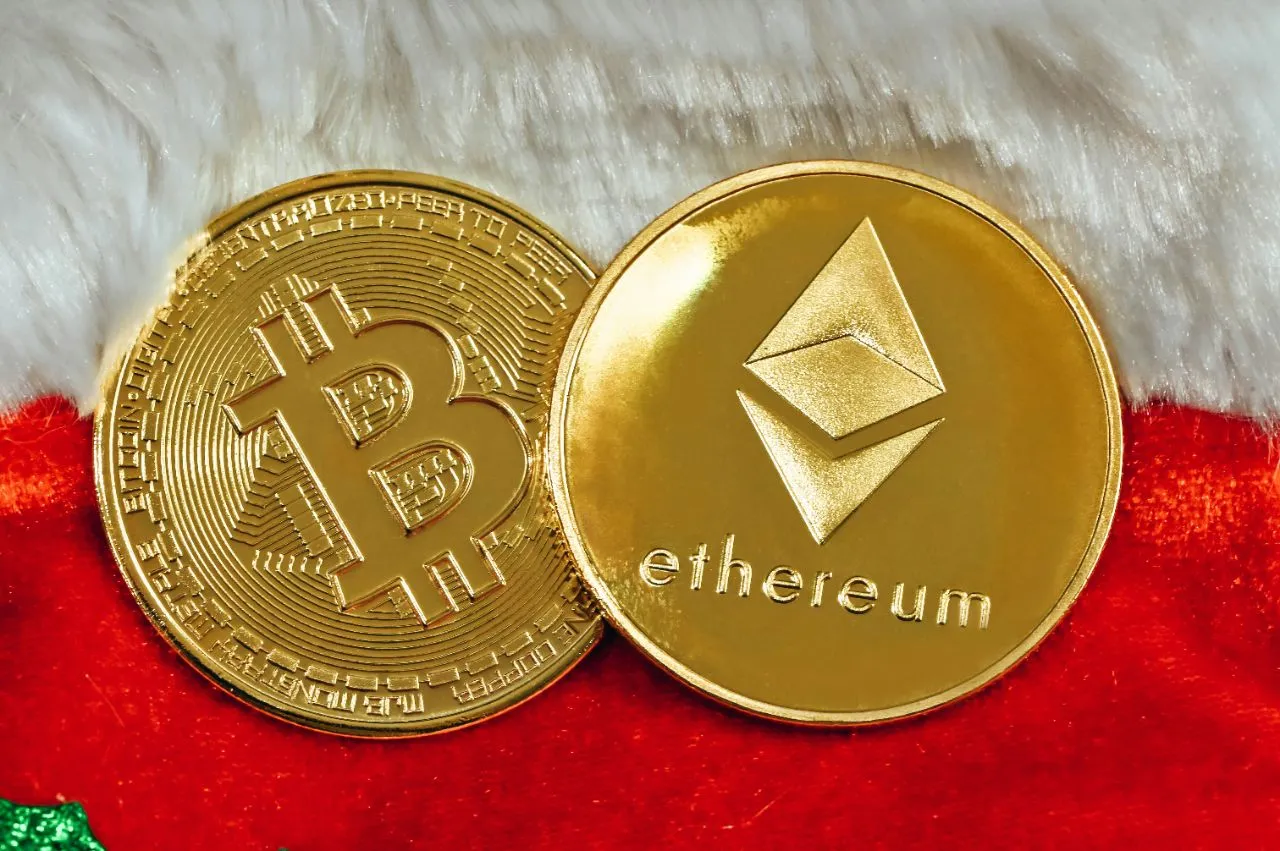
Malaysian daily English language newspaper the Sun reported on Jan. 22 that StashAway will enable Malaysians to invest in two top-tier cryptocurrencies, Bitcoin (BTC) and Ethereum (ETH), through its regulated platform.
https://asset.coinness.com/en/news/b3d65b012b23087826b8fa26858e0fd8.webp
Photo by Traxer on Unsplash

Fidelity products

The company is providing its Malaysian clientele access to crypto investment products offered by American multinational financial services company Fidelity Investments. These include the Fidelity Wise Origin Bitcoin Fund (FBTC) and the Fidelity Ethereum Fund (FETH).


StashAway Malaysia Country Manager Wong Wai Ken explained the company’s rationale in adding the two products. He stated:


“Many of our clients have expressed interest in the long-term potential of major cryptocurrencies like Bitcoin but have been hesitant because of security concerns or the complexities of navigating crypto exchanges. We’re now offering them a familiar and safe way to diversify their portfolios by incorporating crypto through a platform they already know and trust.”


On a previous occasion, Wong told the Sun that its role is to help investors to diversify their portfolios. Adding access to cryptocurrency fits that objective. The StashAway executive believes that while there may be growing mainstream adoption of cryptocurrency, many investors are turned off gaining exposure due to the risks involved with self-custody or the fees and counterparty risk involved with cryptocurrency exchanges.


StashAway charges management fees ranging from 0.2% to 0.8%. The Fidelity crypto ETF products will be offered with a 0.25% annual management fee. 


Last June, Malaysian commercial bank Affin Bank became the first entity to offer a crypto ETF in Malaysia. The bank partnered with local fund management company Cross Light Capital to launch the actively managed digital asset fund. Titled the “Performa Digital Asset Fund,” the product incorporates investment in Bitcoin and Ether exchange-traded products (ETPs), with the remaining third invested in blockchain-related equities.


The approval of eleven Bitcoin ETFs in the United States led to greater consideration for the approval and addition of such products internationally. However, in the first few months following the launch of these products, regulators, exchange platforms and asset management firms still remained cautious. 


In March of last year, Bursa Malaysia, Malaysia’s stock exchange, dismissed the notion of adding cryptocurrency to its multi-asset exchange. Within the region, regulators in Singapore and Thailand both dismissed the idea of enabling Bitcoin ETFs within their markets. 


Since then, Thailand’s regulator has moved closer in its consideration of such a product offering. In the case of Malaysia, earlier this month, the country’s Prime Minister, Datuk Seri Anwar Ibrahim, called for stakeholders such as the central bank to focus on cryptocurrency so that the Southeast Asian nation doesn’t get left behind.


StashAway is headquartered in Singapore. Besides Singapore and Malaysia, the company also serves investors in Thailand, the United Arab Emirates (UAE) and Hong Kong. The digital platform has 50,000 users in Malaysia, where it serves retail and accredited investors. The company was the first robo-advisor platform to acquire a Capital Markets Services License from the SC in Malaysia.


More to Read
View All
Web3 & Enterprise·

Dec 12, 2023

SBI and Saudi Aramco to explore digital asset business partnerships

SBI and Saudi Aramco to explore digital asset business partnershipsJapanese financial services conglomerate SBI and Saudi Arabia’s state-controlled energy giant Saudi Aramco have jointly announced their exploration of potential collaboration in the realms of digital assets and semiconductors.Photo by Chris Liverani on UnsplashDigital asset portfolio co-investingThe partnership, which was publicly disclosed last week, aims to delve into co-investing in each other’s digital asset portfolios. Such an arrangement will leverage SBI’s substantial holdings and the formidable position of Aramco as the world’s second-largest company by revenue, boasting a staggering $604 billion figure. The partnership will mark a strategic alliance that goes beyond geographical boundaries, underscoring the global impact of digital asset investments.The collaboration between SBI and Aramco extends beyond mere investment, with SBI actively seeking to identify Japanese digital asset startups keen on expanding their operations into Saudi Arabia. The joint effort aims to provide comprehensive support to these startups, facilitating their integration into the Saudi market and contributing to the growth of the digital economy.SBI Middle EastIn addition to this venture, SBI is set to establish “SBI Middle East” in Riyadh, serving as a central hub for its operations in the Middle East. This move aligns with SBI’s recent announcement of a $100 million joint fund with Standard Chartered, based in Dubai, solidifying its commitment to fostering financial partnerships in the region.When contemplating cryptocurrency activities in the Middle East, Saudi Arabia might not be the first destination that comes to mind, given Turkey’s significant crypto adoption rate and the UAE’s well-established crypto regulatory authorities, such as Dubai’s VARA and Abu Dhabi’s ADGM.However, Chainalysis data reveals that Saudi crypto activity is steadily gaining ground, experiencing the most significant year-on-year growth (12%) to June 2023. Additionally, the country’s Vision 2030 initiative involves efforts to diversify its economy. With that, blockchain and Web3 are being embraced.TokenizationWhile lacking a formal crypto regulatory regime, recent reports suggest that Saudi regulators are warming up to the idea, indicating a shift in approach. A recent collaboration has emerged between the central banks of Saudi Arabia and Hong Kong which will explore tokenization and payments infrastructure.It is noteworthy that both SBI and Aramco explicitly referred to “digital assets” in their collaboration, avoiding the mention of cryptocurrencies. This emphasis raises the possibility that the focus might extend to tokenization, an area where SBI has a robust presence, notably through the establishment of the Osaka Digital Exchange (ODX), set to commence trading tokenized securities later this month.As part of its digital asset investments, Saudi Aramco has previously engaged in blockchain initiatives, including investments in VAKT, a post-trade solution for the oil sector. Additionally last year Aramco invested in blockchain startup Data Gumbo, which utilizes blockchain in order to bring about operational efficiencies. The collaboration extends to the approval of electronic bill of lading (eBL) providers like TradeGo.In February, Aramco signed an agreement with droppGroup to build out a range of Web3 technologies. Furthermore, Aramco’s investments in companies like Red Date Technologies and IR4LAB underscore its interest in developing blockchain-based services, including document and supply chain solutions.

news
Policy & Regulation·

Jul 11, 2023

Korean Financial Regulator Reveals Crypto Accounting Guidelines to Prevent Inflated Company…

Korean Financial Regulator Reveals Crypto Accounting Guidelines to Prevent Inflated Company ValuationsThe Korean Financial Services Commission (FSC) has announced new regulations to address accounting uncertainties in the blockchain industry, according to local news outlet KBS News. The rapid growth of the industry and the increasing impact of cryptocurrency transactions on corporate accounting have resulted in confusion due to the lack of clear guidelines.Last month, the National Assembly’s plenary session passed the Virtual Asset User Protection Bill, emphasizing the need for improved regulation. In line with this development, the FSC has introduced practical guidelines and measures to resolve accounting uncertainties.The FSC has introduced two measures to achieve this goal: virtual asset accounting guidelines and mandatory disclosure of virtual assets in annotations within financial statements.Photo by Beatriz Pérez Moya on UnsplashAccounting guidelinesThe virtual asset accounting guidelines state that when an issuer sells virtual assets to a customer, they must fulfill all obligations, such as the sales process, in order to recognize it as revenue. Any costs incurred during the issuance of a virtual asset and the creation of its platform should be recognized as expenses, unless there is clear evidence that these activities specifically contribute to the development of the virtual asset. Additionally, any reserved virtual assets after issuance cannot be treated as assets on the company’s balance sheet. These guidelines aim to prevent companies from artificially inflating the value of their companies using virtual assets.When recognizing virtual assets as assets or liabilities, virtual asset service providers (VASPs) must consider the concept of economic control. Economic control refers to the entity’s authority to dispose of a virtual asset without needing customer authorization.Virtual assets in annotationsFurthermore, companies are obligated to disclose their virtual asset transactions and holdings in annotations to the financial statement. This requirement ensures that users of corporate accounting information have sufficient details. Public companies holding virtual assets for investment purposes must state the basis for classifying the assets as assets or liabilities. They must also provide the book and market values of their virtual assets in their financial statements.Companies that have created or issued virtual assets are required to provide comprehensive information about the quantity and characteristics of these assets. They must also explain their revenue recognition methodology in the event of asset sales. Companies must provide disclosure regarding the historical utilization of cryptocurrencies that have been issued but remain unsold. This disclosure includes various factors such as portfolios and volumes.VASPs must disclose the volume and market value of virtual assets entrusted to them by customers for each asset, regardless of whether these assets are recognized as assets or liabilities. VASPs also have to provide information about the level of protection measures they have implemented to mitigate risks such as hacking.The FSC expects that these measures will enable readers of financial statements to make meaningful comparisons between VASPs while ensuring the provision of reliable information.The accounting guidelines, after incorporating industry feedback, are expected to undergo deliberations and resolutions by both the accounting standards review committee and the Korean Securities and Futures Commission, as per local news outlet Kyunghyang Shinmun. Once the guidelines receive final approval, they will be promulgated and implemented immediately. This process is anticipated to take place between October and November.Meanwhile, the inclusion of virtual asset disclosures in the annotations of financial statements will be enforced next January.

news
Policy & Regulation·

Jul 04, 2023

Singapore Looks to Prohibit Crypto Lending and Staking

Singapore Looks to Prohibit Crypto Lending and StakingIn a move to bolster investor protection and maintain financial stability, the Monetary Authority of Singapore (MAS) is introducing new guidelines for cryptocurrency platforms operating in the country.Details of the measures were published by MAS on Monday. According to its statement, the measures “will mitigate the risk of loss or misuse of customers’ assets, and facilitate the recovery of customers’ assets in the event of a DPT [Digital Payment Token] service provider’s insolvency.”The proposed guidelines outline several key measures. One such measure is the daily reconciliation of customer assets, which will help prevent discrepancies and safeguard against potential losses.Photo by Hu Chen on UnsplashHolding assets in trustAdditionally, the custody function, responsible for holding and safeguarding client assets, will be operationally separated from other business divisions to minimize the risk of mismanagement or unauthorized use. By the end of this year, it’s understood that crypto platforms will be required to store client assets in trust accounts, ensuring enhanced security and accountability.DisclosuresFurthermore, licensed cryptocurrency service providers will be mandated to provide explicit disclosures to customers, clearly outlining the risks associated with holding and trading digital payment tokens (DPTs). Recognizing the speculative nature of digital token trading, the MAS acknowledges that regulations alone cannot fully protect consumers from potential losses.To further protect retail investors, the MAS intends to prohibit cryptocurrency service providers from facilitating lending or staking activities. Lending and staking, where digital tokens are loaned or pledged to earn profits, are considered unsuitable for the general public due to their complex and high-risk nature.These measures come as part of Singapore’s efforts to strengthen its regulatory environment for digital assets. The consultation process began last year, following the collapse of FTX, a cryptocurrency exchange.Singaporeans suffered disproportionately with the collapse of FTX as previously, MAS had banned global crypto exchange Binance from operating within the city-state. That led to Singapore having more FTX customers than many other world regions. To compound matters, state-owned global investment firm Temasek, was an investor in the fraudulent crypto exchange.MAS had called for feedback and proposals, with a focus on enhancing investor safeguards and promoting responsible trading practices. While the regulations aim to provide a safer environment for investors, the MAS also emphasizes the importance of individuals exercising caution when engaging in digital token trading.Contrasting approachesWhile Singapore is taking steps to tighten regulations, other cities like Hong Kong are adopting a more inclusive approach to the crypto industry. Hong Kong Legislative Council member Johnny Ng has voiced support for the local crypto business and has encouraged prominent exchanges like Coinbase to establish operations in the territory, aiming to foster greater engagement and growth within the sector.As the crypto industry continues to evolve, regulatory frameworks play a crucial role in ensuring investor protection and maintaining market integrity. Singapore’s proactive approach to strengthening its regulatory environment reflects its commitment to striking a balance between fostering innovation and safeguarding the interests of investors.

news
Loading
