Top

Animoca Brands Remains Bullish on Blockchain Gaming

Web3 & Enterprise·July 07, 2023, 12:28 AM

Blockchain-based games have gained significant attention within the cryptocurrency space, witnessing remarkable growth and daily activity across various protocols despite challenging market conditions. Hong Kong-based Animoca Brands, the Web3 and metaverse company, recently pronounced its bullishness where blockchain gaming is concerned.

In 2022 alone, Web3 gaming attracted approximately $4.5 billion in funding, as asset managers, investment funds, and venture capitalists sought to capitalize on the flourishing sector. In an interview with Cointelegraph, Yat Siu, Co-Founder of Animoca Brands, expressed the company’s renewed optimism in the blockchain gaming sector and provided an update on its eagerly anticipated metaverse fund, which made headlines in late 2022.

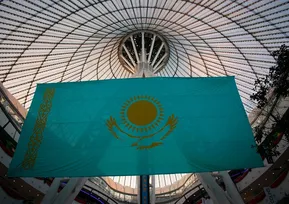
Photo by julien Tromeur on Unsplash


Animoca’s metaverse fund

The metaverse fund, originally planned to have a budget of up to $2 billion in November 2022, aimed to invest in mid to late-stage startups focused on developing metaverse products and experiences. However, due to recent volatility affecting the cryptocurrency space, Animoca Brands scaled back its investment target to $1 billion in January 2023. Reports in March suggested a further reduction to $800 million.

While awaiting the required license to launch the metaverse fund, Siu emphasized that Animoca Brands has been actively investing in early-stage startups through its venture arm, with additional investments directly from the company’s balance sheet. Currently, the company boasts a portfolio of over 450 companies.


AAA blockchain games anticipated

Despite the challenges, Siu anticipates the release of several “AAA” blockchain games, in which Animoca Brands has made investments, by the end of 2023 or early 2024. Siu believes that the quality of titles backed by Animoca Brands, built on open protocol systems such as Ethereum and Polygon, will contribute to the long-term sustainability of the sector. He underlined the importance of these games being on-chain, enabling third parties to leverage the capabilities of blockchain technology and explore exciting possibilities.

Siu also highlighted the significant role of scaling protocols like Polygon and technological advancements such as zero-knowledge proofs in boosting the development and quality of upcoming blockchain games. Immutable, a layer-2 platform, effectively reduced costs and improved transaction speeds for NFT generation in blockchain games. Choosing the right blockchain platform, especially Ethereum, is crucial for success in the industry.

While fully decentralized games present challenges, Siu acknowledged that a hybrid on-chain and off-chain approach might be more suitable as the industry progresses towards true decentralization. Certain game features, such as provenance and skins, lend themselves well to on-chain implementation, while others may require a gradual transition.


Integrating blockchain tech with existing gaming

Siu emphasized the potential for integrating blockchain elements into the existing gaming culture worldwide. By designing interfaces that are familiar to gamers and gradually introducing crypto and Web3 experiences, gaming companies can facilitate the adoption of blockchain technology while promoting financial literacy among players.

The Head of Animoca Ventures, an Animoca Brands sister company, recently explained that key Japanese games console makers are also showing an interest in blockchain gaming.

Looking ahead, the year 2023 and beyond are critical for the blockchain gaming sector. The release of high-quality games, coupled with significant investments, will shape the long-term success of the industry. With its extensive portfolio and unwavering optimism, Animoca Brands remains dead set on driving innovation and pushing the boundaries of blockchain gaming.

More to Read
View All
Web3 & Enterprise·

Jun 23, 2023

Former Coinbase Japan CEO Joins Fidelity-Backed VC

Former Coinbase Japan CEO Joins Fidelity-Backed VCWell-known investment firm Eight Roads Ventures has recruited the former CEO of Coinbase Japan to join them as a partner within the firm.Eight Roads Ventures, a prominent investment firm backed by Fidelity with assets worth over $11 billion, has announced the hiring of Nao Kitazawa as a venture partner. Kitazawa brings a wealth of expertise and experience garnered at Coinbase Japan and elsewhere in the digital assets industry to the firm.In a recent LinkedIn post, Kitazawa expressed his excitement about joining Eight Roads Ventures to pursue his passion for fintech and Web3. He acknowledged the firm’s successful track record of supporting innovative and disruptive companies and considered it an honor to be part of such an organization.Photo by Marten Bjork on UnsplashCoinbase exited JapanKitazawa’s tenure at Coinbase Japan came to an end earlier this year, coinciding with Coinbase’s decision to exit the Japanese market due to prevailing “market conditions.” His appointment at Eight Roads Ventures indicates the increasing interest and involvement of Fidelity, the firm’s backer, in the cryptocurrency space.Fidelity has been making significant strides in the crypto industry. EDX Markets, a crypto exchange backed by Fidelity, recently announced its launch despite regulatory challenges from the United States Securities and Exchange Commission (SEC) and a bearish market environment.TradFi heavyweight in cryptoFidelity is probably the standout heavyweight firm from traditional finance which has stepped foot in the crypto space from early on. It has done so through Fidelity Digital Assets, its crypto arm. The subsidiary company quietly rolled out its trading platform this year, providing millions of users with commission-free trading of bitcoin and ether. Additionally, Fidelity has been expanding its crypto research team, demonstrating its commitment to the industry.Headquartered in Bermuda, Eight Road Ventures positions itself as a global venture capital firm that helps entrepreneurs scale. It backs and partners with game-changing technology and healthcare companies, with a presence in China, Europe, India, and Japan.Eight Roads has also been actively investing in various crypto startups, including Fireblocks and Kaiko. Kitazawa’s appointment is expected to bring significant value to the firm’s portfolio, leveraging his knowledge and insights gained from working in the cryptocurrency sector.Originally known as Fidelity Ventures, Eight Roads Ventures has been involved in investments since 1969, initially operating out of Boston. Recently, it launched a $350 million technology investment fund in China and a $250 million healthcare and life sciences fund in India, demonstrating an interest in pursuing emerging opportunities in Asia.Shifting strategic focus overseasWith the addition of Nao Kitazawa as a venture partner, Eight Roads Ventures reinforces its position as a leading investment firm with a keen interest in the evolving landscape of fintech, Web3, and cryptocurrencies. It’s likely that the firm recognizes what way the regulatory winds are blowing, and with that, it’s bringing on board someone of Kitazawa’s caliber, with expertise outside of the US.Against the backdrop of a currently adverse regulatory environment in the US, earlier this month US VC giant Andreessen Horowitz (a16z) opened its first international office in London, in what many perceived to be a move towards a more regulatory progressive environment relative to the emerging digital assets sector.

news
Policy & Regulation·

May 19, 2025

South Korea’s DPK to propose crypto bill with $3.58M stablecoin reserve minimum

South Korea's Democratic Party of Korea (DPK) plans to introduce a bill this week aimed at establishing a legal framework for digital assets, according to Edaily. The move is part of the party's ongoing efforts to advance its crypto policy agenda ahead of the upcoming presidential election. The proposed law would define the legal status of digital assets and set rules for their issuance, distribution and listing. The bill is expected to keep the requirement for Korean won-pegged stablecoin issuers to obtain authorization with a minimum reserve of 5 billion won ($3.58 million), a key point of debate.Photo by Brady Bellini on UnsplashA DPK official stated that the bill has been drafted and is set to be introduced to the National Assembly this week, following feedback from internal subcommittees. Most of the provisions remain consistent with last month’s draft, but final comments are still being collected on stablecoin reserve requirements, which have been a major point of discussion. Defining digital assetsThe bill defines digital assets as "electronic records with economic value based on blockchain technology" and establishes a regulatory framework for issuers, exchanges and custodians. Key provisions include permitting initial coin offerings (ICOs) and creating a digital asset committee under the Financial Services Commission (FSC). This committee would oversee legal framework design, market monitoring, and policy promotion. Additionally, an industry association will establish a separate committee to oversee token listing practices, ensuring consistent listing standards across exchanges. The most contentious part of the draft has been the regulations for won-based stablecoins. It classifies stablecoins as digital assets akin to fiat currency, requiring a minimum reserve of 5 billion won and authorization from the FSC. It also mandates real-time reserve disclosures, secure asset custody and quarterly reporting. Divide over stablecoin reserve requirementOpinions on the reserve requirement are divided. Some industry insiders argue that the 5 billion won threshold is too high, creating a barrier for startups. Others believe a minimum capital requirement is necessary due to stablecoins' role in payments and their potential as currency substitutes. Lee Jung-yup, president of the Blockchain Law Society, stressed that stablecoins must maintain a basic level of trust, warning that those failing to meet the 5 billion won threshold could become prone to insolvency or fraud. However, Lee acknowledged concerns about the centralized regulatory approach led by financial authorities and the potential for market dominance by large corporations. He suggested exploring the creation of an independent regulatory body for cryptocurrencies, warning that overly strict regulations could stifle domestic digital finance innovation amid growing global competition. Crime surges with market growthWhile regulations continue to evolve, crypto crimes are also rising sharply amid the expanding digital asset market. According to Segye Ilbo, South Korean police arrested about 2,100 individuals for crypto-related offenses last year—17 times more than in 2017, when data collection began. The total losses from such crimes now exceed 1 trillion won ($714 million) annually. Since the election of U.S. President Donald Trump, known for his crypto-friendly stance, Korea's crypto market has experienced rapid growth. This surge has raised concerns about an increase in fraud targeting investors chasing quick profits. 

news
Web3 & Enterprise·

Sep 06, 2024

WazirX hack: Hacker launders $10M through Tornado Cash amid legal disputes and partial withdrawals

In the aftermath of the massive $235 million hack of the WazirX cryptocurrency exchange on July 18, users and stakeholders are grappling with its devastating consequences. The breach, which compromised a significant portion of the exchange’s reserves, has led to a series of legal, financial and security-related challenges, leaving millions of users uncertain about the future of their funds. The hack and its aftermathWazirX, once a leading Indian cryptocurrency exchange, lost approximately $235 million due to a breach in one of its multi-signature wallets. This included significant amounts of Shiba Inu (SHIB), Ethereum (ETH) and other assets. The hack crippled the exchange, forcing it to temporarily shut down operations and seek a restructuring process under Singapore's insolvency laws. The WazirX hacker has since begun laundering the stolen assets through Tornado Cash, a crypto mixer known for obscuring transaction details. According to blockchain security firm Cyvers, the hacker transferred over 5,000 ETH (approximately $12 million) to a new wallet and laundered $10 million in Ethereum through Tornado Cash. This mirrors the tactics of the North Korea-backed Lazarus Group, which has used similar methods in past high-profile crypto thefts. Photo by GuerrillaBuzz on UnsplashUsers seeking redress and government interventionAs the victims of the hack face uncertainty, over 4 million active WazirX users are expected to suffer a loss of at least 43% of their funds due to the restructuring process. Frustrated by the lack of action from Indian authorities, many users have sought help from Indian Prime Minister Narendra Modi, who was visiting Singapore at the time. Users took to social media to air their grievances and demand justice, urging the government to intervene. WazirX co-founder Nischal Shetty, who is based in Dubai, added to the confusion by stating that he does not know who is responsible for safeguarding user crypto funds on the platform. His statement has fueled outrage among users, who feel abandoned by the exchange’s management. Legal and ownership disputesAmid the chaos, WazirX is also battling a legal dispute over its ownership with Binance, the world’s largest cryptocurrency exchange. Shetty has repeatedly claimed that Binance acquired WazirX, granting it significant control over the platform's operations. However, Binance founder Changpeng Zhao (CZ) refuted these claims in 2022, stating that the acquisition deal was never completed. The uncertainty surrounding the ownership of WazirX has further aggravated users, many of whom are demanding a clear statement from Binance. So far, Binance has remained silent, neither confirming nor denying its involvement. This ambiguity has intensified calls for clarification, with users fearing that a lack of transparency may worsen their chances of recovering their funds. Partial withdrawals and restructuring effortsIn response to the crisis, WazirX has initiated phased withdrawals for users, allowing them to access 66% of their Indian Rupee (INR) token balances. Initially set for September 9, the withdrawal window was moved forward, offering some relief to users. However, many are dissatisfied with the partial access to their funds and are questioning when full crypto withdrawals will resume. WazirX’s legal team has indicated that users may recover only 55% to 57% of their crypto holdings, sparking further discontent. Meanwhile, the exchange has filed a moratorium application in the Singapore High Court, seeking a six-month reprieve from legal actions as it works on a restructuring plan. Looking aheadAs the WazirX saga unfolds, the future of the exchange and its users remains uncertain. The legal battles, ownership disputes and the ongoing laundering of stolen assets pose significant challenges to the platform's recovery. For now, users can only hope that the restructuring process will bring them closer to recovering their lost funds and that authorities will step in to provide clarity and resolution. 

news
Loading
