Top

Former Binance CEO advising Kyrgyzstan on blockchain & crypto

Policy & Regulation·April 07, 2025, 2:25 AM

Binance co-founder and former CEO, Changpeng Zhao (CZ), has partnered with the authorities in the Central Asian republic of Kyrgyzstan to provide advice on crypto regulation and the development and adoption of blockchain technology.


It’s understood that CZ has signed a memorandum of understanding (MOU) to this effect with the National Investments Authority (NIA), a state authority that falls under the direction of the President of the Kyrgyz Republic. The NIA promotes foreign direct investment, assisting foreign companies in developing business opportunities within Kyrgyzstan. 
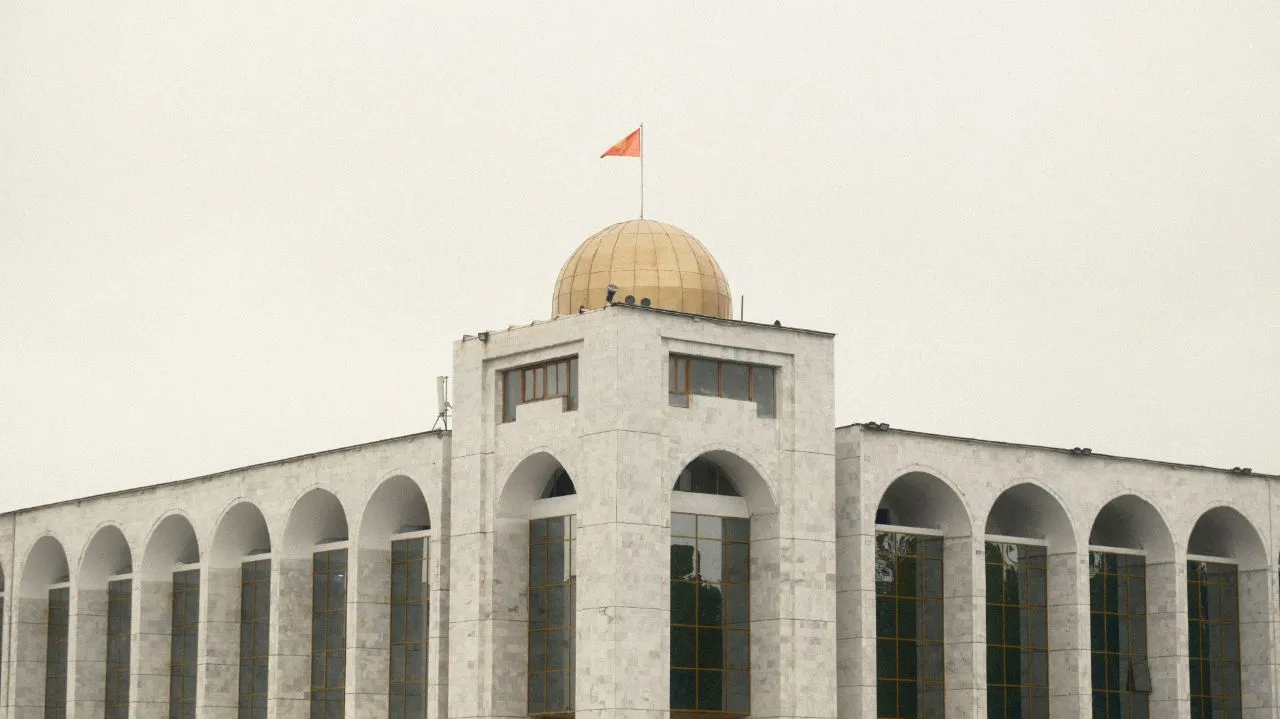
https://asset.coinness.com/en/news/3592a5bd8529dae70ba8c03b135cc96e.webp
Photo by Abai K on Unsplash

Crypto & blockchain ecosystem development

In a statement published on X on April 3 by the President of the Kyrgyz Republic, Sadyr Zhaparov, the president outlined that in accordance with the MOU, the parties will cooperate on the development of the crypto and blockchain ecosystem.


Breaking that down further, the president said that this cooperation will involve the provision of technical, infrastructural and technological support and expertise. Additionally, it will involve collaboration towards the implementation of related educational initiatives. Zhaparov added:


“This cooperation marks an important step towards strengthening technological infrastructure, implementing innovative solutions, and preparing highly qualified specialists in blockchain technologies, virtual asset management, and cybersecurity. In light of the rapid global evolution of digital technologies, such initiatives are crucial for the sustainable growth of the economy and the security of virtual assets, ultimately generating new opportunities for businesses and society as a whole.”


‘Crypto adoption one country at a time’

CZ reacted to this X post by the President of the Kyrgyz Republic, stating:


“Kyrgyzstan. Crypto adoption, one country at a time.”


He also remarked that this event had brought Zhaparov to X, given that this was his first post on the platform, with an account registered last month.


Steve Milton, co-founder and CEO of Web3 wallet project Fintopio and a former Binance marketing executive, commented on the development. Milton stated that Kyrgyzstan is a forward-thinking country, while interpreting CZ's involvement as a step that will help move adoption forward.


Additional advisory activity

In another X post, CZ provided details on his advisory activity. He stated:


“I officially and unofficially advise a few governments on their crypto regulatory frameworks and blockchain solutions for gov efficiency, expanding blockchain to more than trading. I find this work extremely meaningful.”


Reports emerged in January that Malaysian Prime Minister Datuk Seri Anwar Ibrahim had discussed digital finance policy matters with CZ. The Binance co-founder said that those discussions revolved around digital asset regulation and risks related to such assets. Furthermore, cross-border collaborations and collaborations between industries were discussed.


In December CZ met with the King of Bhutan. Prior to that visit, he posted a link to an article on X that outlined that the Kingdom of Bhutan has accumulated in excess of $1 billion in Bitcoin. At that time, the Binance co-founder said that many nation states will use Bitcoin and other cryptocurrencies as reserve assets.


In the past, commentators have identified Kyrgyzstan as having considerable potential for crypto mining, given ample hydroelectric generation within the mountainous country. However, crypto mining tax receipts as of the end of last year suggest that crypto mining still remains a niche activity in the Kyrgyz Republic.


More to Read
View All
Web3 & Enterprise·

Oct 23, 2024

Komainu acquires Singaporean digital asset custodian

Jersey-headquartered Komainu, a digital asset custodian backed by Japan’s Nomura Holdings, is in the process of acquiring Propine Holdings, a Singaporean competitor. Subject to approvalKomainu has signed an agreement in principle with Propine to acquire the company, according to a press release published on Oct. 22 by PR Newswire on behalf of the two firms. One of the key elements in completing the deal is attaining the approval of local regulator the Monetary Authority of Singapore (MAS). This is Komainu’s first acquisition, and according to the firm’s co-CEO Paul Frost-Smith, it will be the first of several. According to Bloomberg, Frost-Smith stated in an interview that “an absolutely key factor in building” the business is obtaining access to Propine’s Capital Market Services license, which the company was awarded in Singapore. Frost-Smith described the acquisition as "setting ourselves up for the future with a licensed platform that we can grow." The company intends to further its efforts in terms of compliance by applying for a Major Payment Institution (MPI) license in Singapore. Komainu is motivated in developing in this manner as it has identified increasing demand from established institutions in Singapore for advisory services.Photo by RDNE Stock project on PexelsStrategic hubThe Komainu co-CEO said that the Asia-Pacific (APAC) region was central to Komainu’s heritage. With that, he added that Singapore is “an important strategic hub for Komainu in Asia and Propine will enhance our capabilities in meeting the significant client demand we are experiencing, including for Komainu Connect, our collateral management service, which is already extensively utilised by our investor clients in Hong Kong, Singapore, Malaysia, Thailand and Australia.” Back in August, global crypto exchange platform Bitfinex signed a memorandum of understanding (MOU) with Komainu Connect, with a view towards enhancing trading security. In July Komainu was added by crypto infrastructure firm Fireblocks to its Global Custodian Partner Program. The Japanese market has been one that Komainu has been focusing on. Frost-Smith asserted that it will serve as a major hub for the company, given that it is home to its primary backer, Nomura.  In November 2023, the company partnered with Crypto Garage, a regulated Japanese crypto-asset financial services firm. The collaboration extended Komainu’s dealings with the firm, given that it had invested in Crypto Garage’s parent company, Digital Garage, previously. At the time, the companies claimed that the partnership would allow them both to leverage their collective expertise. Komainu has also been following a regulatory-compliant path in other markets. In the UK, where it’s stationed, it received permission from the Financial Conduct Authority (FCA) to operate as a crypto custodian in October 2023. In August of the same year, it was awarded an operating license by the Virtual Asset Regulatory Authority (VARA) in Dubai. Alongside Nomura, the company was also established with the backing of digital asset security firm Ledger and digital asset investment manager CoinShares. Earlier this year, Komainu was approved by Nasdaq to be a core custodian relative to its suite of crypto indices. 

news
Policy & Regulation·

Sep 20, 2023

Korean Crypto Expert Claims NFTs and Security Tokens Shouldn’t Be a Priority for Investors Yet

Korean Crypto Expert Claims NFTs and Security Tokens Shouldn’t Be a Priority for Investors YetAlthough there has been a lot of speculation recently regarding the prospects of non-fungible tokens (NFTs) and security tokens as lucrative investment opportunities, these topics should not be of concern yet, said Kim Dong-hwan, CEO of Korean crypto consulting firm Wonder Frame, at Tuesday’s 2023 FNTimes Investment Forum hosted in Seoul by the Korean Financial Times.Photo by Markus Winkler on UnsplashFrom a price-to-earnings perspective, these types of investments should not be of priority to the average investor, Kim said, stating that this argument is rooted in historical context. Bitcoin, the kingpin of cryptocurrencies, had its first breakthrough in 2012 when its price was around $13. Since then, its value has skyrocketed nearly 2,000 times. Those who profited from Bitcoin then went on to invest in Ethereum, the second-largest cryptocurrency by market capitalization. Ultimately, the money earned from Bitcoin was constantly circulating in the crypto market.Grappling for liquidityHowever, Bitcoin’s liquidity — the frequency at which assets are bought and sold, which can be deemed the most important aspect of investing in and trading cryptocurrencies — is currently down. Liquidity in the crypto market usually flows in order from Bitcoin first, to altcoins, then to NFTs, Kim explained, because investments in NFTs are made by people who hold cryptocurrencies, not Korean won. Therefore, NFTs, which have now experienced more than a 90% decline from their peak, must depend on Bitcoin’s price recovery for their own resurgence.Securing liquidity for security tokens is also difficult, considering the fact that while these assets share common characteristics with cryptocurrencies, they are subject to strict regulatory oversight by financial authorities such as the Korea Exchange. Therein lies the difficulty in forecasting the prospects for security tokens.Kim thus questioned whether there would be market makers or liquidity providers that would be willing to boldly step into the role of satisfying the market, given the close scrutiny of authorities such as Korea’s Financial Services Commission (FSC) and Financial Supervisory Service (FSS). Although crypto exchanges like Upbit act as market makers by facilitating daily trading worth trillions of won, speculation suggests that securities firms that are responsible for supplying security token liquidity may find it challenging to do the same.Weak investments and negative perceptions of DeFiAnother concern for security tokens is fractional investments, which tend to be concentrated on assets of lower value. “Security tokens are fundamentally about dividing underlying assets and then selling them. However, in many cases, these underlying assets are of lower value or have no choice but to be traded this way,” Kim said.Kim also mentioned the regulatory hurdles hindering decentralized finance (DeFi) in general, despite its reputed appeal. “DeFi is perceived by international organizations like the Financial Stability Board (FSB), the US Federal Reserve System, and the European Union (EU) as a public enemy that causes financial instability in the real world,” he said.Taking all these factors into consideration, Kim recommended against investing in security tokens or NFTs at this time, given the current situation where even Bitcoin’s liquidity is at an all-time low. He suggested that, with market interest rates approaching 5%, unless there is a specific need to invest in virtual assets, it may be better to explore investment options positioned for higher interest rates.Kim is an industry expert who has previously written articles for crypto news site CoinDesk Korea for four years and has taken on the role of Chief Business Development Officer (CBDO) at Blitz Labs, a virtual asset research firm. He founded Wonder Frame in 2022, where he currently works as a professional consultant.

news
Web3 & Enterprise·

Apr 11, 2023

NH Bank Establishes Consortium to Build Security Token Ecosystem

NH Bank announced today that Korean banks and fractional investing companies have teamed up to establish a consortium with the aim of building an ecosystem for security tokens. Consortium between banks and fractional investorsThe consortium comprises NH Bank, Suhyup Bank, and Jeonbuk Bank as well as six fractional investing companies, including Seoul Auction Blue, Tessa, and Galaxia Moneytree.The banking sector will contribute to the security token industry by building infrastructure for distributed ledger technology, conducting research on promoting security tokens, and bolstering investor protection. Korean banks’ crypto initiativesNH Bank has been in partnership with domestic Korean crypto exchanges Bithumb and Korbit to provide them with real-name registered bank accounts, demonstrating continued interest in crypto services. Under current law, crypto exchanges in Korea are obliged to hold real-name bank accounts if they want to provide Korean won trading services.This move led by NH Bank shows that traditional banks, which have been more conservative compared to securities companies, are actively striving to secure a position in the security token market.

news
Loading