Top

Iran curtails crypto exchange hours following $90M hack

Policy & Regulation·June 22, 2025, 11:56 PM

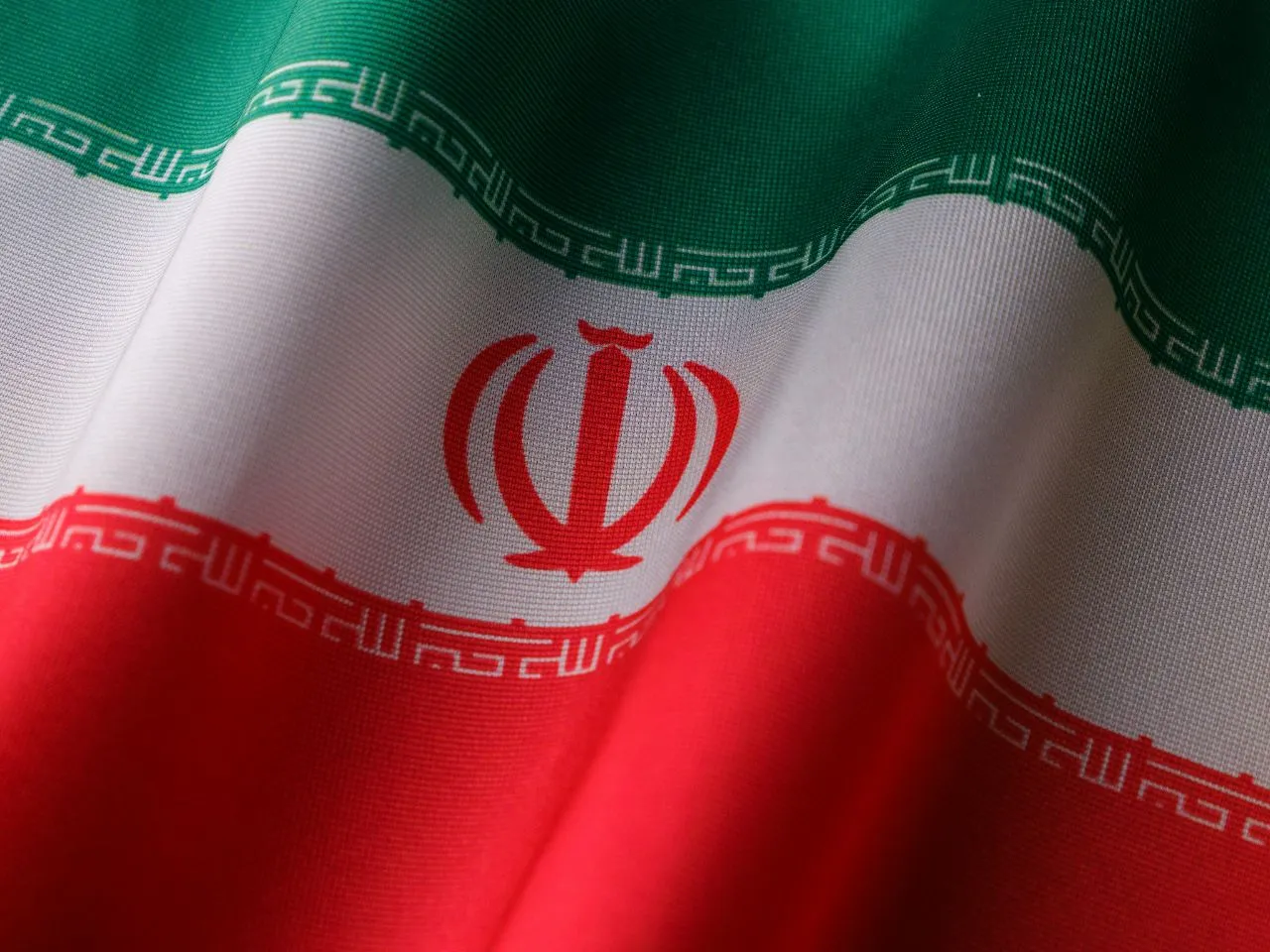
While the crypto markets have not been immune to geopolitical developments, the sector in Iran experienced a more direct effect last week with a politically motivated $90 million exchange hack, prompting the authorities to introduce an exchange curfew.


Blockchain analytics firm Chainalysis outlined on X on June 18 that Nobitex, Iran’s largest cryptocurrency exchange, had been hacked, with crypto assets to the value of $90 million having been drained from exchange-controlled wallets.
https://asset.coinness.com/en/news/91d6b522a07d63c927187c631d5bd852.webp
Photo by Engin Akyurt on Pexels

Weaponizing blockchain technology

The hack had the hallmark of a politically-motivated attack given that rather than the digital assets being stolen, they were sent to vanity addresses, customized blockchain addresses involving user-defined sequences of characters. The vanity addresses contained “politically charged messages” and in sending the funds to them, the funds were effectively burned as they’re now permanently inaccessible. 


The firm stated:

”This incident highlights how crypto exploits aren’t always financially motivated. Bad actors can weaponize blockchain technology for geopolitical messaging, turning hacks into ideological statements rather than profit-driven crimes.”


Pro-Israel hacker group Gonjeshke Darande, also known as “Predatory Sparrow,” appears to have carried out the hack, given that on June 18, it outlined on X that it would release Nobitex’s source code together with other internal information related to the firm’s internal network, while confirming that it had conducted cyberattacks against the company. The group made the following assertion:

”The Nobitex exchange is at the heart of the [Iranian] regime’s efforts to finance terror worldwide, as well as being the regime’s favorite sanctions violation tool.”


Rafe Pilling, director of threat intelligence at Sophos, a British cybersecurity company, told The Guardian that Predatory Sparrow “bears all the hallmarks of a false persona used by a government-sponsored threat group to conduct disruptive operations against targets” linked to the Iranian government.


While Nobitex is estimated to have seven million users, an Open Source Intelligence (OSINT)-based investigation carried out in 2024 linked relatives of Ali Khamenei, Iran’s supreme leader, and other Iranian establishment figures to the crypto exchange.


Minimizing systemic risk

The cyber attack has prompted a response from the Iranian government. In a blog post, Chainalysis outlined that the Central Bank of Iran has instructed all domestic crypto exchange platforms to curtail their service hours to between 10 a.m. and 8 p.m.


The company speculated that this measure could be motivated by a desire to impose a higher level of oversight and control over the local crypto sector. However, it also suggested that it may be part of an attempt by the Iranian authorities to manage and minimize systemic risk.


In recent years, Iran has been subject to extensive international sanctions applied by various entities including the United States, the European Union and the United Nations. Those sanctions have had a significant impact upon the country’s economy, triggering high inflation and currency devaluation. 


With that, crypto has been increasingly viewed by the authorities as a means to circumvent sanctions. Last December, the Iranian authorities appeared to be working towards regulating crypto, embracing the asset class in acknowledgement of its growing importance to the Iranian economy.


In February, Chainalysis reported that sanctioned entities worldwide had received $15.8 billion in crypto transactions in 2024.


More to Read
View All
Web3 & Enterprise·

Feb 26, 2025

MANTRA snags VASP license in Dubai

MANTRA, a real-world asset (RWA) tokenization blockchain project headquartered in Hong Kong, has announced that it has been awarded a Virtual Asset Service Provider (VASP) license in the United Arab Emirates (UAE). In a community update published on its website, MANTRA co-founder and CEO John Patrick Mullin outlined that Dubai regulator, the Virtual Assets Regulatory Authority (VARA), had awarded the company the VASP license, meaning that the project is now entitled to act as a virtual asset exchange. Additionally, it is authorized to offer broker-dealer and investment management services. Photo by Aleksandar Pasaric on PexelsMullin claimed that the milestone is huge for both the company and the broader industry. He stated:”It’s a major step in our objective to bring the world’s financial ecosystem onchain by being the preferred ledger of record for real world assets. It’s a validation of our purpose,which is to provide developers and institutions with a purpose-built RWA Layer 1 Blockchain, that’s capable of adhering to real world regulatory requirements.” Scaling operations in the Middle EastThe project sees the license as a key step in broadening MANTRA’s global footprint and scaling its operations within the Middle East. Mullin outlined that both the UAE and broader Middle East & North Africa (MENA) have become “a progressive global hub and thriving ecosystem for Web3 and virtual assets owing to their regulatory initiatives and frameworks.” Mullin added that the license not only strengthens the project’s presence regionally, but it also “positions us internationally to deliver unique DeFi products that bridge the gap between decentralized finance and traditional finance.”  Shorooq Partners, a Dubai-based venture capital firm and investor in the project, commented on the announcement on X. It said that the license would mean that MANTRA would set a new standard for compliant and secure DeFi solutions. It emphasized the importance of regulatory compliance in enabling institutional DeFi adoption on a global scale. The venture capital firm was the lead investor in an $11 million funding round completed by MANTRA in March 2024. At the time, Shane Shin, founding partner at Shorooq, said that he liked MANTRA’s strategic focus on key markets like Hong Kong and Dubai, adding that the investment implicated a future where digital and traditional assets converge seamlessly. The project intends to launch DeFi-based products that have been formulated to meet investors' needs by combining the benefits of DeFi with the structure and security provided by conventional finance. Token's price performanceThe OM token is a utility and governance token within the MANTRA decentralized autonomous organization (DAO). It was the best-performing layer-1 token as of Feb. 17. At the time of writing, it’s trading at $7.59, according to CoinMarketCap data. The project also announced a $1 billion deal with UAE-based DAMAC Group, a property development company, last month.

news
Markets·

Jan 25, 2024

OKX to compensate service users following flash crash

OKX is set to compensate users after its native exchange token, OKB, experienced a rapid 48% flash crash on Tuesday. OKB price fluctuationThe crash occurred within a brief three-minute window, triggered by a series of liquidations resulting from an abnormal price fluctuation. During the event, OKB's diluted market capitalization plummeted by $6.5 billion. At around 9 a.m. GMT on Tuesday, the price of OKB dropped from $46.80 to $25.10, representing a 48% decrease within 15 minutes. However, the token has since recovered, currently trading at $47.63 at the time of writing. The crash led to the triggering of liquidations for large leverage positions, causing a cascading effect on pledged loans, leverage transactions and cross-currency transactions.Photo by Nicholas Cappello on UnsplashCompensation planOKX responded promptly, pledging to fully compensate users for any additional losses incurred due to abnormal liquidation. The exchange aims to launch a specific compensation plan within the next three days, taking into account users who engaged in on-chain trades. In a statement on Tuesday, the platform suggested that it is committed to enhancing "margin position tier rules, risk management controls and liquidation mechanism" to prevent similar issues in the future. The flash crash coincided with a day of notable price swings across cryptocurrency markets, partly driven by the Grayscale Bitcoin Trust's (GBTC) sale of bitcoin to meet investor redemption demands on its exchange-traded fund (ETF). Additionally, the bankrupt crypto exchange FTX has been selling nearly $1 billion worth of GBTC ETF shares recently, further contributing to market volatility. Focusing on complianceOKX has been actively focusing on regulatory compliance in recent times. On Dec. 29, the exchange announced the delisting of several privacy coins, including Monero (XMR), Zcash (ZEC), Dash (DASH) and Horizen (ZEN). Subsequently, on Jan. 2, the platform introduced additional requirements for United Kingdom users to comply with the new Financial Conduct Authority (FCA) regulations, including the mandatory completion of risk assessment questionnaires before engaging in trading activities. Flash crashes are a common occurrence in cryptocurrency markets, often attributed to thin liquidity distributed across multiple venues. The 2% market depth for OKB indicates that a sell order exceeding $224,000 could potentially trigger another price cascade. Notwithstanding that, oftentimes it can be difficult to pinpoint the precise reason for a flash crash. In 2021 global crypto exchange Kraken experienced a flash crash that saw token prices drop by in excess of 50% over the course of one hour before recovery was achieved. While some suggested it was caused by a technical glitch, Kraken founder Jesse Powell dismissed that notion, pointing instead to the possibility of a large-scale sell-off by a service user. Despite this recent challenge, OKB remains a significant player in the cryptocurrency space, boasting a market cap of $2.8 billion, making it the fourth-largest exchange token in circulation, according to CoinGecko. 

news
Policy & Regulation·

Jul 27, 2023

Ripple and the Republic of Palau Collaborate to Mint First PSC Stablecoin

Ripple and the Republic of Palau Collaborate to Mint First PSC StablecoinIn a groundbreaking partnership, the Republic of Palau has teamed up with Ripple Labs to introduce its inaugural stablecoin, the Palau Stablecoin (PSC).This occasion was shared by Jay Hunter Anson, the Director of Palau’s Digital Residency Program and a member of Palau’s Ministry of Finance, who took to Twitter on Wednesday to shed light on the collaboration between the Palau National Treasury and Ripple Labs.The event unfolded at the National Capitol in Ngerulmud, Palau, where representatives from both the Palau National Treasury and Ripple gathered to celebrate the successful launch of the Palau Stablecoin. Anson emphasized that this marks a significant step in their joint exploration of the stablecoin’s potential use cases within the Micronesian island nation.Photo by Kanchanara on UnsplashReducing payment costsPalau’s Ministry of Finance initiated the Stablecoin project to address specific needs within the nation’s financial landscape. By sponsoring this project, the ministry aims to reduce payment costs within the Republic of Palau and enhance access to financial services, especially for underserved communities and various socio-economic groups, utilizing digital solutions.Notably, the Palau Stablecoin operates on the XRP Ledger (XRPL), demonstrating Ripple’s technology as the backbone of this financial initiative.Anson’s tweets also shed light on the meticulous approach taken in developing the Palau Stablecoin. Controlled and limited PSC pilot tests have been conducted to assess the effectiveness and efficiency of the solution co-designed with Ripple. These pilot experiments provide valuable insights into the stability and usability of the Palau Stablecoin before its potential public release.Extensive testingAlready, the Palau Stablecoin pilot program has seen volunteer users actively participating in the testing phase. Videos shared by Anson on Twitter showcased smooth transactions at partner vendors in Palau, promptly confirming the transaction receipts.The successful implementation of the Palau Stablecoin pilot program has drawn attention from the XRP community, and anticipation is building for the official joint press release scheduled for July 27, Thursday morning in Ngerulmud, Palau, as Anson revealed.The collaboration between Ripple and the Republic of Palau was initiated at the end of 2021, with launch originally scheduled to take place in 2022. Ripple has claimed to be in dialogue with in excess of twenty governments relative to enabling central bank digital currency (CBDC) issuance.Given that the island state lacks a functioning central bank and the US dollar is recognized as the primary medium of exchange throughout the country, the creation of a USD-backed stablecoin is a significant achievement resulting from the national stablecoin initiative. The president described this as a “step towards our own central bank digital currency.”There has been plenty of activity in Micronesian nations relative to cryptocurrency in recent times. Tonga is understood to be considering introducing bitcoin as legal tender. The Marshall Islands is considering issuing a CBDC although it is being discouraged by the International Monetary Fund (IMF) in that endeavor. Meanwhile, the government of Vanuatu announced its support for the Satoshi Island project.With a strategic focus on addressing financial needs and enhancing accessibility within Palau, this partnership sets the stage for a new era of digital financial solutions for the Micronesian nation.

news
Loading