Top

Hong Kong releases ‘LEAP’ framework for digital assets

Policy & Regulation·June 27, 2025, 6:28 AM

The Financial Services and the Treasury Bureau (FSTB), a policy bureau attached to the government of the special administrative region of Hong Kong, has released a new digital assets policy statement, incorporating its “LEAP” framework for the digital assets industry within the city.


The document, outlining the government’s objectives and guiding principles relative to the digital assets sector, builds on its first policy statement for the industry which it published in October 2022.
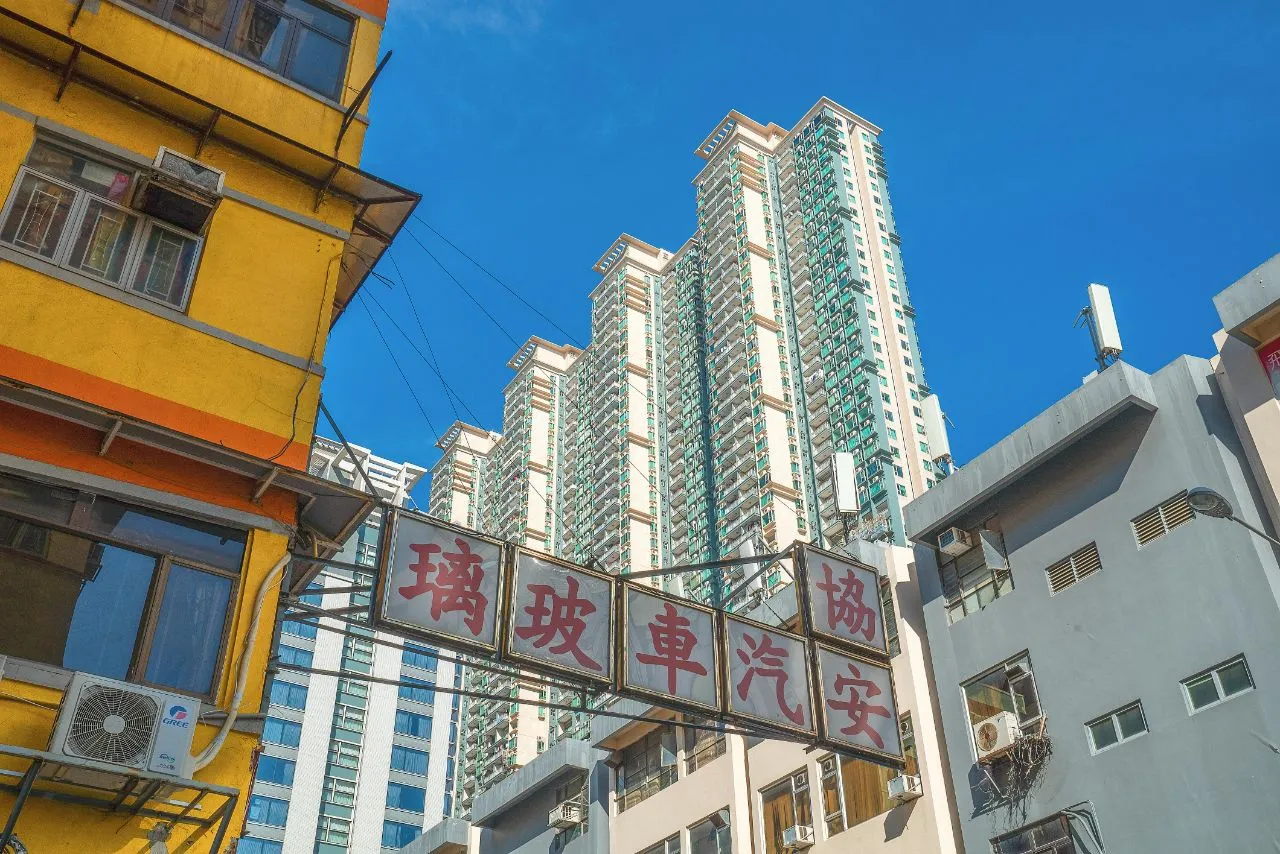
https://asset.coinness.com/en/news/02b61c8307d2ace40443316826308e35.webp
Photo by Harry Shum on Pexels

A ‘LEAP’ towards an integrated digital assets ecosystem

The FSTB suggests that this new policy statement builds upon foundational initiatives pioneered through the initial policy statement, asserting that “Hong Kong is poised to 'LEAP' towards a trusted, sustainable, and deeply integrated [Digital Assets] ecosystem embedded within the real economy.”


The government agency also suggested that this “Policy Statement 2.0” also builds on the “ASPIRe” digital asset regulatory roadmap introduced by the Securities and Futures Commission (SFC) in February, outlining the next phase of digital asset sector development in Hong Kong.


Strengthening global hub status

The government has set out to home in on strategic measures to bring about greater liquidity in digital asset markets and diversify digital asset product offerings, while strengthening the Chinese autonomous territory’s position as a global hub for the digital asset sector.


“LEAP” is an acronym for the proposed initiatives that underpin the new framework, including:


- Legal and regulatory streamlining
- Expanding the suite of tokenized products
- Advancing use cases and cross-sectoral collaboration
- People and partnership development


The framework focuses heavily on the tokenization of real-world assets (RWA), with particular emphasis on bond tokenization. In February 2023, Hong Kong pioneered the issuance of the world’s first-ever tokenized government green bond. Building on that, it now seeks to bring about the regularization of the issuance of tokenized government bonds.


The Hong Kong government would also like to see tokenization efforts expanding into “a broader range of assets and financial instruments.” It cited sectors such as precious metals, non-ferrous metals and renewable energy as candidates for tokenization.


Promoting tokenized ETFs

The authorities are also encouraging tokenized exchange-traded funds (ETFs), with plans to introduce a stamp duty waiver for these products as an incentive. Additionally, the Hong Kong government is interested in nurturing the development of secondary market trading of such tokenized ETF products, whether that’s through digital asset trading platforms or other channels.


The framework considers the further development of stablecoins. The city’s new licensing regimen for stablecoin issuers commences on Aug. 1. The FSTB maintains that stablecoins have the potential “to transform payments, supply chain management, and capital market activities by offering a cost-effective and efficient alternative to traditional systems.”


In order to capitalize on this potential, the Hong Kong government, together with the city’s regulators, intends to enable licensed stablecoin issuers in the city “to explore and implement different stablecoin use cases.”


Cyberport, a Hong Kong business park and digital technology incubator that hosts in excess of 1,650 startups, will also extend its support through its incubation ecosystem to further the objectives set out in the Hong Kong government’s new digital assets policy statement.



More to Read
View All
Web3 & Enterprise·

Dec 29, 2023

Filipino exchange Coins.ph adds BRC-20 support

Coins.ph, the leading crypto exchange in the Philippines, has announced its support for BRC-20 tokens. As part of that move, the exchange has successfully integrated the ORDI token, thereby becoming the inaugural platform in the country to embrace the BRC-20 standard. The platform clarified its support for BRC-20 in a recent blog post, which it published to its website. Coins.ph revealed its intention to expand its services further by adding support for additional BRC-20 tokens, showcasing a forward-looking approach to cater to the evolving needs of its user base. BRC-20 is a standard facilitating the creation of fungible tokens on the Bitcoin blockchain. The inclusion of this technical standard allows for the minting of tokens with unique features, introducing a new dimension to the capabilities of the world's flagship cryptocurrency.Photo by Kanchanara on UnsplashORDI memecoin additionORDI stands out as one of the most popular BRC-20 tokens, gaining traction and reaching an all-time high above $81 earlier this week. This surge in value followed the addition of trading support by crypto exchange Binance in early November, underscoring the influence of strategic partnerships and market dynamics on token performance. Wei Zhou, CEO of Coins.ph, expressed the company's commitment to staying at the forefront of digital asset innovation through this strategic move. Highlighting the remarkable growth in BRC-20 activity since its launch earlier in the year, Zhou emphasized the importance of enabling users to participate in these opportunities. He mentioned the recent listing of $ORDI and hinted at future product offerings enabled by the BRC-20 standard. Industry trendWhile coins.ph may have been the first exchange in the Philippines to introduce BRC-20 support, it's not the first mover in the broader Asian region. Back in May, leading crypto exchange OKX decided to support the BRC-20 standard through its OKX Wallet product. The company’s support of the standard was validated more recently when it emerged that BRC-20 support played a large role in OKX NFT Marketplace taking top rank as the NFT marketplace with the greatest trading volume earlier this month. Seychelles-based crypto derivatives platform Bitget has also identified the associated growth potential. Earlier this week, the platform unveiled a plan to support development within the Bitcoin ecosystem, inclusive of BRC-20. The fusion of ordinals and BRC-20 enables users to embed images, texts or audio, among other data, into satoshis—the smallest units of BTC. Bitcoin community controversyAmidst these developments, concerns have been raised by Bitcoin core developer Luke Dashjr. On Dec. 6, Dashjr disclosed that developers are working to remove Bitcoin inscriptions before the v27 update scheduled for the next year. This would imply the elimination of ordinals and BRC-20 from the Bitcoin landscape. Dashjr clarified that Bitcoin Core has allowed users to set limits on extra data size in transactions since 2013 through the "datacarriersize" setting. Despite this, inscriptions have found a way to bypass the limit by obfuscating their data as program code. He reassured the community that a recent bug in Bitcoin Knots v25.1 has been fixed, addressing concerns about vulnerability.

news
Policy & Regulation·

Sep 03, 2024

Qatar’s QFC launches digital assets framework

The Qatar Financial Centre (QFC), a business and financial center located in the Qatari capital, Doha, has announced that the Qatar Financial Centre Authority (QFCA) and the Qatar Financial Centre Regulatory Authority (QFCRA) have launched the QFC digital assets framework. In a press release published to the QFC website on Sept. 1, the project set out details of its QFC Digital Assets Framework 2024.Photo by 拜耳 闫 on UnsplashIndependent economic zoneThe QFCA and the QFCRA both act in a regulatory capacity relative to the financial center. The QFC is an economic zone, which operates independently from the rest of the country. With that, it has its own legal, tax, regulatory and business framework. The initiative is similar in this respect to projects located within its Middle Eastern neighbors, the United Arab Emirates (UAE), such as RAK DAO in Ras al Khaimah and Abu Dhabi’s international financial center, the Abu Dhabi Global Market (ADGM). The QFC incentivizes international startups to base themselves within the economic zone by allowing full foreign ownership and 100% repatriation of any profits made by the established entity, with a low rate of 10% taxation applied to those profits. In its press release, the QFC claimed that the framework establishes the legal and regulatory foundation for digital assets, including the process of tokenization, legal recognition of property rights in tokens and their underlying assets, custody arrangements, transfer and exchange.  Providing for a transparent ecosystemAdditionally, the framework provides for the legal recognition of smart contracts. The QFC claims that the framework will ensure a “secure and transparent digital asset ecosystem,” in accordance with international standards and best practices.  The financial center established its Digital Assets Lab in October 2023. Since then, it has welcomed in more than 20 startups, with those entities at various stages in terms of developing, testing and commercializing their products and services. The project outlined that the digital assets framework was developed simultaneously, alongside the operation of the QFC Digital Assets Lab, with industry engagement and collaboration arising as a consequence, having played a role in the framework’s development. His Excellency, Sheikh Bandar bin Mohammed bin Saoud Al Thani, the Qatari Central Bank governor, commented on the development, stating: “Launching the 2024 Digital Assets Regulations marks a significant milestone in our journey towards realising the Third Financial Sector Strategy.” The central bank governor added that the project was aligned with Qatar’s endeavor to achieve specific digital transformation goals. Sovereign wealth fund rumorsRumors had emerged in December 2023 that Qatar’s sovereign wealth fund was driving a Bitcoin price surge. While those rumors weren’t substantiated subsequently, this latest development has once again led to some market commentators considering the prospect of one of the world’s largest sovereign wealth funds investing in Bitcoin. Pseudonymous crypto influencer “MartyParty,” who has over 110,000 followers on X, commented on the development, adding that “[The Qatar Investment Authority (QIA) has] been very interested in #Bitcoin and other digital assets and are huge investors in technology.” Back in 2021, QIA CEO Mansoor Bin Ebrahim Al Mahmoud stated at the Qatar Economic Forum that crypto needed to mature before the $500 billion wealth fund would establish a view about investing in the space.

news
Web3 & Enterprise·

Nov 19, 2024

OKX enables zero-fee SGD transfers in Singapore

Seychelles-headquartered global crypto exchange OKX outlined on Nov. 18 that it will offer instant, zero-fee Singaporean dollar (SGD) deposits and withdrawals into and out of the exchange platform for customers resident in Singapore.Photo by Peter Nguyen on UnsplashDBS partnershipIn a press release published by GlobeNewswire on behalf of OKX, the company outlined that it has been in a position to enable this feature for its Singapore-based customers due to a collaboration with Singapore’s largest bank, DBS Bank. OKX Singapore CEO Gracie Lin said that “working with DBS to provide payment rail infrastructure in Singapore provides customers with secure and seamless access to digital assets.” As DBS is one of 27 banks that participate in PayNow, a real-time payment system that falls under the Fast and Secure Transfers (FAST) service in Singapore, OKX customers who are also customers of a bank that participates in the PayNow scheme, can effect those SGD deposits and withdrawals in real time. Lin added that OKX is working towards the addition of more features in an effort to further enhance the customer experience. The new offering takes OKX a step further towards integrating with the local traditional finance system (TradFi).  Singpass integrationAdditionally, the exchange has also integrated Singpass verification. Singpass is a digital identity system that enables Singaporean residents to access private sector and government services online. Back in March, the company acquired in-principle approval (IPA) from the Monetary Authority of Singapore (MAS) in respect of a Major Payments Institution (MPI) license. Continuing that shift towards regulatory compliance, it followed up with the acquisition of a full MPI license from MAS in September. The company is now one of 29 crypto sector firms to have been licensed by MAS in Singapore. While a particular effort has been made in Singapore, OKX has been making similar in-roads elsewhere. Last month, it launched its service in the United Arab Emirates (UAE), having received full licensing from Dubai’s Virtual Assets Regulatory Authority (VARA). Making further progress in October, OKX partnered with UK-headquartered multinational bank Standard Chartered for institutional crypto custody. Both Singapore and the UAE are seen by the company to be strategic crypto hubs. However, its efforts in expanding its offering globally has also taken it into other markets. In February OKX launched OKX TR, a specialized crypto exchange platform catering to the specific needs of the Turkish market. In an emailed response to Reuters, DBS Bank’s Head of Digital Assets, Evy Theunis, commented on its partnership with OKX:”DBS has been actively fostering a responsible and innovative digital asset ecosystem in Singapore for several years now. Working with OKX deepens the bank's wide-ranging involvement in this space." DBS has been following its own path as a pioneering TradFi entity getting further involved in cryptocurrency, blockchain and tokenization. Last month it launched DBS Token Services for institutions, integrating tokenization and smart contracting capabilities within its existing conventional services. 

news
Loading