Top

ETH surge being led by Asian market

Markets·July 18, 2025, 6:34 AM

Over the course of the past two weeks, the unit price of Ethereum (ETH) has surged 32%, with a report from a Singapore-based crypto financial services firm asserting that the Asian market has had a large part to play in that increase.


Taking to X on July 16, Matrixport, a crypto financial services platform, provided its daily analysis in which it suggested that “Ethereum’s recent outperformance appears to be heavily influenced by Asia.”
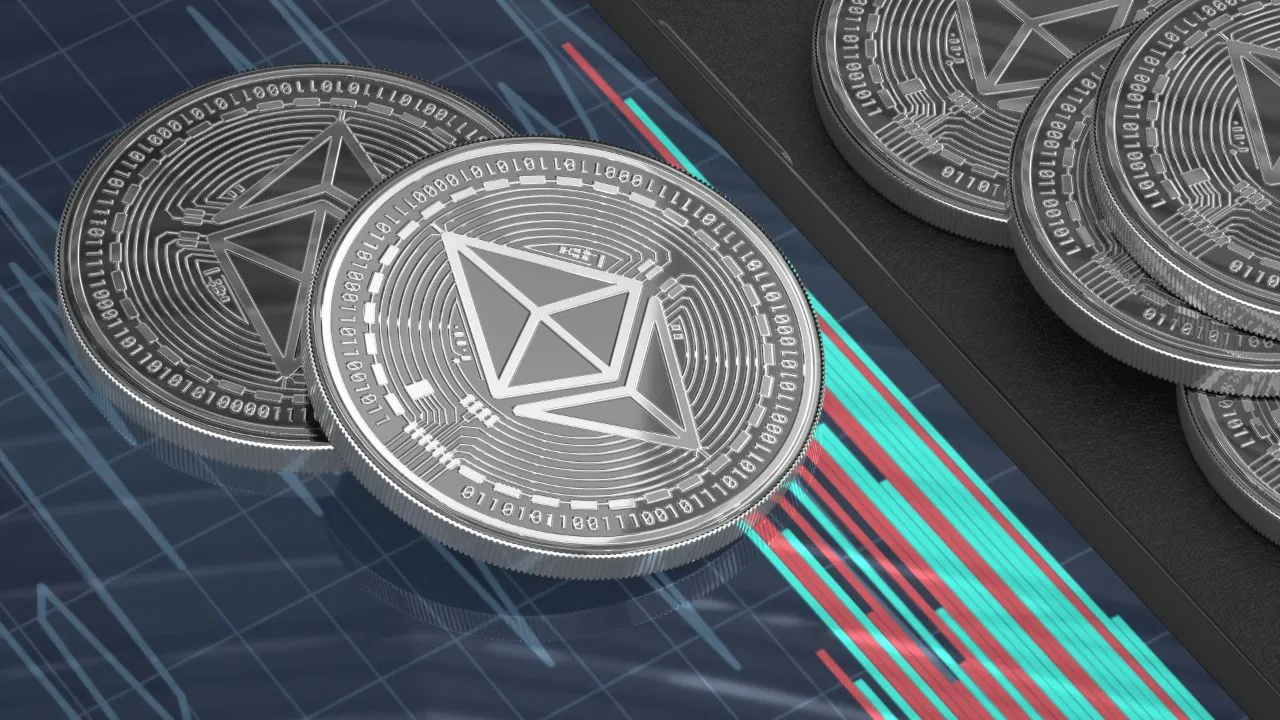
https://asset.coinness.com/en/news/315b26e4b17b798858af87540e3d71d7.webp
Photo by DrawKit Illustrations on Unsplash

Asian market influence

The company included a graph in which it had plotted Ethereum’s recent performance during Asian trading hours, asserting that as much as 17% of the uptick in the Ether unit price can be accounted for by the actions of market participants within the Asian market. It added:

"The influence of the Asian market in the pricing of crypto assets is continuing to rise, whether in terms of volatility or trading momentum.”


ETH ETFs in Hong Kong

Spot ETH exchange-traded funds (ETFs) were approved in Hong Kong in April 2024. Hong Kong ETH ETF volumes have risen substantially in July, with significant inflows being recorded related to both retail and institutional investors. 


In the past, many commentators have suggested that the addition of staking would be an attractive prospect for institutional investors who like the idea of accumulating an ongoing yield. With that, Asian investors may be enticed to delve further into Ethereum positions going forward, given that ETF issuers are trying to add that component to their offerings. Huaxia Fund, a subsidiary of China Asset Management (ChinaAMC), is preparing to launch staking as part of its ETH ETF.


Another potential driver for ETH in Asia in the future lies with the ongoing enablement of trading via established institutions. Earlier this week, China Merchants Bank’s brokerage arm received a virtual asset license in Hong Kong to trade crypto assets. It’s the first mainland China-affiliated brokerage to be awarded such a license, with licensing enabling it to offer trading services related to assets like Ether.


Global asset

While Asia is playing a role in ETH’s recent move upwards, the asset is traded globally and with that, factors further afield are also playing a role. Tom Lee, founder of American financial research firm Fundstrat, pointed out on X that ETH had been range-bound since 2021. However, he believes that the rise of stablecoins, which by and large run on Ethereum, together with ongoing growth in the tokenization of real-world assets (RWAs), is driving demand for the digital asset.


While Bitcoin treasury companies have played a significant part in driving Bitcoin in recent months, Ethereum is starting to see similar activity. Lee made the point that Strategy (formerly MicroStrategy) “set the standard for Treasuries,” but that now BitMine “wants to be the Microstrategy of Ethereum.” The crypto mining and treasury firm confirmed on July 17 that it now holds $1 billion worth of Ethereum.


Arthur Hayes, co-founder of BitMEX and chief investment officer (CIO) at Hong Kong family office, Maelstrom, said that it was “ETH szn” and that the Maelstrom Fund is buying the digital asset. Tom Dunleavy, head of venture at Varys Capital, asserts that ETH will hit a unit price of $10,000 by the end of 2026.


More to Read
View All
Policy & Regulation·

Apr 28, 2023

Hong Kong to Issue Digital Asset Licensing Guidelines in May

Hong Kong to Issue Digital Asset Licensing Guidelines in MayAccording to Hong Kong’s Securities and Futures Commission (SFC), the Commission will issue new guidelines for virtual asset exchanges within the Chinese autonomous special administrative region (SAR).© Pexels/Jimmy ChanSFC CEO Julia Leung made that announcement while speaking at an event in the city on Thursday, indicating that the guidelines are due to be released next month. Additionally the autonomous region intends to introduce a new licensing system from June 1 onwards, enabling the retail investors among Hong Kong’s populace to trade leading cryptocurrencies like Bitcoin and Ethereum.Hong Kong authorities had provided an insight into this approach back in February, when plans to provide retail access to digital assets were first set out. At the time, they outlined the need for retail customers to pass a knowledge test relative to digital assets or otherwise only being allowed to trade such assets once the customer had completed a certain level of training relative to digital assets, provided by a regulated crypto service provider.This latest announcement has arrived amid a backdrop of a series of recent indications that signify the intent of authorities in Hong Kong to make the autonomous region a major financial hub centered around digital assets.Leung articulated that the further development of this digital assets framework follows a consultation process that attracted more than 150 responses. Although virtual asset service providers (VASPs) will need to await the complete rollout of the licensing system, a handful of crypto businesses such as OSL and Hashkey, under the supervision of the Hong Kong regulator, have already started to offer their services.Crypto as propertyA Hong Kong court recently recognized cryptocurrency as property. The ruling emerged in a bankruptcy hearing pertaining to failed cryptocurrency exchange Gatecoin. In presiding over the case, Justice Linda Chan outlined that the autonomous region takes a broad view of what constitutes property. In finding crypto to meet the definition of property, she went on to clarify that it therefore has the capability of being held in trust.The finding has particular relevance in the crypto world right now given the consequences of an “in trust” custodianship of customer’s digital assets relative to numerous ongoing bankruptcy processes involving failed crypto businesses, and the pecking order of creditors in those instances, in their efforts to recover their digital assets.Positive approachWhile mainland China remains an adverse territory relative to digital assets, Hong Kong has taken to welcoming the sector and with that, enticing crypto firms to relocate to the autonomous region from the mainland. Leadership in the city has been making all the right soundings to demonstrate that it is actively trying to nurture the nascent sector.While recent months have seen the Biden administration in the United States attempt to close off banking from the crypto sector, in contrast, Hong Kong’s largest virtual bank, ZA Bank, was recently given permission to act as a settlement bank for regulated Web3 businesses located within Hong Kong.

news
Policy & Regulation·

Oct 17, 2023

Former PBOC Governor: CBDC Development Must Focus on Security

Former PBOC Governor: CBDC Development Must Focus on SecurityZhou Xiaochuan, a former governor of the People’s Bank of China (PBOC), has issued a call for China to prioritize security and vigilance against potential misuse as it advances the development of its central bank digital currency (CBDC), known as the e-CNY.Photo by FLY:D on UnsplashSafeguarding the CBDC ecosystemXiaochuan made this appeal during the Digital Finance Forum, which was held in Beijing last week. He emphasized the necessity of safeguarding the CBDC ecosystem.The PBOC has been actively engaged in trials and innovations related to the e-CNY, even rolling out a pilot application in January 2022. The digital yuan’s journey, however, comes with significant responsibilities, particularly in terms of security and prevention of misuse.Thwarting potential abuseZhou acknowledged that in the realm of finance, security has always been a paramount concern, and this sentiment couldn’t be more accurate when applied to the realm of digital currency. He stressed that, as technology costs continue to decline and systems become more user-friendly, the risks associated with misuse also decrease. In this context, it becomes imperative for China to adopt stringent security measures and robust regulatory frameworks to thwart any potential abuse.Zhou underscored the illicit utilization of cryptocurrencies and stablecoins in facilitating various activities, including arms trafficking and drug trade. He pointed out that addressing these issues necessitates a concentrated effort, making it clear that a proactive approach to prevention is essential.The development of the e-CNY has seen impressive progress, with pilot projects initiated in 2019 and later expanded to 26 locations across 17 provincial-level cities and regions, including major metropolitan areas like Beijing, Shanghai, Shenzhen, and Suzhou.Last month another official from the PBOC spoke to the need to make the e-CNY accessible in all retail payment scenarios within China at a trade forum in Beijing. Digital yuan use is also being broadened to facilitate its availability in the special Chinese administrative area of Hong Kong.Proposing two-tier systemZhou advocated for a two-tier system in the operation of e-CNY, a structure already in place. The People’s Bank of China presides over the first tier, responsible for issuance and regulation, while the second tier comprises commercial institutions such as commercial banks, internet platforms, and telecommunications operators.This dual-layered design promotes dynamic evolution within the digital currency landscape, enhancing service quality and fostering innovation through healthy competition. Zhou stressed the importance of exploring cross-border transactions, an area that entails both technological advancements and policy orientation.Hong Kong has actively embraced e-CNY for cross-border payments, advancing into the second phase of technical testing and preparing to incorporate it into its predominantly local payment system.On a related note, Lu Lei, the deputy administrator of the State Administration of Foreign Exchange (SAFE), highlighted the programmable features of CBDCs as tools for enhancing monetary policy effectiveness.While current CBDCs are positioned as M0 currencies, strictly currency in circulation plus commercial bank reserve balances, he proposed that central banks could evolve them into M2 currencies. M2 is a measure of money supply that incorporates checking deposits and other forms of deposits that are readily convertible to cash, alongside cash itself.

news
Policy & Regulation·

Sep 09, 2025

South Korea to mandate disclosure of crypto funds in home purchases

South Korean authorities will require homebuyers to disclose funds originating from cryptocurrency sales, a move aimed at increasing transparency in the nation's tight real estate market. The new rule is part of a wider government effort to address housing affordability, which is particularly pronounced in Seoul, and to integrate digital assets into its regulatory framework. The change, announced on Sept. 7 as part of new housing supply measures, will alter the mandatory funding plan submitted during property transactions. Proceeds from digital assets will be listed as a distinct category, similar to funds from stocks or bonds. Officials are also expanding loan disclosure requirements to include business loans and overseas borrowing, closing potential financing loopholes.Photo by Traxer on UnsplashImpact of asset volatility on property valuesThe policy follows growing evidence that volatility in assets like cryptocurrency can spill over into the property market. A 2024 study cited by Maeil Business Newspaper highlighted that both the COVID-era stock rally and Bitcoin's 2023 price surge had a discernible impact on housing values. According to Yu Jung-suk, a professor at Dankook University, apartments in Seoul's affluent Gangnam district are particularly sensitive to fluctuations in Bitcoin and the KOSDAQ index. He noted that high-profile property acquisitions by young crypto investors, even if few in number, can significantly sway market sentiment. Professor Yu suggested that regulators may need more comprehensive tools to manage the risks connecting different asset classes. The government's new measures also seek to cool the capital's housing market, where prices have continued to rise despite a slowdown in growth. In contrast, prices in areas outside Seoul have been declining since 2022. To address the supply-demand imbalance, officials plan to begin construction of 1.35 million new homes in the Seoul metropolitan area between 2026 and 2030. Stablecoin regulation and CBDC trials advanceBeyond real estate, officials are developing a formal regulatory structure for stablecoins. The Presidential Commission on Policy Planning is reportedly considering a model where a consortium of banks and fintech firms would be granted rights to issue a won-pegged stablecoin. Supervision for this new system would fall to a proposed Financial Stability Council, a body intended to serve as a central coordinator for financial policy, comprising the finance ministry, the Bank of Korea, and other regulators. The initiative aims to combine the stability of the traditional banking sector with the innovation of non-bank financial companies. The evolving regulatory environment is attracting attention from global industry leaders. Executives from Tether, the issuer of the USDT stablecoin, met with Shinhan Financial Group CEO Jin Ok-dong in Seoul on Sept. 8. While Tether representatives stated they were monitoring the regulatory climate, they confirmed no specific business plans were discussed. Separately, the Bank of Korea is moving forward with digital currency experiments. In partnership with government agencies and six major commercial banks, the central bank will launch a pilot program to test the use of a digital currency for distributing state subsidies and vouchers. 

news
Loading