Top

Filipino legislator proposes bill to establish Bitcoin reserve

Policy & Regulation·August 26, 2025, 6:06 AM

A legislator in the Philippines has put forward a bill that, if passed and enacted, would see the Southeast Asian country establish a Bitcoin reserve consisting of 10,000 BTC.


The proposed bill was filed with the House of Representatives as House Bill 421. Its proposer is Congressman Miguel Luis Villafuerte, a representative of Camarines Sur’s 5th district since 2022. Villafuerte also served as governor of the same province on two occasions, gaining recognition for becoming the youngest individual to assume the governorship in the Philippines.
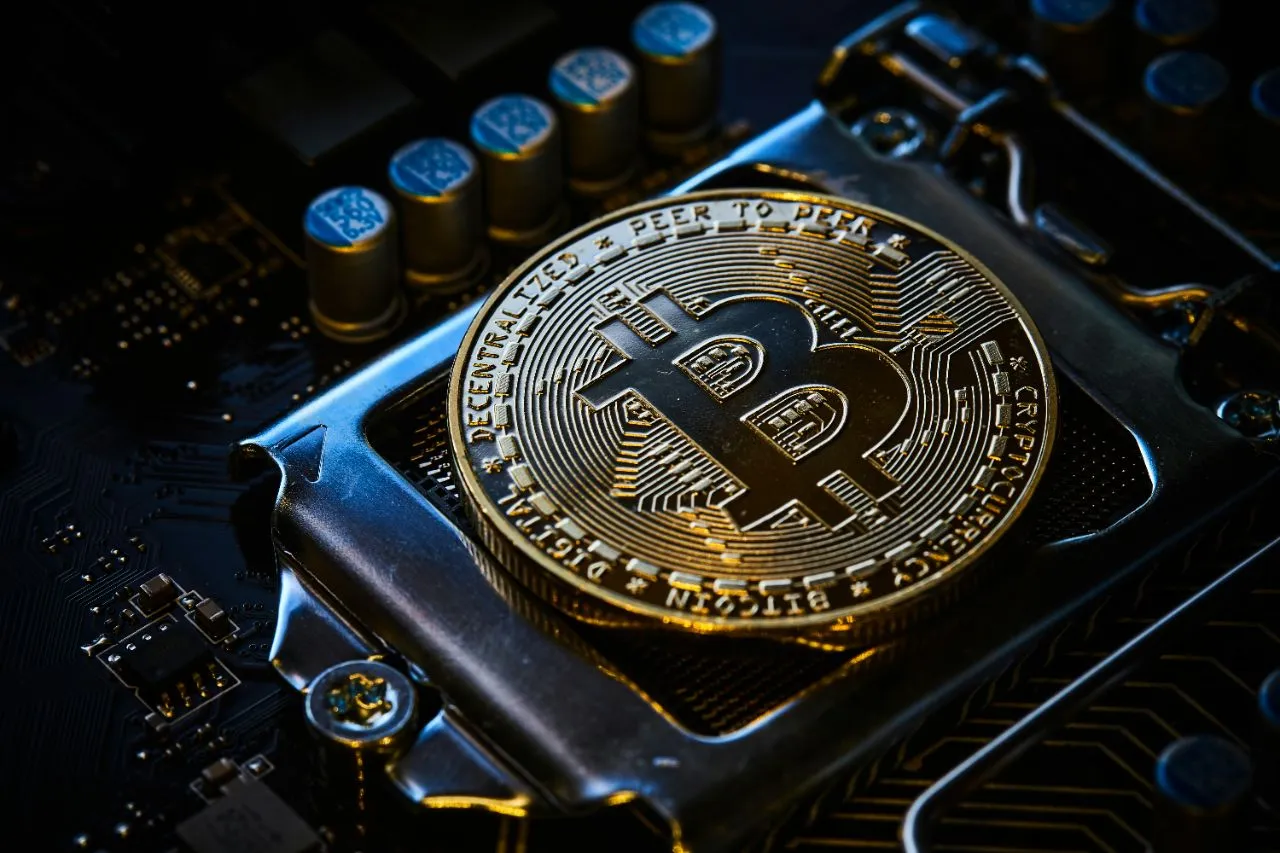
https://asset.coinness.com/en/news/d6c625c00d73628dbc6271349cfaea43.webp
Photo by Michael Förtsch on Unsplash

Drawing on developments overseas

Prefacing the bill with an explanatory note, Villafuerte draws on developments related to Bitcoin in the United States. He drew attention to U.S. Federal Reserve Chairman Jerome Powell having referred to Bitcoin as “digital gold,” while pointing to a bill in the U.S. proposed by Wyoming Senator Cynthia Lummis to create a strategic Bitcoin reserve in the U.S., with the support of U.S. President Donald Trump.


The bill itself, if passed and enacted, would provide a mandate to Banko Sentral ng Pilipinas (BSP), the country’s central bank, to acquire 2,000 BTC on an annual basis over a period of five years. According to Villafuerte’s proposal, that would result in the Philippines amassing a reserve of 10,000 BTC.


20-year minimum holding period

Following the achievement of this accumulation, the bill sets out that the leading digital asset would be locked in trust for a period of 20 years for the benefit of the country. A provision is included to establish a procedure that would enable the purchase schedule to be adjusted if a need arose to do so due to prevailing market conditions.


Upon completion of the 20-year holding period, the proposed legislation calls on the central bank to present a report to Congress with recommendations as to whether Bitcoin should continue to be held or if some of the holdings should be sold off on a gradual basis. Following the expiration of that initial 20-year period, the governor of the central bank cannot recommend the selloff of more than 10% of the holding over any two-year period.


Proof of reserves

In terms of sovereign nations, an early mover with regard to Bitcoin has been El Salvador. It became the first nation to establish Bitcoin as legal tender, while also establishing a Bitcoin reserve. However, the Central American nation has been criticized with regard to a lack of transparency surrounding that reserve.

In the case of Villafuerte’s bill, the proposed legislation includes a requirement for the central bank governor to establish a system of quarterly proof of reserve attestations. It calls for attestations to be performed by an independent third-party auditor with expertise in auditing digital assets.

The proposal comes as a number of nations are understood to be exploring the establishment of a strategic Bitcoin reserve. In April, a parliamentarian in Sweden proposed adding Bitcoin to the Nordic nation’s foreign exchange reserves. The Swedish parliament is set to debate the notion of a Bitcoin reserve next month.


Meanwhile, Switzerland’s central bank has reportedly gained exposure to Bitcoin through a $253 million shareholding in Bitcoin treasury firm Strategy.

More to Read
View All
Web3 & Enterprise·

Sep 26, 2023

GroundX to Bring NFT Activities to 2023 Seoul Light Hangang Bitseom Festival

GroundX to Bring NFT Activities to 2023 Seoul Light Hangang Bitseom FestivalGroundX, the blockchain subsidiary of South Korean conglomerate Kakao, said Tuesday that it will host NFT-related activities at Seoul’s largest laser art festival, the 2023 Seoul Light Hangang Bitseom Festival, from October 6 to 15 in collaboration with the Seoul Metropolitan Government and other affiliates like LG Uplus and the Seoul Foundation for Arts and Culture.Photo by Wes Hicks on UnsplashMerging physical activity, learning, and artThe activities will fall under the theme of “3L”: Light Run, Laser Art, and Lecture. Light Run is a four-kilometer running course scheduled for October 6 and 14, for which GroundX will mint NFT certificates for participants who complete the course. The NFTs will contain information about the participant, as well as the date of the event and a record of completion. They will then automatically be sent to and stored in the participant’s Klip wallet, GroundX’s digital wallet service, and can be accessed at any time on the Klip app and KakaoTalk Wallet.GroundX said that it will also showcase digital artworks by eight artists, including Kim Duk-ki, Han Seung-ku, and Berry Kim. These works will be displayed on LED platforms installed at the Banpo and Ichon Hangang Parks.Kim Tae-keun, Head of Business at GroundX, is set to participate as a lecturer for the Bitseom Lecture segment on October 8, where he will discuss NFT art and the company’s vision for the media art industry. Bitseom Lecture is an outdoor art convergence lecture program that introduces immersive media artworks and technology in virtual reality (VR) and extended reality (XR).Bringing the NFT experience to Seoul“We hope that citizens visiting the Bitseom Festival will be able to get the real NFT experience through our media art displays, lectures, and running course completion certificates,” GroundX said. “We will continue to collaborate with various organizations and create NFT use cases through participation in offline festivals and events.”

news
Web3 & Enterprise·

Nov 27, 2024

Hong Kong’s ZA Bank brings crypto trading to 800K retail customers

Zhong An Bank (ZA Bank), Hong Kong’s largest digital bank, has announced that it is now offering crypto trading services to its 800,000 retail customers. The bank set out details of its latest offering in a press release published to its website on Nov. 25. With that, ZA Bank claims to be the first Asian bank to offer crypto trading services to retail customers. Singapore’s DBS Bank was the first conventional bank in Asia to offer crypto services, although in that case, its offering was confined to institutional and accredited investors. It has yet to launch crypto trading for its retail customers.Photo by Traxer on UnsplashHashKey Exchange partnership While DBS built its own crypto exchange platform, in this instance, ZA Bank has decided to partner with local regulated crypto platform, HashKey Exchange. To begin with, the bank will offer Bitcoin and Ethereum in HKD and USD trading pairs. To promote the service, users are being offered commission-free trading during the first three months. A minimum investment level of HKD 600 ($70) has been set. Essentially, ZA Bank customers can access this trading feature through the ZA Bank banking app. Commenting on the partnership, HashKey Exchange CEO Livio Weng stated:”Our collaboration goes beyond technical synergies; it also reflects our shared commitment to upholding the highest regulatory standards. Looking ahead, HashKey Exchange will continue to work closely with ZA Bank to drive the development of the Web3 ecosystem, while delivering more diversified financial services to our users. Together, we aim to usher in a new era of wealth management.” HashKey Exchange is one of three virtual asset exchanges in the Chinese autonomous territory that have been fully regulated and licensed. Facilitating retail demand The bank cited a recent Hong Kong Association of Banks survey, which suggested that 70% of respondents believe that banks offering virtual asset trading services would mean greater convenience for people in accessing cryptocurrencies. Consequently, it would lead to further adoption of cryptocurrencies and it’s on this basis that ZA Bank has launched this latest service, catering to an emerging demand from its customers. Speaking to that, ZA Bank's Alternate Chief Executive Calvin Ng stated:“The rise of cryptocurrency presents investors with more diverse asset allocation opportunities.” On X, Neo blockchain co-founder Da Hongfei described the development as “noteworthy.” In particular, he highlighted the fact that ZA Bank supports account openings not just for Hong Kong residents but also mainland China residents living in Hong Kong. Notwithstanding that, crypto services still remain out of bounds for mainland China residents.  Hongfei also pointed out that the offering doesn’t allow the customer to transfer crypto purchased via the app off the platform. It is strictly limited to trading of crypto between digital assets and fiat currency. This offering by ZA Bank has been in the works for quite a while, with the bank having indicated that an app-based crypto retail offering was in development last December.  In September the bank received approval from the China Securities Regulatory Commission to add digital asset transactions to its Type 1 license. The bank is owned by ZA Global, an affiliate company of Chinese insurance company Zhong An.

news
Web3 & Enterprise·

Jul 04, 2025

Solana faces rising phishing threats in South Korea amid growing adoption

As Solana (SOL) gains institutional momentum through new investment products and major platform integrations, the blockchain is also becoming a target for sophisticated phishing scams in South Korea.Photo by GuerrillaBuzz on UnsplashFake websites and impersonatorsAccording to a recent Etoday report, attackers have been impersonating the Solana Foundation and Superteam Korea, a developer community within the Solana ecosystem. Using fake group chats on messaging platforms like KakaoTalk and Telegram, the scammers deploy official branding and fabricated partnership announcements to appear legitimate. Victims are lured with promises of five SOL tokens for creating wallets on fraudulent websites mimicking Solflare, a widely used Solana wallet. Users are then instructed to stake their tokens in exchange for daily yield, enabling the scammers to access their funds. The schemes have become more advanced, with perpetrators using names and photos of Superteam Korea members and generating fake wallet interfaces that display fabricated token balances. When victims attempt to withdraw funds, they are removed from chats, blocked from further communication and left with inactive websites as evidence is wiped. The Solana Foundation and Superteam Korea have issued public warnings, stating they do not solicit investments through messaging platforms or request payments to specific accounts. They have noted an increase in phishing sophistication and advised users to be cautious of unsolicited offers, particularly those that promise guaranteed returns. Solana adoption gains momentumThese scams stand in contrast to Solana’s recent growth. The Rex-Osprey Solana + Staking ETF, launched in the U.S., recorded $12 million in inflows and $33.6 million in trading volume on its first day. It is the first U.S.-listed ETF to offer SOL exposure with staking rewards available directly through brokerage accounts. Additionally, PancakeSwap’s V3 liquidity pool went live on Solana, offering up to 84% of trading fees to liquidity providers and enabling swaps starting at 0.01%.Amid these developments, Bitwise Chief Investment Officer Matt Hougan and Head of Research Ryan Rasmussen expressed cautious optimism about Solana, predicting it could set new all-time highs this year, though likely with more difficulty than Bitcoin. They pointed to rising interest in stablecoins, ETF approvals and the emergence of treasury firms focused on SOL and Ethereum (ETH) as key factors that could support long-term value. The pair also reaffirmed Bitwise’s $200,000 price target for Bitcoin, citing sustained institutional demand.

news
Loading