Top

Japan’s finance minister acknowledges crypto investment merits

Policy & Regulation·August 27, 2025, 5:48 AM

Katsunobu Katō, a Liberal Democratic Party politician and Japan's Minister of Finance under Prime Minister Shigeru Ishiba's government since October 2024, has said that cryptocurrency assets can play a role in a diversified investment portfolio.


Katō made the remarks while speaking at an event that was held in Tokyo related to the subject of crypto assets on Aug. 25, according to Bloomberg. Katō stated:

''Crypto assets run the risk of high volatility, but if an appropriate investment environment is created, they can become targets for diversified investment.''

https://asset.coinness.com/en/news/46f9c0e01b513711c28add3d38da2146.webp
Photo by JJ Ying on Unsplash

Growing crypto user base

Katō acknowledged that there is a growing user base in Japan related to digital assets. With that, he intends to work towards the provision of a healthy trading environment in Japan for stakeholders within the digital assets sector.


The finance minister added that he has been trying to balance regulation with a need to leave the digital assets sector with sufficient freedom so as to enable the development of innovation.


Crypto tax reform

It emerged over the weekend that the Japanese financial regulator, the Financial Services Agency (FSA), intends to include tax reform measures in respect of the crypto sector in 2026 tax revision proposals that it will bring to the Japanese government. It’s expected that the proposals, scheduled for submission by the end of this month, will call for a separate taxation category for digital assets and the implementation of a flat 20% tax rate. 

Under Japan’s existing tax regimen, crypto trading gains must be reported under the categorization of “miscellaneous income,” with those gains subject to tax rates of up to 55%. The move would bring taxation on crypto trading gains in line with the tax treatment that’s currently in place for equity trading gains. Equities have been given their own category and are taxed at a flat rate of 20%.


Reclassifying cryptocurrencies

Additionally, the FSA plans to propose legislation next year that would result in the reclassification of cryptocurrencies, removing them from their current treatment as a means of payment under the Payment Services Act. The regulator wants crypto to come under the Financial Instruments and Exchange Act, reclassifying it as a financial product.


Katō has outlined his party’s commitment to the consideration of reviewing crypto asset taxation. That item was incorporated into his government’s tax reform plan for 2025, while the Japanese cabinet approved a proposal to amend the Payment Services Act back in March.


As part of plans to have digital assets categorized as financial products, the FSA is also understood to be interested in broadening the scope of insider trading restrictions.


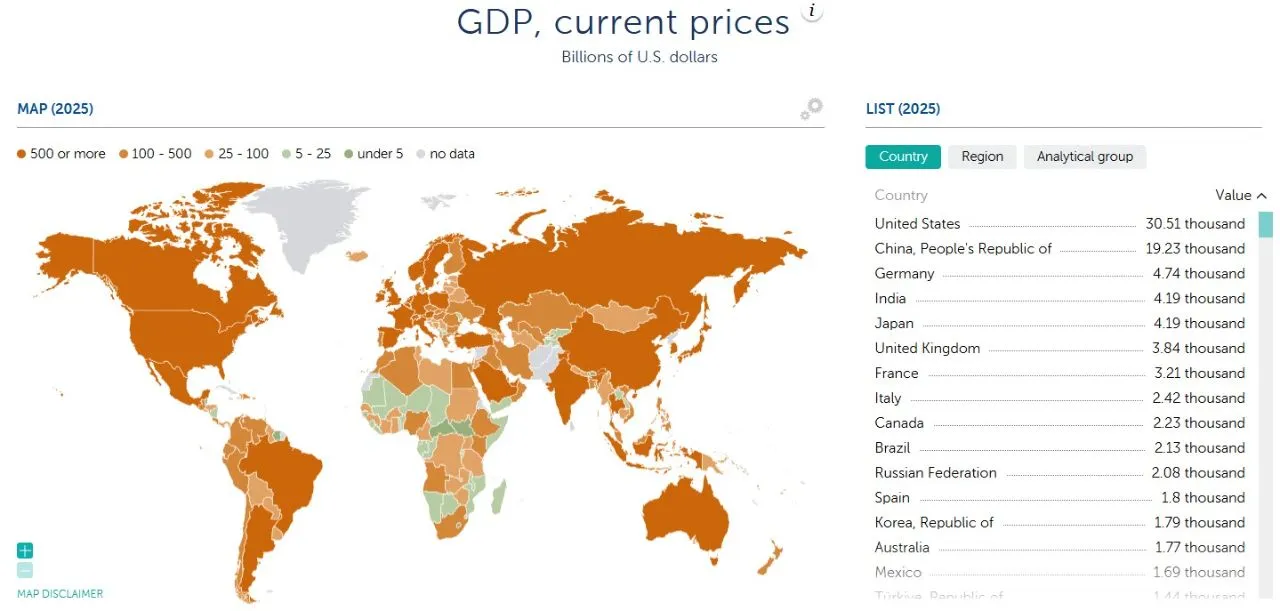
Kato’s remarks are being interpreted as positive for the crypto sector. According to International Monetary Fund (IMF) data, Japan is the world’s fifth-largest economy, with a gross domestic product (GDP) exceeding $4.1 trillion.
https://asset.coinness.com/en/news/7571af1cae99df69b112c000d61f717f.webp
Source: World Economic Outlook (April 2025)

In further positive news for the sector in Japan, it was reported on Aug. 18 that the FSA is likely to approve the issuance of JPYC, a Japanese yen-backed stablecoin, over the course of the coming months.


More to Read
View All
Policy & Regulation·

Nov 03, 2023

Abu Dhabi’s ADGM unveils DLT foundations regulations

Abu Dhabi’s ADGM unveils DLT foundations regulationsThe Registration Authority (RA) of Abu Dhabi Global Market (ADGM) has officially unveiled the Distributed Ledger Technology (DLT) Foundations Regulations 2023, marking yet another milestone in the evolution of digital assets regulatory frameworks both regionally and internationally.Photo by Kamil Rogalinski on UnsplashFramework for DAOs and foundationsThe new regulations were published to the ADGM website on Wednesday, with enactment occurring on Thursday. This legislative framework has been crafted to offer a comprehensive structure for DLT foundations and decentralized autonomous organizations (DAOs), addressing their unique operational needs within the blockchain sector. ADGM’s strategic vision to promote initiatives in the broader blockchain and digital asset sphere has culminated in the creation of this regulatory regime.As a global first of its kind, the DLT foundations regulation sets a precedent for blockchain foundations, Web3 entities, DAOs and traditional foundations seeking to enhance their operations through DLT. This forward-thinking framework is poised to provide a unified solution for digital asset-related activities and the broader foundations landscape, fostering transparency and efficiency.Establishing governance structuresThe ADGM DLT foundations regulation represents an effective means to establish governance structures while acknowledging the imperative decentralization characteristic of the industry. This regulatory development followed a robust public consultation process, actively involving stakeholders and industry participants to gather feedback and refine the regulations.In the realm of digital assets, ADGM continues to push towards taking leadership in regulatory standards, providing an attractive environment for Web3 startups. Ahmed Jasim Al Zaabi, Chairman of ADGM, emphasized the pivotal role that the DLT Foundations Regime plays in shaping the future of digital asset development. According to a press release on PR Newswire, Al Zaabi stated:“Abu Dhabi is rapidly emerging as the destination of choice for global players at the forefront of digital asset development. The introduction of the DLT Foundations Regime marks a revolutionary step forward, reinforcing ADGM’s commitment to a proactive approach rooted in extensive cross-industry dialogue and collaboration with various stakeholders. The new regime serves as a driving force for positive change in the digital assets sector. By transforming the blockchain and Web3 landscape, we are moving towards a future characterised by setting global benchmarks with enhanced transparency and efficiency.”Nurturing Web3 innovationOver the course of the past 12 months, the authorities in Abu Dhabi, alongside the United Arab Emirates (UAE) itself and other emirates such as Dubai, have been allocating resources towards developing the right conditions for the Web3 sector to flourish. In April of this year, a legislative framework was proposed by the ADGM.Recent months have seen a plethora of digital asset sector firms gain trading approval within the emirate. These included virtual asset firm M2, Standard Chartered digital asset subsidiary firm Zodia Markets and Laser Digital, the digital assets subsidiary of Japanese financial services conglomerate Nomura.By way of its DLT foundations regulations, the ADGM is attempting to go beyond simply creating a set of rules. The aspiration is to strive towards a future where the blockchain and digital asset industry operates within a transparent, efficient and globally respected framework. As blockchain technology continues to gain traction, Abu Dhabi’s ADGM is positioning itself to play a role in driving these advancements.

news
Policy & Regulation·

Aug 04, 2023

Gyeonggi Content Agency Partners with The Sandbox to Foster Metaverse Talent

Gyeonggi Content Agency Partners with The Sandbox to Foster Metaverse TalentThe Gyeonggi Content Agency (GCA) is teaming up with global metaverse platform The Sandbox to recruit participants for the “2023 Northern Gyeonggi Cultural Creation Hub: Metaverse Creator Training,” aimed at cultivating specialized experts in the field of the metaverse.Photo by GuerrillaBuzz on UnsplashA space for creators within the metaverseThe training program focuses on nurturing creators who will be active in The Sandbox Metaverse platform. Participants will be trained in The Sandbox’s metaverse content creation tools, namely VoxEdit and Game Maker.The Sandbox also plans to allow anyone and everyone to publish and offer the content they create in the LAND — the platform’s virtual real estate space for interacting and showcasing creativity — by the end of this year.“The Northern Gyeonggi Cultural Creation Hub is a regional hub for support and entrepreneurship in design and content convergence. Through various support programs that implement education, mentoring, and startup funds, we are taking the lead in promoting a startup ecosystem with design and storytelling,” said Tack Yong-seok, director of the GCA.About the training programApplications for the program can be submitted through The Sandbox’s official Naver Cafe and the Gyeonggi Cultural Creation Hub’s online portal until August 27. The opportunity is open to anyone interested in pursuing a career as a metaverse creator.The free training course will take place over eight weeks, from September 2 to October 27, at the Northern Gyeonggi Cultural Creation Hub located in Uijeongbu, Gyeonggi Province. Training sessions will be held every Saturday, the GCA explained.“Since 2022, we have collaborated with partners both online and offline to train over 500 creators. We will expand offline education in regions that have had relatively fewer opportunities for metaverse training,” said Cindy Lee, CEO of The Sandbox Korea.

news
Web3 & Enterprise·

Sep 11, 2023

UAE’s Royal Office Visits Korea to Further Security Token Collaboration with AIITONE

UAE’s Royal Office Visits Korea to Further Security Token Collaboration with AIITONEAIITONE, a Korea-based augmented reality firm specializing in security tokens, invited journalists to showcase its strategy to foster business collaborations between South Korea and the United Arab Emirates (UAE) on the occasion of the Korean visit of the Private Office of His Highness Sheikh Ahmed Bin Faisal Al Qassimi.Photo by Ethan Brooke on UnsplashPrivate Office’s return visitThe Private Office is a Dubai-based corporate conglomerate that operates businesses in various areas including real estate, energy, and finance. This visit by the Private Office marks a return visit following AIITONE’s visit to the UAE in July.The conference took place at a hotel in Gangnam, Seoul, and was attended by Lee Jin-yeop, CEO of AIITONE; Bruce Jeong, Chairman of Middle East Investment; and H.H. Sheikh Ahmed Bin Faisal Al Qassimi.Security tokens, CBDCs, smart defenseChairman Jeong, leading AIITONE’s global initiatives, said that their primary endeavor is to set up a Korean branch of the Royal Office. This branch will function as an international business hub, facilitating collaborations across three key sectors: security tokens, central bank digital currencies (CBDCs), and smart defense ventures.The event also featured presentations by AIITONE officials who introduced the company’s focus areas.Kang Man-soo, who leads AIITONE’s defense unit, highlighted the company’s technical expertise in maintenance training equipment, interactive electronic technical manuals, and integrated system support. He pointed out that AIITONE has been actively involved in the development of technical manuals and training simulators for various defense assets, including warships, guided weapons, and fighter aircraft. Kang emphasized that AIITONE’s strategic partnerships with Korean defense firms have propelled their engagement in initiatives aimed at exporting these products to countries such as Indonesia, Malaysia, and Poland.Lee Joo-hyung, the head of AIITONE’s extended reality (XR) content division, revealed the company’s plan to create portable products that can replicate the physical sensations of the real world, including sensations like physical contact and heat. Additionally, Lee introduced MOUM, a metaverse platform that features blockchain-powered security functions and generative artificial intelligence (AI) capabilities.Park Sang-il, who is at the helm of the firm’s security token project, showcased AIITONE’s comprehensive security token platform, which enables users to both issue and distribute security tokens. Notably, the platform is compatible with hyperledgers Besu and Fabric.Since arriving in Korea last Wednesday, the Royal Office has met with representatives from Standard Chartered Bank Korea and lawyers from law firm Kim and Chang, as well as lawmaker Yang Hyang-ja. Additionally, the Royal Office made a visit to smart farms located in South Jeolla Province.H.H. Sheikh Al Qassimi expressed a high regard for South Korea, acknowledging its beautiful natural landscapes and significant economic development. He underlined that this visit serves as an opportunity for the Royal Office to strengthen cooperation between UAE companies and their Korean counterparts, further fostering economic exchanges between the two countries.

news
Loading