Top

SBI–Zodia venture to shut down amid Japan crypto regulatory hurdles

Web3 & Enterprise·September 16, 2025, 6:26 AM

SBI Zodia Custody is discontinuing operations two years after its launch, Bloomberg reported. The joint venture was formed by Tokyo-based SBI Holdings and Zodia Custody, an institutional digital-asset platform backed by Standard Chartered, with ownership split 51% and 49% respectively.

https://asset.coinness.com/en/news/ff817c38ab2a80a0156eb5bab44fb7df.webp
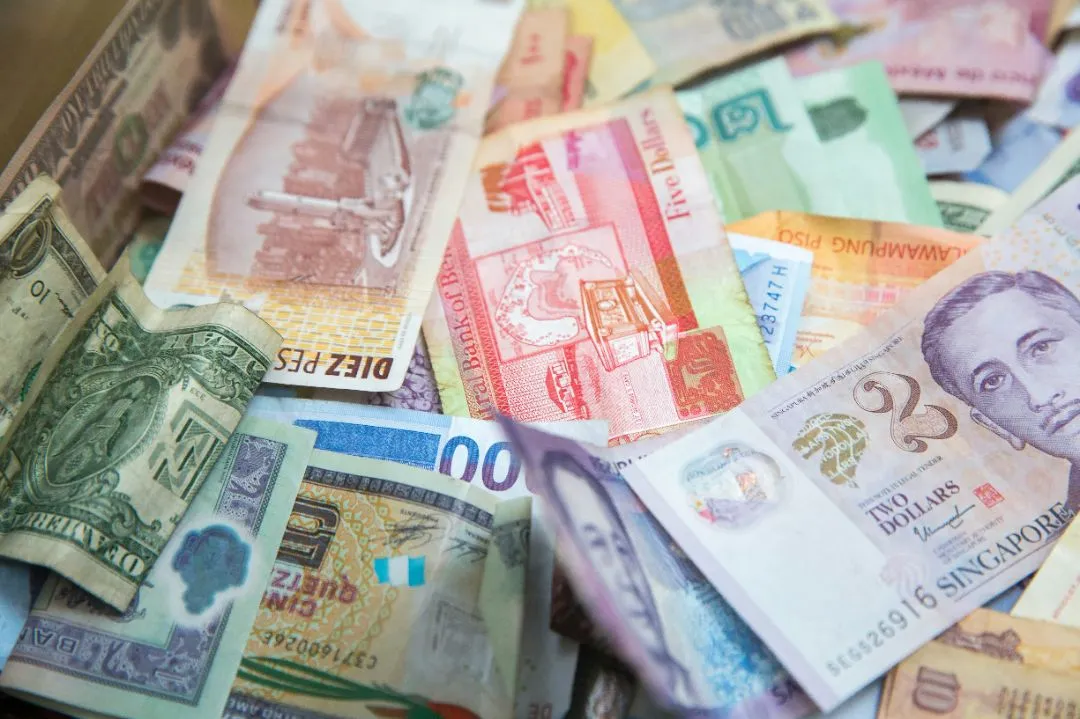
Photo by Haotian Zheng on Unsplash

Strategic realignment behind exit

According to people at the companies involved, the decision reflected shifting priorities at both partners. Zodia Custody chief executive Julian Sawyer described the move as a mutual alignment of strategy and said the company had prepared materials to seek local registration with Japan’s Financial Services Agency but had not filed an application before opting to exit.


An SBI Holdings spokesperson said the dissolution did not signal a withdrawal from crypto custody or the company’s broader Asia strategy, describing the step instead as an effort to generate greater collective impact across SBI’s digital ecosystem.


Security breaches shape regulatory climate

The retreat comes as overseas crypto businesses continue to face a cautious regulatory environment in Japan, a market shaped by several high-profile security breaches. Industry analyses have repeatedly noted that three of the largest crypto hacks targeted Japanese exchanges: Mt. Gox in 2014, Coincheck in 2018, and DMM Bitcoin in 2024.


Mt. Gox lost about 850,000 BTC, now worth roughly $98 billion, and began making creditor repayments in July 2024 after years of legal proceedings. The repayment deadline was later extended to Oct. 31, 2025, and initial distributions totaled about 59,000 BTC, or just over 41% of the roughly 141,686 BTC earmarked for repayment, to an estimated 127,000 creditors.


Coincheck’s 2018 breach involved what was then about $534 million in NEM tokens. Despite that episode, the company secured approval from the U.S. Securities and Exchange Commission (SEC) in November 2024 for a Nasdaq debut through a merger with Thunder Bridge. The transaction generated roughly $31.6 million in gross proceeds for the combined company. Moving forward, Coincheck is entering Europe through the acquisition of Aplo, a French-licensed digital asset brokerage.


The most recent breach involved DMM Bitcoin, which had suspended operations after a May 2024 theft of more than 4,502.9 BTC. Its accounts and assets were transferred in March 2025 to SBI VC Trade, a cryptocurrency exchange owned by SBI Holdings, which said it would support 14 tokens previously listed on DMM that were not available on its own platform.


Policy uncertainty as leadership shifts

At the policy level, uncertainty is growing over Japan’s stance on crypto and blockchain following Prime Minister Shigeru Ishiba’s Sept. 7 announcement that he will step down. Ishiba, who took office in October 2024, has advocated for digital assets, with his latest remarks delivered at the WebX2025 event. There, he pledged greater state support for Web3 initiatives, describing the sector as a driver of innovation that could help address demographic decline and support broader economic change.


Last month, Finance Minister Katsunobu Katō, seen as a potential contender to succeed Ishiba, said cryptocurrency could play a role in a diversified investment portfolio, noting its growing user base in Japan. While recent surveys show Sanae Takaichi and Shinjiro Koizumi as the leading preferences for the next Liberal Democratic Party leader, Katō has emphasized the need to foster a stable trading environment for digital asset stakeholders, balancing investor protection with industry innovation. Within this policy climate, SBI Zodia Custody’s shutdown underscores the operational and licensing challenges facing foreign-linked crypto ventures in Japan.

 

More to Read
View All
Policy & Regulation·

Dec 23, 2023

China’s GAPP proposes ban on gaming crypto token conversion

China’s GAPP proposes ban on gaming crypto token conversionChina’s gaming industry hit a significant speed bump on Friday as the General Administration of Press and Publication (GAPP) unveiled a draft proposing substantial changes to the regulation of in-game tokens, signaling a strategic shift in the country’s stance on digital currencies in gaming.Photo by blurrystock on UnsplashImplementing more stringent controlsThe proposed regulations by GAPP bring about a ban on the conversion of game tokens into physical goods or legal tender. These guidelines, spanning 64 articles, impose stringent requirements on gaming companies. These include mandatory licensing in China, a two-year data retention policy, adherence to national and socialist values in content and the eradication of anonymous user registrations.One significant aspect of the guidelines is Article 23, which specifically addresses the use of game tokens. It proposes restrictions on exchanging them for physical goods, services or legal tender.The regulatory landscape becomes more complex due to the ambiguity surrounding cryptocurrencies, which are not recognized as legal tender in China. Although a warning was issued about the risks inherent in non-fungible tokens (NFTs), they remain legal in China. NFTs feature prominently within blockchain-based gaming.Game providers are also confronted with new limitations on inducements, such as bonuses for registration or daily logins, and are mandated to implement measures against irrational consumer spending.Gaming sector falloutIn the wake of these developments, several Chinese tech giants experienced a significant market downturn in Hong Kong. Tencent, a global gaming powerhouse and one of China’s most valuable companies, saw a 12.4% drop on Friday, marking its worst day since October 2008. This decline erased a massive 367 billion Hong Kong dollars ($47 billion) from Tencent’s market value.NetEase, another gaming giant, witnessed a 25% dive in Hong Kong afternoon trade, recording its most substantial daily loss since its listing in June 2020. Additionally, Bilibili and Kuaishou, prominent players in video-sharing and short-video platforms, experienced declines of 9.7% and 7.2%, respectively, given their involvement in online gaming.Market uncertaintyWith this latest development, the future of gaming crypto tokens remains uncertain in China, with investor confidence having been hit hard. Putting the matter in context on Friday, Stansberry Research Analyst Brian Tycangco took to the X social media platform, stating:”Govt regulation will effectively render prevailing business models irrelevant due to uncertainty regarding monetization. Games are inherently reward-based and if you clamp down on the use of rewards/incentives, you turn an entire industry on its head.”The guidelines, open for public consultation until Jan. 22, 2024, have not yet been legally enacted. This time frame allows for feedback and potential adjustments before enforcement.Notably, the Web3 gaming sector has witnessed substantial activity, with approximately a million unique active wallets engaged daily over the past three months, according to DappRadar. Industry experts, including Yat Siu of Animoca Brands, anticipate a potential surge in user engagement, emphasizing the potential impact of these regulations on the gaming industry’s trajectory.

news
Web3 & Enterprise·

Dec 14, 2023

XPLA and PERPLAY join forces to bolster rewarding mechanism to Web3 games

XPLA and PERPLAY join forces to bolster rewarding mechanism to Web3 gamesSouth Korean gaming corporation Com2uS Group’s layer 1 blockchain XPLA has entered a business agreement with the mobile Game and Earn (G&E) platform PERPLAY to boost the sustainability of its ecosystem and take Web3 gaming to new heights, according to an official announcement on Thursday (KST).Photo by ROBIN WORRALL on UnsplashXPLA’s vision“XPLA is a project working towards promoting new levels of fun in Web3 gaming and building an ecosystem based on a fair system of sharing rewards with users,” said Paul Kim, Team Leader at XPLA. “Through this partnership with PERPLAY, we are one step closer to fulfilling our Web3 philosophy, which is centered around the participants in our ecosystem.”Rewards for everyoneThe PERPLAY app runs on a Proof of Play (POP) algorithm that employs a rewarding mechanism that distributes tokens to users based on their game playtime and collection of tiered NFTs. PERPLAY users can earn $XPER and $PER token rewards by playing any mobile game — existing or newly downloaded — that they have registered in the PERPLAY app.XPLA hopes to integrate this algorithm into its ecosystem to add a rewarding layer to various games on its mainnet, offering a unique and elevated gaming experience. The first of these games will be Com2uS Holdings’ popular mobile role-playing game (RPG) The Walking Dead: All-Stars.“We see this partnership with XPLA as an opportunity to further strengthen the PERPLAY user ecosystem,” said Lim Jae-chung, CEO of PERPLAY. “Starting with The Walking Dead: All-Stars, we will bring the PERPLAY experience to various Web3 games on XPLA.”In a related development, XPLA has partnered with Google Cloud, which will serve as a Volunteer Validator for its blockchain protocol. The collaboration with the cloud computing platform is expected to enhance the integrity of the XPLA network.

news
Web3 & Enterprise·

Apr 29, 2025

Stacks establishes foundation within UAE’s ADGM

The Stacks Asia DLT Foundation, an organization associated with the Stacks Bitcoin layer-2 network, has become the first Bitcoin-based foundation to establish itself within, and be recognized by, the Abu Dhabi Global Market (ADGM). ADGM is a free zone and international financial centre located on Al Maryah Island within the capital of the United Arab Emirates (UAE). In a press release published on April 28, the foundation set out that it has established itself within the ADGM in an effort to further grow the adoption of the Bitcoin layer-2 network within Asia and the Middle East, while leveraging the positive regulatory environment that has been established by the ADGM with regard to distributed ledger technology (DLT).Photo by Joshua Woroniecki on UnsplashAttracting DLT foundationsThe ADGM has played a significant role in positioning the UAE as a go-to location for crypto startups and projects. The Berlin-based IOTA Foundation, developer of the IOTA DLT project, was among the first to establish a foundation within the ADGM to promote use of its network in the Middle East region back in November 2023.Since then, others have followed. In 2024 DLT foundations were established related to blockchain projects such as Kaia, Aptos and Beam. Last month DeFi protocol project NEOPIN announced that it had established a DLT foundation within the ADGM.  The free zone has proven popular not just among DLT foundations, but among crypto startups too. Projects such as Polygon Labs, Chainlink Labs and TON have established a presence there. Regulatory frameworkThe ADGM has its own regulator, the Financial Services Regulatory Authority (FSRA), and it established a framework for blockchain foundations in 2023. In establishing the Stacks Asia Foundation within the ADGM, the project would have had to register as a DLT Foundation, while meeting all local legal and regulatory requirements.Kyle Ellicott, interim Executive Director of the Stacks Asia DLT Foundation, commented on the development, providing an insight into why the ADGM was chosen:”We chose to establish our presence in ADGM because of its unparalleled commitment to fostering innovation in the blockchain space. Their forward-thinking approach to policy-making aligns perfectly with the Stacks ecosystem’s history of creating pathways for Bitcoin builders.”  Bitcoin programmabilityThe foundation asserts that it will play a “pivotal role” in forging the future of Bitcoin programmability and its adoption in that respect within Asia and the Middle East.  Referring to Bitcoin while speaking at the Abu Dhabi Digital Assets Forum, Ellicott said that “the once sleepy asset, seen only as a store of value, is now yielding with Layer 2s," through Stacks Bitcoin (sBTC), a 1:1 Bitcoin-backed asset hosted on the Stacks blockchain network. Stacks believes that the next wave of growth for Bitcoin will come through Bitcoin layer-2s. The project claims that unlike wrapped Bitcoin (wBTC), sBTC doesn’t rely on centralized intermediaries. The asset has been designed to extend Bitcoin’s utility, enabling Bitcoin-adjacent DeFi applications and smart contracts. While the project highlights the importance of Bitcoin layer-2 going forward, back in February, Stacks co-founder Muneeb Ali forecast that a shakeout of Bitcoin layer-2 projects will occur, with only a handful of such projects surviving over the course of the next three years.

news
Loading