Top

Japan’s finance minister acknowledges crypto investment merits

Policy & Regulation·August 27, 2025, 5:48 AM

Katsunobu Katō, a Liberal Democratic Party politician and Japan's Minister of Finance under Prime Minister Shigeru Ishiba's government since October 2024, has said that cryptocurrency assets can play a role in a diversified investment portfolio.


Katō made the remarks while speaking at an event that was held in Tokyo related to the subject of crypto assets on Aug. 25, according to Bloomberg. Katō stated:

''Crypto assets run the risk of high volatility, but if an appropriate investment environment is created, they can become targets for diversified investment.''

https://asset.coinness.com/en/news/46f9c0e01b513711c28add3d38da2146.webp
Photo by JJ Ying on Unsplash

Growing crypto user base

Katō acknowledged that there is a growing user base in Japan related to digital assets. With that, he intends to work towards the provision of a healthy trading environment in Japan for stakeholders within the digital assets sector.


The finance minister added that he has been trying to balance regulation with a need to leave the digital assets sector with sufficient freedom so as to enable the development of innovation.


Crypto tax reform

It emerged over the weekend that the Japanese financial regulator, the Financial Services Agency (FSA), intends to include tax reform measures in respect of the crypto sector in 2026 tax revision proposals that it will bring to the Japanese government. It’s expected that the proposals, scheduled for submission by the end of this month, will call for a separate taxation category for digital assets and the implementation of a flat 20% tax rate. 

Under Japan’s existing tax regimen, crypto trading gains must be reported under the categorization of “miscellaneous income,” with those gains subject to tax rates of up to 55%. The move would bring taxation on crypto trading gains in line with the tax treatment that’s currently in place for equity trading gains. Equities have been given their own category and are taxed at a flat rate of 20%.


Reclassifying cryptocurrencies

Additionally, the FSA plans to propose legislation next year that would result in the reclassification of cryptocurrencies, removing them from their current treatment as a means of payment under the Payment Services Act. The regulator wants crypto to come under the Financial Instruments and Exchange Act, reclassifying it as a financial product.


Katō has outlined his party’s commitment to the consideration of reviewing crypto asset taxation. That item was incorporated into his government’s tax reform plan for 2025, while the Japanese cabinet approved a proposal to amend the Payment Services Act back in March.


As part of plans to have digital assets categorized as financial products, the FSA is also understood to be interested in broadening the scope of insider trading restrictions.


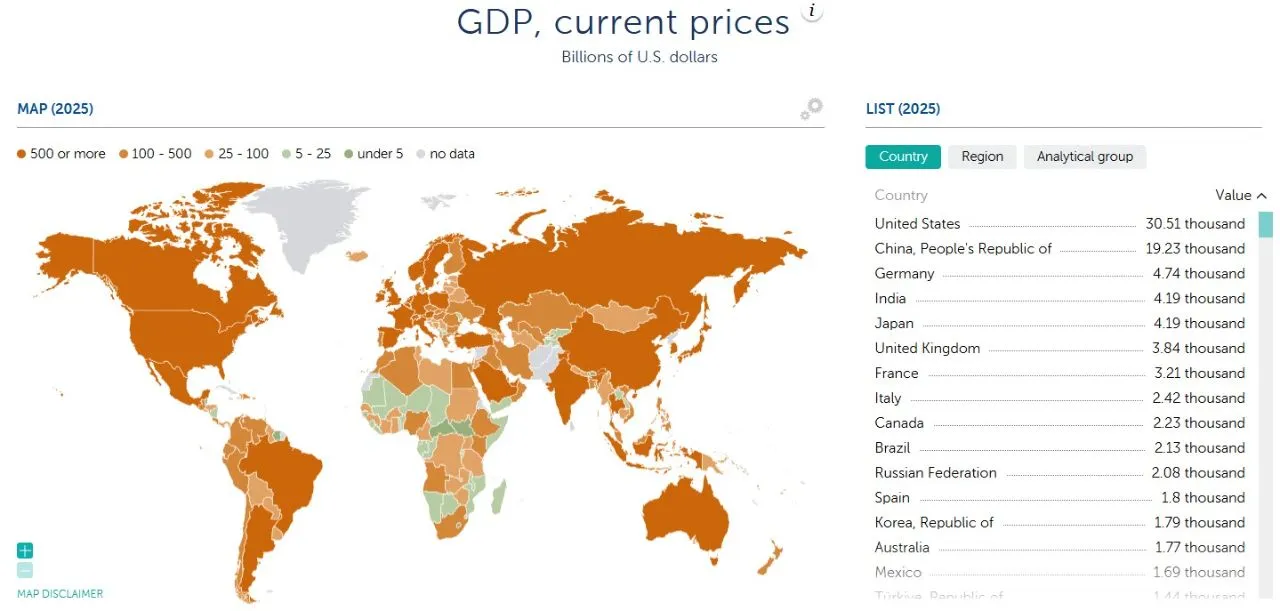
Kato’s remarks are being interpreted as positive for the crypto sector. According to International Monetary Fund (IMF) data, Japan is the world’s fifth-largest economy, with a gross domestic product (GDP) exceeding $4.1 trillion.
https://asset.coinness.com/en/news/7571af1cae99df69b112c000d61f717f.webp
Source: World Economic Outlook (April 2025)

In further positive news for the sector in Japan, it was reported on Aug. 18 that the FSA is likely to approve the issuance of JPYC, a Japanese yen-backed stablecoin, over the course of the coming months.


More to Read
View All
Web3 & Enterprise·

Dec 20, 2023

MEVerse and XPLA forge partnership to herald new era of blockchain gaming

MEVerse and XPLA forge partnership to herald new era of blockchain gamingMEVerse, the blockchain metaverse platform operated by South Korean gaming company ME2ON Group, and global layer 1 blockchain XPLA have established a partnership to share their respective technologies and create content to popularize Web3 gaming, according to an official announcement on XPLA’s Medium on Wednesday (KST). Their larger goal outlines a commitment to redefining the industry’s landscape by creating a dynamic and engaging metaverse for users worldwide.Photo by Scott Graham on UnsplashHigh hopes“XPLA aims to broaden the horizons of the Web3 industry and contribute to the popularization of blockchain through collaboration with various projects. We plan to work closely with the MEVerse platform, which has secured a high-level lineup of Web3 games, to provide participants with an even richer experience,” said Paul Kim, Team Leader at XPLA.Seamless metaverse experienceMEVerse is known for leveraging its high-speed blockchain technology, which can process 9,000 transactions per second, to help users immerse themselves in the metaverse and enjoy the content it has to offer. Notably, it employs a Proof of Formulation (PoF) consensus algorithm developed by blockchain service platform FLETA — a more eco-friendly alternative to Proof of Work (PoW) that prevents forks by confirming blocks and transactions in real time. The platform also implements cross-chain technology to enhance scalability and interoperability.MEVerse’s blockchain infrastructure includes the Web3 P2E casual game portal MEVerse GameZ, non-fungible token (NFT) marketplace MEVerse DEX, blockchain explorer MEVerse Scan, and more. It also features games like X Heroes: NFT War and Pocket Battles: NFT War.This development is the newest partnership in XPLA’s growing lineup. The platform recently teamed up with Study-to-Earn (S2E) project EDUM and Game and Earn (G&E) platform PERPLAY in an effort to branch out its business.

news
Web3 & Enterprise·

Jan 13, 2024

Telcoin makes users whole in exploit recovery

Singapore-regulated Telcoin, a developer of financial applications for mobile users, has successfully restored user balances following an exploit that saw approximately $1.2 million worth of funds transferred from affected accounts.Photo by Martin Sanchez on UnsplashUnauthorized withdrawal of assetsThe incident, which occurred in late December, was attributed to an error in the interaction between Telcoin's digital wallet and a proxy contract on Polygon. In a blog post which was published on Wednesday, the company shared a full post-mortem analysis report which it commissioned Hong Kong-based blockchain security firm BlockSec to carry out, relative to the exploit. The fault in the proxy contract's implementation caused a technical conflict that allowed for the unauthorized withdrawal of assets. Fortunately, no admin keys were compromised, ensuring that the broader Telcoin ecosystem remained unaffected. In response to the security breach, Telcoin took action by immediately freezing the use of its application as a precautionary measure. The team initiated an investigation and committed to releasing updates promptly to address the issue and restore normalcy. The identified address associated with the exploit was 0x35d2775e5f95596509951b140d68fc5b9185ff98. TEL token freefallDespite the initial market turbulence, with the price of the Telcoin (TEL) token plummeting, the cryptocurrency has demonstrated resilience. On Dec. 25, TEL fell from a peak price of $0.00235146 to $0.00122535, representing a 48% decrease. At the time of writing, the price has slightly rebounded, trading at $0.001335. Nevertheless, it's still down 40% over the course of the past month's trading. In a social media direct message to CoinDesk recently, Telcoin's founder and CEO, Paul Neuner, expressed pride in how his team responded to the issue, stating: “Making the decision to preemptively restore affected user wallets from our company treasury was a no-brainer, and I’m proud of the team for making that happen in record time.” Regulatory standingTelcoin's regulatory standing played a crucial role in instilling confidence during this challenging time. Although headquartered in Tokyo, the company is regulated in Singapore as a Major Payment Institution (MPI) by the Monetary Authority of Singapore (MAS). The firm is also registered and regulated in other global markets, including Canada and Australia. Telcoin maintains offices in Singapore, Tokyo, Dubai and Los Angeles. The company had been active in trying to shape regulation in the United States in 2023, with company executives having made repeated visits to Washington D.C. to meet with Financial Services Committee members and staffers on Capitol Hill. In April of last year, the company extended its service offering to the European market, starting out initially in Lithuania.It appears that the restoration of Telcoin's application services led to a significant boost in user confidence. The company reported a 400% increase in deposits compared to the previous month. Users responded favorably to Telcoin's swift resolution of the security breach, with a ratio of $3.60 being deposited for every $1 withdrawn in the first day since the service restoration. Telcoin's measures, collaboration with security experts and the surge in user deposits appear to have resulted in a resilient recovery. The saga highlights the importance of prompt and transparent responses in maintaining trust in the face of crypto security issues.  

news
Policy & Regulation·

Dec 09, 2023

Taiwan weighs up CBDC following feasibility study completion

Taiwan weighs up CBDC following feasibility study completionTaiwan’s central bank, the Central Bank of the Republic of China (Taiwan), recently concluded an in-depth feasibility and technology study on the potential implementation of a wholesale central bank digital currency (CBDC).Photo by Timo Volz on UnsplashGathering feedback and refining designAccording to statements made by Deputy Governor Chu Mei-lie while speaking at an annual event organized for the banking sector by the Financial Information Service Co., an entity that oversees Taiwan’s banking, payment and settlement systems, Chu disclosed that the central bank is now in the process of gathering feedback and refining the design of the CBDC platform.In her keynote speech, Chu underscored the significance of CBDCs in the evolving landscape of digital currencies. She concurred with the Bank for International Settlements’ (BIS) assertion that conventional payment tools and platforms may not always meet the demands of all-day transactions, smart contracts and automatic settlements facilitating simultaneous and irreversible transfers of assets or funds.Supporting asset tokenizationChu emphasized that a nation’s monetary system should be poised to support tokenized assets. CBDCs, she suggested, could potentially offer comprehensive payment and settlement services, integrating tokenization and a unified ledger that harmonizes CBDCs with traditional currencies.The concept of a unified ledger, as explained by Chu, doesn’t imply a single ledger but rather that tokenized ledgers of each economy could coexist and connect through an application interface.This approach aims to ensure interoperability, minimizing the risk of errors in message transmission. Interoperability is also being worked on by financial messaging service SWIFT. It recently collaborated with central banks in Hong Kong and Kazakhstan with a view towards testing a connector that would enable the integration of SWIFT with CBDCs.Additionally, a unified ledger is anticipated to expedite the clearing process, foster a secure trading environment and ensure the safe, reliable and effective execution of currency and asset transactions.International integration of e-CNYChu acknowledged that foreign central banks are actively exploring the feasibility of issuing CBDCs to establish a unified value for all forms of currency. Of the many early-stage CBDC projects that are out there, China’s e-CNY has gathered the greatest momentum.British bank Standard Chartered has been the most recent entity to join the Chinese CBDC international pilot project. Taiwan’s Fubon Bank has enabled its customers to top up e-CNY via mobile banking. The leading CBDC currency has similar collaborations in place with Hong Kong banks, HSBC and Hang Seng Bank.Fubon has also gotten involved alongside Ripple in a pilot program run by the Hong Kong Monetary Authority. Through that collaboration, it is supporting an asset tokenization trial that revolves around Hong Kong’s CBDC, the e-HKD.Chu outlined that in the case of Taiwan, the matter of a CBDC is being pursued cautiously, without a predefined timetable for reaching a conclusion. The monetary policymaker plans to engage in discussions with academic and business sectors to inform its stance on CBDCs.Meanwhile, the central bank is committed to enhancing overall planning related to the CBDC platform, focusing on transaction ease, capacity and innovative functionalities. Chu also highlighted the consideration of offline transaction scenarios in this ongoing process.

news
Loading