Top

UAE signs on to OECD crypto-tax reporting pact, sets 2027 launch

Policy & Regulation·September 25, 2025, 6:42 AM

The United Arab Emirates (UAE) has taken a step toward global tax transparency in digital assets, opening a public consultation on how it will implement the Organisation for Economic Co-operation and Development’s (OECD) Crypto-Asset Reporting Framework (CARF) and confirming a formal commitment to the regime.


The UAE Ministry of Finance said it has joined the Multilateral Competent Authority Agreement, enabling the automatic exchange of information under CARF, following its intention announced last November. Implementation is slated to begin in 2027, with the first cross-border exchanges of data expected in 2028.
https://asset.coinness.com/en/news/4a5871b60e8c5b77a9f5d3852dc7e71e.webp
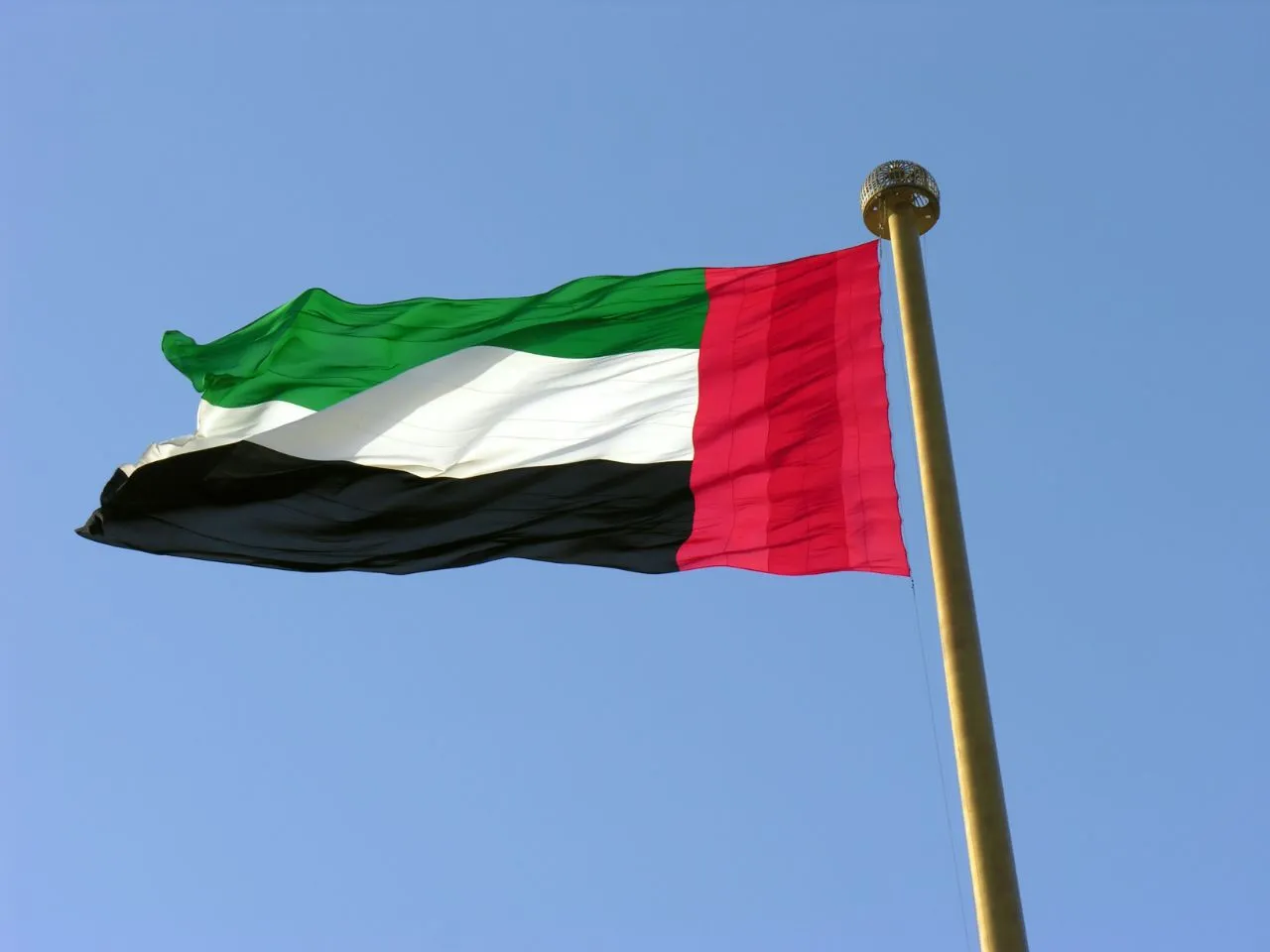
Photo by Saj Shafique on Unsplash

Global rules for crypto tax reporting

Designed by the OECD, CARF establishes standardized rules for collecting and sharing tax-relevant information on crypto activity. UAE officials say the framework will provide greater certainty for industry participants while aligning the country with international tax transparency standards.


As part of the rollout, the ministry is seeking input from across the market. Advisory firms, intermediaries, traders, custodians, exchanges, and other stakeholders are invited to weigh in on potential impacts and areas needing clarification. The consultation began on Sept. 15 and runs until Nov. 8, with the aim of shaping clear, effective rules that reflect expert insight and market realities.


Solana treasury company

The policy moves come amid brisk momentum in the UAE’s digital asset ecosystem. A recent announcement outlined the planned launch of Solmate, a Solana (SOL)-based digital asset treasury firm that will emerge from the rebranding of Nasdaq-listed, Ireland-based holding company Brera Holdings. The venture is supported through a $300 million private investment in public equity (PIPE) sponsored by UAE-based Pulsar Group.


Brera, known for its multi-club football ownership strategy across three continents, will have that business carried forward under Solmate, which counts the Solana Foundation, RockawayX, and ARK Invest among its investors. Former Kraken chief legal officer (CLO) Marco Santori is also set to become CEO.


Tokenization and real estate

Real-world asset (RWA) tokenization is another area gaining traction in the UAE. Mavryk, a layer-1 network, has raised $10 million in a round led by financial derivatives provider MultiBank Group. The investment builds on a partnership targeting the tokenization of more than $10 billion in UAE real estate via MultiBank’s RWA platform. Fireblocks will provide multiparty computation wallets to secure tokenized assets on Mavryk’s network.


Beyond tokenization, RAK Properties has signed a strategic deal with Hubpay to let foreign buyers acquire homes in the UAE, most notably in Ras Al Khaimah, the country’s sixth most populous city, using cryptocurrencies such as USDT, Bitcoin (BTC), and Ethereum (ETH).


Taken together, the UAE’s alignment with CARF and the burst of private sector initiatives point to a market moving toward clearer rules and broader institutional participation, even as the details of implementation are refined through the current consultation.

 

More to Read
View All
Policy & Regulation·

May 16, 2024

China busts underground bank conducting illegal currency exchanges via crypto

China's authorities have dismantled an underground bank that illicitly utilized cryptocurrency for currency exchange operations between the Chinese yuan and the South Korean won, involving approximately 2.14 billion yuan ($295.8 million). China has a history of imposing strict capital control policies, prompting some individuals and entities to resort to cryptocurrency as a means of bypassing these regulations. According to a report published by local police in Northeast China’s Jilin province, six suspects were apprehended for their alleged involvement in facilitating the illegal operations spanning China and South Korea.Photo by Hyory Liu on UnsplashExploiting cryptocurrency featuresThe suspects purportedly took advantage of cryptocurrency features like transaction anonymity and decentralization to execute foreign currency exchange activities unlawfully. Investigations revealed that the criminal group utilized domestic accounts for fund receipt and transfer, alongside over-the-counter cryptocurrency transactions. Supporting illicit transactionsThe arrested individuals allegedly aided various entities, including South Korean purchasing agents, cross-border e-commerce platforms and import-export trade firms, in circumventing currency exchange regulations between the Chinese yuan and the South Korean won. 

news
Policy & Regulation·

Jun 14, 2023

Korea Securities Depository Spotlights the Significance of a Security Token Platform

Korea Securities Depository Spotlights the Significance of a Security Token PlatformDuring a press conference held today in Seoul, Chairman Lee Soon-ho of the Korea Securities Depository (KSD) highlighted the need for developing innovative financial infrastructure, including a security token platform, as reported by local tech news outlet etnews.Photo by JEONGUK -on UnsplashBlockchain-based securitiesIn recent times, there has been a surge in demand for blockchain-based securities, prompting the South Korean government to issue guidelines on security tokens in February of this year. Consequently, securities firms, fractional investment platforms, and technology companies have been collaborating to form consortia.The KSD has been actively studying the legislative and institutional aspects of security tokens to establish a foundation for their widespread acceptance. Furthermore, it has devised a mid-to-long-term roadmap for the security token platform. Since February, the KSD has been spearheading a security tokens council with an aim to develop a business model for a security token platform starting in July.KSD’s roleSpecifically, the KSD intends to provide feedback on subsequent legislative revisions pertaining to security tokens, review security token registrations, and establish methods for managing the total volume of security tokens under the Act on Electronic Registration of Stocks and Bonds.Additionally, the KSD aims to expedite the construction of a new system for the capital market infrastructure. This endeavor entails revamping the operational system to enable flexible responses to internal and external changes, as well as creating a smart workplace suited for the digital era.Since its establishment in 1974, the KSD has played a crucial role in supporting the development of the Korean capital market by providing diverse securities services, including the issuance and distribution of securities. Nonetheless, participants at the conference concurred that the agency needs a fresh vision and strategy to maintain its position in the future.Chairman Lee emphasized that the agency’s 50th anniversary will take place next year, prompting a thorough assessment of its current status and the formulation of a new vision and strategy to adapt to the ever-evolving financial landscape. As part of these efforts, he underscored the recent establishment of a task force dedicated to devising future plans.

news
Policy & Regulation·

Jul 27, 2023

Ripple and the Republic of Palau Collaborate to Mint First PSC Stablecoin

Ripple and the Republic of Palau Collaborate to Mint First PSC StablecoinIn a groundbreaking partnership, the Republic of Palau has teamed up with Ripple Labs to introduce its inaugural stablecoin, the Palau Stablecoin (PSC).This occasion was shared by Jay Hunter Anson, the Director of Palau’s Digital Residency Program and a member of Palau’s Ministry of Finance, who took to Twitter on Wednesday to shed light on the collaboration between the Palau National Treasury and Ripple Labs.The event unfolded at the National Capitol in Ngerulmud, Palau, where representatives from both the Palau National Treasury and Ripple gathered to celebrate the successful launch of the Palau Stablecoin. Anson emphasized that this marks a significant step in their joint exploration of the stablecoin’s potential use cases within the Micronesian island nation.Photo by Kanchanara on UnsplashReducing payment costsPalau’s Ministry of Finance initiated the Stablecoin project to address specific needs within the nation’s financial landscape. By sponsoring this project, the ministry aims to reduce payment costs within the Republic of Palau and enhance access to financial services, especially for underserved communities and various socio-economic groups, utilizing digital solutions.Notably, the Palau Stablecoin operates on the XRP Ledger (XRPL), demonstrating Ripple’s technology as the backbone of this financial initiative.Anson’s tweets also shed light on the meticulous approach taken in developing the Palau Stablecoin. Controlled and limited PSC pilot tests have been conducted to assess the effectiveness and efficiency of the solution co-designed with Ripple. These pilot experiments provide valuable insights into the stability and usability of the Palau Stablecoin before its potential public release.Extensive testingAlready, the Palau Stablecoin pilot program has seen volunteer users actively participating in the testing phase. Videos shared by Anson on Twitter showcased smooth transactions at partner vendors in Palau, promptly confirming the transaction receipts.The successful implementation of the Palau Stablecoin pilot program has drawn attention from the XRP community, and anticipation is building for the official joint press release scheduled for July 27, Thursday morning in Ngerulmud, Palau, as Anson revealed.The collaboration between Ripple and the Republic of Palau was initiated at the end of 2021, with launch originally scheduled to take place in 2022. Ripple has claimed to be in dialogue with in excess of twenty governments relative to enabling central bank digital currency (CBDC) issuance.Given that the island state lacks a functioning central bank and the US dollar is recognized as the primary medium of exchange throughout the country, the creation of a USD-backed stablecoin is a significant achievement resulting from the national stablecoin initiative. The president described this as a “step towards our own central bank digital currency.”There has been plenty of activity in Micronesian nations relative to cryptocurrency in recent times. Tonga is understood to be considering introducing bitcoin as legal tender. The Marshall Islands is considering issuing a CBDC although it is being discouraged by the International Monetary Fund (IMF) in that endeavor. Meanwhile, the government of Vanuatu announced its support for the Satoshi Island project.With a strategic focus on addressing financial needs and enhancing accessibility within Palau, this partnership sets the stage for a new era of digital financial solutions for the Micronesian nation.

news
Loading