Top

Iran caps stablecoin transactions amid currency devaluation and sanctions

Policy & Regulation·October 02, 2025, 3:37 AM

Iranian authorities last week introduced new restrictions on stablecoin transactions, limiting individuals to an annual purchase cap of $5,000 and a total holding limit of $10,000. According to a report from Iran International, licensed digital platforms have one month from the effective date to enforce these new regulations on all users.

https://asset.coinness.com/en/news/7308de6e3dc51c68635cd0c68e22cf0f.webp
Photo by Hadis Malekie on Unsplash

Rial decline fuels stablecoin uptake

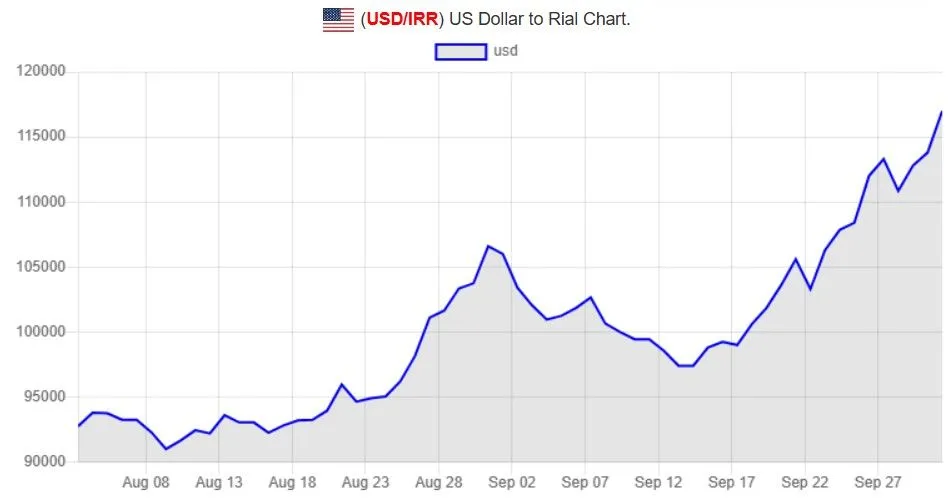
The move coincides with the continued devaluation of the national currency, with the Iranian rial reaching an all-time low of 1,136,500 per U.S. dollar on Sept. 27. This currency plunge occurred just before the reimposition of United Nations sanctions, which took effect at 00:00 UTC on Sept. 28. Since then, the rial has weakened further, reaching a new low of 1,170,000 per U.S. dollar as of publication, as per data from Bonbast. 


For many Iranians, stablecoins like USDT have become an essential financial tool, providing a hedge against inflation and a means to transfer funds internationally, bypassing the traditional banking system. The adoption of these U.S. dollar-pegged digital assets has reportedly grown since the escalation of conflicts with Israel and the U.S. earlier in the year.


These new financial controls follow recent actions by the U.S. to counter what it describes as Iranian "shadow banking" networks. On Sept. 16, the U.S. Department of the Treasury’s Office of Foreign Assets Control (OFAC) sanctioned two Iranian financial operatives and their network of companies in Hong Kong and the United Arab Emirates (UAE). A press release stated these entities used cryptocurrency and front companies to transfer funds from oil sales, benefiting Iran’s IRGC-Qods Force (QF) and its Ministry of Defense and Armed Forces Logistics (MODAFL). The U.S. Treasury asserts these funds are funneled into regional proxy groups and the development of advanced weapons programs.
https://asset.coinness.com/en/news/be931ce65df2ae5e897f3935ee58667d.webp
U.S. dollar to rial chart Source: Bonbast

Hack on Iran’s top crypto platform

Iran’s private digital currency sector has also faced mounting security pressures. In June, Nobitex, the country’s largest crypto exchange, was hit by a major exploit that drained about $90 million in assets, including Bitcoin (BTC), Ethereum (ETH), Dogecoin (DOGE), Ripple (XRP), Solana (SOL), Tron (TRX), and TON. A pro-Israel hacker group known as Predatory Sparrow, or Gonjeshke Darande, later claimed responsibility in a post on X. The attack took place during heightened military tensions that began with Israeli strikes on Iranian military and nuclear facilities on June 18, 2025.


According to analysis by TRM Labs, digital assets are increasingly integral to Iran's efforts to navigate international sanctions and advance its geopolitical interests. Iranian exchanges, including Nobitex, process billions in cryptocurrency transactions. These platforms have been noted for permitting large withdrawals without stringent Know Your Customer (KYC) protocols and for employing sophisticated methods to obscure the origins and destinations of funds.


At the same time, these exchanges are not used solely for state-level purposes. For many ordinary Iranians, grappling with inflation and economic isolation, digital assets represent a practical tool for safeguarding savings and maintaining limited access to the global economy, underscoring the dual role that cryptocurrency plays in the country.

 

More to Read
View All
Web3 & Enterprise·

Nov 21, 2023

Sleek Secures $5M seed funding to propel Web3 social networking offering

Sleek Secures $5M seed funding to propel Web3 social networking offeringHong Kong-based startup Sleek has successfully raised $5 million in seed funding to advance its Web3 social networking platform, aiming to further the ownership economy and introduce blockchain-powered social media accessible to a broad audience.Photo by micheile henderson on UnsplashIncentivized networking through ‘SocialFi’Officially launched in April of this year, Sleek aspires to reshape human connections by simplifying networking, infusing a sense of fun and fostering productivity. The platform provides users with an expansive environment where they can exchange information, connect with new contacts and participate in incentivized networking through innovative Web3 social finance (SocialFi) business models.In essence, SocialFi employs blockchain technology with the objective of monetizing social interactions. The concept has come to broader attention in recent months as a consequence of the emergence of Friend.tech, a novel way for creators to monetize content, by way of tokenizing attention. Sleek enables users to directly monetize their content and social capital, emerging as a new generation of creators within the Web3 landscape. Sleek Co-Founder Chase Guo explained to The Block how it differs from other Web3 social networks:“Most of the time, this strategy [bootstrapping a platform using tokens or incentives] does not result in unique content generation and sustainable growth. People are here for the airdrop and leave once they cash out. Sleek took a very different approach — build a real use case first with die-hard fans.”Sleek CardAt the forefront of Sleek’s offerings is its flagship product, Sleek Card, specifically designed to empower Web3 professionals in face-to-face networking. Each Sleek Card generates a blockchain wallet and a decentralized identity for users, streamlining the onboarding process into the Web3 space.Utilizing NFC technology and a proprietary messaging bot, Sleek Card allows users to capture data and manage contacts, resulting in robust on-chain social graphs. Notably, Sleek Card has facilitated over 300,000 connections, establishing itself as a key player in the Web3 landscape. The platform has also formed strategic partnerships with prominent entities such as Solana Hacker Houses, Coinfest, Digital Art Fair and NFTNow, bringing innovative event experiences to life.Both of the startup’s founders spoke about the body of work Sleek is involved in. Co-Founder Tania Tse stated:“We are launching monetization models in our platform that are only possible through the blockchain, so talented creators from various verticals who don’t have a full team supporting them can earn sustainably.”Chase Guo added: “Leveraging our own experiences and lessons learned, we are building applications alongside our users to power the future of Web3 social.”Looking ahead, Sleek plans to unveil an open marketplace in the first half of 2024, empowering domain experts to become creators by tokenizing their knowledge into liquid and accessible assets. This strategic move aligns with Sleek’s vision for a more equitable, user-centric and transparent digital social landscape.Broad industry backingSleek’s investor roster includes well-known names such as Shima Capital, Spartan Group, Symbolic Capital, Genblock Capital, Big Brain Holdings, Market Across, Emirates Consortium, Arkstream, Perridon, GBV and various angel investors. Notably, Binance Labs, the venture capital arm of Binance, invested in Sleek through the Binance Labs Incubation Program in 2022.

news
Markets·

Nov 24, 2025

UAE institutions deepen Bitcoin positions prior to market pullback

Major investment entities linked to the Abu Dhabi government increased their exposure to Bitcoin in the third quarter, according to newly released data. These moves came ahead of a broader decline in the digital asset market amid shifting macroeconomic conditions in the U.S.Photo by Kanchanara on UnsplashInstitutional accumulationThe Abu Dhabi Investment Council (ADIC), a subsidiary of Mubadala Investment Company, more than tripled its holdings in BlackRock’s iShares Bitcoin Trust ETF (IBIT) during the third quarter, increasing its position from 2.4 million to nearly 8 million shares, Bloomberg reported. An ADIC spokesperson told Bloomberg that the organization views Bitcoin as “a store of value similar to gold,” and described the allocation as “part of a long-term diversification strategy.” Other UAE-based conglomerates are also maintaining sizable Bitcoin positions. The Royal Group, which is linked to the Abu Dhabi royal family, holds around 6,450 BTC, according to a Crypto Briefing report citing Arkham data. The assets were accumulated through the group’s majority-owned subsidiary, Citadel Mining. Regulatory and infrastructure developmentsThe UAE’s efforts to position digital assets as a driver of economic growth are also reflected in its regulatory framework. A recent Global Digital Assets Report by the Global Finance & Technology Network (GFTN) identified the UAE as one of seven jurisdictions worldwide whose crypto-exchange rules meet all three key standards for AML/CFT compliance: know-your-customer (KYC) and ID verification, suspicious transaction reporting, and implementation of the Financial Action Task Force (FATF) Travel Rule. The report characterized the UAE’s approach as “federated oversight with zone-specific AML regimes.” Responsibilities are divided among the Securities and Commodities Authority (SCA) at the federal level, the Virtual Assets Regulatory Authority (VARA) in Dubai, and the Financial Services Regulatory Authority (FSRA) of the Abu Dhabi Global Market (ADGM). In decentralized finance (DeFi), VARA has issued specific rulebooks covering activities such as lending and borrowing. ADGM has introduced DLT Foundations Regulations to provide legal structures for decentralized autonomous organizations (DAOs), while DeFi operations within the jurisdiction still require authorization from the FSRA. In addition to regulatory developments, the UAE is also advancing the practical deployment of digital asset technologies. In the payments sector, Abu Dhabi Airport has signed a memorandum of understanding (MOU) with Al Hail Holding to pilot stablecoin payment options and digital wallets for travelers, according to Cryptopolitan. Bitcoin declining below $87KThe buildup in institutional exposure has occurred against a backdrop of declining market prices. Bitcoin (BTC) reached a peak of $126,080.00 on Oct. 6 before dropping to roughly $87,000 as of Nov. 21, its lowest level since April 21. Technical indicators show that Bitcoin has fallen below both its 50-day and 200-day moving averages. IBIT has followed a similar trajectory. After closing the third quarter at $65 per share, the ETF rose to $71 on Oct. 6 before falling to $48.96 by Nov. 20. Two days before that, the fund recorded a net outflow of $513.47 million, the largest in its history, according to data from Trader T. Reuters reported that the recent weakness in Bitcoin and other risk assets is tied to the U.S. Federal Reserve’s cautious stance on rate cuts amid persistent inflation pressures. That concern was reinforced on Nov. 20 when the U.S. Bureau of Labor Statistics released September nonfarm payrolls data that had been delayed by the federal government shutdown, showing a figure of 119,000 against the market forecast of 53,000. The stronger-than-expected labor reading has reduced expectations for a rate cut next month, adding pressure to both equities and Bitcoin. 

news
Web3 & Enterprise·

Nov 11, 2023

Hodlnaut to proceed to liquidation

Hodlnaut to proceed to liquidationCryptocurrency lender Hodlnaut, based in Singapore, is set to undergo liquidation, according to former interim judicial managers, Aaron Lee and Angela Ee.The High Court of Singapore has lifted the protection order it had put in place in respect of the business and efforts to restructure it in August 2022. The decision, formalized with a winding-up order filed on Friday in the High Court, follows a period of trading in 2022 when the company incurred losses of approximately $189 million due to the collapse of the Terra ecosystem in May 2022.The liquidators, tasked with providing regular updates to the more than 17,000 creditors, will oversee the process. Hodlnaut’s crypto assets, amounting to $13.3 million, were locked on FTX before the exchange froze withdrawals and declared bankruptcy last November. Despite a rejected restructuring plan earlier this year, the creditors opted for liquidation, deeming it more favorable to their interests. Aaron Lee and Angela Ee will now act as the appointed liquidators, overseeing the winding-up process under the Insolvency, Restructuring and Dissolution Act of 2018.Photo by Hu Chen on UnsplashCreditors favored liquidationAt an early stage, Hodlnaut founders Simon Lee and Zhu Juntao were in favor of a business sale as a preferable alternative to liquidation. Back in February, there appeared to be some potential of a sale, with several buyers having indicated an interest in the business. The identity of these interested parties was never revealed and the interim judicial managers of the restructuring process later confirmed that no “white knight” had emerged to buy out the business.It became clear in April of this year that creditors preferred liquidation as opposed to attempting to restructure the business. The Algorand Foundation is a leading creditor, with a $35 million exposure to Hodlnaut. In a court filing in April, the Algorand Foundation, alongside other leading creditors Samtrade Custodian Limited and S.A.M. Fintech Pte Ltd., were noted as being opposed to a restructuring.OPNX bidIn August it emerged that controversial crypto claims trading platform OPNX, owned by Three Arrows Capital’s (3AC) Kyle Davies and Su Zhu alongside Mark and Leslie Lamb from CoinFLEX, was mounting a bid for Hodlnaut.OPNX had proposed to provide a capital injection of $30 million. The proposal outlined that this investment would be made in the form of FLEX tokens, the native token of the CoinFLEX platform.Following consideration by the interim judicial managers overseeing Hodlnaut’s restructuring process, it decided not to take up the offer. It was decided that the FLEX tokens had a speculative value and that they were highly illiquid.Additionally, no clear timeline had been provided by OPNX in respect of the repayment of creditors’ debts. Furthermore, the proposal was found to be scant on detail, particularly with regard to payments which were limited to 30% of liabilities. In August the FLEX token experienced a large drop, falling 90% in value.

news
Loading