Top

Hodlnaut to proceed to liquidation

Web3 & Enterprise·November 11, 2023, 1:42 AM

Cryptocurrency lender Hodlnaut, based in Singapore, is set to undergo liquidation, according to former interim judicial managers, Aaron Lee and Angela Ee.

The High Court of Singapore has lifted the protection order it had put in place in respect of the business and efforts to restructure it in August 2022. The decision, formalized with a winding-up order filed on Friday in the High Court, follows a period of trading in 2022 when the company incurred losses of approximately $189 million due to the collapse of the Terra ecosystem in May 2022.

The liquidators, tasked with providing regular updates to the more than 17,000 creditors, will oversee the process. Hodlnaut’s crypto assets, amounting to $13.3 million, were locked on FTX before the exchange froze withdrawals and declared bankruptcy last November. Despite a rejected restructuring plan earlier this year, the creditors opted for liquidation, deeming it more favorable to their interests. Aaron Lee and Angela Ee will now act as the appointed liquidators, overseeing the winding-up process under the Insolvency, Restructuring and Dissolution Act of 2018.
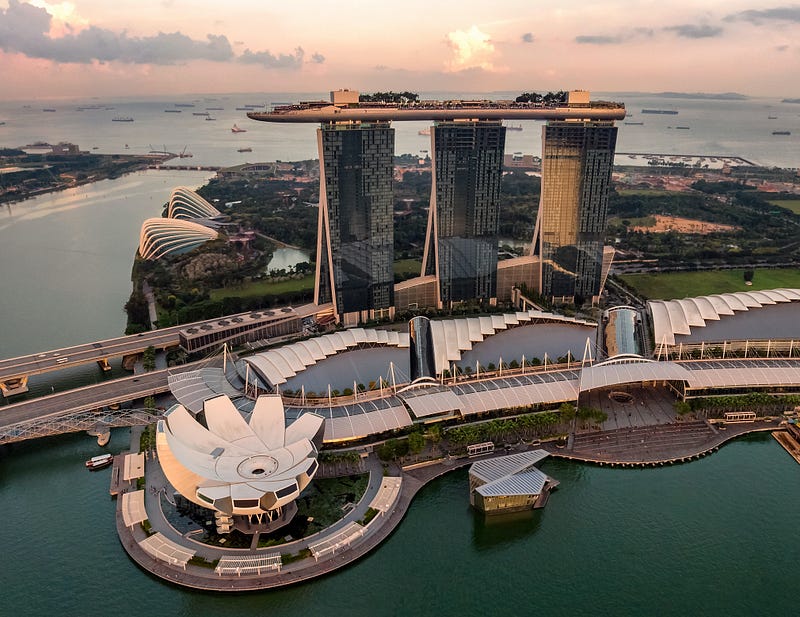
Photo by Hu Chen on Unsplash


Creditors favored liquidation

At an early stage, Hodlnaut founders Simon Lee and Zhu Juntao were in favor of a business sale as a preferable alternative to liquidation. Back in February, there appeared to be some potential of a sale, with several buyers having indicated an interest in the business. The identity of these interested parties was never revealed and the interim judicial managers of the restructuring process later confirmed that no “white knight” had emerged to buy out the business.

It became clear in April of this year that creditors preferred liquidation as opposed to attempting to restructure the business. The Algorand Foundation is a leading creditor, with a $35 million exposure to Hodlnaut. In a court filing in April, the Algorand Foundation, alongside other leading creditors Samtrade Custodian Limited and S.A.M. Fintech Pte Ltd., were noted as being opposed to a restructuring.


OPNX bid

In August it emerged that controversial crypto claims trading platform OPNX, owned by Three Arrows Capital’s (3AC) Kyle Davies and Su Zhu alongside Mark and Leslie Lamb from CoinFLEX, was mounting a bid for Hodlnaut.

OPNX had proposed to provide a capital injection of $30 million. The proposal outlined that this investment would be made in the form of FLEX tokens, the native token of the CoinFLEX platform.

Following consideration by the interim judicial managers overseeing Hodlnaut’s restructuring process, it decided not to take up the offer. It was decided that the FLEX tokens had a speculative value and that they were highly illiquid.

Additionally, no clear timeline had been provided by OPNX in respect of the repayment of creditors’ debts. Furthermore, the proposal was found to be scant on detail, particularly with regard to payments which were limited to 30% of liabilities. In August the FLEX token experienced a large drop, falling 90% in value.

More to Read
View All
Policy & Regulation·

May 10, 2024

HKMA forms working group to establish tokenization standards

The Hong Kong Monetary Authority (HKMA) has outlined that it has established a community initiative relative to its recently launched Project Ensemble tokenization market development effort. 'Project Ensemble Architecture Community'In a press release on May 7, the Hong Kong regulator set out the establishment of the “Project Ensemble Architecture Community.” Project Ensemble was launched two months ago on March 7. At the time, the regulator described the project as “a new wholesale central bank digital currency (wCBDC) project to render support to the development of the tokenisation market in Hong Kong.” The HKMA is trying to create an environment in which it can “develop standards” for the emerging tokenization market, with particular emphasis on the use of a wholesale central bank digital currency (wCBDC). The Chinese autonomous territory’s central bank has launched the “Project Ensemble Architecture Community,” with a view towards supporting interoperability between a wholesale CBDC, tokenized money and tokenized assets. The HKMA has outlined the community's primary objective, stating it aims to provide recommendations on various topics, with initial emphasis on devising a mechanism to facilitate seamless interbank settlement of tokenized deposits through wCBDC for tokenized asset transactions.Photo by Jimmy Chan on PexelsPublic and private sector participantsFurthermore, the working group intends to support the design and execution of Project Ensemble. Notable participants in the "Architecture Community" include the HKMA itself, Hong Kong’s other financial regulator, the Securities and Futures Commission (SFC), the BIS Innovation Hub Hong Kong Centre, the CBDC Expert Group and seven private sector entities.  Among these are Bank of China (Hong Kong), Hang Seng Bank, HSBC, Standard Chartered Hong Kong, HashKey Group, Ant Digital Technologies and Microsoft Hong Kong. Hashkey Group owns one of two Hong Kong-regulated cryptocurrency exchanges, HashKey Exchange. It also runs a brokerage, asset manager and tokenization platform, amongst other entities. Ant was recently involved in a tokenized deposit trial with HSBC. Regulatory sandboxOne of the first matters on the agenda for the newly-formed Community is to make recommendations about using a wCBDC for interbank settlement of tokenized deposits. Following that, the project plans to work towards the design and implementation of the Project Ensemble Sandbox which will launch in the coming months. The HKMA has been actively testing its CBDC and commenced the second phase of the e-HKD pilot in March. This phase of the pilot program is slated to extend until mid-2025. The journey towards exploring CBDCs in Hong Kong dates back to 2017, with the authorities intensifying their focus on researching a potential e-HKD in 2021, spanning both wholesale and retail levels. With the participation of key stakeholders from both the public and private sectors, including leading financial institutions and technology firms, the initiative appears to be well-positioned to drive innovation and address the evolving needs of the financial industry in Hong Kong.

news
Web3 & Enterprise·

Nov 16, 2023

Web3 chatting app Beoble acquires $2 million in pre-seed funding round

Web3 chatting app Beoble acquires $2 million in pre-seed funding roundWeb3 social messaging app Beoble announced on Wednesday that it has secured a total of $2 million in pre-seed funding, gaining recognition for its innovative communication service technology and potential for future growth.Photo by Yura Fresh on UnsplashEmpowering individuals in the Web3 eraTargeted at the Hong Kong and Singaporean markets, Beoble is a Web3-based social messenger platform that employs a decentralized encryption network called the Communication Delivery Graph, which allows users to engage in end-to-end encrypted chatting between their digital wallets. It also offers a communication toolkit for integrating decentralized applications (dApps). The service emphasizes giving ownership to individuals rather than corporations, distributing “cat points” to users based on their participation and contribution to the ecosystem, which are then used to determine their eligibility for rewards like token airdrops. It currently supports all EVM-compatible blockchains like Ethereum and Polygon and plans to include others like Solana, Aptos and Sui.“Beoble’s new solution for facilitating communication among Web3 wallets will address the vulnerabilities in control and security that are characteristic of existing Web2 messaging platforms, making it a leader in the Web3 messaging market,” said Beoble CEO Cho Sung-min.Attracting industry giantsIn this pre-seed round, major investors include firms focusing on crypto and blockchain projects such as Digital Currency Group (DCG), HashKey Capital and GBV Capital. Notably, Samsung Electronics’ venture capital arm, Samsung Next, also participated as an investor.Furthermore, Beoble has received acclaim from experts for providing a direct communication channel among Web3 wallet owners and allowing them to conduct non-fungible token (NFT) and peer-to-peer (P2P) transactions. The company was also selected for the Web3 incubation program conducted by internet juggernaut Kakao’s public open-source blockchain, Klaytn, in April of last year.Beoble is currently accepting pre-registration applications for beta testing until Nov. 30 and will launch the beta version on Dec. 2.

news
Policy & Regulation·

Aug 02, 2023

India Offers Suggestions in the Development of G20 Crypto Guidelines

India Offers Suggestions in the Development of G20 Crypto GuidelinesIndia submitted its Presidency Note on Tuesday, contributing to the global framework for cryptocurrency regulation under the auspices of the G20, a forum comprising the world’s 20 largest economies.The document aligns itself with the guidance provided by prominent entities including the Financial Stability Board (FSB), the Financial Action Task Force (FATF), and the International Monetary Fund (IMF).Photo by Swapnil Deshpandey on UnsplashKey Summit topicMany months in advance of September’s G20 Summit in New Delhi, it was clear that crypto regulation would be a key subject for discussion. The FSB’s guidelines, released in July, offer a comprehensive framework for regulating various crypto assets, particularly stablecoins, based on existing standards and principles. These guidelines encompass crucial aspects such as governance, risk management, disclosure, supervision, and cross-border collaboration.In May, the FSB’s Regional Consultative Group for Asia met in Cebu, in the Philippines. During that meeting, the FSB highlighted the risks implicated by digital assets.Published in June, the FATF guidelines put forth a universally applicable set of rules to combat money laundering and counter the risks of terrorist financing linked to cryptocurrencies. One of the main provisions is the “travel rule,” compelling crypto service providers to share customer information when conducting fund transfers.While the IMF guidelines are expected to be unveiled in August, they will encompass a synthesis paper that offers a comprehensive roadmap for crypto regulation. This roadmap is designed to reflect input from multiple stakeholders and jurisdictions.India’s supplementary additionsAmidst endorsing these global crypto guidelines, India also proposes supplementary additions, particularly highlighting the challenges faced by developing economies in the crypto realm. The document underlines that these nations may grapple with capacity and resource constraints when implementing effective crypto regulation and supervision.Furthermore, they might require more extensive access to reliable data regarding crypto activities and associated risks. Developing economies are also at a heightened risk of falling victim to illicit crypto use, including money laundering, tax evasion, and cyber-crime.In light of these concerns, India advocates for the inclusion of developing economy-specific considerations in the FSB’s guidelines. The country also urges for technical assistance and capacity-building support to be extended to these nations. Additionally, it proposes a global outreach initiative to raise awareness of the risks, commencing with nations experiencing higher levels of crypto adoption.Broadening the scopeAnother noteworthy suggestion from India is an extension of the regulatory approach beyond the G20’s scope, encompassing the broader digital economy. While recognizing that crypto is merely one facet of the sweeping digital transformation reshaping multiple sectors, India’s document underscores the need for enhanced cooperation and coordination among various stakeholders and authorities at both national and international levels.In this vein, India proposes that the G20 contemplate formulating a comprehensive framework for the digital economy. This framework should encompass a wide array of concerns, including data governance, digital taxation, digital identity, digital inclusion, and fostering digital innovation, according to the document.India’s exploration of diverse aspects related to cryptocurrency — ranging from legal status to taxation implications, central bank digital currency (CBDC) potential, and innovation possibilities — further underlines its desire to see greater international cohesion in relation to the regulation of digital assets.

news
Loading