Top

Korean Securities Firms Unite to Build Shared Security Token Infrastructure

Web3 & Enterprise·September 13, 2023, 5:44 AM

Shinhan Securities, KB Securities, and NH Investment and Securities are gearing up to sign a memorandum of understanding (MOU) later this month to establish a security token consortium, according to South Korean news outlet MoneyToday.
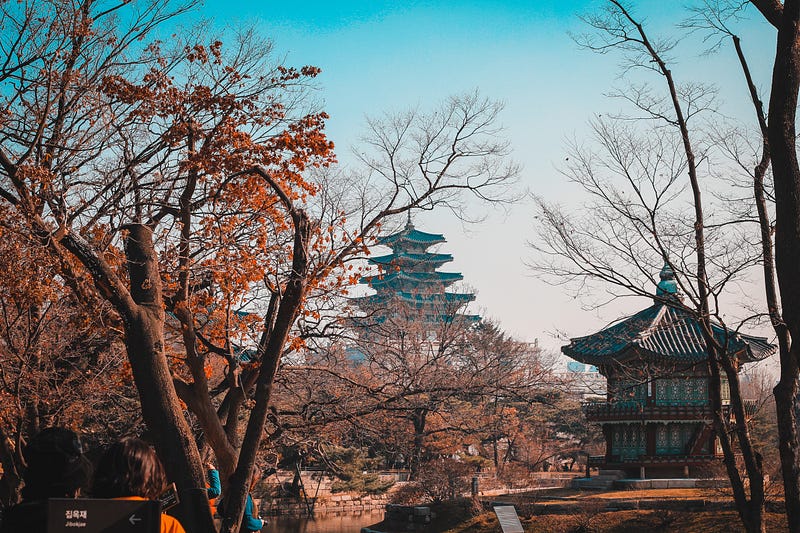
Photo by Louie Nicolo Nimor on Unsplash


Shared infrastructure

The primary objective of this consortium is to create a shared infrastructure for their security token operations. This initiative marks the first instance where the nation’s major securities firms are getting together to set up a security token consortium. Until now, securities companies have typically sought collaborations with banks, fractional investment firms, or blockchain technology companies, showing reluctance to cooperate with their direct competitors over concerns of potential loss of competitiveness.

An expert within the securities industry underscored the paramount importance of securing control over the infrastructure, particularly given that the security token market has not materialized. The expert further stated that once a collaborative network is built among the leading securities firms, it is likely to set the standards for the entire market. Meanwhile, the precise details of the plan have not yet been finalized.


Challenges in prior initiatives

Since the South Korean Financial Services Commission revealed the security token guidelines in February, the securities sector has been deliberating the creation of a shared network that would be accessible to all industry participants. This kind of system is considered ideal as it facilitates flexible expansion and cost efficiency. However, the discussion came to a halt due to conflicts between the Korea Securities Depository, the Korea Financial Investment Association, and fintech firm Koscom.

Meanwhile, installing an independent network is not very feasible, given that it not only incurs significant costs upfront but also has limited potential for expansion. This is why these industry leaders devised an alternative strategy in which they can collectively share the financial burden. In addition, Shinhan, KB, and NH plan to explore joint business models with the aim of maximizing the utility of their security token infrastructure.

More to Read
View All
Policy & Regulation·

Jul 06, 2023

UAE’s RAK DAO Partners with HBAR Foundation to Support Web3 Startups

UAE’s RAK DAO Partners with HBAR Foundation to Support Web3 StartupsRAK Digital Assets Oasis (RAK DAO), the world’s first free zone dedicated to digital and virtual asset companies located within the United Arab Emirates (UAE), has announced a collaboration with the HBAR Foundation which aims to provide growth and funding opportunities to members of the free zone.Leveraging blockchain technologyThe Cayman Islands-based HBAR Foundation, the project team behind the Hedera public ledger, will assist RAK DAO members in leveraging cutting-edge technologies, including blockchain, and building economies and applications on Hedera.In a joint statement released on Tuesday, the partners outlined the benefits of the collaboration, which include a grant program, financial backing processes, and specialized expert support in technology, marketing, and business development. They also aim to support the scaling of adoption and innovation of new ideas in the Web3 space.Photo by Mostafa Ashraf Mostafa on UnsplashRas Al Khaimah free zoneSheikh Mohammed bin Humaid Al Qasimi, Chairman of RAK Digital Assets Oasis, expressed his excitement about the partnership, stating: “Together, we are unlocking a world of new possibilities, empowering entrepreneurs, and propelling innovation forward. This collaboration is a testament to our shared commitment to driving sustainable growth and shaping a future where Ras Al Khaimah emerges as a global leader in the digital economy.”Ras Al Khaimah is the largest city within the Emirate of the same name. It’s the sixth largest city in the UAE and home to the RAK DAO free zone.In March, Ras Al Khaimah enacted a law to establish RAK Digital Assets Oasis, demonstrating its commitment to diversification, attracting new businesses, and positioning itself as a global tech center. The free zone is exclusively focused on digital and virtual asset companies operating in various sectors such as the metaverse, blockchain, utility tokens, virtual asset wallets, non-fungible tokens, decentralized autonomous organizations (DAOs), decentralized applications, and other Web3-related businesses.Various initiativesAs part of the collaboration, RAK Digital Assets Oasis and HBAR Foundation will undertake several initiatives, including start-up and scale-up pitching sessions, opportunities for partners and investors to connect, and exploration of joint projects such as venture studios or accelerators. Grantees of the HBAR Foundation will also benefit from discounted set-up and licensing packages to establish their presence within RAK Digital Assets Oasis.Shayne Higdon, CEO of HBAR Foundation, acknowledged the UAE’s reputation as a dynamic hub for Web3 innovation and its ability to attract global enterprises and top-tier talent. Higdon stated: “Through this exclusive relationship we are honored to provide grantees with greater access to the UAE while working together to establish RAK Digital Assets Oasis as a major hub for the Web3 and digital assets sector.”The UAE has been actively investing in its infrastructure and implementing policy reforms to attract more entrepreneurs and businesses, aiming to grow its non-oil sector. The country’s digital economy is projected to surpass $140 billion by 2031, up from nearly $38 billion at present, according to a report by the Dubai Chamber of Digital Economy in February.

news
Policy & Regulation·

Apr 13, 2023

Hong Kong Reiterates Web3 Credentials and Commitment

Hong Kong Reiterates Web3 Credentials and CommitmentHong Kong is committed to growing the Web3 industry under appropriate regulations, according to government officials.©Pexels/Andrea PiacquadioAt the four-day Web3 Festival, which is the largest Web3 event that the city has hosted since declaring its intention last year to become a digital asset hub, Financial Secretary Paul Chan stated that the stability of the financial system and investor protection should not be damaged, and that appropriate regulations are a must to create a sustainable development environment and a more ideal space for development.DeFi licensing requirementSome attendees were surprised to learn that the Securities and Futures Commission (SFC) believes that decentralized finance (DeFi) platforms for virtual assets need a license under existing rules. Keith Choy, interim head of the intermediaries division at the SFC, stated that people operating or performing DeFi activities should be subject to Hong Kong’s licensing requirements.This means that if Hong Kong really intends to regulate DeFi, it will have a stricter environment than Singapore. The Web3 industry has been closely watching the development of a new regulatory framework for virtual assets in Hong Kong since the city revealed at the end of October its intention to become a cryptocurrency hub. Under new regulations that go into effect in June, cryptocurrency exchanges serving customers in Hong Kong must be licensed by the SFC.10,000 Web3 Festival attendeesThe event attracted more than 10,000 people ahead of the conference, with several big-name speakers and exhibitors looking for new opportunities in the city. OKX and Filecoin were some of the large cryptocurrency firms in attendance, as were traditional tech firms like Tencent Cloud, which had a booth touting its blockchain-related services for corporate clients. Alibaba Cloud was also a co-organiser, along with Amazon Web Services and Hong Kong’s Cyberport.Binance co-founder and CEO Zhao Changpeng (CZ) also dialed in via video for a fireside chat. Last month, the US Commodity Futures Trading Commission (CFTC) sued CZ and Binance over what it alleged was “sham” compliance with domestic regulations. The company has been scrutinized over connections to its local firm Binance.US, which legally is meant to operate as a separate entity. Zhao was not asked and did not address his legal troubles at the conference. However, he did note that Binance is in talks with regulators in many markets.“We are actively engaged with regulators all around the world,” Zhao said. “Many of them are very receptive, some of them are still skeptical, and that’s fine, but we need to engage. We need to have dialogue, we need conversations, and we also need patience.”Singapore comparisonsHong Kong has frequently been compared with Singapore, which had been considered a friendlier market for related activity until Hong Kong’s policy shift. Some attendees had hoped that Hong Kong’s shift would provide some competition for Singapore in the region. “We did see a very obvious trend of people flying to Singapore to make sure their business was part of this space,” said Luke Liu, chief core ecosystem contributor at cross-chain protocol developer Poly Network. “Hong Kong and Singapore can coexist in some sense, but there is definitely a very positive change going on recently because of the Hong Kong policy announcement.”Hong Kong has reaffirmed its commitment to growing the Web3 industry under “appropriate” regulations, with the stability of the financial system and investor protection as a top priority. This has been reiterated during the largest Web3 event in the city since declaring its intention to become a digital asset hub.

news
Policy & Regulation·

Apr 07, 2023

Korean Financial Regulator to Inspect Non-Fiat Crypto Trading Platform

Korean Financial Regulator to Inspect Non-Fiat Crypto Trading PlatformThe Financial Intelligence Unit (FIU) under the Korean Financial Services Commission (FSC) plans to launch a comprehensive inspection on crypto trading platform Fobl (previously known as Foblgate) from March 11.©Pexels/김 대정Unlike other major Korean crypto exchanges, such as Upbit or Bithumb, which allow trading between fiat currencies and cryptocurrencies, Fobl only offers trading between cryptocurrencies.Inspection on non-fiat exchangesThe FIU’s inspection of Fobl is a follow-up to the regulator’s inspection of GDAC, another Korean non-fiat crypto exchange. This suggests that the FIU will focus on inspecting non-fiat exchanges in the first half of this year.Many in the cryptocurrency industry have been paying attention to the FIU’s move after its first inspection of GDAC, as it could signal the direction in which the regulator would take. Earlier this year, the FIU announced that it would conduct inspections not only on non-fiat crypto exchanges but also on wallet solutions, custodians, and staking service providers. It is known that the FIU has been reviewing anti-money laundering (AML) systems and asset management statuses of these crypto enterprises.Fobl’s possible addition of fiat tradingThe Korean crypto industry suspects Fobl might transform itself into a fiat crypto exchange, considering the FIU’s notice that it will prioritize examining non-fiat exchanges that are preparing to support fiat trading.Fobl CEO’s take on the marketPrior to this news, Fobl CEO Ahn Hyun-joon said in a recent interview with Etnews that the platform is in talks with multiple banks to acquire real-name bank accounts and is complying with all the regulations required by the authorities. During the interview, he also raised concerns about the uncertainty that faces non-fiat crypto trading platforms, pointing out that 97% of the crypto trading in Korea is being carried out in crypto exchanges that support trading of Korean won.In Korea, the financial regulator requires virtual asset service providers (VASPs) offering trading in Korean won to hold real-name registered accounts at domestic banks as a measure to prevent money laundering.

news
Loading
