Top

Bitget Exec Speaks to Utility of Enhanced KYC

Web3 & Enterprise·September 13, 2023, 12:57 AM

Crypto continues to undergo significant transformation as regulatory authorities across Asia tighten their grip on the industry. In response to these regulatory changes, Seychelles-headquartered Bitget has joined KuCoin and OKX, which have recently bolstered their Know Your Customer (KYC) measures to ensure compliance and safeguard their operations.

In a recent interview with Cointelegraph, Bitget Managing Director Gracy Chen spoke to the utility of KYC measures, stating that KYC is useful in filtering out illegitimate users, particularly those engaged in activities such as money laundering.

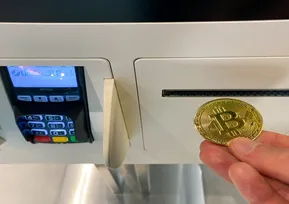
Photo by Pixabay on Pexels


Meeting Asian regulatory requirements

The Seychelles-based exchange with ties to China and Singapore recently announced updates to its KYC protocols. These changes come in the wake of the Monetary Authority of Singapore’s (MAS) directives, which advise financial institutions, including cryptocurrency exchanges, to implement robust risk management procedures. The MAS has taken a stringent stance, shutting down certain digital payment token service providers to prevent them from facilitating lending and staking activities by retail customers.

Starting from October 1, Bitget will require users who have not completed level 1 KYC verification to be restricted from creating new trading orders. This move aims to ensure that users comply with the newly updated guidelines and maintain the integrity of the exchange’s operations.


Following industry peers

KuCoin and OKX, two other prominent exchanges which, like Bitget, have their corporate headquarters in Seychelles and a strong presence in Asia, have also revamped their KYC policies. While KuCoin initially introduced KYC in 2018, the exchange has strengthened its identity verification procedures, requiring users to upload documents and complete face checks.

Furthermore, in July, it announced a mandatory KYC requirement, in line with anti-money laundering (AML) regulations. While the mandatory KYC requirement is already in force, the other changes are set to take effect at the end of the month.

OKX, on the other hand, has implemented stringent requirements, including the submission of a government-issued ID selfie for users to access all its services. The exchange recently set a deadline for service users to complete KYC.

Bitget’s Chen highlighted that its decision to embrace KYC measures was driven by a commitment to serving the market responsibly. She acknowledged that while some users may have reservations about KYC, it is a necessary step to maintain the integrity of the exchange and prevent illicit activities. Speaking at the fringes of the firm’s EmpowerX Summit in Singapore, Chen said:

“I’m pretty sure if the user is a financially healthy user, such as, like, if they’re not doing something illegitimate, such as money laundering, they should be pretty comfortable with the KYC process.”


Tightening regulation

The tightening of regulations in Asia is not limited to Singapore alone. Japan has also taken steps to enhance anti-money laundering measures related to cryptocurrency transactions, responding to international calls for stricter oversight. Additionally, South Korea’s Financial Services Commission (FSC) has announced plans to require companies to disclose details about their cryptocurrency holdings, expected values, and related business models in their financial statements, aligning crypto accounting with conventional financial reporting.

These regulatory developments signify a broader trend in the region, with cryptocurrency service providers proactively adapting to the changing landscape. As governments and regulatory authorities take steps to address the potential risks associated with cryptocurrencies, exchanges are prioritizing compliance to ensure their longevity and continued growth.
More to Read
View All
Web3 & Enterprise·

Apr 24, 2023

Korean Cafe Attracts Customers with NFTs

Korean Cafe Attracts Customers with NFTsA South Korean cafe owner has employed non-fungible tokens (NFTs) as an ingenious marketing strategy to attract customers.©Pexels/Leeloo ThefirstNFT holder benefitsIn an interview with Korean crypto news outlet Digital Asset, Yoo Hyun, the entrepreneurial business owner, explained that he was seeking a strong marketing tool to capture the attention of the NFT market. Yoo was interested in seeing if his cafe could remain profitable while also offering substantial benefits to its customers.Since April 2022, Yoo has released a total of 50 Ethereum-based NFTs related to his cafe, Hide Me, Please (HMP), in two separate batches of 25 each. The first set of NFTs grants holders a free cup of coffee or drink daily for life, while the second set offers an extra drink or dessert with each drink purchased.Increased revenueThis unique NFT initiative has led to increased revenue for the cafe. Kim Dae-sung, the CFO of HMP, explained that the cafe’s monthly revenue increased by 15% compared to the same period last year.HMP is currently selling 500 NFTs as a third set and plans to release more depending on demand. Yoo highlighted the importance of an appealing interior design and tempting desserts, as NFT holders visiting for a free coffee may be enticed to purchase a dessert as well.Regular customersYoo asserts that the food and beverage industry hinges on retaining regular customers and believes NFTs can help achieve that objective. HMP aspires to become a community-based platform, and according to Kim, many digital artists are interested in the space that the cafe provides because it enables them to connect with clients. Collaborations often take place, and while the cafe charges for food and drinks, it does not charge for space rental. This approach fosters a positive impression and contributes to a strong brand image.High-quality cafeAt present, about 5% of HMP’s customers hold NFT memberships. Yoo and Kim plan to increase this number to 10% but no higher, as excessive reliance on NFT members could jeopardize the business. They underlined the significance of remaining a high-quality cafe, staying true to the core foundation of their enterprise. As they anticipate the growth of the Web 3.0 ecosystem, Yoo and Kim believe that with continued efforts, HMP will gain even greater value.

news
Policy & Regulation·

Jul 25, 2025

Hong Kong criminalizing promotion of unlicensed stablecoins

The CEO of Hong Kong’s central banking institution, the Hong Kong Monetary Authority (HKMA), has outlined that the introduction of the Chinese autonomous territory’s Stablecoins Ordinance on Aug. 1 will criminalize the unlicensed promotion of stablecoins. In an article published on the HKMA website on July 23, CEO Eddie Yue stated:”According to the Ordinance, starting from the commencement date, it will be illegal for any person to offer any unlicensed fiat-referenced stablecoin (FRS) to a retail investor, or actively market the issue of unlicensed FRS to the public of Hong Kong.”Photo by Manson Yim on UnsplashSubject to fine & imprisonmentIf an individual is found to have promoted an unlicensed stablecoin, they will be subject to a fine of HK$50,000 ($6,400) and imprisonment of up to six months. Yue warned the public to remain vigilant and to exercise caution if they come across marketing material related to an unlicensed stablecoin offering. The HKMA CEO is conscious of the fact that stablecoins are an emerging payment instrument that is being gradually integrated into the mainstream financial system. However, he feels that some discussion on stablecoins has been overly idealistic. Yue outlined that interactions with the few dozen institutions that have reached out to the HKMA with regard to stablecoin licensing have led him to believe that “many proposals remain conceptual.” He claimed that many of the institutions putting forward these proposals “fail to put together viable and concrete plans as well as implementation roadmaps, let alone demonstrate their awareness of risks and competence in managing them.” Limited license issuanceYue believes that in many instances, these institutions would be better served to collaborate with stablecoin issuers rather than becoming stablecoin issuers themselves. It’s on that basis that the HKMA will only grant a handful of stablecoin issuer licenses. Bloomberg reported that in the region of 50 companies have been seeking to apply for stablecoin licensing in the city, with the HKMA likely to approve around 10 licenses. It referenced particular interest from Chinese brokerages and a related move recently by asset management firm ChinaAMC in launching a yuan-denominated tokenized money market fund that facilitates subscriptions via stablecoins.  Significant Chinese businesses such as JD.com and Ant Group have been preparing to acquire stablecoin licensing in Hong Kong. Chinese stablecoin urgencyIn its Asia Morning Briefing, CoinDesk pointed out that in 2021, the Chinese authorities had been critical of the development of global stablecoins, preferring instead to concentrate on their own central bank digital currency (CBDC), the digital yuan. However, it asserts that “Beijing’s caution on stablecoins is giving way to a sense of urgency.” Animoca Group President Evan Ayuang told the publication that China’s interest in stablecoins is on the rise. Ayuang asserted that actions taken by the Trump administration in the U.S. related to stablecoin policy are “pressuring China to act a lot faster.” Developments in Hong Kong are relevant in the context of China’s newfound interest in stablecoins. Lily King, chief operating officer (COO) at crypto custodian Cobo, stated recently that Hong Kong continues to be a testing ground for mainland China.  In keeping with that outlook, analysts at Morgan Stanley recently asserted that yuan-denominated stablecoin projects launched in Hong Kong would potentially serve as a developmental stablecoin sandbox for mainland China.

news
Web3 & Enterprise·

Nov 17, 2023

BSN Foundation launches in Singapore with five global members

BSN Foundation launches in Singapore with five global membersThe BSN Foundation, a Singapore-based organization dedicated to building global blockchain infrastructure, on Thursday officially announced its five founding members from different regions and sectors.Photo by Julien de Salaberry on UnsplashBroad representationThe founding members of the BSN Foundation include Blockdaemon, a leading institutional digital asset wallet provider; Zeeve, a Los Angeles-based blockchain infrastructure automation platform; TOKO, a Hong Kong-headquartered digital asset creation platform; GFT Technologies, a German tech firm specializing in financial services and Red Date Technology, a tech firm behind the BSN Spartan Network located in Hong Kong.Representatives from these entities gathered at the Pan Pacific Singapore on Thursday for a launch event. The BSN Foundation will act as the governing body of the BSN Spartan Network, a public infrastructure network based on open-source virtual data centers. The launch of the foundation marks a major milestone in the BSN’s global expansion and its vision to establish a decentralized public layer of the internet.In discussion with Cointelegraph, Tim Bailey, the Vice President of Global Business at Red Date Technology, stated:“The BSN Foundation launch is a vital step in our global expansion, demonstrating the international recognition and support for the BSN Spartan Network’s concept and goals.” He added:“These organizations bring expertise in areas like blockchain-as-a-service, asset tokenization, financial services, and consulting, highlighting the wide applicability and potential of the BSN Spartan Network.”Bailey emphasized that the BSN Spartan Network is designed to change the application and governance of public chain technology. “By focusing on non-cryptocurrency public chains and a decentralized governance model, we’re not just innovating in technology but also in how global collaborations can shape the future of IT infrastructure,” Bailey stated. BSN’s strategy is focused on creating a “more stable and accessible network” for businesses around the world, distancing itself from the volatility related to traditional cryptocurrencies like Bitcoin.Chinese originsThe BSN Spartan Network, launched in September 2022, features a non-tradable token (NTT) issued on its default chain. Each of the network’s data centers is equipped with a single registered NTT wallet for managing and holding these tokens. NTTs can be acquired using fiat currency, selected stablecoins or through various incentive programs.The BSN Spartan Network, which originated in China as the “Blockchain-based Service Network” in early 2020, was developed with the backing of the Chinese government.“BSN was indeed originally initiated in China. However, the BSN Spartan Network, governed by the Singapore-based BSN Foundation, is distinct from the BSN Networks in mainland China,” Bailey stated. He highlighted that the BSN Spartan Network is constructed following global standards, is entirely open source and maintains independent operations from the BSN Networks present in mainland China.UDPN proof of conceptBSN, driven by Red Date Technology as its lead developer, had outlined plans to develop a universal digital payments network (UDPN) as early as 2021. That project continues to progress. Last month, it emerged that SC Ventures, the Singapore-based fintech investment subsidiary of British banking conglomerate Standard Chartered, had partnered with Deutsche Bank in a first proof of concept (POC) of the UDPN. That POC resulted in real-time transfers and swaps of synthetic USDC and EURS stablecoins between the two banks.

news
Loading