Top

Uzbekistan’s New Private Bank Joins National Crypto Card Initiative

Web3 & Enterprise·August 17, 2023, 2:23 AM

In a step towards enhancing its cryptocurrency ecosystem, the Republic of Uzbekistan has given the green light to include another private bank in its ongoing national crypto card project. The development was announced through an official press release earlier this week by the National Agency of Perspective Projects (NAPP), the country’s regulatory authority for digital assets.

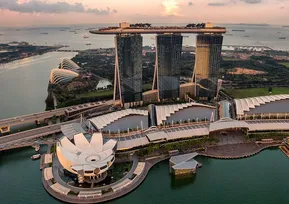
Photo by engin akyurt on Unsplash


Building upon a crypto framework

Under the provisions outlined by the Uzbekistan Ministry of Justice on December 30 of last year, the Special Regulatory Sandbox Regime was established. This unique framework empowers specific entities within Uzbekistan’s crypto sphere to provide specialized services. JSV Ravnaq Bank has now been registered as a member of this regime, enabling its active participation in the pilot phase of the nation’s crypto card project.


Virtual bank card

This initiative is poised to introduce a virtual bank card named “CRYPTO CARD — UzNEX.” The card’s standout feature is its ability to facilitate automatic fund addition to users’ primary accounts. This is achieved by swiftly converting crypto assets from a digital wallet on a partner crypto exchange platform.

A vital aspect of the crypto card’s development lies in its compatibility testing with various financial systems, including the widely used Mastercard payment platform. According to NAPP’s statement, the participant bank within the special regulatory regime will be rigorously testing the integration of the automated banking system, crypto-exchange information system, bank processing center, and the MasterCard international payment system.


December launch

Notably, the addition of Ravnaq Bank marks the second entrant into the project, with Kapital Bank being the first participant approved in May. While Kapital Bank’s testing phase commenced at the end of June 2023, Ravnaq Bank is set to initiate its test launch by the end of October 2023. Both banks are expected to launch the full project by late December, in accordance with NAPP’s timeline.

Beyond these private banks, the Special Regulatory Sandbox Regime also includes UZINFOCOM, a company authorized to develop NFT certificates based on distributed data registry technology.

More to Read
View All
Markets·

Feb 03, 2024

Crypto enthusiasm prevails in China despite crypto trading prohibition

In the face of a crypto trading ban imposed in 2021, the cryptocurrency market in China continues to thrive, defying the odds, according to a recent report from Kyros Ventures. Regional survey and reportThe Vietnam-based blockchain-focused startup incubator and venture capital firm has presented its report findings, shedding light on the unique dynamics of the Chinese crypto landscape compared to neighboring countries such as South Korea, Vietnam, Taiwan and Thailand. The survey was conducted in December in collaboration with 10 media agencies across the region, involving over 5,000 participants to gauge their sentiments and investment patterns.Photo by Road Trip with Raj on UnsplashGreater crypto interestMore than 70% of respondents revealed that cryptocurrencies accounted for over half of their asset portfolios. Among survey respondents in China, 88.9% reported heavy investments in cryptocurrencies, surpassing the enthusiasm observed in Vietnam, South Korea, Taiwan and Thailand. The finding is surprising, given that cryptocurrency trading is prohibited in China, while in the other jurisdictions the same level of restrictions is not in place. China's crypto scene faces substantial regulatory hurdles, with a government ban on crypto trading implemented in 2021. Despite this, the report highlights that a majority of Chinese investors opt for centralized crypto exchanges (CEXs) for their trading activities. Arthur Hayes, the founder of crypto derivatives platform BitMEX, recently outlined that wealthy individuals in China have access to international banking, and with that, access to overseas cryptocurrency platforms through the Chinese autonomous territory of Hong Kong. An investigative report produced by the Wall Street Journal in 2023 found that leading global crypto exchange Binance continues to have a thriving business relative to its Chinese user base. The Chinese authorities appear to be aware that the crypto trading prohibition that has been applied by the government is being flouted. This is demonstrated by the fact that the government is looking to update its anti-money laundering rules for the first time in 17 years to account for the rise in cryptocurrency investment, trading and use. Higher risk appetiteNotably, 33.3% of Chinese investors indicated an allocation to stablecoins. That is indicative of a greater risk appetite in China by comparison with countries like South Korea and Vietnam where 43% and 59% of respondents had money allocated in risk-off stablecoin positions. In terms of investment by referral, Thailand and China emerged with the highest rates, reaching up to 80%. Previous research carried out by Kyros earlier in 2023 highlighted the significance of crypto investment via referrals within the Vietnamese market. Developing regional regulatory landscapeThe regulatory landscape in Asia witnessed significant developments in 2023, with Hong Kong emerging as a leading hub for crypto and Web3 innovation. The issuance of cryptocurrency exchange licenses in Hong Kong marked a pivotal moment for the industry in the region. In South Korea, new legislation aimed at protecting cryptocurrency users, enhancing transaction transparency and fostering market discipline was enacted. Meanwhile, Taiwan's Financial Supervisory Commission explored the possibility of allowing crypto exchange-traded funds, pending a thorough analysis of the product's development in global markets.  

news
Markets·

Apr 24, 2023

Report: Can Bitcoin Replace Gold As a Safe Asset?

Report: Can Bitcoin Replace Gold As a Safe Asset?In light of the substantial increase in Bitcoin (BTC) prices this year, a report from KB Financial Group in South Korea examined the potential for BTC to replace gold as a safe asset.©Pexels/Michael SteinbergThe study delves into the factors behind the recent BTC price surge and emphasizes the need for caution when considering BTC as an alternative to traditional safe assets.3 drivers behind BTC surgeFrom January 1 to March 31 this year, BTC experienced an impressive return of 71%. This surge can be attributed to three main factors: an anticipated increase in liquidity due to market expectations of unchanged or falling interest rates; central banks supplying liquidity to mitigate risks in the traditional banking system; and concerns over the potential delisting of cryptocurrencies should the US court’s decision on the Ripple-SEC case classify XRP, Ripple’s native token, as securities, prompting investors to shift their focus to BTC.The report suggests that the current BTC boom is more likely a result of short-term arbitrages and social conformity, given the greater information asymmetry in the crypto market, which lacks the disclosure system present in traditional stock markets.Persisting risk factorsLast month, blockchain tracker Whale Alert spotted a transfer of 11,125 BTC from an anonymous address to Binance. The primary reason for moving assets from a private address to an exchange address is to sell them, indicating that investors should keep a watchful eye on Bitcoin trading volumes, particularly for any signs of large sell-offs.Data from the crypto data analysis platform Glassnode revealed that the percentage of the BTC supply that was active over a year ago reached an all-time high of 68% in late March. Historically, such an increase has been associated with falling BTC prices.This year, the BTC supply is set to grow due to the US government’s liquidation of seized BTC. As detailed in a March 31 Cointelegraph article, the US government seized 51,352 BTC in a case related to Ross Ulbricht, the creator of the online black market Silk Road. The government has already sold 9,861 BTC, with the remaining amount expected to be liquidated in four additional portions throughout the year.Binance, the world’s largest crypto exchange by trading volume, has been struggling to find banks in the US to store client funds after crypto-friendly banks Silvergate and Signature closed their doors.Need for cautionAlthough various media sources often portray BTC as a safe asset, the report advises caution in accepting these claims. Although some liken BTC to “digital gold,” the two assets share little in common beyond their finite and scarce nature. In fact, gold and BTC diverge significantly in terms of social consensus, intrinsic value, price volatility, and investor protection.Gold serves as a highly liquid asset with applications in both jewelry and industrial goods, in addition to its role as an investment vehicle. In contrast, BTC’s intrinsic value is still debatable. The price volatility of BTC is also a concern, as evidenced by its 71% spike in the first quarter of 2023, compared to gold’s modest 8% increase. Additionally, gold investment products are regulated by law, whereas BTC is not. The report thus recommends treating BTC as a high-risk product and incorporating it into a diverse investment portfolio.It is worth noting that since the outbreak of the COVID-19 pandemic, the crypto market has demonstrated a stronger correlation with the global stock market in response to negative signals. This trend can be partially attributed to the growing presence of institutional investors in the crypto market, who often sell risky assets first to secure liquidity in the face of unexpected shocks.

news
Web3 & Enterprise·

Nov 02, 2023

Hivemind Capital Partners expands into Hong Kong market

Hivemind Capital Partners expands into Hong Kong marketHivemind Capital Partners, a prominent player in the world of Web3 and digital asset investment, has officially unveiled its plans for expanding its operations to Hong Kong.Photo by Chromatograph on UnsplashNew Head of Asia appointmentIn a press release published by the New York-headquartered firm on Tuesday, Hivemind outlined that alongside this significant Asian expansion, the company has appointed Stanley Huo as Head of Asia. Huo is a seasoned investment banker with over 15 years of experience at prestigious institutions like China Renaissance, UBS, Citi and BAML across Asia and Europe.Huo expressed his excitement, stating: “I’m thrilled to be joining Hivemind at such a transformative period. The intersection of traditional finance and burgeoning digital asset technologies in Hong Kong presents unmatched opportunities and I’m looking forward to leading our initiatives in this vibrant ecosystem.”Identifying an opportunityHivemind Capital Partners had nothing but praise for Hong Kong as a significant crypto hub. The company highlighted the distinct advantages that come with operating in the city-state, including a well-established ecosystem that facilitates access to traditional financial infrastructure, capital-raising opportunities and the exploration of blockchain-related innovations.Huo told The Block: “It was very interesting to see that the Hong Kong government welcomes all the Web3 capital and talents… They want to build up a Web3 center.”Matt Zhang, Founder and Managing Partner of Hivemind, is equally enthusiastic about the Hong Kong expansion, stating:“Our expansion into Hong Kong not only represents our firm’s growth, but our commitment to being at the center of financial innovation and technology. With Stanley leading our business in Asia, we are positioned to significantly contribute to, and influence, the evolving narrative of blockchain technology and digital assets in the region.”Zhang is a speaker at Hong Kong Fintech Week later this week, where he will participate in a panel discussion titled “The Future of Stablecoins: Exploring Virtual Asset Payment Infrastructure and the Rise of Non-USD Stablecoin Frameworks.” He founded Hivemind in November 2021, with a view towards deploying capital within verticals such as crypto infrastructure, virtual worlds, programmable money and blockchain protocols.Hivemind has been on a significant growth trajectory, as evidenced by its recent launch of a $1.5 billion investment vehicle, with available funds still waiting to be deployed. Additionally, the company introduced the Liquid Opportunity Fund, a $300 million crypto fund, earlier in the year, securing $60 million for the fund in June.Following a regional trendThe company’s move to Hong Kong aligns with the broader trend of cryptocurrency firms recognizing the region’s potential and considering it for their expansion plans. Notably, Zodia Custody, a digital asset custodian backed by Standard Chartered, recently announced its launch in Hong Kong.While Hong Kong has actively positioned itself as a hub for Web3 companies, boasting recent developments like the introduction of retail trading for licensed crypto exchanges in August, it has also faced challenges. The city recently witnessed the largest Ponzi scheme in its history, involving the embezzlement of approximately $166 million from JPEX crypto exchange users. The investigation into this incident is still ongoing.

news
Loading