Top

Crypto Exchange Bithumb Holds Free Trading Event To Boost User Base and Liquidity

Web3 & Enterprise·August 01, 2023, 6:34 AM

Bithumb, South Korea’s second-largest cryptocurrency exchange, has announced a major “no trading fee” event in an attempt to narrow the gap with its competitor Upbit, the leading exchange in the market.

The event started on August 1, with select listed virtual assets available for trading without having to pay a fee on the exchange’s Korean won market.
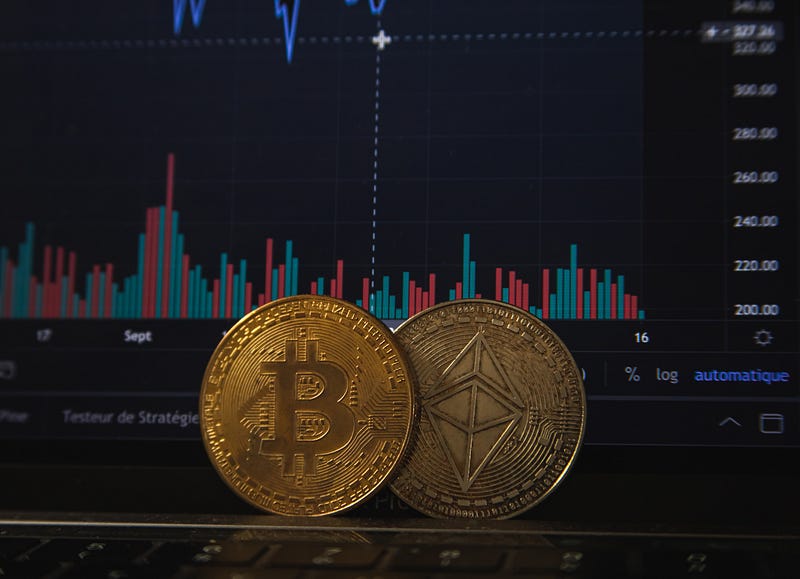
Photo by Pierre Borthiry — Peiobty on Unsplash


Assets with no trading fees

Aptos (APT), Stacks (STX), Flow (FLOW), Sui (SUI), Bitcoin Gold (BTG), FirmaChain (FCT2), Blur (BLUR), Waves (WAVES), Metal (MTL), and Loom Network (LOOM) will be the first assets to have no fees during the event.

The cryptocurrencies eligible for free trading can easily be distinguished by the blue “Free” badge displayed next to their names. Users can also check the full list through the “Fee-Free” category displayed at the top of the exchange chart.

The event is scheduled to continue until further notice and an additional ten assets eligible for free trading will be added every week as well.


Boosting liquidity

According to a Bithumb official, the virtual assets to be unveiled later on will be “subject to active domestic and international investment,” and the exchange will strategically select those that have the highest potential to expand liquidity.

Through this event, Bithumb aims to support the diversification of cryptocurrency investors’ portfolios and increase its user base, thereby enhancing trading liquidity.

More to Read
View All
Policy & Regulation·

Jun 13, 2023

BOCI Partners with UBS in Hong Kong on First Tokenized Notes

BOCI Partners with UBS in Hong Kong on First Tokenized NotesIn a groundbreaking move, the investment arm of the Bank of China (BOCI), has partnered with Switzerland-headquartered global financial services company UBS, to issue tokenized notes in Hong Kong.Photo by Eric Prouzet on UnsplashHong Kong’s first tokenized notesThis marks the first instance of a Chinese financial institution issuing a tokenized note in the region. Leveraging the power of blockchain technology, the notes were tokenized on the Ethereum blockchain. UBS announced the milestone development via a press release published to its website on Friday.The Swiss banking giant has some expertise in this area, having first issued a tokenized fixed rate note in December 2022, recorded on a permissioned blockchain and established under English and Swiss law. On this occasion, the Hong Kong-issued tokenized notes will be compliant in terms of both Swiss and Hong Kong law.The issuance of these tokenized notes involved a significant amount, with BOCI issuing 200 million Chinese yuan worth of notes, equivalent to approximately $28 million. The collaboration with UBS aims to simplify digital asset markets and products for customers in the Asia Pacific region, specifically by developing blockchain-based digital structured products tailored to their needs.Ying Wang, Deputy CEO at BOCI, expressed enthusiasm for the digital transformation and innovative development of Hong Kong’s financial industry, recognizing the evolving digital economy in the region. Wang expressed the view that the development puts BOCI “at the forefront of innovation in technology finance and digital finance.”She sees the UBS collaboration as a means of driving “the simplification of digital asset markets and products, for customers in Asia Pacific through the development of blockchain-based digital structured products, designed specifically for customers in Asia Pacific.”Embracing digital assetsHong Kong has been actively working towards establishing itself as a hub for cryptocurrencies. Paul Chan Mo-po, the Chinese autonomous territory’s Financial Secretary, has emphasized the region’s intention to embrace regulation in this domain. Despite recent fluctuations in the virtual asset market and the closure of certain virtual asset exchanges, Chan remains optimistic about the prospects of Web3 and believes it is the opportune moment to drive its advancement.This month, Hong Kong lifted its ban on crypto retail trading and encouraged crypto exchanges to seek licenses within the region. The Securities and Futures Commission (SFC) has introduced exchange guidelines, leading firms such as Huobi, OKX, and BitMEX to express their intentions to apply for licenses in Hong Kong. Furthermore, in light of the recent lawsuit filed by the SEC against Coinbase, Hong Kong legislator Johnny Ng extended an invitation to the exchange to establish a hub in Hong Kong.The collaboration between BOCI and UBS is significant as unlike UBS’ previous tokenized note project which was established on a permissioned blockchain, this Hong Kong-based project is making use of Ethereum. By issuing tokenized notes on the Ethereum blockchain, these institutions are exploring the decentralized potential of digital assets and paving the way for further innovation in the Asia Pacific region.

news
Web3 & Enterprise·

Sep 15, 2023

Circle and Grab Partner to Pilot Web3 App Integration

Circle and Grab Partner to Pilot Web3 App IntegrationUSDC stablecoin issuer Circle is embarking on a strategic partnership with Grab, Southeast Asia’s multifaceted super app for transportation, deliveries, and payments relative to Web3.Announced via a press release published to Circle’s website on Thursday, the collaboration marks yet another step forward in realizing the promise of Web3 technology in Singapore.Photo by Jason Miraples on UnsplashCircle’s foray into Web3Circle’s latest offering, a Web3 services platform, is set to be seamlessly integrated into the Grab app. The objective of that integration is to enhance Grab user experiences through blockchain-enabled solutions. In that way, the partnership will broaden the horizons of Grab’s already extensive service portfolio, which includes ride-hailing, food delivery, package delivery, ticket bookings, and insurance. Grab hopes that the move will propel the Singaporean super app further into the world of blockchain technology.Grab Web3 WalletNews that Grab was on the road towards rolling out a Web3-related product offering leaked out last week when Chinese crypto reporter Colin Wu tweeted out details related to a Web3 wallet. This official announcement qualifies those initial reports, as one of the key aspects of this collaboration is the introduction of the ‘Grab Web3 Wallet.’The feature, accessible to Singaporean users, enables the easy setup of a blockchain-enabled wallet. Users will have the opportunity to earn rewards in the form of digital collectibles and utilize non-fungible token (NFT) vouchers, thereby immersing themselves in the dynamic world of digital assets.To kickstart this venture, Circle’s Web3 Services will initially support the SG Pitstop Pack NFT vouchers. These vouchers can be redeemed at popular Singapore-based stores in advance of the upcoming F1 Singapore Grand Prix. Jeremy Allaire, Co-Founder and CEO of Circle, expressed his enthusiasm for the company’s efforts in collaborating with what he termed “global-scale consumer internet brands to bring everyday utility to users.” Allaire maintains that the partnership with Grab aligns perfectly with that mission.While bringing Web3 technology into everyday use in Singapore, the partnership also lends support to the Monetary Authority of Singapore’s (MAS) Project Orchid initiative. This initiative seeks to demonstrate the real-world application of Purpose Bound Money. Circle’s Chief Strategy Officer and Head of Global Policy, Dante Disparte, expressed the company’s enthusiasm for accelerating blockchain-powered innovation alongside Grab while aligning with Singapore’s vision to be a leading global hub for responsible digital asset innovation.Circle has been steadily establishing its presence in Singapore, with notable achievements including acquiring a Major Payment Institution (MPI) license from the MAS in June and opening its official office in May.In February, Circle joined forces with Tribe, the first government-supported blockchain ecosystem builder, to launch a unique training and support program aimed at nurturing and upskilling the region’s Web3 developer talent pool.Founded in 2012 in Malaysia as a ride-hailing app, Grab initially entered the scene as a competitor to Uber in the region. Over the years, it has evolved into a true “super app,” offering a myriad of services, including GrabPay (payment services), package delivery, ticket bookings, and insurance. Its user-friendly interface and comprehensive services have made it the go-to app for more than 25 million users in Southeast Asia every month.

news
Web3 & Enterprise·

Aug 22, 2025

Circle President visits Seoul for stablecoin talks with exchanges and central bank

Circle President Heath Tarbert, who oversees the issuer of the USDC stablecoin, arrived in Seoul on Aug. 21 for a series of meetings with South Korean cryptocurrency and blockchain industry leaders, as well as the governor of the country’s central bank. Citing industry sources, local outlet Newsis reported Tarbert visited three major exchanges, Upbit, Bithumb and Coinone, shortly after landing, spending roughly an hour at each. Discussions centered on recent developments in Korea’s digital asset ecosystem.Photo by Daniel Bernard on UnsplashGathering insight from exchangesThe trip underscores Circle’s growing interest in South Korea, one of the world’s largest crypto markets by trading volume despite its heavy tilt toward retail investors. Circle is reportedly seeking on-the-ground insight from local trading platforms. An executive from a research firm said the market offers an attractive foothold for global players looking to deepen networks. Previous reports indicated Circle has also begun informally recruiting in South Korea to support initiatives tailored to the local market, and the company is also weighing a direct investment in a domestic crypto firm. Homing in on stablecoinsStablecoins are expected to dominate the agenda with exchanges. USDC is the world’s second-largest stablecoin by market share, behind Tether’s USDT, and all three exchanges already support USDC trading. Upbit and Bithumb have meanwhile indicated their plans to develop Korean won–pegged tokens, recently filing trademark applications for their projects. Given Circle’s position in the sector, one exchange official said local platforms may look to the U.S.-based company as a benchmark, adding that practical knowledge-sharing could be the most meaningful outcome of Tarbert’s visit. Tarbert also attended a dinner with Simon Seojoon Kim, CEO of crypto venture firm Hashed, whose teams span Seoul, Singapore, Bengaluru, Silicon Valley and Abu Dhabi. Circle and Hashed have been in frequent contact, and the gathering offered another forum to exchange views on recent market developments. Talks with the central bank governorOn the policy front, Tarbert met with Bank of Korea (BOK) Governor Rhee Chang-yong at Circle’s request before the dinner. Rhee has signaled openness to the introduction of won-backed stablecoins, while emphasizing prudential safeguards and noting differences with some lawmakers on potential issuers. The BOK head has previously warned that allowing non-bank entities to issue won-backed stablecoins could pose risks, such as circumventing capital rules. The South Korean central bank is working with other agencies to develop a framework that ensures the stability and utility of stablecoins while preventing their use to bypass foreign exchange controls. The meeting between Tarbert and Governor Rhee likely covered regulatory parameters for cross-border remittances using stablecoins and avenues for public-private collaboration to foster a compliant won-stablecoin market. On the following day, Tarbert is slated to meet executives from four major financial groups: Shinhan Financial Group, Hana Financial Group, KB Financial Group and Woori Bank. Kakao Group, the company behind the KakaoTalk messaging app, is also on the itinerary. Representatives from its mobile payment platform, KakaoPay, are expected to take part in the discussions. The talks come as Kakao recently formed a task force to navigate Korea’s evolving stablecoin rules. Separately, Circle listed on the New York Stock Exchange (NYSE) earlier this year under the ticker “CRCL.” The initial public offering (IPO) priced at $31 a share and opened at $69, raising nearly $1.1 billion. As of Aug. 21, the stock closed at $131.80. 

news
Loading