Top

Dtcpay Looks to Extend Crypto Payment Services to Hong Kong

Web3 & Enterprise·July 15, 2023, 1:01 AM

Dtcpay, a Singapore-based payment processor catering to both fiat and cryptocurrencies, has set its sights on expanding into Hong Kong by the end of this year. The company also has plans to establish an office in Dubai, another prominent crypto hub, by 2024.
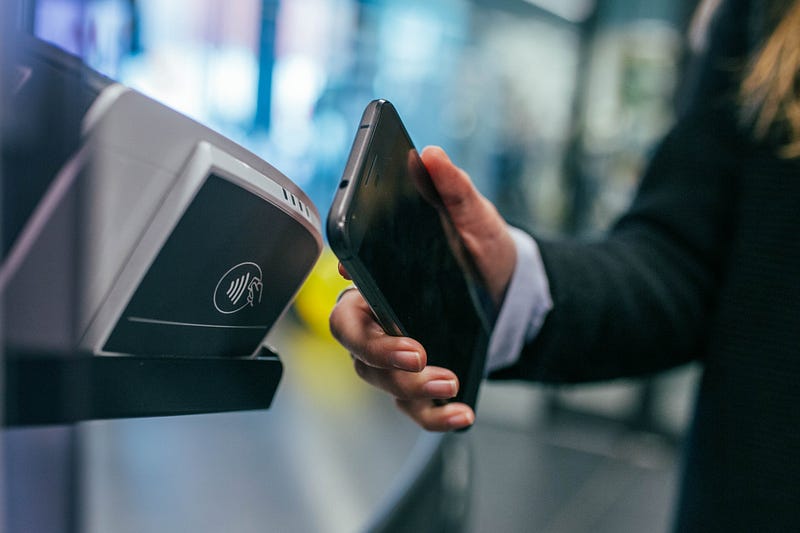
Photo by Jonas Leupe on Unsplash


North Asia potential

In an interview with Tech in Asia, Kanny Lee, the group CEO of Dtcpay, expressed optimism about the North Asia market, citing clear regulations and rules for digital assets and the recent opening up to retail participants. Lee believes that the region holds significant potential for growth over the course of the coming years.

Dtcpay generates revenue through crypto conversion rates on transactions and has already acquired approximately 12 merchants. The company aims to onboard up to 100 merchants by the end of 2023. Since the beginning of this year, the firm has experienced a fourfold increase in transaction volume.


Seamless regional payments

Lee acknowledged that most consumers view tokens primarily as investments. Dtcpay’s objective is to unify various payment methods across different countries, including Indonesia, Malaysia, India, Vietnam, and Singapore, providing a seamless experience for both merchants and consumers.

As an example, Dtcpay enables users to purchase cars using cryptocurrencies, significantly reducing transaction fees from approximately 4% to just 0.5% compared to cash payments. Notable partnerships in Singapore include Cars and Coffee and DM Autohaus.

In June, Dtcpay secured a pre-series A funding round, raising $16.5 million from Kwee Liong Tek. Tek, the chairperson of the Pontiac Land Group, which owns renowned hotels such as the Ritz-Carlton and Conrad Hotels in Singapore, has enabled Dtcpay to target the hospitality sector. At the time Lee said that there are an increasing number of businesses expressing interest in collaborating with regulated entities in the digital assets space and combined with an increase in the adoption of digital payments, that’s turbocharging DTCpay’s business.


Rebrand

That focus on digital payments led to the company rebranding back in April from Digital Treasures Center to Dtcpay. It appears that Hong Kong was already on the company’s radar back then as Lee stated at the time that “in Asia, particularly the key tier 1 financial capitals such as Singapore, Hong Kong and Tokyo, [they] have experienced a rapid rate of digital adoption primarily due to transparent regulatory frameworks for digital financial inclusion.”

Additionally, Dtcpay obtained a major payment institution license from the Monetary Authority of Singapore in August 2022. The company plans to launch a debit card in Q4 2023. That product will allow cardholders to convert their cryptocurrencies into multiple currencies without incurring foreign exchange fees.

The company was co-founded in 2019 by Sam Lin, Band Zhao, and Alice Liu, with Lee joining the company earlier this year with a view towards expanding its area of operations beyond Singapore.

With its expansion plans into Hong Kong and its focus on innovation, Dtcpay is certainly aiming to establish itself as a leading player in the crypto payment services industry, catering to the evolving needs of merchants and consumers alike.

More to Read
View All
Policy & Regulation·

Dec 09, 2023

Binance withdraws Abu Dhabi bid amid global licensing reevaluation

Binance withdraws Abu Dhabi bid amid global licensing reevaluationLeading global crypto exchange Binance has chosen to withdraw its bid for a trading license in Abu Dhabi, according to information gleaned from the Abu Dhabi Global Market (ADGM) register and a report published by Reuters on Thursday.Photo by Demid Druz on UnsplashChange of directionThe local subsidiary company responsible for the application, BV Investment Management Limited, initially submitted its licensing bid on Nov. 15, 2022. Much has changed in the crypto space and in the fortunes of Binance over the course of the past year, leading the firm to withdraw its application on Nov. 7.This proposed license would have granted Binance the authority to pool and invest funds from professional investors. The decision to retract the bid is part of Binance’s broader reevaluation of its overall strategy going forward. “When assessing our global licensing needs, we decided this application was not necessary,” a spokesperson from the company told Reuters.Adapting to new circumstancesMuch has changed for Binance in 2023. The company has been combating regulatory pushback in multiple jurisdictions worldwide, not least in the United States, where Binance founder Changpeng Zhao (CZ) recently reached a plea agreement with U.S. prosecutors and agreed to pay $4.3 billion for violations related to money laundering and sanctions laws.As part of that process, CZ stepped down as CEO, passing the leadership to Singaporean Richard Teng. Teng is a former regulatory executive who previously oversaw the exchange’s regional operations. A spokesperson for the company maintained that this recent decision relative to licensing in Abu Dhabi is entirely unrelated to the recently agreed-upon settlement in the United States.UAE tiesWhile Binance may be dropping its attempts to gain licensing in Abu Dhabi, in July the company acquired a Minimum Viable Product (MVP) license from the Virtual Assets Regulatory Authority in the United Arab Emirates’ (UAE) other major center, Dubai. The UAE is also the location where CZ has established his home.Some had speculated that the company had also established its headquarters within the UAE. However, CZ has always refused to disclose the firm’s global headquarters, instead suggesting that the firm has no global headquarters. Teng has taken a similar approach.Binance was originally founded in China in 2017. It then shifted its headquarters to Japan and later established a base in Malta to circumvent regulatory challenges in China. Similarly, it’s thought that regulatory scrutiny provides the rationale for the company’s ongoing stance in refusing to confirm the location of its corporate headquarters.Despite regulatory challenges, Binance had previously expressed a focus on expanding its operations in the Middle East, known for its crypto-friendly environment and specific regulatory frameworks. Binance holds various crypto licenses from regulators in the region. In May of last year, it acquired a Category 4 crypto-asset service provider (CASP) license from the Central Bank of Bahrain.The exchange maintains registrations and licenses across Europe, Asia and other regions. It’s had mixed fortunes in its endeavors over recent months, driven out of some markets while making in-roads in others. Earlier this week, its Binance Japan subsidiary became fully operational. Last week, regulators in the Philippines moved against the company due to regulatory irregularities.

news
Markets·

Dec 14, 2023

WEMIX comes in 9th in CoinMarketCap’s TVL chain ranking

WEMIX comes in 9th in CoinMarketCap’s TVL chain rankingSouth Korean gaming publisher Wemade’s layer 1 blockchain network WEMIX has ranked 9th in CoinMarketCap’s list of largest blockchains in crypto ranked by total value locked (TVL). TVL refers to the U.S. dollar value of assets locked or staked on a blockchain. It is a key indicator of liquidity as well as investor and developer participation in a blockchain ecosystem.Photo by GuerrillaBuzz on UnsplashWEMIX’s statsAs of this writing, WEMIX’s TVL is $555.4 million, outpacing 10th place-holder Cardano by over $100 million. Its market capitalization is $1.27 billion. Staking accounts for the largest share of WEMIX’s TVL, which implies a high level of on-chain activity and trust among users in the blockchain’s stability and potential for growth.Expansive ecosystemWEMIX is building a large-scale ecosystem centered on the WEMIX3.0 mainnet, which features popular platforms like the blockchain gaming platform WEMIX PLAY; decentralized autonomous organization (DAO) and NFT platform NILE; and decentralized finance (DeFi) platform WEMIX.Fi.The firm’s more recently developed platform is its joint omnichain network with Chainlink Labs dubbed the Unbound Networking & Accelerating Growth Initiative, or “unagi,” which will serve as an interoperable Web3 gaming platform linking multiple blockchains. It is expected to boost WEMIX’s growth into an even larger mega-ecosystem.

news
Policy & Regulation·

Mar 21, 2025

Pakistan moves towards legalizing & regulating crypto

While Pakistan’s Minister of State for Finance and Revenue stated back in 2023 that cryptocurrencies “will never be legalized in Pakistan,” recent events suggest that policy change is now likely.Photo by Hamid Roshaan on UnsplashAttracting foreign direct investmentIn an interview with Bloomberg TV on March 20, Bilal bin Saqib, CEO of the Pakistan Crypto Council (PCC), outlined that the South Asian country plans to move forward towards unbanning cryptocurrency within the country, while establishing a legal framework for such digital assets. The PCC itself was only established in February, with bin Saqib appointed as CEO earlier this month. The role of the PCC is to regulate and integrate blockchain technology and digital assets in Pakistan. The motivation for the proposed change in policy is a desire to attract foreign direct investment into Pakistan. The Trump effectWhen asked “why now,” bin Saqib said that “if [not] now, then never.” Expanding on that theme, he articulated that the return of U.S. President Donald Trump to office combined with his support of cryptocurrency, stands as a “bullish” catalyst for the global development of digital assets. He added: “Trump is essentially flipping the script. Trump signing an executive order instructing regulatory bodies to accommodate digital assets, forming the White House crypto advisory team, creating the U.S. strategic Bitcoin reserve,” . . . “that means that the largest economy in the world is creating it like a valuable national asset.” bin Saqib told Bloomberg that Pakistan is done with sitting on the sidelines and that the country now wants to achieve regulatory clarity on behalf of participants in the crypto sector within the country. He added that there’s a need to establish a legal framework that is pro-business. He added: “We want Pakistan as the leader in blockchain-powered finance, and we want to attract international investment.” Policy u-turnThis new stance on crypto stands in stark contrast to Pakistan’s previous position on cryptocurrencies. The country’s central bank, the State Bank of Pakistan, has warned investors of the risks of dealing in cryptocurrencies on a number of occasions previously, highlighting the fact that no entity is licensed within Pakistan to offer remittance services that implicate crypto tokens.  Earlier this month, bin Saqib outlined that Pakistan is investigating the use of blockchain technology to streamline remittances. The South Asian nation ranks within the top 10 countries in terms of total value remitted each year. At that time, he also confirmed to CoinDesk that Pakistan is exploring real-world asset (RWA) tokenization initiatives.  A report by Chainalysis in 2023 stated that Pakistan is “a world leader in grassroots cryptocurrency adoption.” Wealth preservation was identified as one catalyst for crypto adoption, given that the country has faced high inflation rates in recent years and a devaluation of its sovereign currency. That has led to stablecoins being popular despite a ban being in place on cryptocurrencies all the while. In taking matters forward from this point, bin Saqib said that the PCC is keen to learn from the experiences of jurisdictions such as the United Arab Emirates (UAE), Nigeria, Turkey, Singapore and Hong Kong in determining how best to formulate a pro-business regulatory framework for digital assets in Pakistan. 

news
Loading