Top

Bali Governor Warns Tourists of Consequences of Crypto Use

Policy & Regulation·May 29, 2023, 11:57 PM

Authorities in Bali have issued a stern warning to foreign tourists, cautioning against the use of cryptocurrencies as a means of payment.

Bali Governor Wayan Koster delivered the message during a tourism development press conference on Sunday, stating that individuals who pay with crypto or violate other regulations could face severe consequences, including deportation, criminal penalties, or strict sanctions.

Photo by Alfiano Sutianto on Unsplash


Crypto use “dealt with firmly”

According to reports from state-owned Indonesian news agency Antara, Governor Koster emphasized the need for firm action against foreign tourists who engage in inappropriate behavior, violate their visa permit conditions, attempt to use cryptocurrencies for transactions, or infringe upon other provisions. Koster stated that tourists that violate Indonesian law and use cryptocurrency for payment “will be dealt with firmly.”

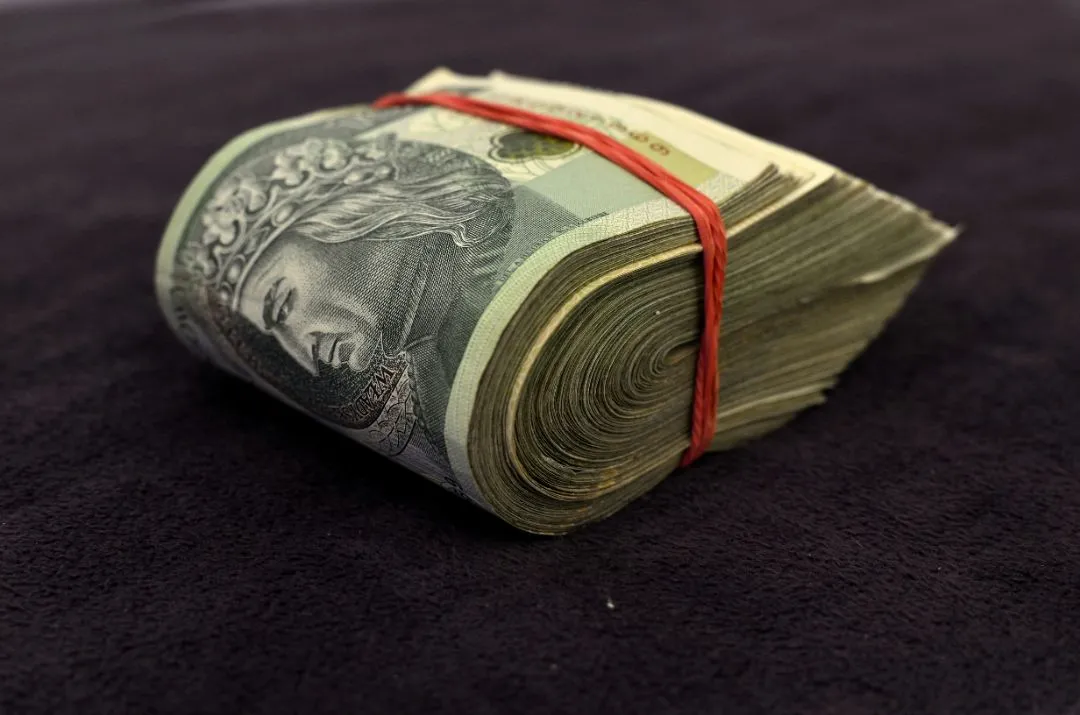
Indonesian law mandates that all transactions within the country must be conducted in the local currency, the rupiah. Individuals found using alternative currencies can face imprisonment of up to one year and fines of up to 200 million rupiah ($13,300). These regulations were initially implemented to safeguard the rupiah from the widespread use of the U.S. dollar in the country.


‘Silicon Bali’

In recent years, however, Bali has emerged as a popular destination for crypto enthusiasts, earning the moniker of ‘Silicon Bali.’ The island has witnessed the rise of cryptocurrencies, with the local crypto community even establishing physical spaces such as the clubhouse set up by Indonesian exchange Tokocrypto.

While the use of cryptocurrencies as assets is permitted in Indonesia, their use as a form of payment is strictly prohibited. The country also imposes restrictions on individuals engaging in foreign exchange business activities, requiring them to obtain permission from Bank Indonesia.

During the press conference, Governor Koster reiterated the regulations, emphasizing that violations would result in administrative sanctions, including written reprimands, fines, and prohibitions on payment transactions.

This latest announcement is part of ongoing efforts to curb negative tourist behavior on the island. Bali, heavily reliant on tourism, experienced significant setbacks due to the COVID-19 pandemic and subsequent travel restrictions. With the return of international visitors, new challenges have emerged.

Earlier this year, Governor Koster proposed a ban on tourists using motorbikes following numerous traffic violations and accidents. Concerns have also been raised regarding tourists disrespecting local traditions by posing nude in sacred sites or engaging in digital nomad activities without obtaining proper visas.


Policy struggles

The firm stance taken in Bali on cryptocurrency payments aligns with the local administration’s commitment to upholding local regulations and maintaining the stability of the national currency. However, the Governor’s response is further evidence of the struggles that centralized governments and administrations around the world have been having in understanding decentralized cryptocurrency. The default position of many centralized governments has naturally enough been to control it.

For that reason, we have seen administrations in places like India who have changed tact several times, sometimes banning crypto while at other times, permitting it. As time goes on, central administrators are beginning to realize that they can’t control it fully. They can only slow down its rate of progress at best.

Over the course of the past 26 years, the Southeast Asian country’s sovereign currency has averaged an inflation rate of 9%, peaking in 1998 at a rate of 82%. Against that background, there’s likely to be an ever-growing interest in using decentralized cryptocurrency in the country.
More to Read
View All
Web3 & Enterprise·

Jan 18, 2024

Night Crows pre-registration NFT collection sells out

South Korean gaming publisher Wemade opened sales for its “The Night is Coming” NFT collection on Jan. 11 to 12 to celebrate pre-registration for the global version of the massively multiplayer online role-playing game (MMORPG) Night Crows. All 341 NFTs were sold out, according to an official press release on Thursday (KST).Photo by Choong Deng Xiang on UnsplashUnveiling exclusive NFTsThe NFT Collection featured NFTs of different tiers, including Uncommon and Rare NFTs that went on sale on Jan. 11, as well as Epic, Legendary and Mythical NFTs that were available on NILE – short for “NFT Is Life Evolution,” a decentralized autonomous organization (DAO) and NFT marketplace on WEMIX3.0 – the next day. All NFTs were sold out within a day. Blockchain-backed fantasy gameBuilt on Unreal Engine 5, a three-dimensional computer graphics engine used for game and content development, Night Crows features high-quality graphics, an immersive world, realistic action and major in-game battles. It has topped the popularity and revenue charts on major app markets in South Korea since its launch in April last year. The global version of the game, which is scheduled for release in March, will harness blockchain technology and a multifaceted tokenomics system that tokenizes in-game items. It will also introduce character NFTs that keep character and player data in one place, connecting the game’s internal and external economies. Wemade also stated that owners of the NFTs can exchange them with CROW, the game’s native token, starting on April 1. The token’s value is stabilized by a minting process controlled by the Peg Stability Module (PSM), which allows users to swap a native stablecoin for other protocol-accepted stablecoins at a 1:1 rate.

news
Policy & Regulation·

Apr 18, 2025

Security token interest gains momentum in Korea ahead of election

South Korean brokerage firms are expanding into the security token offering (STO) space, a sector gaining attention ahead of the upcoming presidential election in June. Photo by Raymond Yeung on UnsplashDedicated STO divisionsAccording to local outlet Kukinews, major players like Mirae Asset Securities, Hana Securities and Shinhan Securities are either establishing dedicated STO divisions or partnering with tokenization platforms to stay ahead of the curve. Some are also exploring fractional investment opportunities tied to real-world assets (RWAs) such as real estate, art and music copyrights. Security tokens are blockchain-based digital assets that represent rights to real-world assets (RWAs) and, as the name suggests, are classified as securities. The financial industry is increasingly interested in this technology for its potential to accelerate digital transformation. However, trading such tokens requires a comprehensive legal framework—something that is currently lacking in Korea. Election renews STO interestSTOs have resurfaced as a key topic, with presidential candidates from both the left and right likely to include them in their campaign agendas. The renewed interest follows the ousting of President Yoon Suk-yeol earlier this month, after the Constitutional Court upheld his impeachment by the National Assembly over his declaration of martial law. Before the presidential election became imminent, legislative discussions around STOs had stalled in the National Assembly and received little attention. Among the standout moves made by presidential hopefuls, Lee Jae-myung, a primary candidate from the Democratic Party of Korea (DPK), recently added Kim Yong-jin, an STO expert and professor at Sogang University, to his policy advisory group. Meanwhile, lawmakers across party lines have introduced amendments to the Electronic Securities Act and the Capital Markets Act, aiming to establish a regulatory framework for STOs, according to the National Assembly’s National Policy Committee. This regulatory shift in political circles favoring STOs has been anticipated by the financial industry. An unnamed official from a brokerage firm predicted that presidential candidates will propose measures such as legalizing security tokens, advancing a regulatory framework for virtual asset service providers (VASPs), promoting investment in crypto-related businesses and permitting the use of stablecoins. Some observers even expect these bills to receive final approval within the year. Brokerage meets blockchainKorean securities firms' push into the STO space is further highlighted by a recent partnership between Shinhan Securities and the Solana Foundation.According to Yonhap, the two parties signed a memorandum of understanding (MOU) to collaborate on expanding the digital asset ecosystem. Their cooperation will focus on STOs, RWAs, crypto custody infrastructure, stablecoin payments for both online and offline use and responses to global policies and regulations.

news
Web3 & Enterprise·

Apr 07, 2023

Samsung Plans to Expand Its Business Through NFTs

Samsung Plans to Expand Its Business Through NFTsSamsung Research, the research arm of Samsung Electronics, set up a new task force earlier this year to launch new projects to combat slowing demand for home appliances.Photo by Markus Winkler on PexelsSamsung’s endeavors in NFTsOne of its projects will involve non-fungible tokens (NFTs), in which Samsung has been showing its continued interest. Last February, Samsung Electronics displayed NFT artworks on their high-end televisions, and more recently, the high-tech company signed a memorandum of understanding with Hana Financial Group to develop NFT-related products.TVs to offer NFT art trading functionalityIt is predicted that in the first half of this year, Samsung will release a premium television with an application that allows TV viewers to trade NFT artworks. It is analyzed that the leading hardware manufacturer now attempts to expand its business models through NFTs and other content services while maintaining its dominance in the TV market.

news
Loading