Top

Incheon City to Host Blockchain Conference Showcasing its Vision

Policy & Regulation·May 03, 2023, 7:34 AM

Incheon City will host a blockchain conference, Incheon Metanomics 2023, to showcase its vision at the Songdo Convensia Convention Center on May 9.

The event will present the city’s goal of building a blockchain ecosystem and fostering digital economy growth. About 150 blockchain experts from around the world are expected to attend, according to Block Media.


Insightful talks

Prominent industry figures, including Leon Sing Foong, the head of Asia-Pacific operations at cryptocurrency exchange Binance; Steve Park, Asia-Pacific head of public policy at online game platform Roblox; and Justin Kim, a solutions architect at semiconductor company AMD, will speak at the event. Foong will talk about the collaboration between crypto exchanges and governments, Park will provide insights into the future of the metaverse, and Kim will address upcoming trends in decentralized storage systems.

Registration for the conference is free and open until May 4 through Event Us, with a live stream of the event available on YouTube.


Incheon and Dubai

Incheon has been working towards establishing a special digital economy zone within the city by utilizing blockchain technology. In March, Incheon Mayor Yoo Jeong-bok met with Ahmed Bin Sulayem, the executive chairman of the UAE’s Dubai Multi Commodities Centre (DMCC), to discuss cooperation in the blockchain industry and digital economy.

The DMCC, a free trade zone in Dubai, hosts over 65,000 workers from more than 21,000 companies across 180 countries. Notably, the DMCC crypto center is home to a community of over 500 crypto firms, fostering the Web3 and blockchain economy.

Similarly, Incheon operates a free trade zone that connects 147 cities with populations exceeding 1 million within a three-hour flight radius. The Incheon Free Economic Zone is appealing to global blockchain companies as it offers flexible business operations for foreign entrepreneurs.
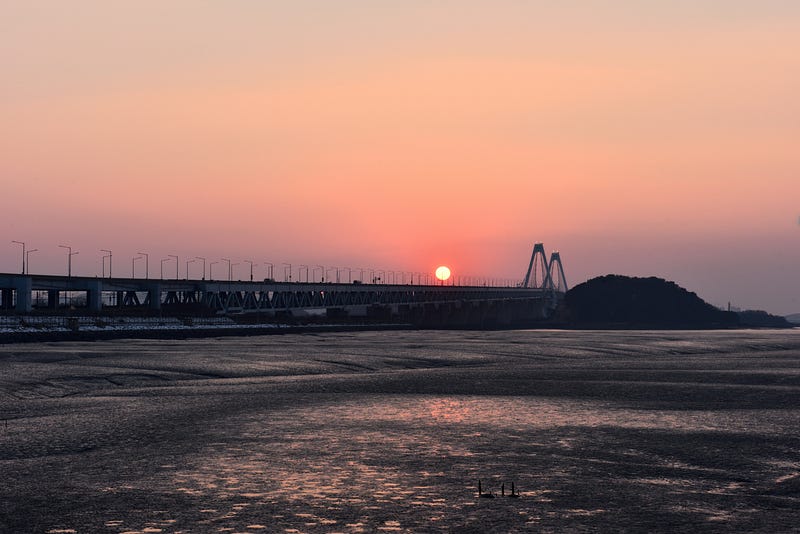

© Pexels/joon young, Park
More to Read
View All
Web3 & Enterprise·

Jun 09, 2023

Animoca Brands Expands Focus to Non-US Markets

Animoca Brands Expands Focus to Non-US MarketsHong Kong-based Web3 and blockchain unicorn, Animoca Brands, is shifting its attention to markets outside the United States following the Securities and Exchange Commission’s (SEC) classification of its $SAND token as an unregistered security.This move comes after the SEC named $SAND, along with other tokens like Solana and Polygon, in lawsuits against major exchanges Binance and Coinbase Global. The labeling of these tokens as securities by the SEC poses legal risks for companies involved in their sale.Photo by Zulian Firmansyah on UnsplashNavigating regulatory challengesAnimoca Brands, led by Co-Founder and Chairman Yat Siu, has long embraced a global approach rather than focusing solely on one territory. Siu clarified the firm’s response to the latest regulatory development to the South China Morning Post (SCMP) via email on Thursday.He emphasized that while the SEC concentrates on the US, Animoca Brands operates in more progressive jurisdictions such as Hong Kong and Japan, where $SAND is widely available and accepted. In response to the recent blockchain-hostile climate in the US, the company has proactively started emphasizing other markets, reducing its reliance on the US market and mitigating potential risks associated with regulatory actions.Exchange business impactWhile Coinbase CEO Brian Armstrong has declared that his company has no intentions of delisting tokens labeled as securities by the SEC, this decision poses challenges for other exchanges less committed to selling these tokens. Dan Gallagher, Chief Legal Compliance and Corporate Affairs Officer of Robinhood Markets, expressed concerns about listing tokens due to regulatory rules and the uncertainty surrounding tokens created by organizations outside the US.These developments could have a chilling effect on exchanges, prompting crypto firms to consider moving away from the US market due to perceived uncertainty and the associated legal risks. As a demonstration of that, in a bankruptcy court hearing on Thursday, it emerged that the FTX Debtor is talking with bidders with a view to restarting the international business but restarting the US-based business is less certain.Animoca’s Middle East ventureIn a further display of its commitment to expanding outside the US, Animoca Brands announced plans in March to make significant investments, worth tens of millions of dollars, in the Middle East. This move reflects the company’s proactive strategy to tap into non-US markets and leverage the growth potential offered by progressive jurisdictions.Animoca Brands’ decision to prioritize non-US markets and reduce its reliance on the US market aligns with its global operating approach. The SEC’s classification of $SAND as a security has prompted the company to shift its attention to more progressive jurisdictions where $SAND remains widely accessible.As other firms, including Ripple, also explore growth opportunities outside the US, the global landscape of the crypto industry is evolving. By navigating regulatory challenges and expanding into promising markets, Animoca Brands aims to position itself for continued success and mitigate potential risks associated with the SEC’s actions in the US market.

news
Markets·

Apr 13, 2023

Shapella Upgrade to Have limited Impact on ETH’s Selling Pressure

Shapella Upgrade to Have limited Impact on ETH’s Selling PressureThe Shapella upgrade on the Ethereum network scheduled to take place on Wednesday will only have a limited impact on the selling pressure on ETH, according to a report by the research center at Korean cryptocurrency exchange Korbit.©Pexels/JievaniShapella upgradeOne of the key features of the Shapella upgrade is to allow withdrawal of staked ETH. This upgrade follows September’s Merge upgrade that switched the Ethereum network’s consensus algorithm from Proof of Work to Proof of Stake, significantly reducing electricity consumption.Impact on selling pressureTo predict the impact of the Shapella upgrade on the selling pressure on ETH, the analysts at Korbit Research calculated the amount of time it takes for all the ETH staked as of March 22 to be withdrawn. They believe this calculation is relevant because withdrawals of staked ETH could trigger bulk sales, potentially imposing a greater selling pressure on ETH.According to the findings, the daily sell volume for the first three days is expected to be 300,700 ETH, 0.254% of the circulating supply. This volume will gradually decrease to 43,000 ETH for the next six months and to 29,000 ETH for the following six months, each corresponding to 0.035% and 0.024% of the circulating supply, respectively.All in all, bulk selling of ETH is not likely, considering it will take about a year and five months for all the staked ETH to be withdrawn and that the amount of withdrawable ETH will stay relatively low for each period. Furthermore, since this analysis assumes an extreme case, the market will be able to effectively handle the volume over the six month to 18 month period.4 other reasonsIn addition, Korbit Research outlined four other aspects that limit the selling pressure on ETH.Firstly, there is some concern that the selling volume of ETH may increase due to unstaking resulting from the cessation of staking services at American crypto exchange Kraken. However, a decrease in the number of validators on the Ethereum network will raise the base reward. This may prompt those who unstaked ETH to stake them on other platforms, rather than selling them.Second, ETH locked up at liquidity staking protocols such as Lido Finance and Rocket Pool provide liquidity for representations of staked ETH. These platforms allow users to stake fewer than 32 ETH for rewards. According to a February Binance Research report, 57.7% of ETH stakers enjoy liquidity and rewards. Therefore, there may be a limited impetus to divest of staked ETH.Third, since only 41.1% of ETH stakers are seeing profits as of the time of writing the report, the remaining stakers would have to risk losses when withdrawing ETH. This suggests that those not yet seeing profits are more likely to keep ETH staked. Furthermore, Dune Analytics data shows that most of the ETH stakers with gains staked ETH when its price was relatively low, which indicates that they participated in staking in early days. Shivam Sharma, the author of the aforementioned Binance report, states that these ETH stakers are likely “some of the strongest Ethereum believers.”Lastly, despite the Shapella upgrade, ETH withdrawals at different staking pools may not be initiated immediately. This could limit the circulation of withdrawable ETH, which in turn would hinder the selling pressure on ETH.Macroeconomic factorsThe Korbit researchers concluded their paper with a note that the selling pressure on ETH will be more influenced by macroeconomic factors than technical factors. They added that a possible downturn in the overall economy and corrections in risky asset markets might lead investors to sell ETH.

news
Policy & Regulation·

Apr 10, 2023

Korean Banks Look into Safer Crypto Investment Amid Wealth Management Growth

Korean Banks Look into Safer Crypto Investment Amid Wealth Management GrowthDespite growing economic uncertainties, the Korean wealth management market is expected to see growth, triggering fierce competition in the banking industry.©Pexels/Adrien OlichonWealth management growth in APACAlthough the Korean wealth management industry saw a slowdown in its growth last year amid burgeoning economic concerns, the banking industry expects recovery in the future. Management consulting firm Oliver Wyman forecast that the Asia-Pacific wealth management industry will experience a compound annual growth rate of 5.4% until 2026. Against this backdrop, Korean banks are focusing on improving their wealth management capabilities.Crypto-inclusive wealth management trendShim Hyun-jung, a researcher at Woori Finance Research Institute, said that following the global trend, the Korean wealth management industry will need to diversify its target customer groups, adding that banks have to devise phased strategies and deploy them while closely monitoring the domestic crypto market.Previously, several global consulting firms mentioned the following as this year’s asset management trend: Customer segment diversification, growing demand for asset transfer and withdrawal, digital asset management with better human interaction, more investment in environmental, social, and governance (ESG) projects, and advancement in virtual asset security and service technology.

news
Loading