Top

OKX NFT Marketplace hits the front on trading volume

Web3 & Enterprise·December 19, 2023, 2:19 AM

In the non-fungible token (NFT) space, OKX’s NFT marketplace has emerged as the leader in daily trading volume, surpassing long-standing frontrunners such as OpenSea, Blur and Magic Eden.

According to data from decentralized applications (DApp) tracker DappRadar, on Dec. 18, the OKX NFT Marketplace had recorded a 24-hour trading volume of $50 million. In more recent trading, that has reduced to around $35 million. Nevertheless, it maintains its lead over its main competitors, whose combined 24-hour trading volume stands at approximately $24 million.
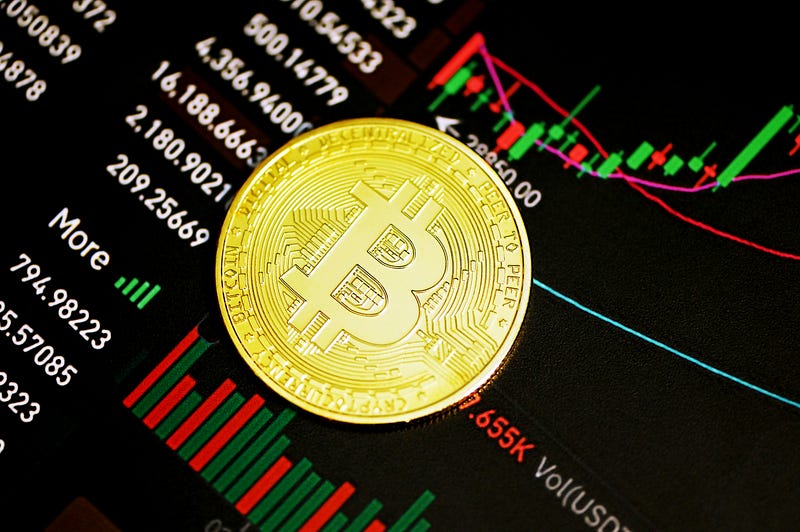
Photo by Kanchanara on Unsplash


Ordinals driving volume uptick

The surge in trading volume can be attributed to OKX’s support for Bitcoin Ordinals NFTs and BRC-20 tokens. Notably, the NFT transaction volume on Bitcoin experienced a substantial increase, reaching $121.8 million between Dec. 10 and Dec. 17.

Unlike traditional NFTs, Ordinals do not rely on smart contracts pointing to a digital asset. Described as digital artifacts by developer Casey Rodarmor, they lack smart contract features, making their trading reliant on decentralized exchanges and wallets.

The Ordinals protocol has been made possible by the Bitcoin Taproot upgrade, which was implemented in November 2021. The upgrade allows digital files to be inscribed on satoshis, the smallest monetary denomination on the Bitcoin network, each with a unique number or ordinal.


Strategic focus on BRC-20

The OKX NFT Marketplace’s strategic focus on the BRC-20 token standard has also played a role in its success. Collaborating with UniSat, a developer of Ordinals wallets, OKX created an indexing mechanism for BRC-20 transactions built on ordinal inscriptions, further solidifying its position in the market.

The Ordinals protocol has not been without controversy, with some, including Adam Back, CEO of Blockstream, criticizing it as a misuse of Bitcoin transaction blockspace. Despite the controversy, Ordinals have gained momentum, contributing to $367 million in sales volume on the Bitcoin network, surpassing Ethereum and Solana.

Ordinals and the BRC-20 standard have generally been a boon for Bitcoin miners, boosting their revenues through increased fees. This incentivizes miners to secure the network. Over 49 million transactions have resulted in over 2,250 BTC in transaction fees. Around 6 p.m. UTC on Monday, bitcoin fees are averaging out at $38.43 per transaction.

Beyond Bitcoin Ordinals, the broader NFT space has seen a resurgence, with the collective volume nearing $1 billion in November. During that month, the average value of NFT transactions experienced a notable 114% increase, rising from $126 to $270. This suggests a willingness among users to engage in higher-value trades compared to previous months.

Speaking with The Block, Nick Ruck, COO of ContentFi Labs, a community-owned Web3 tool suite, had this to say on the development:

“OKX has become the number one NFT marketplace after enabling trading of BTC Ordinals NFTs. Blur and OpenSea have not yet allowed trading of these Bitcoin-based NFTs, so they’ve started to fall behind in terms of volume due to the huge demand of Ordinals.”


More to Read
View All
Policy & Regulation·

Dec 07, 2023

Korea Exchange sets the stage for security token trading

Korea Exchange sets the stage for security token tradingStarting next year, South Koreans may have the opportunity to trade security tokens, as the Korea Exchange (KRX), the sole securities exchange operator in the country, has officially begun preparations to establish a security token market. The Busan Digital Asset Exchange (BDX), slated for launch next year, is expected to play a pivotal role in spearheading the growth and development of this emerging security token market.Photo by Tierra Mallorca on UnsplashSeeking approval from financial regulatorsAs reported by local news outlet Busan Ilbo, KRX applied to the FSC last month for registration as an innovative financial service under the financial regulatory sandbox scheme. On Nov. 19, the FSC approved the creation of pilot markets for investment contract securities and non-cash trust beneficial certificates. KRX’s recent initiative is a follow-up to this development. The financial regulator is set to make a final decision after holding a main committee meeting to review KRX’s application.Investment contract securities and non-cash trust beneficial certificates represent two distinct types of security tokens. Investment contract securities provide a means for fractional investments in real-world assets (RWAs). This can include a diverse range of assets such as artworks, music copyrights, beef and carbon credits, allowing investors to own a portion of these assets. On the other hand, non-cash trust beneficial certificates function as secondary investment instruments. These certificates enable individuals to invest in financial products that themselves have invested in security tokens, offering an indirect pathway to participate in the security token market.Fractional investments on the horizonVarious industries are poised to benefit from the emerging digital market, especially platforms focused on fractional investment in artworks. Companies like Yeolmae Company, Art Together and Seoul Auction Blue are keen on this opportunity and have applied to the FSS for permission to register security tokens. Upon receiving regulatory approval, these platforms plan to accept subscription requests, enabling investors to participate in the art market in a more accessible way.The development of security token markets is expected to positively impact BDX, which is currently seeking an operator. Initially, when BDX’s operation plan was unveiled in September, it excluded security tokens due to regulatory constraints. However, with KRX now involved, it’s more probable that the Busan exchange will feature security tokens as major trading assets. Experts believe the success of these token exchanges will largely depend on the quality and appeal of the underlying assets.A local securities industry official emphasized the significant role of the security token market in enhancing the stature of Busan as a blockchain hub. The growth of this market is seen as pivotal in boosting the value and utility of BDX. The official noted that BDX’s appeal to investors would increase if it offered a diverse range of underlying assets or unique security tokens. This development could mark a significant turning point for Busan in the blockchain industry.

news
Web3 & Enterprise·

Aug 23, 2023

Upbit Launches “Experimental Lab” for Users to View Investment Performance

Upbit Launches “Experimental Lab” for Users to View Investment PerformanceDunamu, the fintech company operating South Korea’s leading crypto exchange Upbit, announced on Wednesday that Upbit has added a new feature called the Experimental Lab, which allows users to try out new functions before their official release.“Through the Experimental Lab, we will progressively introduce various features and actively gather user feedback to enhance our service experience,” the exchange said.Photo by Gilles Lambert on UnsplashEmpowering insightful investmentThe first feature unveiled through the Experimental Lab allows users to view the statistics of their investment performance — in other words, their profits and losses — for any given timeframe, all in one place. This includes cumulative return rates, the average amount of money they invested, and more. This is one of the most frequently requested updates, according to the exchange.The feature also provides information on three types of returns: simple return rate, time-weighted return rate, and money-weighted return rate.Simple return rate calculates the actual gains and losses relative to a user’s initial investment amount. Time-weighted return rate calculates an account’s performance over a specific period while ignoring the effects of external cash flows, such as timing and size. On the other hand, money-weighted return rate calculates investment performance while factoring in changes in external cash flows.Users interested in trying out Experimental Lab can find it in the “More” tab on the Upbit mobile app or the “My” tab on the PC site located at the bottom right corner of the page.Customer-centered philosophyThis move aligns with Upbit’s commitment to providing a better service experience by incorporating user feedback into their feature development and updating processes.

news
Web3 & Enterprise·

Sep 08, 2023

Saudi Arabia Looks to Diversify Through Web3

Saudi Arabia Looks to Diversify Through Web3Saudi Arabia is intensifying its efforts to diversify its economy as part of its ambitious Vision 2030 initiative. In a move away from its traditional reliance on oil, the kingdom is embracing cutting-edge technologies like blockchain and artificial intelligence (AI) and is delving into the burgeoning gaming industry.That’s the view of Animoca Brands Co-Founder Yat Siu, who, in a recent interview with Cointelegraph, highlighted Saudi Arabia’s keen interest in Web3, emphasizing the country’s partnerships with entities like The Sandbox and Animoca itself.Photo by Hala AlGhanim on UnsplashDriving gaming growthSiu believes that Saudi Arabia is making a concerted effort to explore the possibilities of the new iteration of the internet, particularly in the realm of Web3 gaming and blockchain gaming, where asset ownership is verified on the blockchain. He stated:“I think Saudi [Arabia] understands the principle that Web3 gaming or blockchain gaming — the one that we actually prove the owner assets — is going to be the future of gaming.”While Saudi Arabia has yet to make a significant global impact in game and AI development, experts in the emerging field of Web3 believe that the kingdom’s investments in gaming could have far-reaching implications.The Boston Consulting Group reported that Saudi Arabia accounts for 45% of the region’s gaming sector, with a total value exceeding $1.8 billion. It also boasts one of the highest game revenues in the area, according to Ireland-based gaming content creator, Allcorrect.$38 billion gaming fundSiu is not the only one to believe in the efficacy of Saudi’s Web3 efforts. Poland-based Web3 gaming platform GameSwift also articulated a similar view recently. In a tweet thread published last month, the firm acknowledged the $38 billion gaming fund launched by the Saudi royal family.That initiative involves a Gaming Hub, the first incubator for esports in the world. The objective of the hub is to empower early-stage studios and provide an accelerator program for their growth, with direct investment going to top ten studios.Cryptocurrency uncertaintyDespite its understanding of the high-level concept of Web3, Saudi Arabia faces uncertainties regarding the integration of cryptocurrencies and virtual assets into gaming due to the absence of clear regulations. Siu explained that while Saudi Arabia is proactive in investigating cryptocurrencies, other regions like Hong Kong, Japan, and the United Arab Emirates (UAE) offer more clarity on what can be done with crypto and Web3.Siu noted that Saudi Arabia is actively seeking information on best practices and strategies from experts like Animoca. To encourage Web3 adoption, financial literacy is key, according to Siu.He emphasized that users must have a certain level of financial literacy to fully embrace Web3, as it goes beyond traditional banking. Understanding the potential value of digital assets and their network effects is crucial for Web3 users.Saudi Arabia is not the only Gulf nation to pivot to Web3. Oman is looking to do likewise based on similar rationale — to diversify away from an oil-based economy. The UAE is also actively working towards creating the right conditions to nurture Web3 startup businesses.

news
Loading