Top

Regulator lifts investment cap for real estate-backed tokens in Thailand

Policy & Regulation·January 20, 2024, 12:03 AM

The Securities and Exchange Commission (SEC) in Thailand has made a significant adjustment to the rules governing digital token investments. The SEC has decided to eliminate the investment ceiling previously imposed on retail investors participating in initial coin offerings (ICOs) tied to real estate and infrastructure.

https://asset.coinness.com/en/news/8fcb901a1ac0cdd45f88b9e92664757b.webp
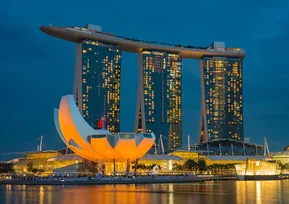
Photo by Colton Duke on Unsplash

Fostering digital economy growth and development

The announcement, specifying the revised criteria, was officially published in the Royal Gazette, with the measure taking effect on Tuesday. This move allows retail investors greater access to ICOs involving tokens backed by real estate or linked to real estate revenues.


The SEC emphasized that, in addition to ensuring appropriate investor protection, its role extends to encouraging the utilization of technology and innovation in fundraising. The objective is to foster sustainable growth in the capital market and support the development of the digital economy.


Prior to this adjustment, retail investors faced a restriction of a 300,000 baht ($8,450) investment limit per offering concerning digital tokens backed by infrastructure or real estate. The SEC's decision to remove this limitation aligns with the goal of managing product risks effectively while promoting a more inclusive environment for retail investors in the realm of digital token investments.


Facilitating custodial wallets

Furthermore, the SEC is currently undertaking a review of criteria to facilitate the establishment of custodial wallet provider businesses for digital asset operators with common major shareholders. This initiative aims to enhance the regulatory framework and provide guidelines for businesses involved in digital asset storage. Custodial wallets will be permitted in Thailand if operated by publicly traded companies with experience in digital asset storage.


All Thai citizens will have a touch point with digital wallets shortly under a government program, a $14 billion digital handout scheme, which has been approved to distribute digital currency to the public through digital wallets.


DASP approvals

As part of its supervisory role, the SEC will also be responsible for granting permissions to digital asset service providers (DASPs) to expand into new business lines. Digital asset operators seeking to diversify their operations are required to obtain approval from the SEC before proceeding. This measure is intended to ensure the effective oversight of such businesses and maintain the credibility of the digital asset industry by preventing illegal operations.


It’s likely no coincidence that tokenized real estate is being embraced in Thailand, given the background of Thailand’s recently installed Prime Minister, Srettha Thavisin. In 2021, Thavisin’s company played a role in funding crypto-friendly investment management firm XSpring Capital to the tune of $225 million. His firm also introduced a real estate-backed ICO in conjunction with XSpring.


While Thailand’s SEC is moving forward with tokenized real estate, it doesn’t feel the same way about exchange-traded funds (ETFs). In the wake of the recent approval of spot bitcoin ETFs in the United States, the Thai SEC responded by stating that it currently has no plans to allow asset managers to launch similar products within the Thai market.

 

More to Read
View All
Policy & Regulation·

Sep 05, 2023

Singapore Elects Crypto Skeptic as President

Singapore Elects Crypto Skeptic as PresidentGarnering 70.4% of all votes cast on Saturday, Singaporeans chose to elect Tharman Shanmugaratnam as their next president, a move that may have implications for Singapore’s outlook when it comes to digital assets.While many had hoped that he would be the nation’s first non-Chinese prime minister, the crypto industry has greeted his rise to this largely ceremonial role with mixed feelings. Shanmugaratnam’s previous stances on cryptocurrency and digital assets have been predominantly critical.Photo by Justin Lim on UnsplashFormer MAS ChairmanIn the past, the president-elect has referred to cryptocurrency as “slightly crazy” and “purely speculative.” His ascent to the presidency comes after a distinguished career that includes serving as the former finance minister, deputy prime minister, and chairman of the Monetary Authority of Singapore (MAS), the country’s central bank, from 2011 to 2023.Crypto platform collapsesIt was during his tenure at MAS that two prominent crypto companies, Three Arrows Capital (3AC) and Terraform Labs, faced catastrophic collapses.The demise of Terraform Labs, along with its TerraUSD (UST) stablecoin, triggered a severe “crypto winter” in May 2022, from which the industry is still struggling to recover. This downfall wiped out a staggering $500 billion in value over just two weeks, devastating the portfolios of numerous retail investors.The ripple effect of TerraUSD’s fall also engulfed 3AC, a significant cryptocurrency hedge fund headquartered in Singapore. The contagion spread across the cryptocurrency market, leading to the downfall of other major entities like crypto lending platforms Celsius Network and Voyager Digital, alongside Singapore-based Hodlnaut.Given that these catastrophic events unfolded during Shanmugaratnam’s tenure at MAS, it’s plausible that he bore the brunt of the consequences. That might explain why in speaking on the subject in 2021, he appeared to be more accommodative, suggesting that there may be a useful role that crypto could play and highlighting that Singapore had allowed crypto businesses to develop within the city-state.In June of last year, MAS reprimanded 3AC for providing misleading information and exceeding the allowed assets under management (AUM) threshold, thereby breaching its status as a registered fund management company.In January, Shanmugaratnam said that regulating the crypto sector would give credibility to speculation and on that basis, it would be best to leave it unregulated. He went on to suggest that crypto should be subject to existing regulation as laid down for traditional finance.Early stage concernsBack in 2018, when he was Singapore’s finance minister, Shanmugaratnam questioned the wisdom of broad regulation potentially legitimizing a speculative and “slightly crazy” market. During the 2018 World Economic Forum, he emphasized the importance of anti-money laundering measures and advocated for educating consumers about the risks inherent in the unregulated crypto sector.Although he acknowledged blockchain’s potential to enhance global payment systems, Shanmugaratnam favored integrating existing traditional payment mechanisms as an alternative to blockchain innovations.Singapore’s new president brings with him a history of skepticism towards cryptocurrency and digital assets. However, with a largely ceremonial role relative to day-to-day governance, he’s not in a position to take direct action that could hold the sector back although he will have the power to initiate corruption investigations upon the advice of the Singaporean cabinet.

news
Web3 & Enterprise·

Jul 17, 2023

Blockchain Firm NEOPLY Rebrands as Neowiz Partners to Focus on Investment

Blockchain Firm NEOPLY Rebrands as Neowiz Partners to Focus on InvestmentNeowiz Holdings, a South Korean investment holding company, announced today that its blockchain subsidiary NEOPLY held an extraordinary general meeting of shareholders and rebranded itself as Neowiz Partners, according to local news outlet News1. Upon this name change, the company will participate as a liquidity provider in the industry through strategic partnerships with investment firms such as venture capital firms and private equity funds.Photo by Precondo CA on UnsplashAbu Dhabi’s supportEarlier, it was revealed that Neowiz Partners became a part of the Innovation Programme offered by the Abu Dhabi Investment Office (ADIO) in the United Arab Emirates (UAE). This program offers incentives to various businesses operating in high-growth areas like financial services and technology.Diverse portfolioUnder its new name, Neowiz Partners aims to build a diverse portfolio of investments in promising companies committed to emerging technologies such as artificial intelligence (AI) and robotics. This strategic move is intended to foster future growth and seize the potential offered by these innovative sectors.Neowiz Partners’ global headquarters, known as H-Lab, located in the Abu Dhabi Global Market (ADGM), will oversee investment and management related to its blockchain businesses. Meanwhile, the operations of these blockchain projects will continue to be managed by NEOPIN, a subsidiary of H-Lab and a CeDeFi protocol that operates as a one-stop solution for those seeking a non-custodial wallet.Earlier reports highlighted NEOPIN’s achievement in launching Korea’s first liquid staking products for ETH. This approach enables users to deposit their cryptocurrencies into a staking pool and receive liquidity provider tokens in return. These tokens can then be deposited again to generate additional yields.On the occasion of this renaming, Neowiz Partners will establish itself as a dedicated investment company, while H-Lab will concentrate on serving the blockchain industry and associated ventures.

news
Web3 & Enterprise·

Nov 24, 2023

Samil PwC seminar informs companies about crypto accounting amid shifting Korean regulations

Samil PwC seminar informs companies about crypto accounting amid shifting Korean regulationsWith the South Korean government anticipated to finalize a plan aimed at enhancing cryptocurrency transparency within this year, companies are preparing to swiftly respond to the changing accounting landscape.A seminar held on Thursday (local time) in Seoul by Samil PwC, the Korean member firm of the London-headquartered accounting firm PricewaterhouseCoopers, exemplifies these efforts. This meeting featured presentations from Samil staff, focusing on the implications of the new upcoming crypto accounting guidelines for businesses and exploring strategies for effective response.Photo by Kelly Sikkema on UnsplashGovt to soon finalize crypto accounting guidelinesDuring the meeting, an official from Samil PwC said that the Virtual Asset User Protection Act is set to be implemented next July. The accounting expert also noted that the Financial Services Commission’s guidelines on virtual asset accounting and the requirement for disclosing virtual assets in financial statement annotations, issued this July, are expected to be finalized shortly.From accounting to internal controlsAs the first speaker of the seminar, Lee Seung-wook, Partner at Samil PwC, delivered a presentation on the management of cryptocurrency accounting and the disclosure of cryptocurrency holdings within financial statement annotations. Lee classified companies into three categories: crypto issuers, crypto holders or investors and companies operating crypto businesses. He provided detailed guidance on what each category of companies should consider in their approach to managing and disclosing virtual assets.In particular, Lee drew attention by clearly explaining the accounting approaches companies should adopt in various scenarios, such as when offering cryptocurrency as an incentive to employees or airdropping cryptocurrency to customers for marketing purposes.Following this, Partner Jo Sung-jae delved into enhancing internal controls related to virtual assets. Drawing from PwC’s own framework, he presented practical methods to mitigate risks associated with cryptocurrencies, such as the loss of private keys, vault breaches and embezzlement.The seminar also covered the topic of Information Technology General Controls (ITGCs). Partner Lee Jeong-mi made a comparison between ITGCs in traditional business environments and those specific to the cryptocurrency industry, highlighting the unique considerations that crypto businesses need to be aware of. Furthermore, Managing Director Lee Eun-young discussed the tax implications related to cryptocurrency.Anticipation of uncertainty reductionLee Jae-hyuk, who oversees the cryptocurrency division at PwC and served as the overall manager of the seminar, expressed optimism that the government-led guidelines would reduce the uncertainty surrounding cryptocurrency accounting. He also conveyed his hope that the seminar would provide attendees with the opportunity to consider the influence of digital assets on corporate accounting, internal controls and tax implications, as well as their potential impact on future industry trends.Samil PwC stands out as one of the first Korean accounting firms to establish a dedicated blockchain division within its Digital Innovation Lab, incorporating a team of developers. Leveraging its accumulated expertise in this field, Samil PwC offers a broad range of services, including internal controls consultations, accounting audits, financial advice and tax filing. Further emphasizing its commitment to the evolving field of cryptocurrency, in June of this year, Samil PwC collaborated with the Korean Accounting Association (KAA) to conduct research focused on cryptocurrency accounting.

news
Loading