Top

Floki Inu acts in response to Hong Kong SFC's warning

Policy & Regulation·February 01, 2024, 2:58 AM

Meme coin project Floki Inu has implemented restrictions on users in Hong Kong from accessing its staking programs following a warning from the Hong Kong Securities and Futures Commission (SFC).


Last week, the regulatory body labeled Floki's staking initiatives as "suspicious investment products'' and urged caution among investors. On Jan. 26, it specifically cautioned Hong Kong users about the Floki and TokenFi staking programs, emphasizing the promised annualized returns ranging from 30% to over 100%. The Commission expressed concern over investment products that make claims of returns deemed "too good to be true."

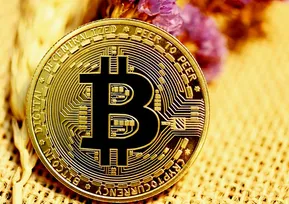
https://asset.coinness.com/en/news/8d495d24d2d0ebd08fb6d223491a65ba.webp
Photo by Jie Yeu Teoh on Unsplash

Staking program access block in Hong Kong

Responding to the SFC's warning, Floki Inu took proactive steps to prevent users in Hong Kong from participating in its staking programs. In an official blog post which was published on Tuesday, the project's team announced the implementation of "practical measures" to block Hong Kong-based users from joining the staking programs. Additionally, prominent warnings have been placed on the Floki and TokenFi staking websites, clearly stating the ineligibility of Hong Kong users to participate.


The SFC emphasized that neither of the mentioned investment products holds authorization in Hong Kong, warning that unauthorized schemes provide limited to no protection under its Securities and Futures Ordinance (SFO). Investors engaging in such unauthorized schemes may face the risk of losing their entire investments.


Addressing regulatory concerns

Floki Inu's team has responded to the regulatory concerns by actively collaborating with legal advisers to address potential regulatory issues associated with the staking project. The team committed to responsible community practices, while affirming its dedication to implementing measures to prevent Hong Kong users from participating in the staking program until regulatory concerns are resolved.


As of Jan. 29, there is no record of Hong Kong users joining the staking programs, according to the Floki team. Furthermore, the team revealed that offline marketing activities in Hong Kong had already been halted before the project's launch in December 2023.


Clarifying high yield

Addressing the SFC's primary concern regarding the high annual percentage yield (APY), the Floki team provided explanations. They clarified that the rewards are subject to volatility influenced by market dynamics and the value of staking rewards may fluctuate based on the market valuation of the token rewards.


The team attributed the high APY for its staking programs to the allocation of the majority of TokenFi's token supply to token stakers, highlighting that the project had not raised venture capital funds or conducted a presale. They noted that market forces beyond their control had significantly increased the TokenFi price from its initial market cap at launch.


In response to potential user confusion, the Floki team emphasized the complete decentralization of the staking programs for Floki and TokenFi, assuring users of a clear understanding of how the programs operate. They concluded by expressing their commitment to ongoing collaboration with regulatory bodies to ensure compliance and foster a responsible and transparent environment for users.


Community response has been largely positive with one crypto influencer claiming:


“You will not find a more legit team in #Crypto than $FLOKI. I’ve known about them for years and everyday they continue to handle themselves in the most informative, structured, and professional way.”



More to Read
View All
Policy & Regulation·

Nov 27, 2025

Japanese financial watchdog pushes new reserve rules for crypto exchanges 

Japan plans to require cryptocurrency exchanges to maintain reserves to cover potential losses from hacking incidents, according to a Nov. 24 Nikkei report cited by local outlet New Economy. The measure is designed to ensure that service providers can compensate users in the event of a breach. Authorities are expected to set the reserve level after reviewing past hacking cases and examining how much traditional securities firms set aside. While crypto exchanges are currently required to store customer assets in cold wallets, they are not obligated to maintain any dedicated pool of funds for compensating losses, and the proposed framework is intended to close that gap.Photo by Jen Titus on UnsplashReserve rules mirroring brokerage standardsThe Financial System Council, which operates under the Financial Services Agency (FSA), will finalize a report on the proposal and draft a bill for submission to next year’s regular Diet session. The legislation would amend the Financial Instruments and Exchange Act (FIEA). The FSA is turning to the FIEA because the reserve framework is modeled on existing rules for securities companies, which must maintain designated reserves to compensate clients for losses stemming from errors or other improper activities. These measures follow earlier reports that similar requirements are being considered for third-party custody providers that hold crypto assets on behalf of exchanges. These external custodians have not been directly overseen, but the FSA now plans to require them to report their activities in advance. The push to reinforce customer protections comes as Japan’s crypto market continues to expand. In a sign of that growth, mobile payment platform PayPay last week enabled transfers between PayPay Money balances and Binance Japan. The new feature allows deposits from 1,000 yen, with limits of 1 million yen per 24 hours and 2 million yen per 30 days. Until now, funding or withdrawing from Binance Japan’s spot trading services was limited to yen bank transfers or transactions through external exchanges and wallets. Accumulation grows amid market pullbackJapanese companies have also continued to accumulate Bitcoin. According to Decrypt, Metaplanet, a former hotel operator that now positions itself as a Bitcoin treasury firm, said on Nov. 25 that it plans to use its Bitcoin holdings as collateral for a $130 million loan to purchase additional Bitcoin. The Tokyo Stock Exchange-listed firm currently holds 30,823 BTC and aims to expand its position to 210,000 BTC by 2027. Another publicly traded company, nail-salon operator Convano, has taken a similar approach, recently adding 97.67 BTC to bring its total to 762.67 BTC, according to BitcoinTreasuries.NET. This accumulation has continued despite Bitcoin’s recent decline. The cryptocurrency has fallen nearly 20% over the past month and is now trading just below $92,000. Citing analysis from 10x Research CEO Markus Thielen and Nansen research analyst Nicolai Søndergaard, Yonhap Infomax pointed to several factors behind the pullback. Thielen highlighted $3.5 billion in outflows from spot Bitcoin ETFs this month and roughly $800 million in stablecoins leaving the market. Søndergaard noted that long-term holders have been selling, adding that such activity has historically appeared early in Bitcoin’s four-year market cycle. Bitcoin’s most recent halving occurred on April 20, 2024, roughly 19 months ago. Market watches upcoming policy movesFrom a broader macro perspective, Reuters reported that the Bank of Japan (BOJ) could raise interest rates as early as next month amid pressure from a weakening yen. The timing remains uncertain, with the decision seen as hinging in part on the U.S. Federal Reserve, which sets policy one week before the BOJ. According to CME Group’s FedWatch Tool, markets currently assign an 84.9% chance of a 25-basis-point Fed rate cut in December. A Fed hold or a more hawkish tone could lift the dollar, further weaken the yen, and increase pressure on the BOJ to act sooner. A Fed cut, by contrast, could ease that pressure but raise questions about the U.S. outlook and the trajectory of future BOJ hikes. Monetary decisions in the coming weeks are expected to influence crypto markets, as lower interest rates generally support demand for risk assets such as Bitcoin. With both the Fed and the BOJ poised to set policy in December, market participants are watching for how shifts in liquidity and currency moves could shape the next phase of digital asset prices. 

news
Web3 & Enterprise·

Jun 09, 2023

OKX Burns $244M $OKB in Record Exchange Token Supply Cut

OKX Burns $244M $OKB in Record Exchange Token Supply CutSeychelles-headquartered OKX, the world’s second largest cryptocurrency exchange, has conducted its largest-ever burn of its exchange token, $OKB, according to on-chain data.Approximately 5.5 million OKB tokens, equivalent to around $244 million, were removed from circulation. This record-breaking burn represents a significant milestone for OKX, surpassing the previous burns conducted since the monthly program’s inception.The burn was valued at approximately $258 million when calculated based on a 90-day average price, as reported by OKX. Chinese reporter Colin Wu highlighted that this burn marked another significant milestone in terms of the value of OKB tokens burned.Taking to Twitter on Thursday, Wu wrote: “The OKX exchange carried out the 20th OKB repurchase and burning on June 8, with a total of about 5.5 million OKB, or about 244 million US dollars, which once again set a new record for the value of OKB burning. OKX previously stated that it will burn OKX according to the seasonal market and operating performance, but has not disclosed the specific rules.”Photo by Jens Mahnke on PexelsBuy-Back & Burn program$OKB is described by OKX as a “global utility token issued by the OKX Blockchain Foundation,” offering holders various benefits such as discounts and exclusive access. The global exchange initiated the first Buy-Back & Burn program in May 2019. Since then, it has burned a total of 64,042,314.70 tokens as part of that ongoing burning process. Despite this significant development, the price of OKB has remained relatively stable, experiencing a slight increase of 0.29% on OKX. At the time of publication, the token was trading at a unit price of $44.97.Exchange token concernExchange tokens have recently garnered attention following the United States Securities and Exchange Commission’s (SEC) lawsuit against global crypto exchange Binance. The SEC has levied charges related to the sale of unregistered securities, resulting in a steep decline of nearly 15% in the value of Binance’s exchange token, BNB, over the past week.That scrutiny is likely to have followed the collapse of Bahamas-based cryptocurrency exchange FTX in November. At that time, it became apparent that the exchange was using its exchange token, $FTT, to prop up the business. FTX had issued $FTT tokens and used them as collateral, a dangerous act given that exchange tokens have no real-world asset backing and limited token utility.As the crypto market continues to face regulatory scrutiny and legal challenges, the burn of $OKB by OKX stands as a noteworthy event within the industry. The burn not only reduces the supply of $OKB tokens but also underscores OKX’s commitment to managing and enhancing the value of its exchange token. Market participants will undoubtedly monitor the implications of this burn and how it may influence OKB’s future performance in the evolving cryptocurrency landscape.Exchanges like OKX are likely to carefully manage the supply levels of exchange tokens, given market perceptions in relation to the extent of the utility of such tokens, the scrutiny of regulators, and the problems caused in over-extending supply in the case of other exchanges in the past.

news
Markets·

Oct 25, 2023

Korean Crypto Market Outpaces Stock Exchange Amid Bitcoin ETF Optimism

Korean Crypto Market Outpaces Stock Exchange Amid Bitcoin ETF OptimismThe anticipation is building around the potential approval of BlackRock’s Bitcoin exchange-traded fund (ETF) in the United States. As the world’s largest asset manager is anticipated to obtain a green light, Bitcoin’s price has surged by more than 17% just this week, capturing the keen interest of investors.Photo by Kanchanara on UnsplashCrypto surpassing stocks in daily trading volumeIt’s worth highlighting the surge in the Korean cryptocurrency market, where the daily trading volume has recently eclipsed that of the Korean Composite Stock Price Index (KOSPI).According to local news outlet Maeil Business Newspaper, on October 24, KOSPI recorded a trading volume of KRW 7.83 trillion ($5.8 billion). Yet, in a 24-hour span from 9 a.m. (KST) on October 23 to 9 a.m. on October 24, the combined trading volume of the top five Korean cryptocurrency exchanges reached KRW 8.44 trillion.Breaking it down by exchange, Upbit had a 24-hour trading volume of KRW 6.97 trillion, followed by Bithumb with KRW 1.36 trillion, Coinone with KRW 87.6 billion, Korbit with KRW 18.8 billion, and Gopax with KRW 2.2 billion.Retail investors leaving the stock marketThe surge in the Korean crypto market is largely due to retail investors shifting their focus away from the Korean stock market. This move comes in response to challenges the stock market has been grappling with, such as monetary tightening in the US and increased volatility stemming from the Israel-Hamas war.

news
Loading