Top

Japanese financial watchdog pushes new reserve rules for crypto exchanges 

Policy & Regulation·November 27, 2025, 7:25 AM

Japan plans to require cryptocurrency exchanges to maintain reserves to cover potential losses from hacking incidents, according to a Nov. 24 Nikkei report cited by local outlet New Economy. The measure is designed to ensure that service providers can compensate users in the event of a breach.


Authorities are expected to set the reserve level after reviewing past hacking cases and examining how much traditional securities firms set aside. While crypto exchanges are currently required to store customer assets in cold wallets, they are not obligated to maintain any dedicated pool of funds for compensating losses, and the proposed framework is intended to close that gap.
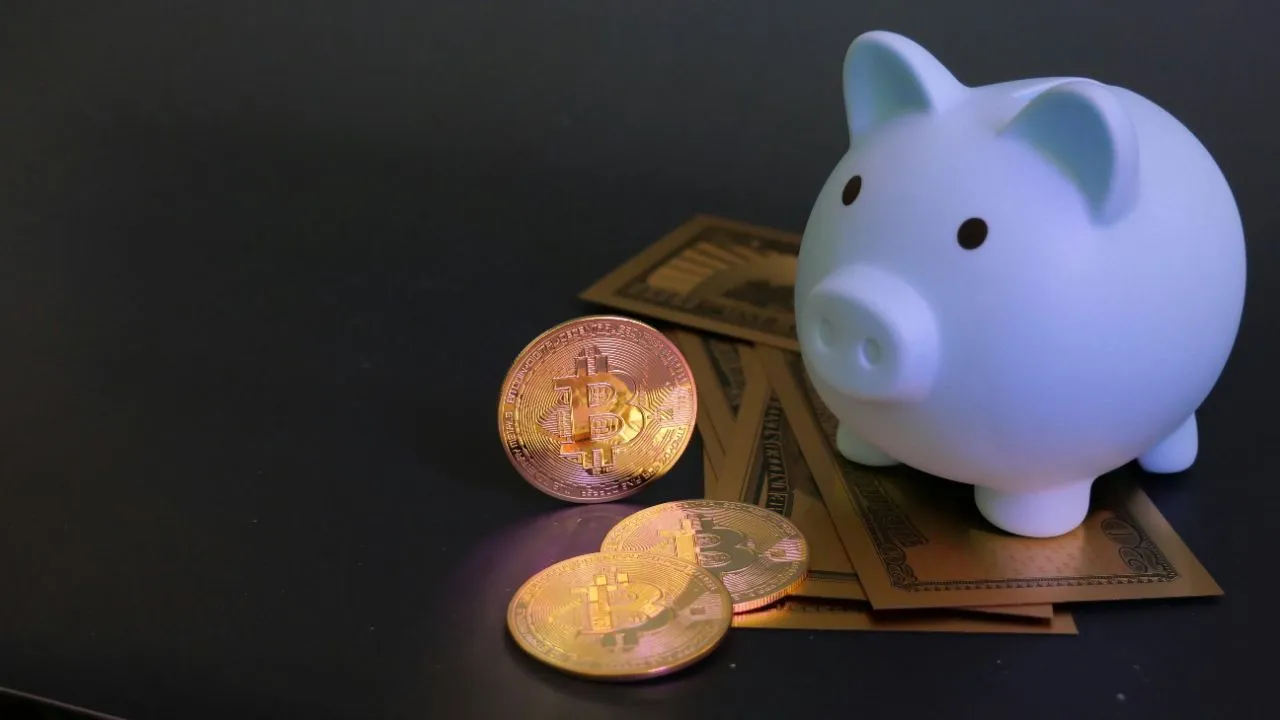
https://asset.coinness.com/en/news/7e721f8cc9c9f5d7bd7f0bc9d1afaaf0.webp
Photo by Jen Titus on Unsplash

Reserve rules mirroring brokerage standards

The Financial System Council, which operates under the Financial Services Agency (FSA), will finalize a report on the proposal and draft a bill for submission to next year’s regular Diet session. The legislation would amend the Financial Instruments and Exchange Act (FIEA). The FSA is turning to the FIEA because the reserve framework is modeled on existing rules for securities companies, which must maintain designated reserves to compensate clients for losses stemming from errors or other improper activities.


These measures follow earlier reports that similar requirements are being considered for third-party custody providers that hold crypto assets on behalf of exchanges. These external custodians have not been directly overseen, but the FSA now plans to require them to report their activities in advance.


The push to reinforce customer protections comes as Japan’s crypto market continues to expand. In a sign of that growth, mobile payment platform PayPay last week enabled transfers between PayPay Money balances and Binance Japan. The new feature allows deposits from 1,000 yen, with limits of 1 million yen per 24 hours and 2 million yen per 30 days. Until now, funding or withdrawing from Binance Japan’s spot trading services was limited to yen bank transfers or transactions through external exchanges and wallets.


Accumulation grows amid market pullback

Japanese companies have also continued to accumulate Bitcoin. According to Decrypt, Metaplanet, a former hotel operator that now positions itself as a Bitcoin treasury firm, said on Nov. 25 that it plans to use its Bitcoin holdings as collateral for a $130 million loan to purchase additional Bitcoin. The Tokyo Stock Exchange-listed firm currently holds 30,823 BTC and aims to expand its position to 210,000 BTC by 2027. Another publicly traded company, nail-salon operator Convano, has taken a similar approach, recently adding 97.67 BTC to bring its total to 762.67 BTC, according to BitcoinTreasuries.NET.


This accumulation has continued despite Bitcoin’s recent decline. The cryptocurrency has fallen nearly 20% over the past month and is now trading just below $92,000. Citing analysis from 10x Research CEO Markus Thielen and Nansen research analyst Nicolai Søndergaard, Yonhap Infomax pointed to several factors behind the pullback. Thielen highlighted $3.5 billion in outflows from spot Bitcoin ETFs this month and roughly $800 million in stablecoins leaving the market. Søndergaard noted that long-term holders have been selling, adding that such activity has historically appeared early in Bitcoin’s four-year market cycle. Bitcoin’s most recent halving occurred on April 20, 2024, roughly 19 months ago.


Market watches upcoming policy moves

From a broader macro perspective, Reuters reported that the Bank of Japan (BOJ) could raise interest rates as early as next month amid pressure from a weakening yen. The timing remains uncertain, with the decision seen as hinging in part on the U.S. Federal Reserve, which sets policy one week before the BOJ.


According to CME Group’s FedWatch Tool, markets currently assign an 84.9% chance of a 25-basis-point Fed rate cut in December. A Fed hold or a more hawkish tone could lift the dollar, further weaken the yen, and increase pressure on the BOJ to act sooner. A Fed cut, by contrast, could ease that pressure but raise questions about the U.S. outlook and the trajectory of future BOJ hikes.


Monetary decisions in the coming weeks are expected to influence crypto markets, as lower interest rates generally support demand for risk assets such as Bitcoin. With both the Fed and the BOJ poised to set policy in December, market participants are watching for how shifts in liquidity and currency moves could shape the next phase of digital asset prices.


 

More to Read
View All
Policy & Regulation·

Oct 25, 2023

As Excitement for First US Spot Bitcoin ETF Intensifies, South Korea Still Faces Mountain to Climb

As Excitement for First US Spot Bitcoin ETF Intensifies, South Korea Still Faces Mountain to ClimbThe price of bitcoin has surged significantly as it recorded an 18% increase in the past week, spurred by mounting anticipation surrounding the US’ first spot bitcoin exchange-traded fund (ETF) propelled by asset management juggernauts BlackRock and Fidelity Investments — a threshold that had not been crossed in over a year. According to CoinMarketCap, bitcoin is trading in the upper $33,000 range as of 5 p.m. KST on Wednesday.Photo by André François McKenzie on UnsplashOngoing buildupThe approval of a spot bitcoin ETF — long rejected or delayed due to a plethora of reasons like the volatility of cryptocurrencies and their susceptibility to market manipulation — would in the long run open up the possibility for institutions to earmark bitcoin as a major asset that can be integrated into the sphere of traditional finance. This would make bitcoin easier to handle and increase its exposure to traditional investors. “The mere possibility of this development marks a significant shift in the market landscape,” said an unnamed executive at a Korean asset management company in a news article by South Korean news outlet Maeil Business Newspaper.BlackRock’s spot bitcoin ETF, the iShares Bitcoin Trust, was also listed on the US Depository Trust & Clearing Corporation (DTCC)’s website with the ticker symbol IBTC on Monday before it mysteriously disappeared the following day. It has since been relisted on the website. The listing is “all part of the process of bringing ETF to market”, as explained by Bloomberg’s senior ETF analyst Eric Balchunas via his X (formerly Twitter) account on Tuesday.Is a spot bitcoin ETF on the table for Korea?However, Korean experts believe that there are still numerous hurdles to overcome in order for a spot bitcoin ETF to settle in Korea. In particular, some question whether cryptocurrency platforms that offer custodial services can even be classified as exchanges. There is also the issue of bitcoin’s varying prices across different exchanges. Its current price on Upbit, the country’s largest crypto exchange, is in the KRW 45.9 million range as of 5 p.m. on Wednesday. Local financial authorities have reportedly expressed skepticism about bitcoin ETFs for these reasons, suggesting a murky future for this development becoming a reality in Korea.

news
Web3 & Enterprise·

Sep 20, 2023

Busan to Merge Blockchain and Coffee through Smart Logistics Platform

Busan to Merge Blockchain and Coffee through Smart Logistics PlatformThe Korean southern port city of Busan and its regional institution for industrial innovation, Busan Techno Park, announced that they will begin developing a collaborative platform that facilitates smart logistics in the local coffee industry through the use of blockchain technology. The project is aimed at enhancing transparency and trust in the industry by tracking the entire logistics process — from the importation of raw coffee beans through Busan Port to distribution to businesses, then purchase by consumers.Photo by Theo Crazzolara on UnsplashTracking production and flavor profilingThe platform will use artificial intelligence (AI) technology to track the distribution of coffee beans as well as objectively analyze various types of coffee to arrange flavor profiles based on factors such as weather, storage conditions, and the environment. This would eliminate any room for subjective opinions that are usually associated with taste evaluation.“This project aims to develop blockchain technology that can be used to trace the background of coffee beans starting from their country of origin,” said Kim Hyung-kyun, Director of Busan Techno Park. Blockchain technology’s strength lies in its ability to solve the problem of a lack of transparency between coffee producers and consumers.The platform was selected in April as a technology commercialization initiative under the Korean Ministry of Science and ICT’s 2023 Special R&D Zone Development Project. It is set to receive a total of KRW 11.8 billion (approximately $8.9 million) in governmental, private, and municipal funding until December 2025.Fostering transparency and securing a competitive edgeA ceremony was held at the Asti Hotel in Busan on Tuesday to kickstart the project and form the Busan R&D Innovation Valley Committee — consisting of two subcommittees dedicated to distribution and technology, respectively — to carry out the initiative.“It will be possible to manage data on changes in ingredients and quality due to storage conditions and duration. This will give sellers a competitive advantage and allow consumers to enjoy better-quality coffee at reasonable prices,” explained Oh Dong-joon, who is in charge of the distribution subcommittee.After the platform has been developed over the next three years, it will be available for coffee businesses and startup entrepreneurs in Busan. “In the case of specialty coffee, traceability and transparency are important. When the platform is established, it will be a significant help in verifying objective data related to problems that may occur during the import and storage of coffee beans,” remarked Jeon Joo-yeon, CEO of Busan-based specialty coffee brand Momos Coffee.Jung Yo-han, leader of the business mining division under the project’s technology subcommittee, added that consumers will be able to buy coffee that they can trust after it has been traced through the distribution process. The city will also be able to stimulate startups by leveraging blockchain technology and take advantage of the project’s scalability by applying it to all agricultural and marine products that are imported through Busan Port.

news
Web3 & Enterprise·

May 08, 2023

BitMEX Chalks Up Two New Perp Contract Listings

BitMEX Chalks Up Two New Perp Contract ListingsSeychelles-based cryptocurrency exchange and derivative trading platform BitMEX announced recently that it has added perpetual contracts relative to two additional digital assets.A perpetual contract is a crypto futures contract without an expiry date. Just like with a more conventional futures contract, a perpetual contract is a derivative product, deriving its value from the underlying crypto asset.$SUI tokenTaking to Twitter, the company outlined that it has added perpetual contracts for the $SUI token. The contracts will be available in $SUI/USD and SUI/USDT pairings. Leverage relative to the contracts is being made available up to a maximum of 50x.$SUI is the native token of the Sui blockchain platform. Sui is a layer one blockchain which launched earlier this week. It’s a smart contract platform maintained via a network of permissionless validators. The blockchain network claims to offer a scalable network with ultra low latency. Such low latency can enable diverse use cases such as retail point of sale payment systems and gaming.The contract allows users to post bitcoin as collateral, earning or losing in bitcoin as the SUI/USD rate changes. Maximum risk limit is set at 50 bitcoin. Meanwhile maker and taker fees have been set for the product at 0.02% and 0.075% respectively. A base initial margin of 2% applies while base maintenance margin of 1% applies.$PEPE tokenOn Wednesday, BitMEX also launched perpetual contract products relative to the $PEPE token at 04:00 UTC. There are two listings, PEPE/USD and PEPE/USDT. Pepe coin is a meme token project, inspired by the Pepe the Frog meme. The origins of the cartoon character stem from the Boy’s Club comic in 2005. It later became an internet meme, and later still it was adopted as a meme within the crypto space.The token itself was launched in April, sky rocketing to a $502 million market capitalization since then, representing a 2,100% rise in the token’s unit price since its launch.As in the case of the $SUI token, $PEPE is also available to trade on BitMEX with leverage as high as 50x. In an interview with one crypto news publication, a representative of BitMEX commented on the launch as follows:“PEPE needs a Perp! Perpetual Contracts are the most traded product in crypto and offer all investors taking a long or short position on tokens with better liquidity and fewer network risks. At BitMEX, we offer Tether-margined and Bitcoin-margined perpetual contracts. We are proud to be the inventor of the Perpetual Swap and have long been a leading trading venue for crypto derivatives, offering uncompromised security, a reliable platform, and deep liquidity — as professional traders deserve.”Many commentators in the crypto space have repeatedly pointed to the high risks involved with leverage. In this instance 50x leverage is incredibly high risk, making the product suitable only for those traders that fully and thoroughly understand the risk that comes with such leveraged trading.Photo by Shubham Dhage on Unsplash

news
Loading