Top

Stables Money partners with Coins.ph to use PHPC for cross-border remittances

Web3 & Enterprise·August 31, 2024, 1:05 AM

Stables Money, an Australian platform that claims to be on a mission “to make stablecoins usable for everyday use,” has partnered with Philippines-based digital assets platform Coins.ph to use the latter’s peso-pegged stablecoin (PHPC) for remittances.


Peso-denominated stablecoin

In a press release published to the Coins.ph website on Aug. 28, the firm laid out details of the deal. PHPC is a retail stablecoin which is backed by Philippine peso-denominated cash reserves and pegged to the peso on a 1:1 basis. The stablecoin was launched by Coins.ph in July. 


It’s an ERC-20 token which runs on the Ethereum virtual machine (EVM)-compatible Ronin blockchain network. The stablecoin was accepted into the Bangko Sentral ng Pilipinas’ regulatory sandbox in May.

https://asset.coinness.com/en/news/1c37d0a165c48bb5e2fa5c217573d976.webp
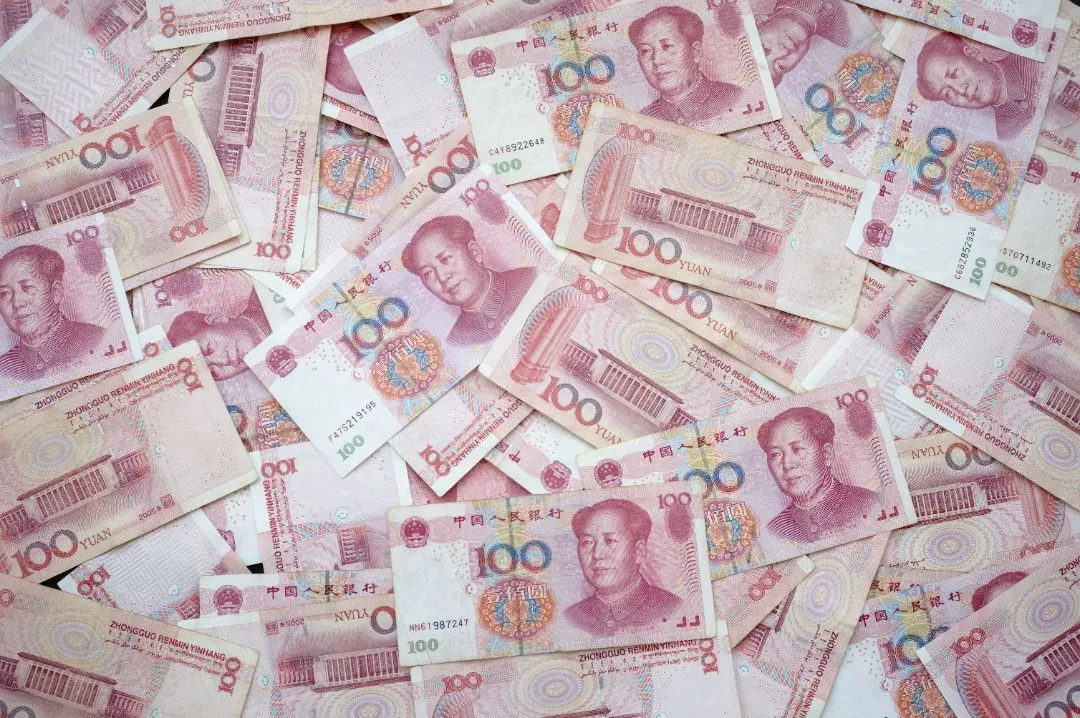
Photo by Aeron Oracion on Unsplash

$35 billion in remittances

The Philippines has always been seen as a lucrative remittance market due to the high number of Filipinos who work outside of the country, sending funds home to family on a regular basis. In 2020, remittances back to the Philippines from overseas were just shy of $35 billion, according to data from the World Bank.


It appears that Australia’s Stables Money has identified this opportunity, with the company entering the Philippine market back in March. The Philippine peso already accounts for over 25% of all outward transactions sent via the platform.


Stables Money CEO Bernardo Bilotta spoke to the opportunity that the company is trying to exploit. He stated:


"Recognizing the Philippines as a key player in global remittances, we expanded to deliver smooth PHP transactions. With 28.44% of our send transactions now in PHP, this move highlights our commitment to making cross-border payments hassle-free for those sending money to the Philippines.”


Coins.ph has the intention of engaging in further industry partnerships in an effort to expand the reach of PHPC. That will mean additional collaborations with crypto exchanges, digital asset wallet providers and those financial institutions who are increasingly delving into the world of stablecoins.


Commenting on this latest development, Wei Zhou, Coins.ph CEO, stated:

”We’re encouraged to see growing adoption of PHPC among our user base. Our partnerships with Stables and Ronin underscore the vast potential of PHPC in cross-border transactions, trading and other financial activities.”


Stables has also made efforts to expand through the use of Circle’s USDC stablecoin. Last month, it partnered with global payments card platform Mastercard in a collaboration which facilitates Stables users in purchasing goods using USDC at locations across 27 European countries where Mastercard is accepted.


The firm’s partnership with Mastercard dates back to March 2023 when it entered into a similar collaboration relative to the Asia-Pacific region.


Previous peso-based stablecoin projects

Coins.ph is not the first entity to try and drive adoption of a Philippine peso-based stablecoin. The Southeast Asian country’s UnionBank launched a similar product back in 2019. However, the product failed to find product-market fit and ultimately, it was withdrawn from the market. The company tried once again in 2022, attempting to launch a similar product through its digital bank subsidiary UnionDigital, in an effort that seems to have failed.


More recently still, UnionBank subsidiary company UBX launched a peso-based stablecoin on Polygon back in March.


More to Read
View All
Web3 & Enterprise·

Sep 27, 2023

Daehong and Animoca Brands Partner to Leverage NFTs in Expanding Web3 Projects

Daehong and Animoca Brands Partner to Leverage NFTs in Expanding Web3 ProjectsDaehong Communications, the marketing solutions arm of South Korean industrial conglomerate Lotte Group, has recently inked a partnership with Animoca Brands, a blockchain gaming company headquartered in Hong Kong.Animoca Brands gained attention earlier this year by raising $5.5 million through the sale of its Mocaverse NFTs. Mocaverse is the membership NFT collection for the Animoca Brands ecosystem. The Hong Kong-based publisher is also the owner of the renowned metaverse gaming platform, The Sandbox.Photo by Shubham’s Web3 on UnsplashConnecting two worlds of NFTsThis collaboration between Daehong Communications and Animoca Brands is intended to expand their respective Web3 projects, focusing on domains like games, communities, and tickets. As a move under this collaboration, Daehong’s Bellygom and Bellyland NFTs will see integration with Mocaverse. Daehong oversees the Bellygom NFT project, while the pink bear character of the project is a promotional tool for Lotte Homeshopping, a media commerce arm of Lotte Group.Moreover, holders of Mocaverse NFTs are set to experience a variety of games, missions, and rewarding systems introduced by Bellyland — Daehong’s second collection of the Bellygom NFT project.Bellygom’s expansion effortsIn recent times, Daehong has been actively driving the growth of the Bellygom NFT project by revealing the project’s details on GitBook in both Korean and English. Furthermore, Daehong has forged alliances with several burgeoning Web3 projects, including decentralized wellness ecosystem Yogapetz, Web3 social media platform Phaver, and Web3 social network CyberConnect.This partnership marks a strategic confluence of marketing solutions and blockchain gaming, aiming to spearhead innovations in a variety of Web3 projects, especially those related to gaming and community building. These efforts are poised to contribute to broadening the horizon of decentralized technologies.

news
Web3 & Enterprise·

Dec 12, 2023

HTX experiences $258 million outflow post-hack

HTX experiences $258 million outflow post-hackHTX, the digital-asset trading platform associated with Chinese-born crypto mogul Justin Sun, has witnessed a substantial net outflow of $258 million since resuming operations after a significant security breach.According to Bloomberg, data from DefiLlama indicates that the outflow occurred between the exchange’s restart on Nov. 25 and Dec. 10, signaling unease among some clients following last month’s cyberattack. In November, HTX reported a loss of $30 million in crypto tokens due to the breach, prompting a temporary suspension of withdrawals and deposits.Towards the end of last month, the platform re-enabled withdrawal services for major cryptocurrencies, gradually bringing the exchange back to full service, supporting withdrawal of all digital assets.Photo by Amritanshu Sikdar on UnsplashMultiple hacksJustin Sun is also associated with the Poloniex exchange and the HECO Bridge, a network established by HTX for blockchain transfers. Both Poloniex and HECO fell victim to hacks in November, resulting in the theft of approximately $200 million in crypto. It’s worth noting that hackers had previously stolen $8 million from the HTX platform in September.HTX, which was formerly known as Huobi up until a business rebrand in September, boasts an average trading volume of $1.5 billion in the past 24 hours, securing its position as the fifteenth largest exchange when measured in terms of trading volume.Increased vigilanceIn the wake of several high-profile crypto platform failures in 2022, digital-asset investors are increasingly vigilant about monitoring flows and reserves at virtual currency exchanges. In particular, that trend gained momentum after the FTX platform’s collapse last year due to fraud.November turned out to be the most damaging month this year so far in terms of platform digital asset theft. Exit scams and exploits encountered during the month totaled a staggering $363 million in losses.In October, the UK’s Financial Conduct Authority (FCA) included HTX, alongside KuCoin, on a warning list, due to their promotion of services in the UK, without having obtained the required regulatory approvals.A third of reserves in BitcoinDefiLlama data reveals that Bitcoin constitutes the largest portion of HTX’s reserves, accounting for approximately 33%. Tron’s TRX token, launched by Sun in 2017, represents around 32% of the reserves. HTX’s native exchange coin, HT, makes up 14%, followed by a Sun-backed token named stUSDT at 12%.In August, Travis Kling, Founder of Ikigai Asset Management, had this warning relative to Sun and HTX:”Justin Sun is a criminal. There’s a hole in Huobi, a hole in TUSD and a hole in Tron DeFi. Act accordingly.”TRX, at the center of U.S. fraud allegations against Sun, prompted a March lawsuit by the Securities and Exchange Commission (SEC), accusing him and his firms of market manipulation to inflate the token’s trading activity. Sun dismissed the suit on the X social media platform back in March, stating that it “lacks merit.” On Sunday, Sun claimed that the Tron blockchain network which he founded had reached a new milestone of 200 million users.Despite security firm BlockSec reporting the recovery of the $8 million stolen in September, hackers still appear to control the $30 million taken last month. The ongoing situation raises concerns about the security measures and resilience of HTX in the face of persistent cyber threats.

news
Web3 & Enterprise·

Oct 31, 2023

Thailand’s KBank Furthers Crypto Business Through Satang Acquisition

Thailand’s KBank Furthers Crypto Business Through Satang AcquisitionKasikornbank (KBank), Thailand’s second largest bank, is expanding its involvement in the digital assets sector through the acquisition of a majority stake in the local crypto exchange Satang.Photo by Lisheng Chang on UnsplashTradFi embracing cryptoThe acquisition, involving a purchase of 97% of Satang’s shares, is a significant move in the context of an ongoing trend of traditional financial institutions embracing digital assets. The deal was officially announced on Monday, as disclosed on KBank’s official website.KBank executed the acquisition through its newly established subsidiary, Unita Capital, whose registered capital is valued at 3.7 billion Thai baht (approximately $103 million). Unita Capital specializes in investments within the digital asset sector. This move underlines the bank’s commitment to stay ahead in the dynamic world of digital finance.Subsidiary formationIn light of the acquisition, Satang Corporation is set to undergo a name change and will soon be known as Orbix Trade Company Limited. Unita Capital has established a number of other subsidiary companies as a consequence of the buy-out.KBank’s cryptocurrency venture will be structured into three distinct divisions. Orbix Custodian has been formed, focusing on secure digital asset storage and management. There is a growing demand for reliable digital asset custody services. KBank will use Orbix Custodian as a vehicle to capitalize on that growth opportunity.Orbix Invest has been established to act as the venture arm of the business relative to the digital assets space. It will focus on fund management in meeting the needs of clients looking for exposure to the digital assets sector. Lastly, Orbix Technology has been established to concentrate on blockchain technology development.Satang, a prominent player in the Thai cryptocurrency scene, operates a cryptocurrency exchange alongside a range of digital asset services. Notably, Poramin Insom, the founder of Satang, is recognized for his role in launching Firo (formerly Zcoin), a privacy-centric cryptocurrency. Insom confirmed the acquisition via a Facebook post on Monday, acknowledging the evolution of Satang as it transitions under KBank’s ownership.Insom stated: “I’ve been at Satang since 2017 until now, six years have passed. Currently, Satang on the trading board has already exited according to the news. And there should be an official announcement soon.” He also highlighted Satang’s diversified ventures, including Satang Technology, a blockchain service platform, and Satang Space, focusing on space-related endeavors.This strategic move by KBank follows its recent launch of a $100 million fund, introduced in September, targeting investments in Web3, fintech, and artificial intelligence (AI). In 2022, KBank launched Bigfin, a digital asset investment analysis platform. Bigfin has since been integrated with the Binance platform.Last year the bank backed Thai digital asset and blockchain startup Forward, a project that is working on developing a decentralized derivative platform.KBank is recognized as the second largest lender in Thailand based on assets, trailing behind Bangkok Bank. Thai NVDR Company Limited is the largest shareholder of KBank, as per data from the Stock Exchange of Thailand (SET), with the SET itself owning 99.9% of NVDR’s shares.

news
Loading