Top

BitGo Singapore launched to serve APAC region

Web3 & Enterprise·November 25, 2024, 3:54 AM

In a press release published by Business Wire on Nov. 20, American crypto custodian BitGo announced the launch of its Singaporean subsidiary company, BitGo Singapore Pte. Ltd.


The company has set out the key features that the BitGo Singapore platform intends to offer going forward. These include secure, regulated cold storage. The platform is offering digital asset custody support in respect of over 1,100 digital assets. BitGo claims that the range of assets supported far exceeds that offered by competitors in the digital asset custodian space. 

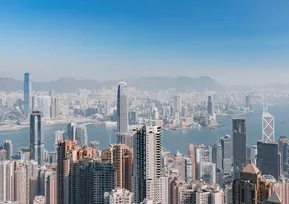
https://asset.coinness.com/en/news/06f7fa21ce0238c2c790cfa55ceeee27.webp
Photo by Joshua Ang on Unsplash

Regulatory compliance

In January, the company achieved in-principle approval (IPA) relative to a Major Payment Institution (MPI) license from local regulator the Monetary Authority of Singapore (MAS). By August the company had satisfied regulatory requirements sufficiently to be awarded a full MPI license.


The company will also offer clients electronic and voice trading, allowing them to access deep liquidity directly through the digital assets held in cold storage. BitGo had deployed its Go Network to effect automated settlement. It claims that the Go Network mitigates counterparty risk through the use of delivery versus payment (DVP) settlement processes, while enabling access to exchange liquidity.


Token management is another area that the firm identified in its press release as a feature of its overall service. Back in September, the company rolled out a streamlined token management service for crypto foundations.


Broadening APAC service offering

The crypto asset custodian has launched this separate subsidiary in Singapore with the purpose of broadening its service offering within the Asia-Pacific (APAC) region.


BitGo Singapore CEO Youngro Lee stated that BitGo is “thrilled to launch BitGo Singapore and offer the APAC region a best-in-class suite of digital assets solutions and regulated infrastructure services.” 


Lee added that the new regional entity is committed to providing its clients “with the highest quality products and services while maintaining strict regulatory standards,” while also looking forward to “further strengthening the APAC digital assets ecosystem.”


In expanding the reach of its service offering, BitGo has engaged in a collaborative approach. It has partnered with companies such as Vancouver-headquartered Lightning Network infrastructure provider Neutron Pay, and crypto market maker Wintermute, who announced in July 2023 the planned establishment of a base in Singapore.


Taking to X on Nov. 21, Neutron Pay stated:


We're excited to announce a strategic partnership with @BitGo Singapore, paving the way for expansion of our #Bitcoin and #LightningNetwork services across Asia-Pacific (APAC).


The firm’s CEO Albert Buu said that “by leveraging BitGo's robust custodial infrastructure, we aim to enhance our ability to serve businesses throughout Southeast Asia.” 


Wintermute Co-Founder Yoann Turpin offered his own thoughts on the BitGo Singapore announcement, stating:


“Having recently expanded our own footprint in the region, we see strong potential for collaboration in addressing the sophisticated needs of institutional players. By working together, we aim to build a more robust environment for institutions and drive meaningful growth across APAC’s digital asset markets.”


At the time of writing, 29 crypto-sector firms, including the likes of Circle, Coinbase and Blockchain.com, have acquired full MPI licenses to trade in the city-state of Singapore.

 

More to Read
View All
Web3 & Enterprise·

Oct 21, 2023

UAE Emirate Launches Digital Asset Oasis Free Zone

UAE Emirate Launches Digital Asset Oasis Free ZoneRas Al Khaimah (RAK), one of the seven Emirates of the United Arab Emirates (UAE), has launched the RAK Digital Assets Oasis (RAK DAO), a free zone tailored exclusively for digital and virtual asset enterprises.Photo by Mostafa Ashraf Mostafa on UnsplashFrom conception to launchThe Emirate has been working on the RAK DAO project for some time, having enacted a law to establish the free zone in March of this year. In July it emerged that RAK Digital Assets Oasis had partnered with the HBAR Foundation, the project team behind the Hedera public ledger, with HBAR extending funding and resources to fuel the growth of free zone members.Having put in the hard yards to establish the free zone, RAK DAO, under the patronage of RAK Emirate ruler His Highness Sheikh Saud Bin Saqr Al Qasimi, had its launch event on Thursday. The event included a range of industry speakers including Ledger Chairman and CEO Pascal Gauthier, Animoca Brands Co-Founder and Executive Chairman Yat Siu, DFINITY Founder Dominic Williams, and TON Foundation President Steve Yun, among others.During the event, DAO creation and governance platform DeXe DAO Studio announced its partnership with RAK DAO.With an eye towards keeping the RAK Emirate ahead of the technological curve, RAK DAO aims for the digital assets oasis to become the world’s first free zone dedicated solely to digital and virtual asset companies. While RAK DAO is initially expected to focus on non-financial activities, it holds the potential to introduce financial activities at a later stage.Nurturing Web3 innovationThe mandate of RAK DAO is to provide robust support to companies engaged in cutting-edge technologies. This includes but is not limited to ventures in the metaverse, blockchain, utility tokens, virtual asset wallets, non-fungible tokens (NFTs), decentralized autonomous organizations (DAOs), decentralized applications (DApps), and various other Web3-related businesses.Entrepreneurs who establish their presence within the confines of this free zone will be granted the privilege of retaining 100% ownership of their enterprises. Moreover, they will benefit from innovative tax schemes and a regulatory framework that is tailored to the unique demands of the digital asset industry.Progressive approach to Web3The UAE, as a nation, has actively pursued and courted crypto and blockchain firms by cultivating a progressive regulatory environment. Dubai led the charge by introducing a virtual assets law and establishing the Virtual Asset Regulatory Authority.RAK is not the first Emirate to establish a free zone that caters to crypto and Web3 business within the UAE. The Emirate of Abu Dhabi has established the Abu Dhabi Global Market (ADGM) while the Dubai International Financial Centre (DIFC) established its own financial regulator in Dubai, paving the way for attractive free zones for digital asset businesses. The Dubai Virtual Assets Regulatory Authority (VARA) even took its commitment a step further by inaugurating its headquarters in The Sandbox in May 2022.Dubai has issued operational licenses to several crypto firms, including prominent names like Binance, Crypto.com, and Nomura’s Laser Digital and digital asset custodian Komainu. These licenses have further solidified the UAE’s position as a preferred destination for crypto, blockchain, and Web3 enterprises.

news
Policy & Regulation·

Sep 22, 2023

Busan’s Digital Asset Exchange to Transform the City into a Global Financial Hub

Busan’s Digital Asset Exchange to Transform the City into a Global Financial HubBusan, the southern port city in South Korea, has unveiled an extensive plan for the creation of the Busan Digital Asset Exchange. The primary aim of this initiative is to establish a blockchain-based exchange that facilitates the trading of a wide range of valuable assets, including raw materials, precious metals, intellectual property rights, and carbon emission rights, all through tokenization.Photo by Joseph Pradipta on UnsplashDecentralized governance modelThis planned exchange will operate under a decentralized governance model, where separate entities will handle depository and settlement, listing assessment, and market monitoring. Such a governance framework is designed to ensure checks and balances and enhance investor protection. Busan is committed to providing both administrative and financial support for the establishment of these entities.The roadmap for this plan was presented yesterday at Busan City Hall by Mayor Park Heong-joon and the Busan Digital Asset Exchange Establishment Promotion Committee.The committee was introduced by the city in December of last year, and since then, it has been crafting specific plans. This committee is led by former lawmaker Kim Sang-min, who is recognized as an expert in blockchain policy.Operator selection processThe legal operator for the exchange is slated to be launched within this year. Starting from the middle of the upcoming month, the city of Busan will initiate an application-based process to find an exchange operator and intends to finalize the selection by November.The operator will be entirely funded through private contributions. Companies possessing blockchain technology and the capability to construct an exchange system will form a consortium to partake in the project and operate the exchange. The city of Busan will support the founding and operation of the exchange in accordance with the ordinance.Diverse asset tokenizationShould everything proceed as planned, the exchange is set to commence operations next year. It will tokenize and support the trading of items that pass through the Port of Busan, including gold, silver, copper, crude oil, and ammonia. Additionally, a marketplace will be developed to trade intellectual property (IP) rights, such as films, and carbon emission rights. Particularly, there are plans to broaden the spectrum of tradable items to include virtual assets and security tokens.In contrast to traditional stock exchanges that utilize home trading systems (HTS), the upcoming digital asset exchange will run on blockchain, which is immune to hacking and forgery. Users can trade their assets directly without intermediaries and benefit from reduced transaction costs.Highlighting blockchain as a pivotal technology in the era of the Fourth Industrial Revolution, Kim Sang-min, the chair of the committee, expressed that Busan will develop its digital asset exchange to set a global standard in the field.Mayor Park resonated with this perspective, emphasizing that in this age of digital transformation, Busan will leverage this opportunity to position itself as a global financial hub.

news
Markets·

Jan 24, 2024

Mt. Gox edging closer to BTC payouts sparks market fears

The trustee of the failed Japanese cryptocurrency exchange Mt. Gox is preparing to initiate repayments of bitcoin (BTC) and bitcoin cash (BCH), prompting fears of a market sell-off among traders and investors.Photo by Dmytro Demidko on UnsplashConfirming repayment detailsThe crypto community on the /mtgoxsolvency subreddit disclosed that the Tokyo-based bitcoin exchange has initiated the process of verifying creditors' addresses for forthcoming repayments. Emails have been sent to creditors, confirming that their repayment details have been validated with relevant cryptocurrency exchanges. The communication from Mt. Gox appears to be staggered, with users on different platforms receiving emails at varying times. Some Bitstamp users reported receipt of the email, while several Kraken customers mentioned that they were still awaiting the confirmation. Mt. Gox, cautioning creditors, clarified that users with disabled or frozen accounts would not be able to receive repayments using the provided addresses. Additionally, the emails specifically pertain to payments in bitcoin and bitcoin cash. This recent communication follows Mt. Gox's announcement in November, where it committed to returning approximately 142,000 bitcoin, 143,000 bitcoin cash and 69 billion Japanese yen, valued at over $5.67 billion at the announcement date and approximately $6.46 billion at the present moment. During the November announcement, Mt. Gox assured creditors that repayments would commence in the following months and weeks. Creditors with payment methods deemed "effective at this time" were earmarked to receive their assets first. Towards the end of December, some creditors reported the addition of yen-denominated balances to their PayPal accounts by Mt. Gox, signaling progress in the repayment process. Market fearsThe fear among market participants of a distribution of bitcoin from the Mt. Gox estate has cast a shadow over the sector over the course of a number of years. With this latest development, it appears that the estate is finally on the cusp of executing on that distribution. If distribution is achieved in the short term, it will come at a time when bitcoin has experienced a major unit price pullback already. Since the approval of spot bitcoin exchange-traded funds (ETFs) in the United States earlier this month, it appears that another bankrupt crypto exchange, FTX, has sold $1 billion worth of Grayscale Bitcoin ETF shares into the market. That move is believed to have been responsible for a dramatic drop in bitcoin’s unit price. In tandem with that event, some commentators believe that a pullback at this point is healthy for the market. That’s the view of Charles Edwards, founder of Capriole Investments. Taking to social media, Edwards wrote:”We're still not here yet. This pullback is very overdue and lower is healthier.” At the time of writing, bitcoin has a unit price of $39,884, down from a high earlier this month of $48,494. Confirmation emails have been reported by several Reddit users, with Bitstamp confirming for most, and a few Kraken users also acknowledging receipt. Nevertheless, a significant number of Kraken users mentioned they are yet to receive the confirmation email. Mt. Gox officially closed its doors in February 2014, almost a decade ago, after succumbing to an exploit in 2011.  

news
Loading