Top

USDT stablecoin receives full regulatory approval in Abu Dhabi

Web3 & Enterprise·December 16, 2024, 11:47 PM

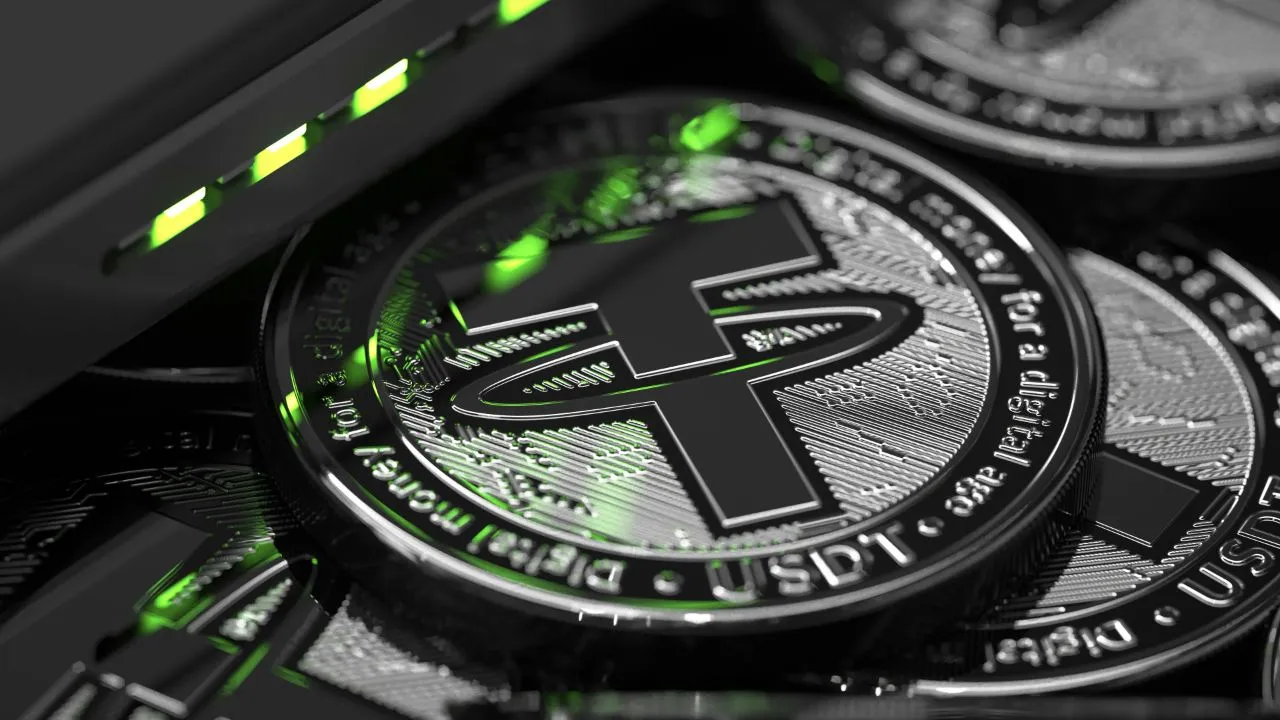
The Financial Services Regulatory Authority (FSRA), a regulatory body within the Abu Dhabi Global Market (ADGM) economic free zone and financial center in the United Arab Emirates (UAE), has fully approved USD₮, the world’s leading U.S. dollar stablecoin by market cap, as an accepted virtual asset (AVA).
https://asset.coinness.com/en/news/eaf08a1ad4bdf292be57387fe07c3323.webp
Photo by DrawKit Illustrations on Unsplash

Pre-approved USDT services

USDT issuer Tether publicized details of the approval via a statement published to its website on Dec. 10. The company outlined that the approval means that “Authorised Persons” operating and licensed by the FSRA can offer pre-approved services related to USDT.


The company stated that the approval facilitates the integration of USDT into regulated financial ecosystems in Abu Dhabi while also claiming that the move helps to advance the region’s leadership relative to digital asset innovation.


The FSRA has acknowledged acceptance of the leading stablecoin with recognition of its issuance on various blockchains including Ethereum, Solana and Avalanche.


Validating the importance of stablecoins 

With the ADGM regulator now fully accepting and recognizing the stablecoin, Tether CEO Paolo Ardoino said that the move goes beyond just “validating the importance of stablecoins as critical tools for modern finance,” as he believes it opens the door for collaboration and growth across the Middle East.


Stablecoins are increasingly playing a significant role in bridging the gap between traditional finance (TradFi) and the Web3 sector. In October, crypto asset fund manager Bitwise identified a number of key insights that point to the ongoing development and use of stablecoins. 


It outlined that the top five stablecoin projects are currently holding more U.S. Treasury bonds than some G20 countries. Tether recorded profits last year that surpassed those of BlackRock, the world’s largest asset manager. Bitwise identified that leading payments firms like Visa are adopting stablecoins and incorporating them into their platforms for the purpose of effecting transactions.


A month prior to that, Wall Street investment bank Bernstein highlighted the fact that stablecoins are playing an increasingly important role relative to the global financial system as a whole. 


It’s thought that this latest development in Abu Dhabi may act as a further driver of USDT’s market cap. At the time of writing, the stablecoin asset had a market cap in excess of $140 billion. Its inclusion as an AVA reinforces the crypto asset’s position as the most used stablecoin within the industry.


AE Coin licensing 

In a further boost for further roll-out of stablecoins in the Middle East, the Central Bank of the UAE (CBUAE) awarded the final license to fully approve AE Coin, a UAE dirham-denominated stablecoin. Commenting on the development, AE Coin General Manager Ramez Rafeek said, "AE Coin harnesses the speed and efficiency of blockchain technology, offering instant, secure, and cost-effective transactions. It simplifies transfers, making them faster and more seamless."


In an effort to bring about greater adoption of the stablecoin, the AE Coin project intends to engage in partnerships with payment gateways, financial institutions and technology providers going forward. Tether also has plans to launch a dirham-backed stablecoin, having recently partnered with UAE-based entities to bring that about.




More to Read
View All
Policy & Regulation·

Nov 30, 2023

Zipmex proposes creditor repayments of 3 cents on the dollar

Zipmex proposes creditor repayments of 3 cents on the dollarBeleaguered Singaporean crypto exchange Zipmex has unveiled a restructuring proposal aimed at repaying creditors. According to a report published by Bloomberg on Wednesday, the initial offer stands at 3.35 cents for every dollar of the creditors’ claims.Photo by Alexander Grey on UnsplashRestructuring challengesThis restructuring proposal unfolds against the backdrop of a challenging period for Zipmex, triggered by the aftermath of last year’s crypto price downturn. The crypto exchange, which operates in Thailand, Indonesia, Australia and Singapore, is currently undergoing a court-supervised restructuring process based in Singapore.In its efforts to restructure the business, Zipmex is grappling with a debt of $97.1 million. That total debt level is contingent upon the eventual recovery of assets. Bloomberg cited sources familiar with the matter, suggesting that depending on the success of these recovery efforts, the repayment figure could potentially surge to 29.35 cents per dollar.Creditor dissatisfactionHowever, not all major creditors are on board with Zipmex’s proposed plan. Expressing reservations, they are pushing for an independent review to scrutinize recent changes in the company’s assets and liabilities, as outlined in an Oct. 4 court document. This external examination is deemed crucial to ensuring transparency and fairness throughout the restructuring process.In response to these developments, Marcus Lim, the Group Chief Executive Officer of Zipmex, refrained from providing detailed comments due to the confidentiality of the ongoing arrangement. While acknowledging inaccuracies in information sourced from external outlets, he chose not to elaborate on them further.Investor deal failureA previous attempt to sell Zipmex to V Ventures, a subsidiary of Thoresen Thai Agencies, fell through. To add to the struggling company’s woes, it emerged earlier this week that Thailand’s securities regulator, the Securities and Exchange Commission (SEC) recently instructed Zipmex to halt operations in the country due to insufficient net capital.The company had been fined 11 million baht ($315,000) by the SEC earlier this year. The SEC cited the co-mingling of corporate and customer funds as one regulatory breach. Furthermore, the Thai regulator claimed that between May and July 2022, Zipmex “did not have in place a system to effectively prevent conflicts of interest in such matters and the business operation does not have an adequate risk control system.”In response to this recent regulatory directive, Zipmex Limited issued a statement to its customers, expressing its commitment to ensuring proper and compliant business operations in line with the criteria set by the Thai SEC. Consequently, the temporary suspension of digital asset trading and deposit of all types was deemed necessary.The intricacies of Zipmex’s financial restructuring will be closely watched by market observers, especially considering the volatility in the crypto market and the regulatory challenges faced by the company in multiple jurisdictions. The success of the proposed repayment plan, contingent upon asset recovery, remains uncertain, leaving creditors and industry stakeholders on edge.As Zipmex grapples with these multifaceted challenges, its future trajectory hinges on navigating both the demands of the bankruptcy process alongside regulatory requirements.

news
Markets·

Mar 11, 2024

Korea’s daily crypto trading volume surpasses that of stocks at nearly $9B

With Bitcoin prices hitting an all-time high, the daily crypto trading volume in South Korea has surpassed that of the stock market, local media outlet The Financial News reported.  As of yesterday at noon (KST), the local daily trading volume of cryptocurrencies over the past 24 hours stood at over KRW 11.8 trillion, or nearly $9 billion, according to data from crypto platform CoinMarketCap. Meanwhile, the daily trading volume on the Korea Composite Stock Price Index, or KOSPI, was KRW 11.4 trillion on Friday.  The total daily crypto trading volume was tallied by adding trading volume across Korea’s five major crypto exchanges – Bithumb posted KRW 8.8 trillion, Upbit KRW 2.7 trillion, Coinone KRW 176.4 billion, Gopax KRW 55.2 billion and Korbit KRW 32 billion. Photo by Alexander Mils on UnsplashUnlike stock markets which have a closing time, crypto assets are traded 24/7, which makes it difficult to do an apple-to-apple comparison. Still, the numbers clearly demonstrate retail investors’ bullish sentiment toward the crypto market.  According to the U.S. crypto exchange Coinbase, the Bitcoin price touched $70,199 on Friday (UST), just three days after the flagship coin surpassed $69,000 on March 5, an already record-breaking price in 28 months since November 2021.  Inflation and recession drive retail investors to crypto Financial experts say that Korea’s persistently high inflation and slowing economic growth are driving local retail investors to seek relatively riskier yet high-yielding assets such as cryptocurrencies. Young investors in their 20s and 30s are particularly leaning towards investing in crypto, as they fear not being able to buy houses solely with their wages. Moreover, Koreans’ average monthly real wage declined by 1.1% year-on-year, which marks a continuous decline for two consecutive years since 2022.  Despite the country’s economic slowdown, the KOSPI has actually risen, fueled by capital influx from foreign investors who are expecting a valuation increase in local firms. In contrast, local retail investors are rushing out from the stock market as they see a lack of outperforming companies.  Data from the Korea Exchange (KRX), the sole securities exchange operator in the country, showed that foreign investors purchased KRW 4.4 trillion in stocks over the past month on the KOSPI market, while local retail investors sold KRW 3.3 trillion worth of stocks during the same period.  Local crypto boom prompts ‘Kimchi Premium’ effectThe recent bullish sentiment in the Korean crypto market can largely be attributed to local retail investors, because current laws prohibit foreign investors from trading crypto assets in the country and regulations limit enterprises from making direct investments in crypto.  While the KOSPI market grapples with the so-called Korea Discount effect, which refers to the undervaluation of the Korean stock market, the local crypto market is experiencing the exact opposite trend – crypto investors are benefitting from something called the Kimchi Premium effect, a newly coined term referring to the overvaluation of crypto assets in Korean crypto markets compared to those in their foreign counterparts. As of yesterday at 14:00 (KST), Bitcoin changed hands at KRW 917.4 million on foreign exchanges while at KRW 971.8 million on Korean exchanges, per data from local crypto exchange Upbit.  Cho Dong-keun, a professor at the Economics Department at Myongji University, described the current Korean economic situation as “a competition for the country’s limited wealth”. He said that the stagnant national growth has pushed people to fight for more wealth, urging them to invest in crypto assets, adding that Kimchi Premium could substantially appeal to many retail investors.   

news
Web3 & Enterprise·

Jun 07, 2023

Atomic Wallet Hacker Uses Lazarus Crypto Mixer

Atomic Wallet Hacker Uses Lazarus Crypto MixerThe stolen cryptocurrency from the recent $35 million hack of Atomic Wallet is already being moved to a crypto mixer favored by North Korea’s notorious cyber-hacking group.Photo by Micha Brändli on UnsplashSinbad.ioAccording to UK-based crypto compliance analysis firm Elliptic, the funds have made their way to a crypto mixer used by Lazarus Group, a notorious hacker group that focuses on crypto heists which is believed to have direct ties with the North Korean government.On June 5, Elliptic’s Investigations Team revealed that it had traced the funds from the Atomic Wallet hack to the crypto mixer Sinbad.io. Lazarus had previously used the mixer to launder over $100 million in stolen crypto assets.While the exact amount sent to the mixer was not specified, Elliptic noted that the stolen funds were being exchanged for Bitcoin before undergoing obfuscation through the mixer. Additionally, Elliptic reported that Sinbad.io is likely a rebranded version of Blender.io, another mixer extensively used to launder funds by the Lazarus Group. Blender.io has been sanctioned by the US Treasury.Atomic Wallet hackThe hack of several user accounts on Atomic Wallet occurred on June 3, resulting in losses of up to $35 million. News of the issue broke with the following tweet from the project team (which has subsequently been deleted): “We have received reports of wallets being compromised. We are doing all we can to investigate and analyze the situation. As we have more information, we will share it accordingly.”In a follow-up tweet the next day, the team confirmed that it was investigating the matter with the assistance of a number of “leading security companies.”However, Atomic Wallet later downplayed the incident, stating that less than 1% of its monthly active users were affected. The project team was castigated by users for trying to present the hack as a minor incident. One user took to Twitter to call out the Atomic Wallet team for “having the nerve to come to the networks and say that only 1% of wallets were affected.”The Atomic Wallet project is based out of Tallinn, Estonia, having been founded in 2017. It claims to provide a non-custodial decentralized multi-currency crypto wallet. The product supports over fifty coins and two hundred tokens. It also offers atomic swaps between digital assets, while also supporting integrations with instant exchanges such as Changelly, ShapeShift, and others.Roland Säde, the Chief Marketing Officer of Atomic Wallet, assured users that the team is working tirelessly to recover the stolen funds. He emphasized the need to complete the investigation to develop a concrete plan.Despite the ongoing efforts, Säde urged victims to track the illicit transfers and report them to popular crypto exchanges. By doing so, it was thought that may hinder the scammers from exchanging the funds.Crypto hacking menaceLazarus Group hackers have been the bane of the crypto space in recent years. Elliptic released a report last month that identified Japan as having been the country most adversely affected by the North Korean hackers. It’s understood that the estimated $721 million in stolen crypto from Japan-based entities amounts to nearly nine times the value of North Korea’s exports based on 2021 data.While Atomic Wallet is directly reporting the incidents, Säde believes that having more individuals monitoring the hackers’ activities will make it more challenging for them to move the funds undetected. Unfortunately, Elliptic’s recent findings suggest that for many victims, it may already be too late to prevent further misuse of their stolen cryptocurrency.

news
Loading